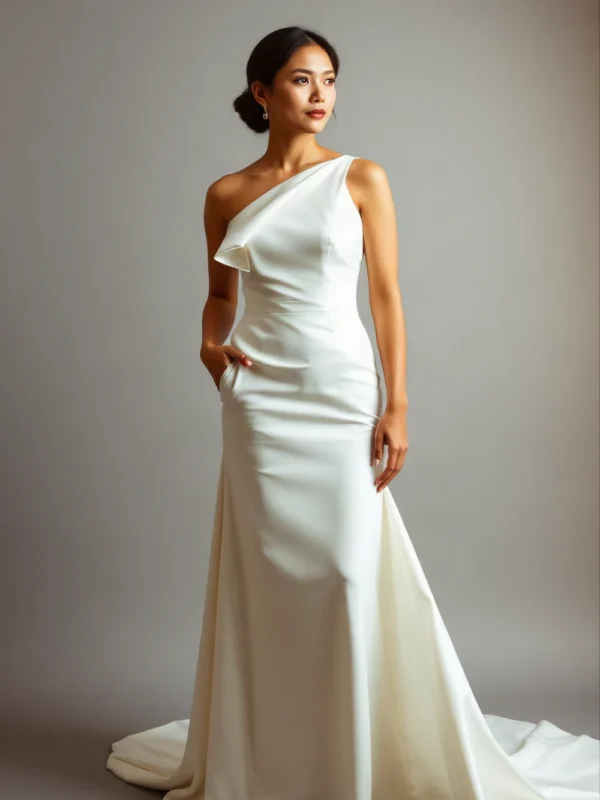
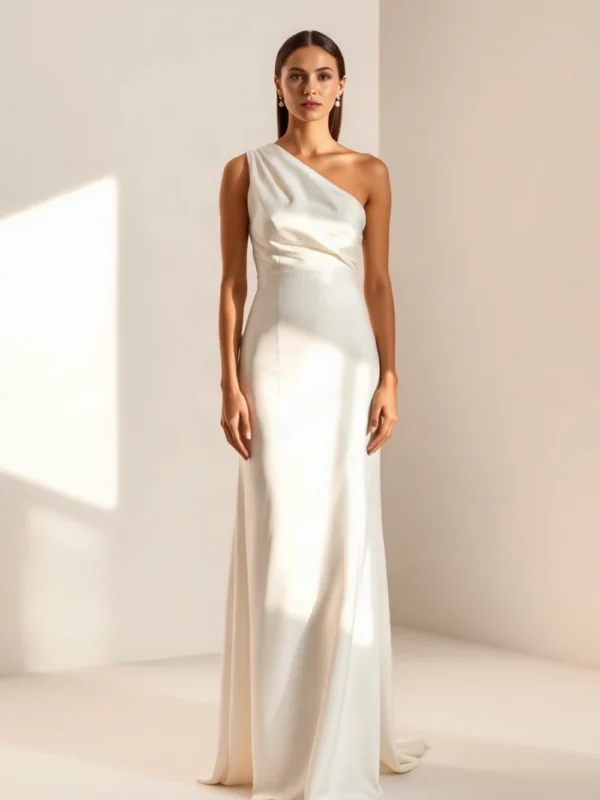
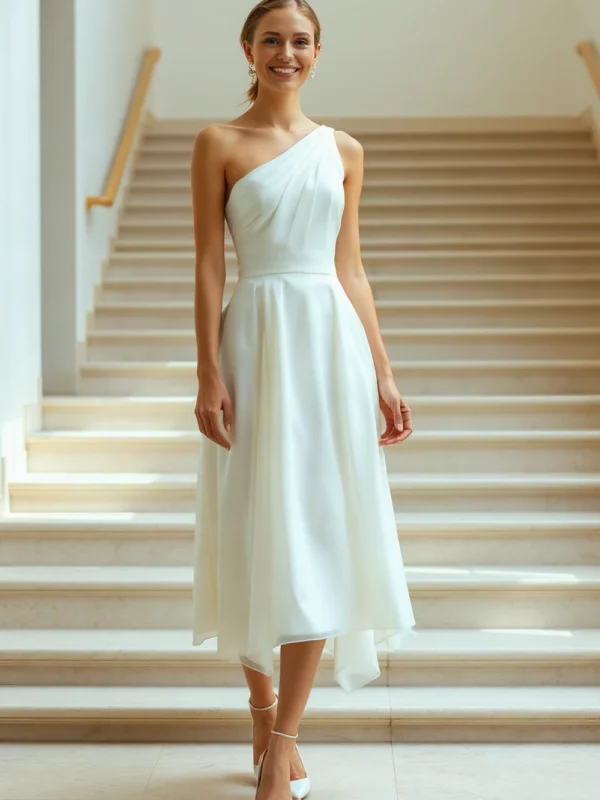
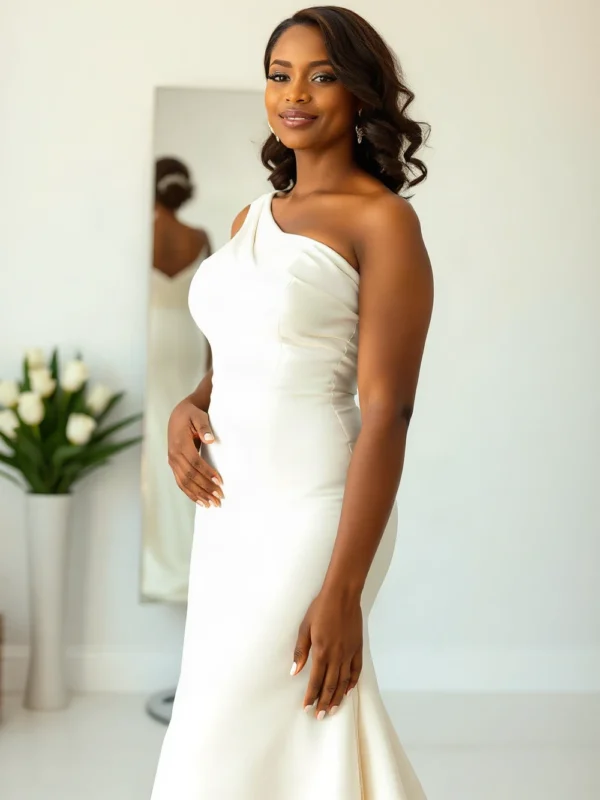
The unifying feature across these six concepts is a single shoulder line that becomes the main design direction of a white bridal silhouette. Its effect changes substantially, however. The first look uses a folded neckline and extended train to create a sculptural composition. The third softens the idea with gentle bust draping and a continuous column, while the sixth brings a similarly restrained surface closer to the body.
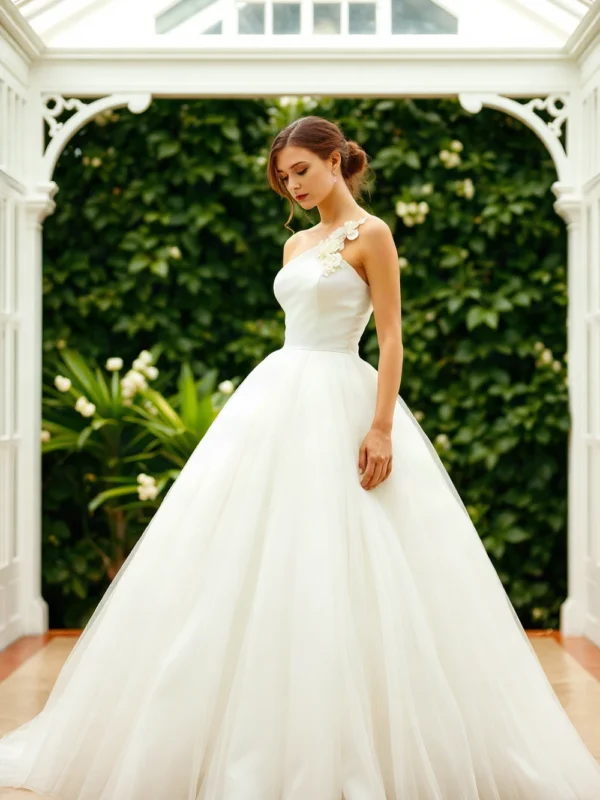
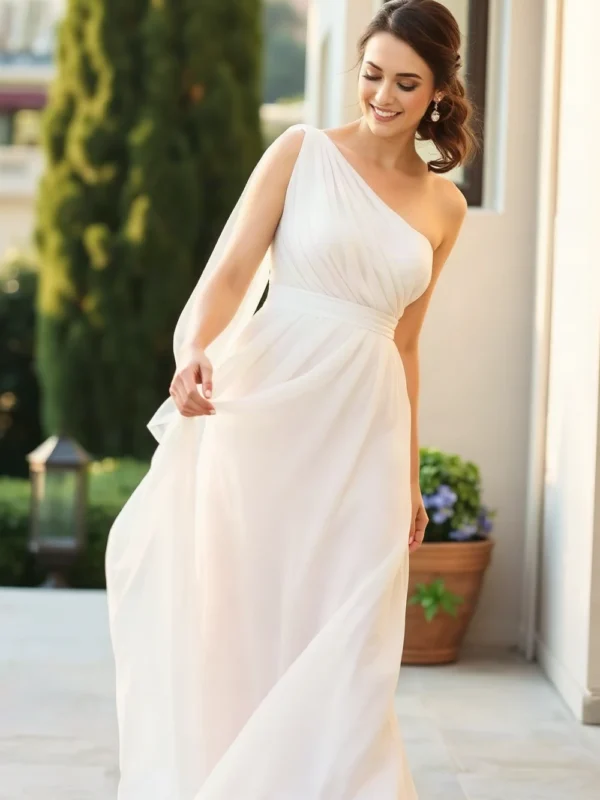
Skirt volume produces the clearest contrast. In the second image, broad, translucent-looking layers expand from the waist into a ball-gown shape, with floral appliqués keeping attention near the shoulder. The fourth look is lighter and more mobile: narrow gathers flow into a defined waistband and then a relaxed A-line skirt. Choosing between them involves more than appearance; seating, aisle width and room for turning matter too.
The fifth dress departs from all the floor-length options with an uneven tea-length hem. It reveals the shoes and may be easier to manage on stairs or in a compact ceremony space. The first design makes the opposite proposition. Its train spreads across the floor for a more ceremonial entrance, but it requires advance thought about walking, turning, photographs and sitting.
Surface detail also changes the styling needs. The floral shoulder of the second look already provides a strong focal point, whereas the plain surfaces in the remaining concepts make seams, folds and silhouette more prominent. Earrings, hair placement or a veil can consequently play a larger role. Small earrings or one focused hair accessory will usually preserve the neckline more clearly than a heavy necklace covering its diagonal path.
Do not assess a one-shoulder style from a motionless front view alone. During a fitting, raise both arms, sit, climb a few steps and turn several times. Check whether the shoulder stays secure, the waist remains level and the skirt permits the movement your plans require. The most useful choice aligns the preferred shape with the venue and pace of the day.