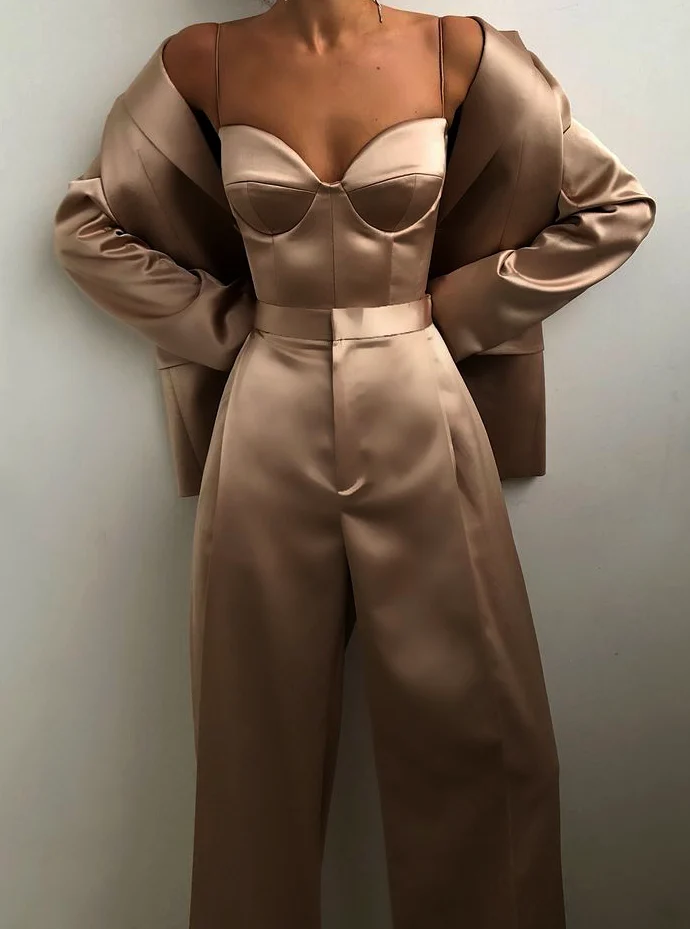
A shaped top sits above higher trousers in this close view. Fine straps lead towards a divided bust outline, with vertical seams drawing the short upper surface. The matching jacket lies open beside the shoulders, leaving the top clearly visible. Wider trousers begin below a smooth waistband area. The crop explains those transitions but shows neither the complete leg length nor the full rear outfit, keeping the upper idea separate from an overall silhouette still to be seen.
For your own combination, assess the waist transition independently of the jacket arrangement. Try the real pieces with the jacket properly worn first, then without it. Decide how much top should remain visible and whether the finish above the waistband appeals in both states. Outer divisions establish no particular internal support; ask to see real layers and fit.
Sit and reach for an object before rearranging the upper finish. Inspect the top-waistband relationship afterwards. Add a complete view with your shoes to judge trouser length and outline. The close crop can supply a clear upper idea without silently replacing the missing whole silhouette. Complete the choice through the actual pieces worn together.