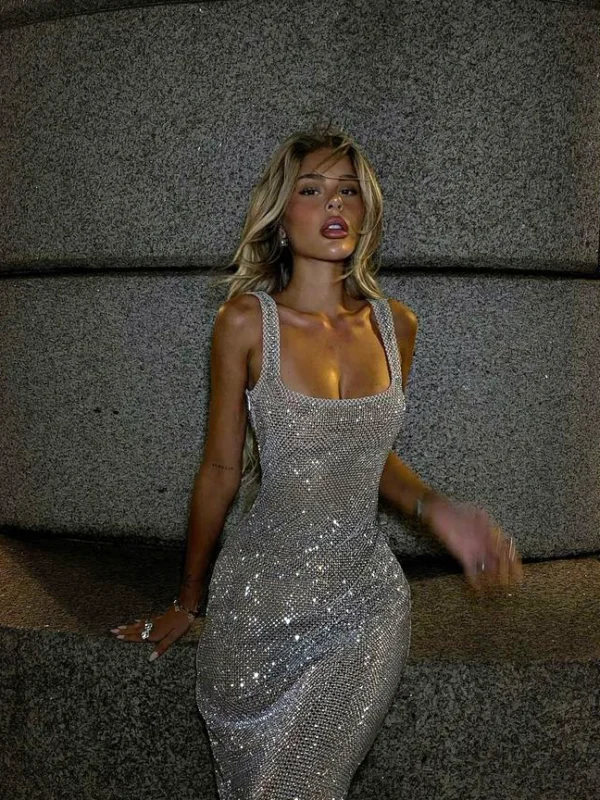
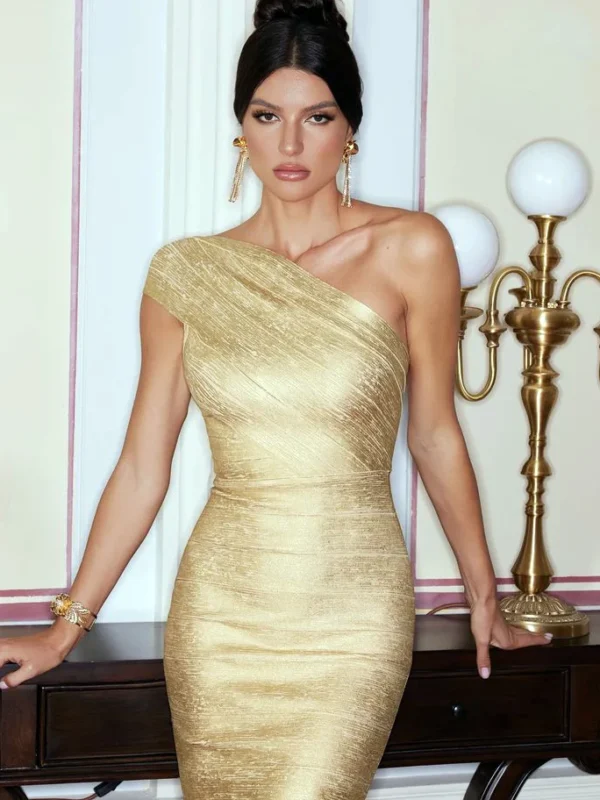
Metallic party outfits offer two different surface arrangements in this selection. The silver-coloured view has broader straps and a squared upper opening, with many small bright points across a close-fitting area. The gold-coloured example crosses one shoulder and ends in a visible short hem. Fine diagonal-looking lines mark its surface. Both images belong to the article’s original party selection, but do not establish a representative fashion development for a particular year.
Compare the necklines independently of colour first. Would you prefer a largely symmetrical opening or a slanted upper boundary? Then consider the visible length. The gold hem can be seen, whereas the silver photograph ends before that question can be answered. A complete product view is still needed there.
Open each image page for its particular details. The backgrounds and lighting also differ, so this is not a controlled material comparison. Treat the pictures as two design references for your own actual candidates. Choose the upper boundary and length before adding shoes, a bag and jewellery. The gallery then remains a useful archive comparison rather than an unsupported trend list.
Guide to comparing these images
Look at the spaces around the neckline
The silver square opening leaves a more even upper frame between broad straps. The gold diagonal creates different heights at the two sides. Describe the shape of that open space before selecting an accessory. A preference for an angular opening and a preference for metallic colour are two things you can test independently on actual candidates.
Surface detail supplies a second comparison: many small points on silver and finer diagonal-looking lines on gold. View the upper areas at a similar size so the closer crop does not make one form of detail appear disproportionately important.
Give earrings a specific trial
The gold image includes long earrings. Start your own comparison with the chosen neckline and hair arrangement, then add the earrings you actually intend to wear. Check from the front and both sides without changing the bag at the same time. Note whether your interest remains in the neckline direction or moves towards the extra hanging line.