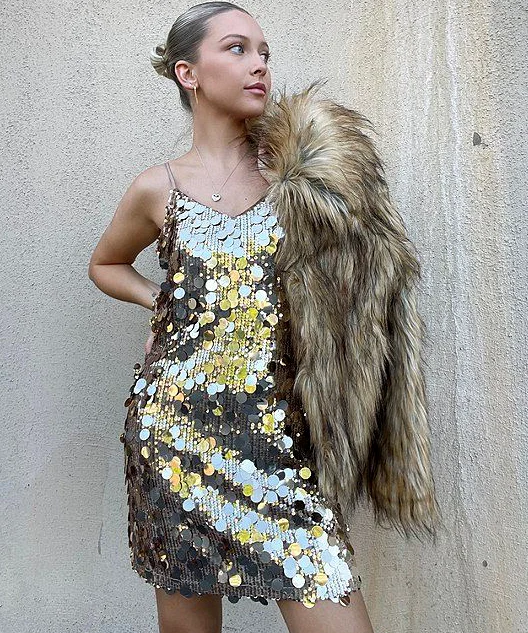
Round reflective pieces cover a short narrower dress surface with fine straps here. Pale and darker areas vary with the visible reflections. A long-haired-looking outer layer lies over one shoulder while the other arm remains bare; a small pale jewellery piece sits at the neck. The picture mainly shows surface decoration and an additional outer contour. It is used as a countercomparison rather than evidence of a ruched front. Appearance establishes neither confirmed metal nor a particular origin for the outer layer or a production year.
Ask whether the many small light points appeal to you or whether you actually want converging fabric lines. If the first feature leads, you may need another search direction from central ruching. Compare the actual surface without an outer layer first, then with your own jacket or coat. Check how much decoration remains visible in both states and whether you want additional jewellery. The reference is useful because it identifies a different design tool. You can enjoy it as an alternative without attributing a feature that the image does not establish.