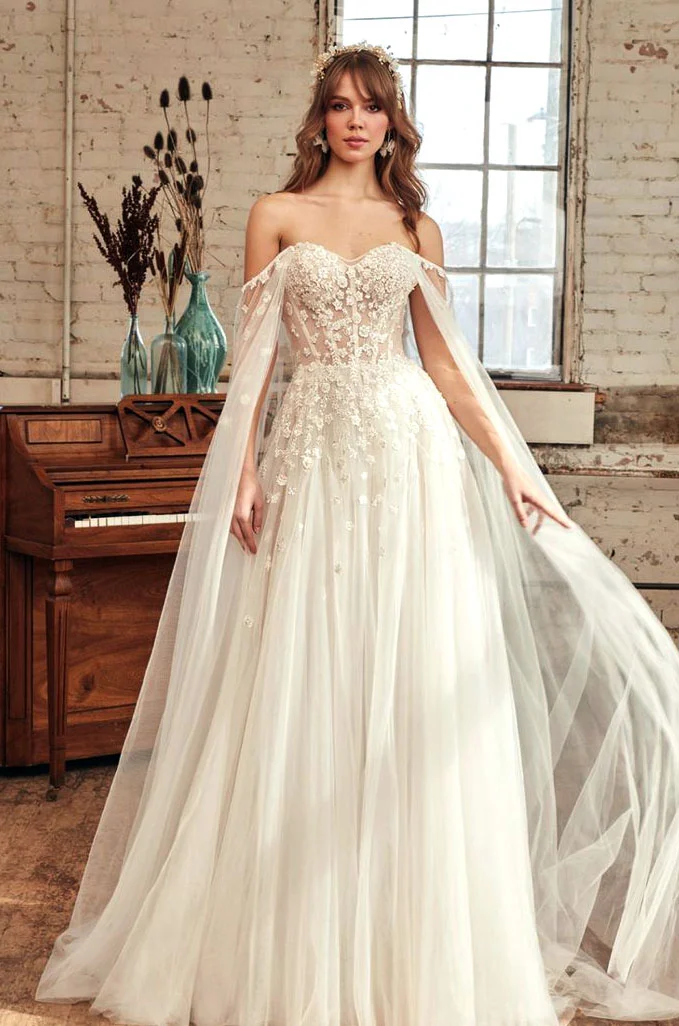
The held side panel extends the outer frame beside this pale dress. One hand holds a long side area out, while the other stays lower beside the skirt. Flowers sit along the upper edge and across the bodice, with individual motifs continuing farther into the wider lower area. The upper shoulders remain visibly bare.
The hand position contributes to the visible spread. Do not infer from this pose that the areas stay the same distance from the body when standing normally. Request a view of your actual candidate with relaxed hands first. Then add the hand movement for which you really want to use the larger side area.
Next compare the flower density you prefer along the arm edge and farther down. You may like the dense upper drawing while wanting a quieter skirt. Consider that question independently of the entire skirt width at first. Otherwise, changing two features at once can make the reason for your preference unclear.
Holding the side area out does not confirm a technical function. Connection, included parts and any removable version remain questions for the actual offered garment. The piano setting shows the picture arrangement, not a required use. Record the desired side outline and the ordinary front view that you still need to see.