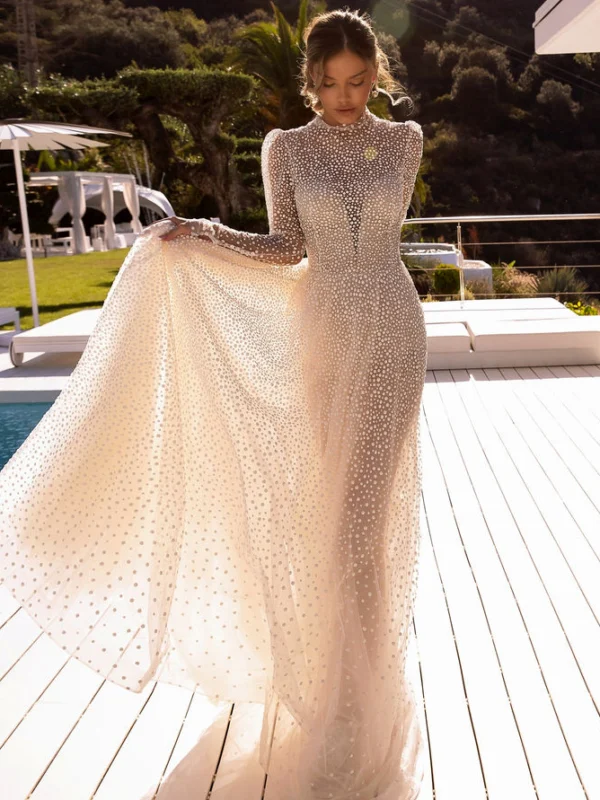
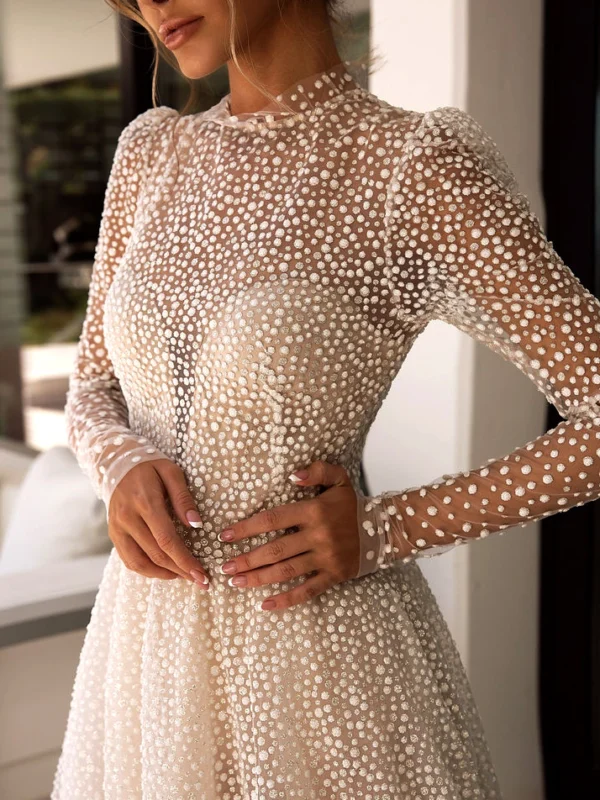
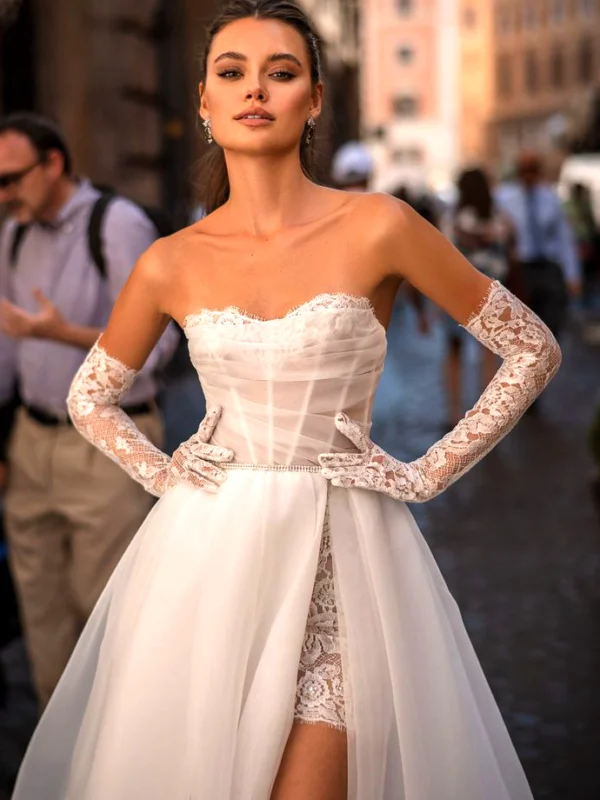
Dot patterns can be compared across different areas in this sequence. The broad front view shows closely spaced pale shapes across the upper body and wider gaps on the fabric held to one side. The close view makes the repeat around neck and arms easier to examine. Consider these visible features separately from the unconfirmed method used to create them.
Guide to comparing these images
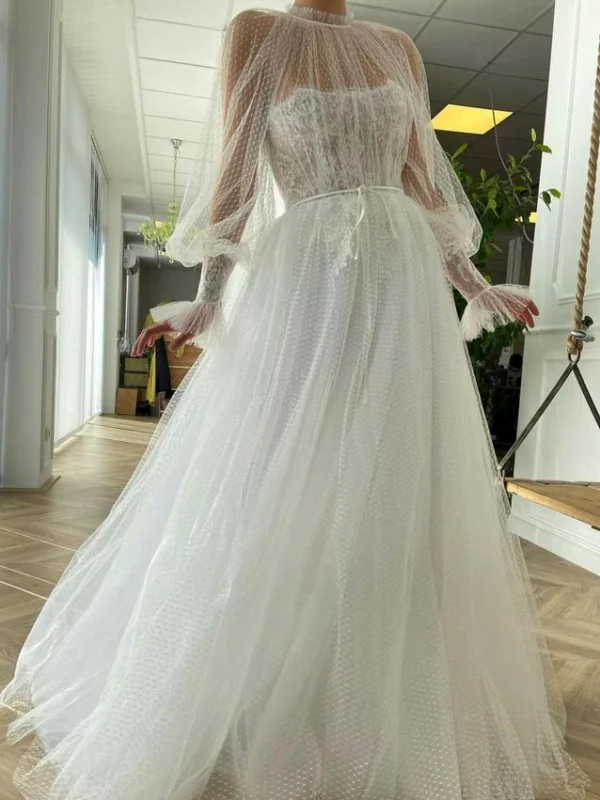
The broad skirt with loose-looking sleeves adds a finer repeat. Look at the connection between neck, sleeves and skirt, and the narrow waist tie that creates a separate boundary. Compare this direction with the denser close example without assuming a verified product family or identical fabrics.
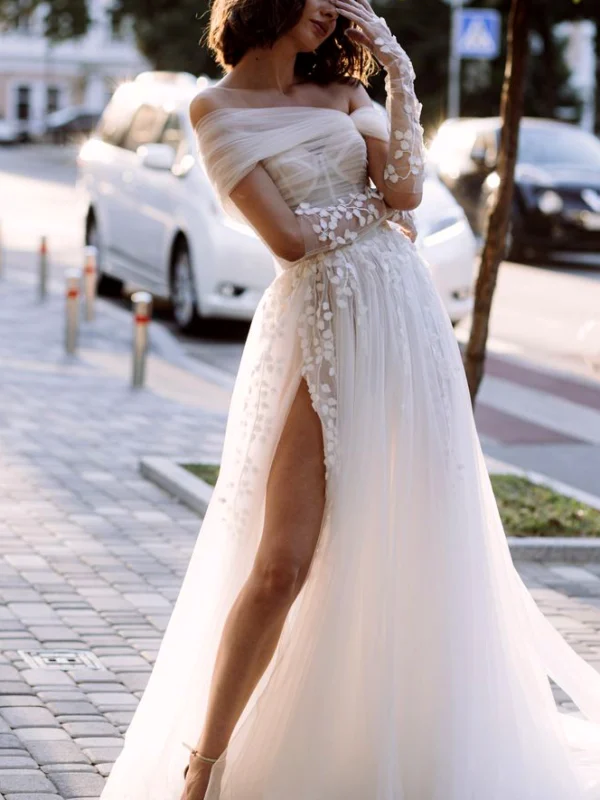
The last two images are deliberate alternatives. Their larger leaf and flower shapes are not simple dots. They help distinguish a preference for botanical motifs from one for regular rounded repetition. For a fitting, choose an actual dot reference and the alternative you find most interesting. Then name the size, spacing and ground you want. Those three visible features provide a clearer starting point than a general request for a playful dress, and they can be checked against a real offered garment.
Read spacing, framing and pose together
Begin with the broad view and upper-body close-up as a pair. Dots look particularly large on screen in the close-up partly because the camera is nearer the dress. Do not compare their displayed size directly with the dots on a distant skirt. Use the close-up to trace the repeat around the collar and arms; use the broader view for the relationship between the dense centre and more open side area. The two frames answer different questions.
Then move to the finely dotted broad skirt. The narrow band and its hanging ends interrupt the patterned surface. Decide whether you like that boundary or want a more continuous repeat. When comparing the two floral alternatives, look specifically at the gloves: one shows larger separate leaves, the other denser floral drawing. Neither establishes a simple dotted fabric. For your notes, choose the particular area whose rhythm you want, rather than only your favourite complete outfit. You can like a neckline in one image while preferring the repeat elsewhere.