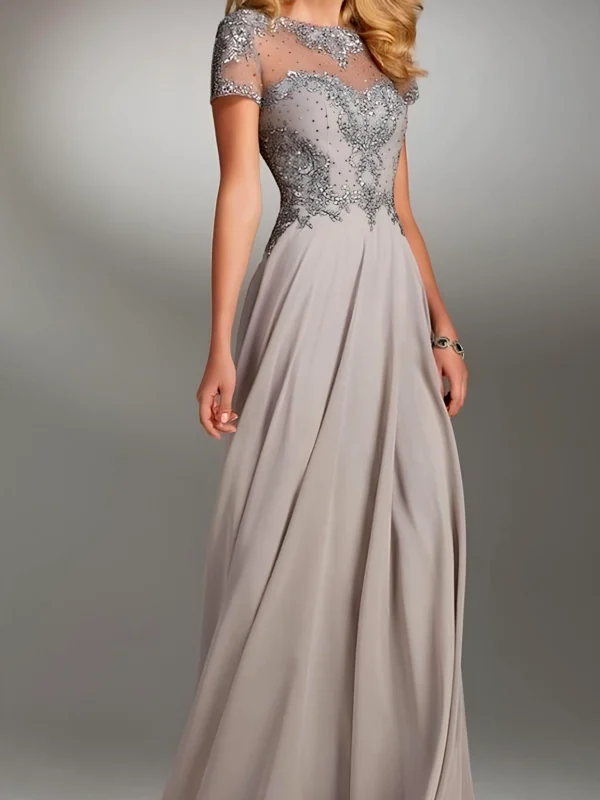
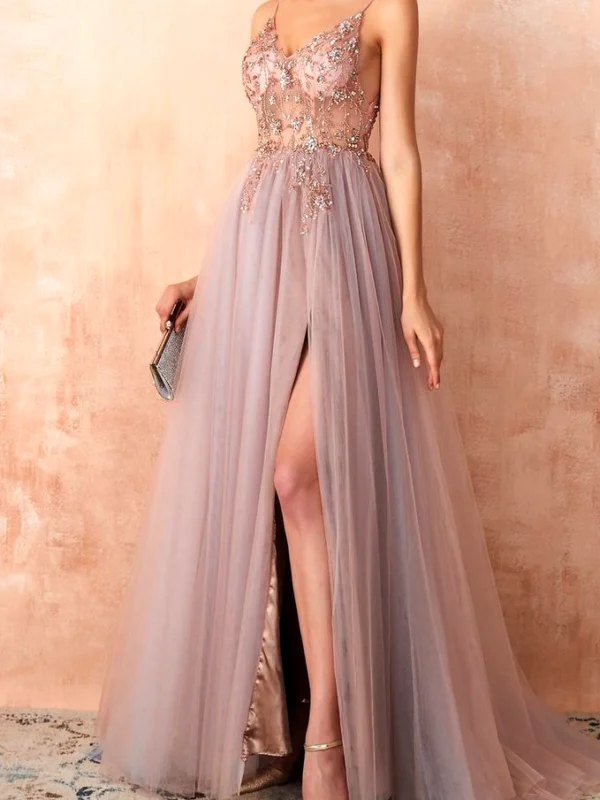
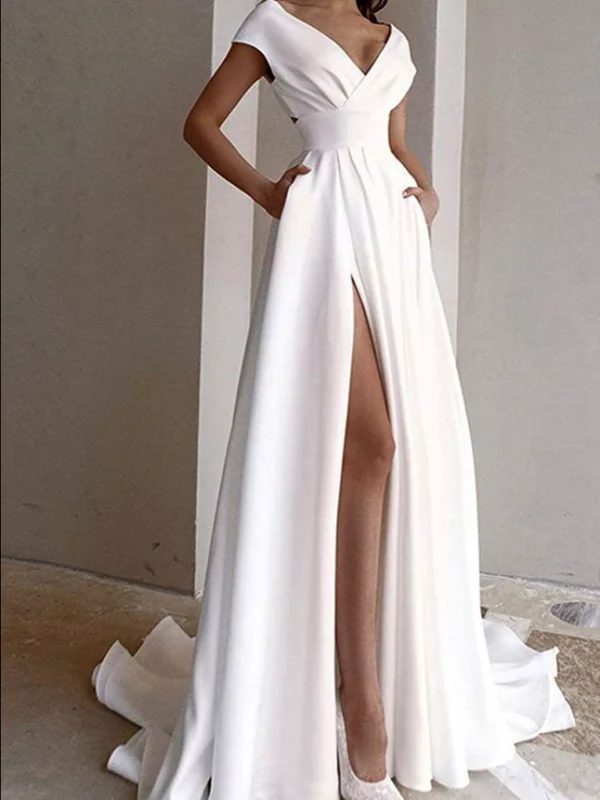
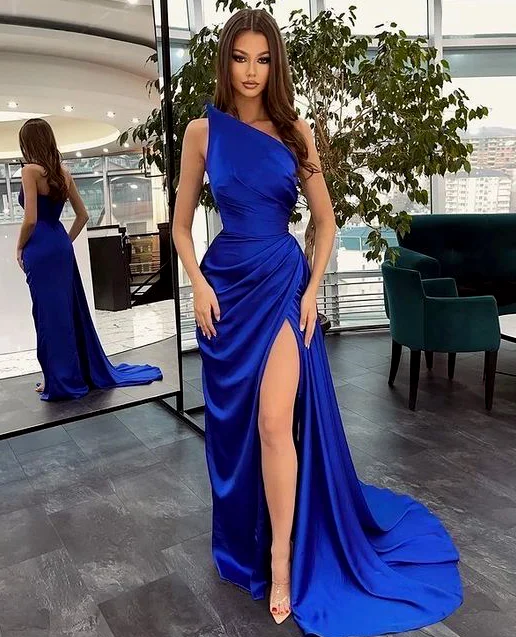
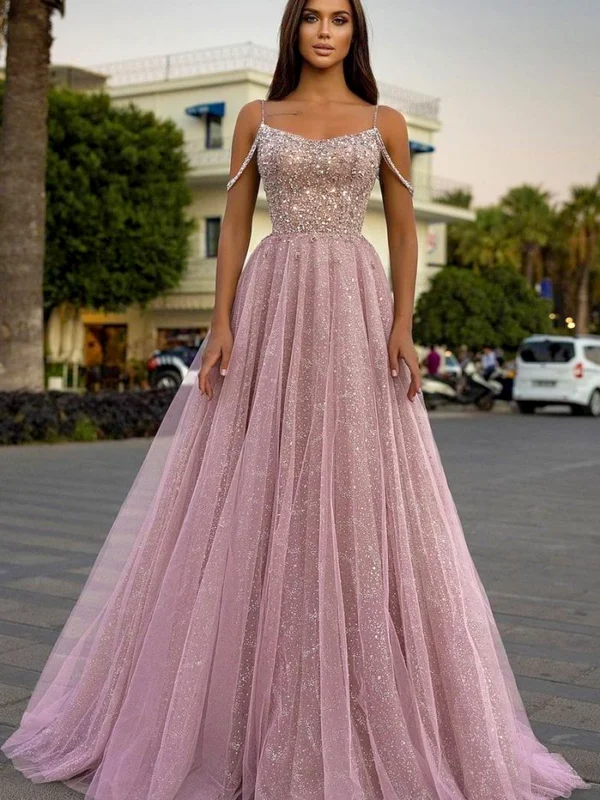
Five references show festive evening dresses through different upper lines and lower surfaces. The pale main front has a higher fine frame and short arm areas. A quieter white front places folds around a V-shaped middle; the blue dress has a diagonal shoulder edge. Two rose-to-lilac fronts add narrow straps and differently distributed reflections. The pictures establish neither a shared collection nor an event. Choose a concrete visible comparison before connecting the actual invitation with the offered outfit. Keep each angle attached to its own dress.
Guide to comparing these images
Compare upper edges and quiet surfaces
The white front and blue dress offer a clear comparison without dense upper drawing. White carries crossed folds from both sides into a V-shaped middle. Blue places an angled upper edge over one shoulder, continuing folds at waist and hip. Describe direction and position rather than deriving identical inner construction. The two photographs leave different upper-body areas bare. Your own fitting with planned underwear remains necessary for the actual model. A visible line does not answer that check in advance.
The main reference instead combines a higher fine-looking area with shaped inner front edge and short arm surfaces. Its pale reflective drawing is concentrated more strongly above. A quieter long area with larger vertical folds follows below the waist. The two rose fronts distribute smaller reflections differently over upper and lower surfaces. This is a visible distribution question, rather than a finding about metal, fibre or occasion. Ask about material and included pieces in each offer, rather than transferring another photograph’s description.
Notice face framing and additional views
The main reference, blue dress and wider rose front include the whole face with hair. The narrow-strapped decorated front and quieter white front are cropped above the mouth area. Do not compare hair and earrings across those missing areas. Ask for the favourite’s corresponding complete view. Similar colour cannot supply a missing head frame. Try your own accessories with the complete face and upper edge too.
The mirror beside the blue dress also shows its rear; it is not another dress in the sequence. A real all-round assessment still needs suitable corresponding views of the specific model. Other references supply only their own sides and front surfaces. Complete missing angles with the same shoes and freely falling cloth. This keeps upper line, lower edge and whole combination together without turning different pictures into one supposed model.