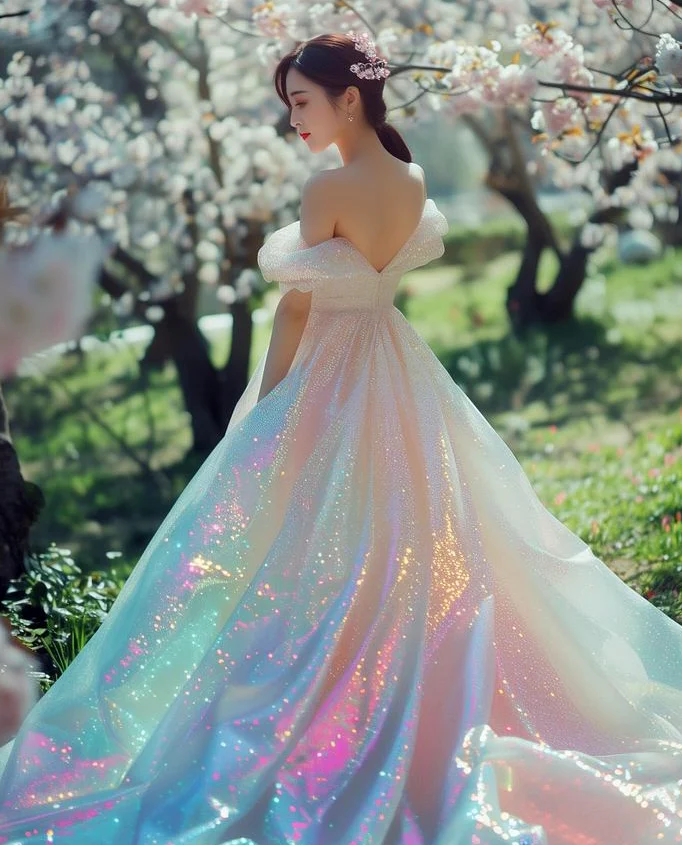
An off-shoulder wedding dress supplies a rear view without a visible veil here. The folded pale upper edge sits beside the arms and leads into a V-shaped back. A narrower waist appears below before the broader pale skirt begins. Coloured reflections spread through its folds. Hair is gathered lower, with a small flower-like ornament beside the head. The wearer turns in front of blossoming trees. The setting establishes neither a particular wedding date nor the garment’s fibre, and the outside lower skirt edge is not completely within the frame everywhere.
Compare this clear back line with the actual veil you are considering. Retain hair and dress initially, choosing whether the upper centre should remain definite or become finely overlapped. The small hair ornament can stay or be assessed as a separate addition. Have another veil position demonstrated rather than assuming every attachment can be freely changed. This picture primarily supplies a back counter-comparison, making clear which preferred area an extra veil would alter. The real pair of arrangements can establish the difference more usefully than adopting all the pictured hair styling unchanged.