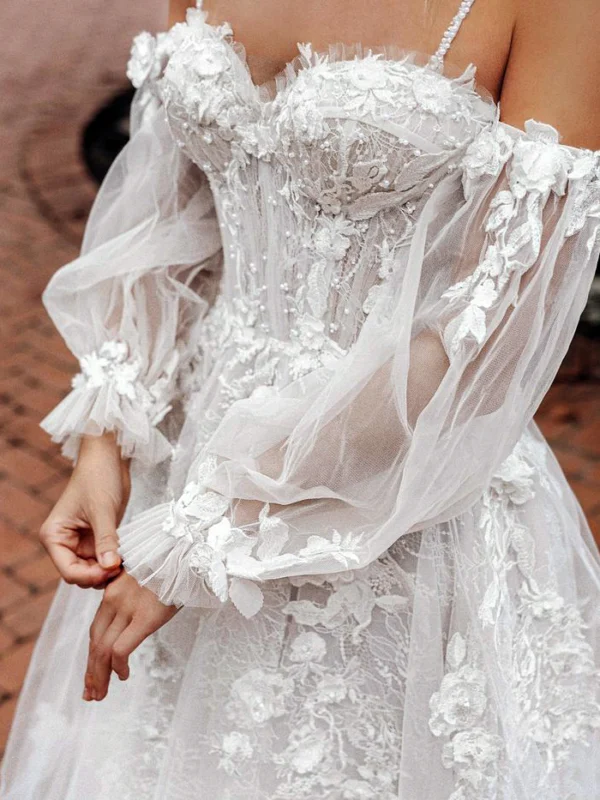
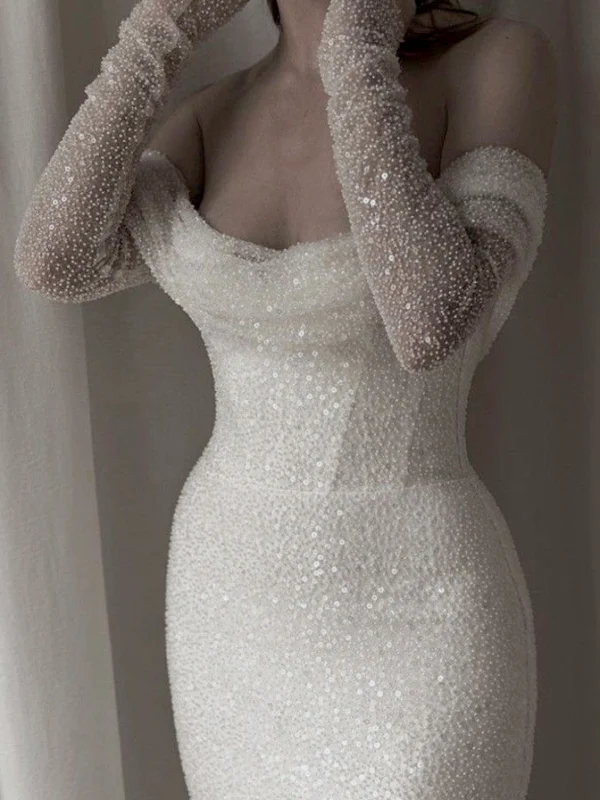
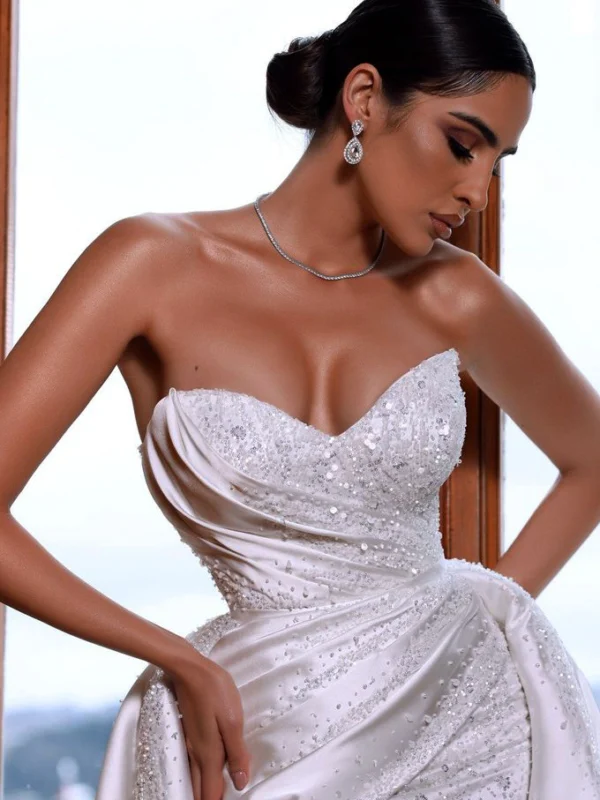
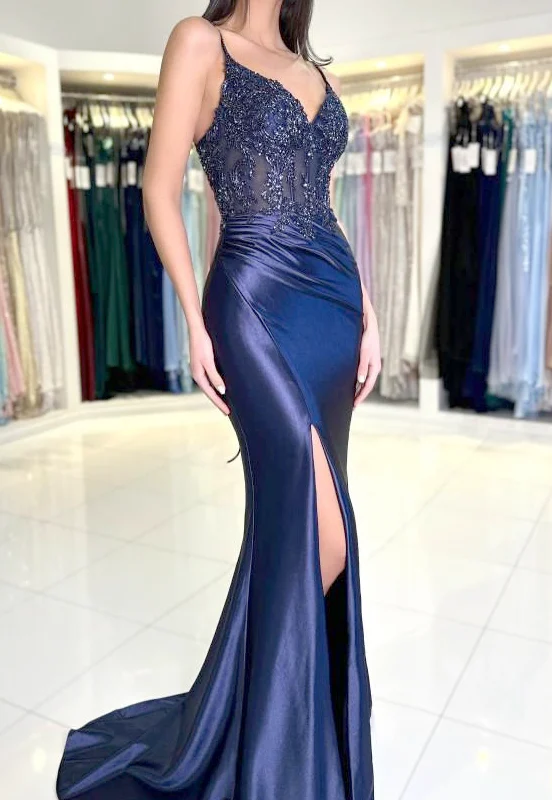
Bridal trim details can be compared at several visible locations here. The close floral view shows a fine row of pale rounded elements on the straps and further dots between flowers and sleeve surfaces. Another closer photograph distributes many small rounded details across body and long sleeves. The draped bodice places reflective points beside quieter folds.
Guide to comparing these images
Organise the distribution and crop before inspecting components
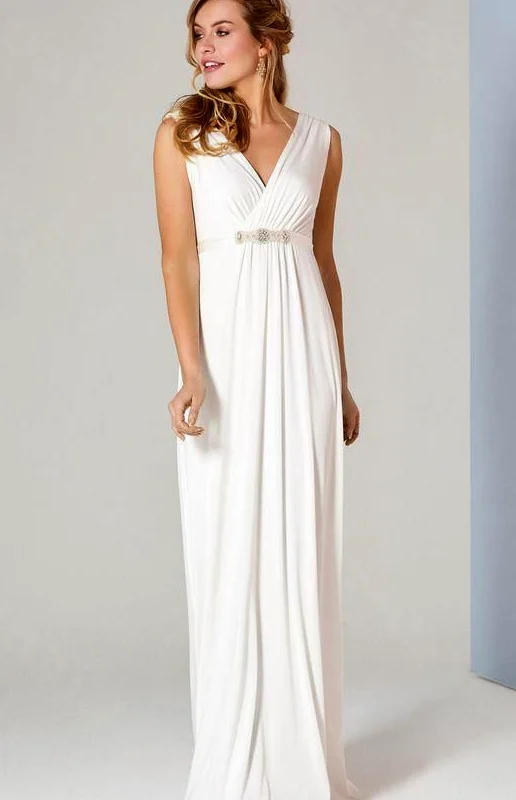
Two explicit comparisons limit the decorated surface differently. On the pale V dress, the accent sits on a narrow band below the bust. The navy dress has a more densely decorated bodice and a quieter draped skirt. None of these views identifies the individual components as real pearls or explains how they are attached.
Choose the location where you want the effect first. Then inspect component information, transitions and contact with jewellery or outer layers on the real offer. Ask specific questions about straps, sleeve ends and possible alterations. The selection prepares that inspection; it replaces neither a product description nor your own fitting with the actual pieces.
Place the close floral photograph beside the densely decorated long sleeves first. In one, a narrow strap row, flowers and individual points between them remain distinguishable. In the other, many small round elements create a more even pattern across arms and body. Note which distribution you enjoy before asking about individual components. A closer photograph does not necessarily show physically larger elements. Without a shared scale, the apparent size in each image cannot reliably rank the size of the trim. Request a close view together with a complete photograph of the actual candidate.
Next compare the narrow accent below the bust with the dark blue bodice. Both limit the more obvious decoration to a particular area, but create quite different boundaries with the quieter lower surface. The pale draped bodice adds another arrangement, with reflective points between broad folds. Follow the fold edge first and the points afterwards. This helps separate a preference for draping from a preference for individual round details. It does not identify their composition or attachment. Those remain questions for the supplier of the chosen garment, recorded separately from what is visible in the reference.