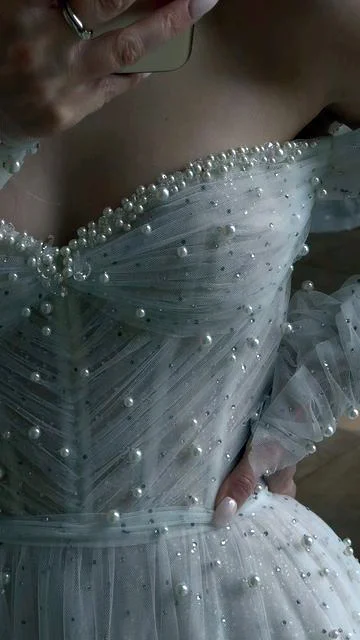
Diagonal bodice folds cross a pale sheer-looking surface in this close view. Small and larger round pale points are scattered between them, with a more pronounced row along the upper edge. A narrow pale strip marks the waist above another gathered area. One hand rests beside the skirt beginning, and part of a phone appears at the upper image boundary. The close mirror-like picture shows neither face nor complete hem. It supports fold direction and edge distribution rather than establishing a whole silhouette or the material of the round decorations.
Decide whether the diagonal route or clearer upper row matters more to you. Record those preferences separately and compare a quieter alternative on the actual dress. Test the edge with your real inner layers and desired neck area before adding jewellery. Let the waist sit naturally in another full view and inspect the lower transition. If you know only the close photograph, request front, side and hem information. The detail preference then becomes a verifiable choice instead of requiring you to imagine the rest of an unidentified garment.