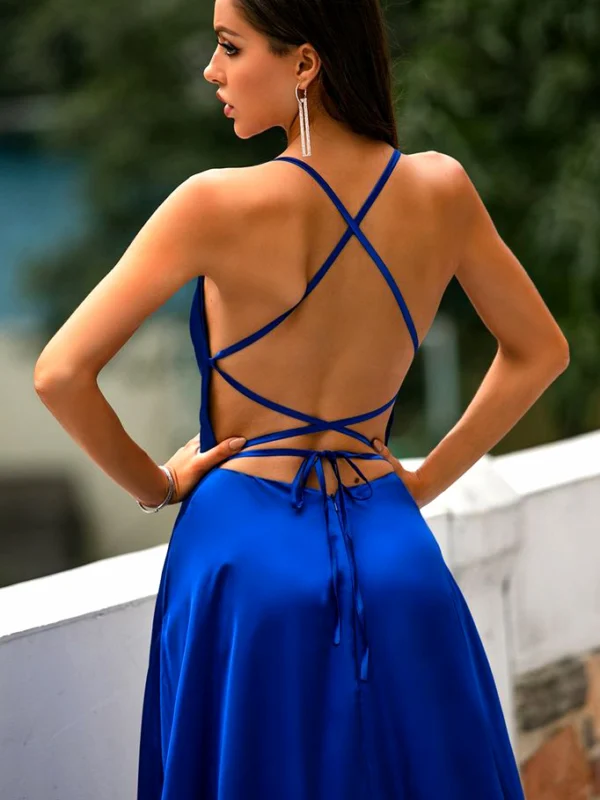
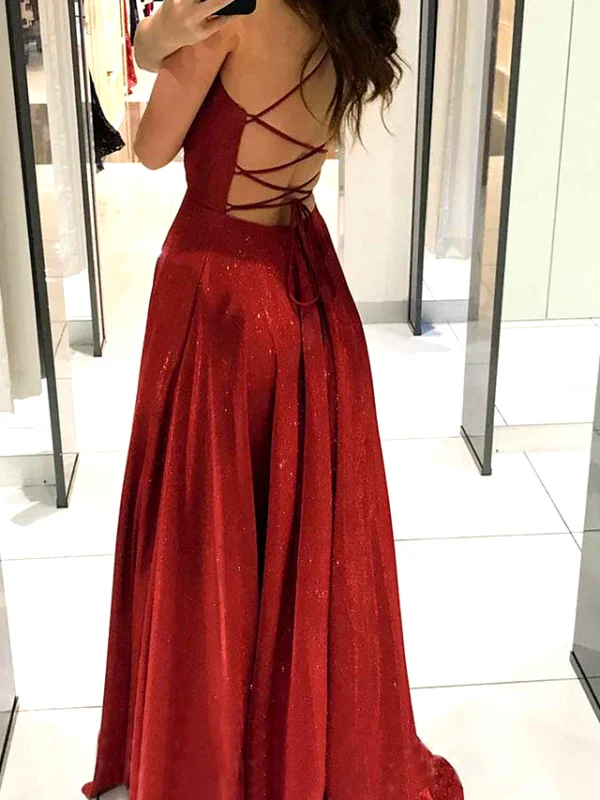
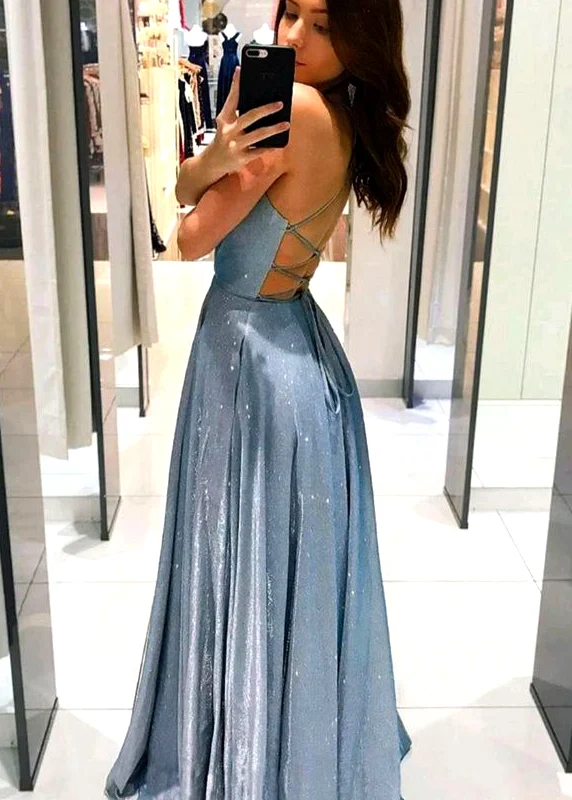
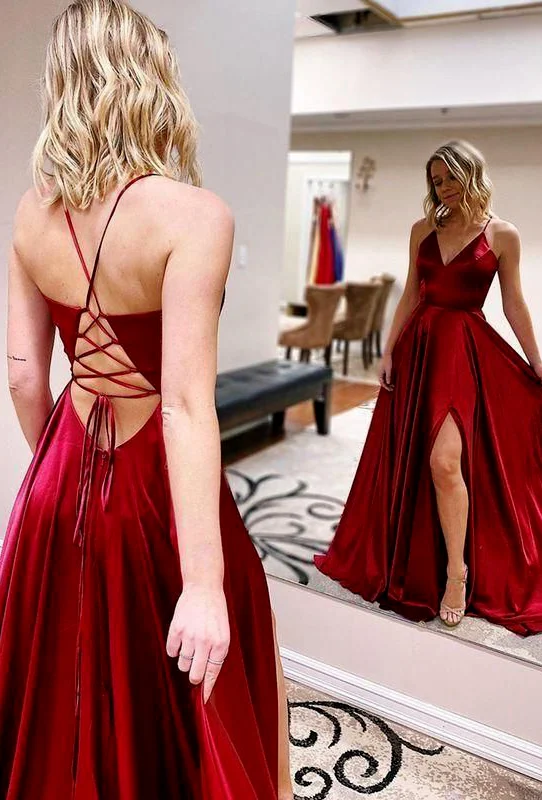
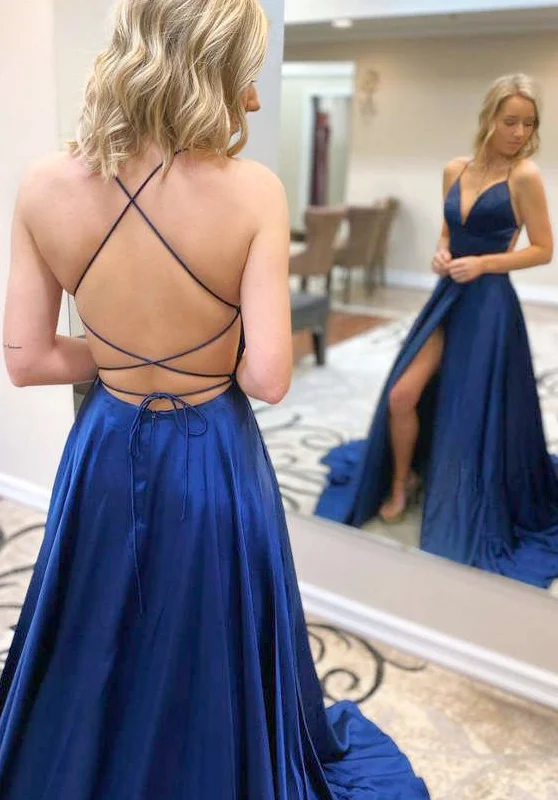
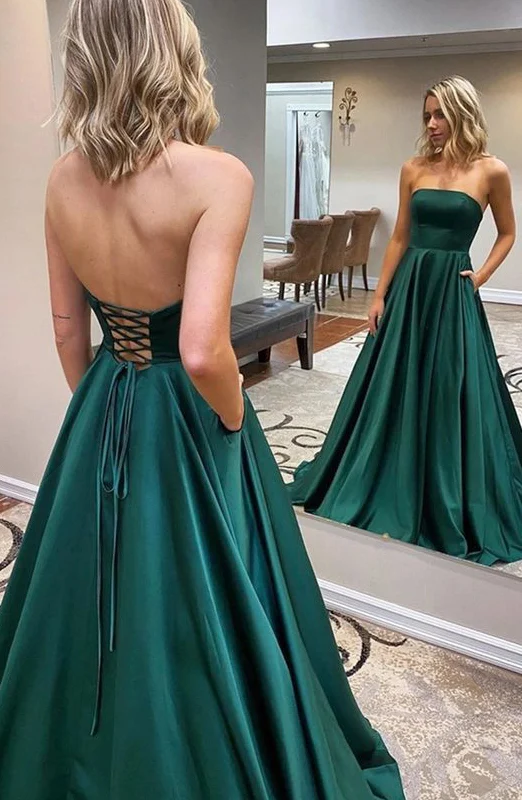
These six rear views compare open areas, fine crossings and low tie points. Some red and blue long dresses appear with a front reflection; the green reference adds a different upper outline. Use the images to compare visible lines. They establish neither identical models in different colours nor the internal construction or function of the ties. Each frame has its own limits.
Guide to comparing these images
Compare upper and lower lines separately
Start with the close blue rear view. A large fine cross sits above several smaller crossings, with tied ends hanging from the centre. The frame describes the back more clearly than the lower skirt. The red side view adds a long length of fabric close to the floor, but hair and the turned phone pose obscure some upper areas. The pale side reference also helps you read the direction of the bands while limiting the view of the complete lower finish.
Keep those limits in the comparison. Stronger reflection can make a thin line more conspicuous without explaining its material. Fabric held in a pose and a turned torso do not show how the bodice will sit on you in an ordinary stance. For an actual choice, request a straight view with relaxed arms and a clear look at both sides of the opening. Do not fill one photograph’s gaps with assumed information from a similarly coloured image.
Use mirror views to ask further questions
The red and blue mirror compositions show front V lines and leg openings alongside rear crossings. The green reference combines its lower laced area with a straighter front upper edge. Read the reflections as supplementary crops within each photograph. A small visible shoe does not replace a full view of your intended footwear or the complete hem.
Finish by recording two separate decisions: your preferred open back area and your preferred front. Then identify the views missing from the offered dress. The long skirt, hanging ends and upper outline need not be adopted as one inseparable package. Keep the image idea you can describe precisely, and ask for the real connection and operation of the parts to be demonstrated at the fitting.