A festive skirt gives you a concrete starting point when you do not want to choose an entirely new outfit for every celebration. The useful decisions concern its relationship with the top: where does the top end, how does it sit at the waist and which surface should lead the look? These three pale skirt pictures offer different approaches. A loose knit-textured top, a reflective camisole-style top and a sparkling cropped top with a light jacket each change the emphasis. Treat them as comparisons for existing pieces and purposeful additions rather than a fixed shopping list.
1. Make a festive skirt the shared base
Start with a skirt you own or can actually try. Describe its visible structure: does it have fine regular pleats, soft overlapping layers or a largely smooth fall? The first picture has a soft, lightly layered-looking lower surface, while the other two show narrower repeated folds more clearly. Compare those qualities before choosing top colours. A skirt carrying many fine lines places a different surface next to a top from a quieter shape with only loose folds. Establish which of those visual effects you want to work with first.
Then assemble three complete options around the same skirt. One might use a familiar plain top, another a softer knitted look and a third a more noticeable surface for a different event. The pictures help with selection, but a covered waist does not establish every detail of how the photographed sections are constructed or joined. For your own combinations, inspect the actual skirt and individual tops. Keeping one shared base makes it easier to see which addition creates a real change and which simply repeats a similar version of the first outfit.
2. Contrast knit texture with a soft skirt surface
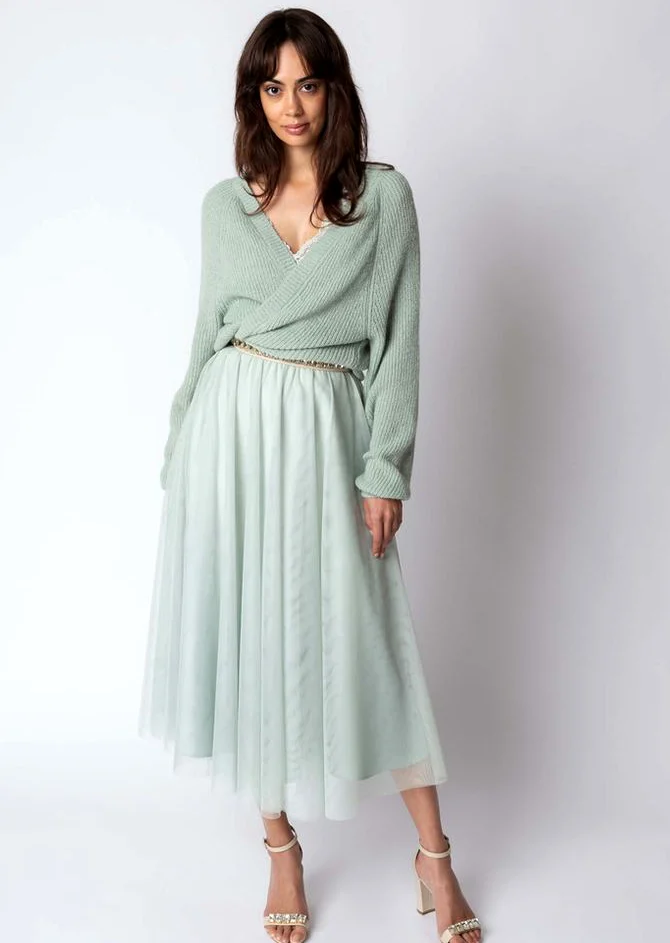
The first image places visible knit texture above a pale, softly falling lower section. A V-neck and diagonal upper line create direction, while loose sleeves add volume. A narrow reflective belt marks the boundary with the skirt. If that contrast appeals, begin by trying a skirt with knitwear you already own. Pay particular attention to the amount of fabric at the waist. An appealing surface is less useful to your selection if the intended finish can only be maintained by continually rearranging the top after ordinary movement.
Knitwear beside a festive skirt does not automatically decide whether an outfit is casual or formal. Judge the particular combination within the invitation’s setting. A finer, closer-fitting top creates a different outline from a loose design with wide sleeves. Photograph both without an additional jacket so the difference stays clear. Decide whether you prefer the softer upper shape or a smoother, quieter surface against the skirt. Only then move to jewellery and bag comparisons, keeping small additions from obscuring the main choice between the garments themselves.
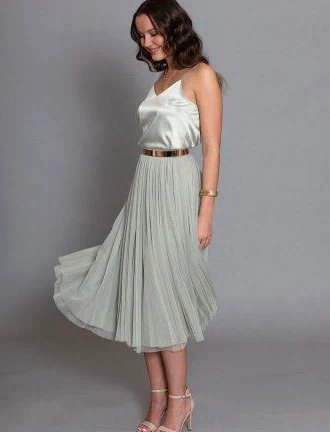
3. Shift the focus with a lustrous top
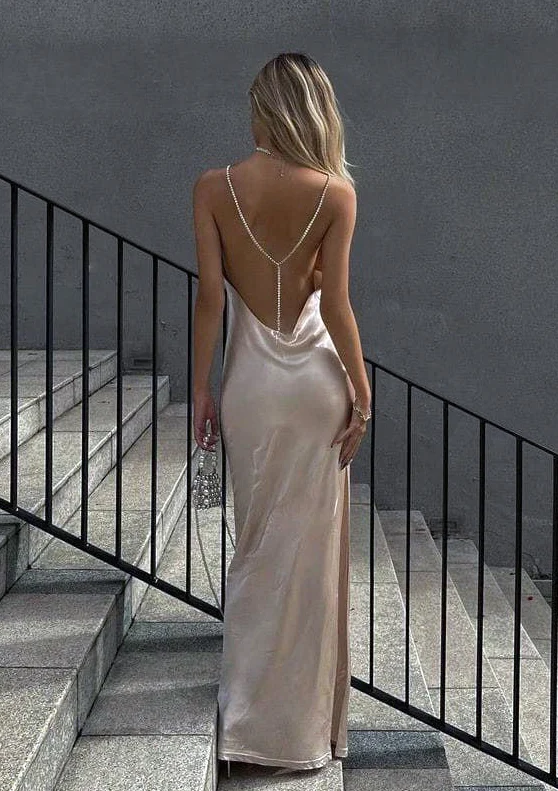
In the second image, a smooth reflective upper area meets many narrow skirt folds. Fine straps keep the shoulder line comparatively light, while a narrow belt defines the waist. Its difference from the knit example is therefore more than colour: the upper surface looks quieter and shinier, with the regular rhythm of folds remaining below. Compare a top like this on the same skirt as your first option. Look at the complete upper body rather than a tiny section of fabric in the mirror, and notice how the emphasis changes around the waist.
The actual top’s position at the waistband matters. Try the intended arrangement, sit down and raise your arms. Then decide whether the skirt’s top edge should remain visible, the top should lie over it or a tucked finish is preferable. Not every cut works equally well in all three positions. If alterations are considered, ask for an explanation on the worn outfit. That keeps a wish for a defined waist specific, rather than turning it into a general search for the shortest or tightest possible top regardless of how the pieces fit together.
4. Examine the waistband before adding another belt
A festive skirt does not necessarily need another line across the waist. All three images prompt a close look at the upper-to-lower transition, but a belt is only one possible solution. Begin with your actual skirt without an extra belt. Check the waistband while standing and sitting, together with the point where the top ends. Add the proposed belt afterwards and photograph both versions. This shows whether it creates a finish you want or simply divides the surface into several smaller sections. Keep the top unchanged so the comparison remains clear.
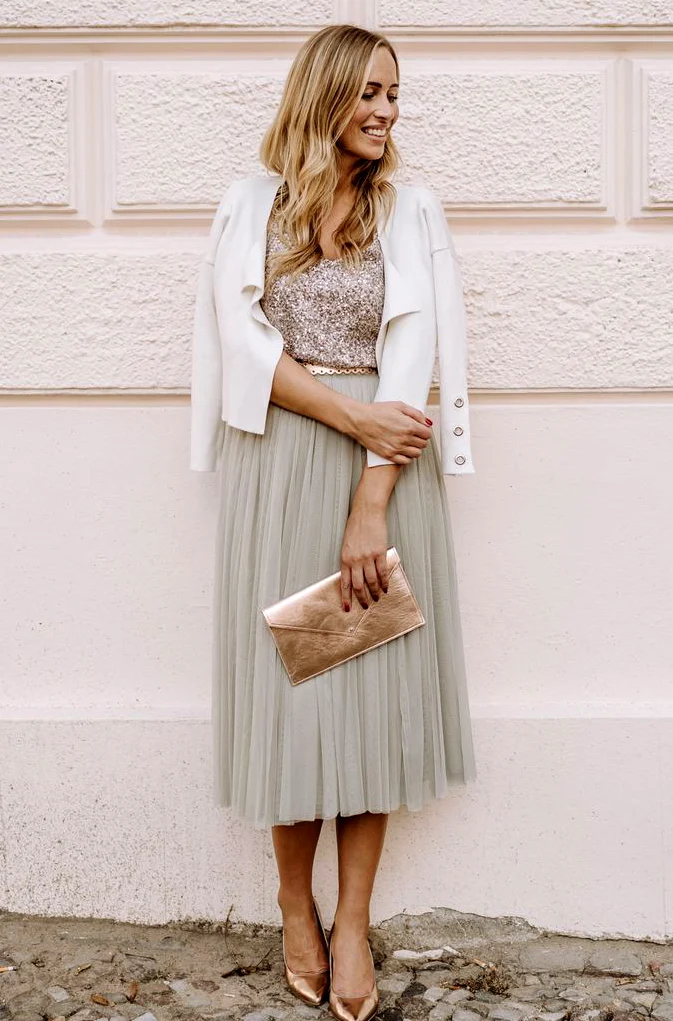
5. Test a short jacket as a third surface
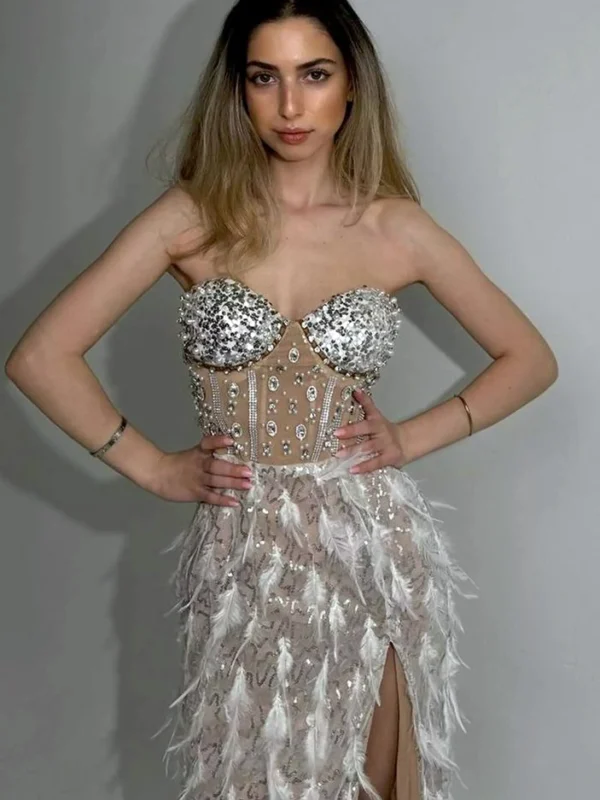
The third picture adds a light short jacket over a sparkling top. The skirt remains visible below, while the jacket edges create two more lines beside the torso. Here the jacket rests over the shoulders. Try your own version both that way and with the sleeves on if you intend to use both arrangements. Notice whether the jacket finishes at the waistband or extends beyond it. That actual length changes how much of the top and the beginning of the skirt folds remain visible in the complete combination you are building.
6. Choose repetition and contrast deliberately
The first two looks stay within a similar pale colour range; the third adds a light jacket and a metallic-looking bag. You can test those relationships with pieces you own without matching every pictured colour exactly. Lay the garments beside each other, then compare them worn. Similar tones can connect different surfaces, while a contrasting jacket makes its boundaries more obvious. The useful choice depends on whether the skirt, the top or the continuous area of colour should take priority. Decide that before adding smaller details around the outfit.
A bag should support that decision while holding the things you really need. Try it with the outfit alone, then alongside jewellery. The tiered party dress guide and ruffle comparison offer other surface references. Borrow one shape idea rather than replacing your own skirt with an entirely different garment. The aim remains a recognisable base with meaningfully different tops, rather than a row of nearly identical outfits in which only the small accessories have changed from one invitation to the next.
7. Record complete combinations you can wear again
Once a festive skirt works with several tops, record the finished versions in full. Note the waist arrangement, planned jacket and main accessories for each. Sit, reach and walk a few steps so the chosen finish still looks as intended after movement. A picture does not replace that test, but it can remind you of an already resolved combination before the next invitation. Repetition becomes a prepared option rather than a rushed experiment, and you can see clearly which tops you selected and what each adds to the shared base.
Read the care information for each actual garment separately. A skirt and top can carry different instructions even when their colours make them look like a matching set. The GINETEX care-symbol explanation helps interpret those labels; visible shine or fine folds do not provide a reliable shortcut. Choose the combinations you like as complete outfits and whose waist transition works without constant adjustment. A small, clearly assembled selection can serve several occasions without the photographs establishing any particular environmental outcome for the pieces you choose to wear.
A festive skirt can support different occasion outfits through changes in top texture, waist finish and the position of a jacket.
Frequently asked questions
Does a festive skirt always need a belt?
No. Check the actual waistband first, then decide whether a belt creates the finish you want or introduces unnecessary extra lines.
Can a knitted top work for an occasion?
That depends on the event and the complete outfit. Compare its shape and surface with a smoother top on the same skirt, using the invitation as your reference.
Does a shiny skirt surface identify its fibre?
No. Reflections describe a visible surface; composition and care information come from the actual garment details.