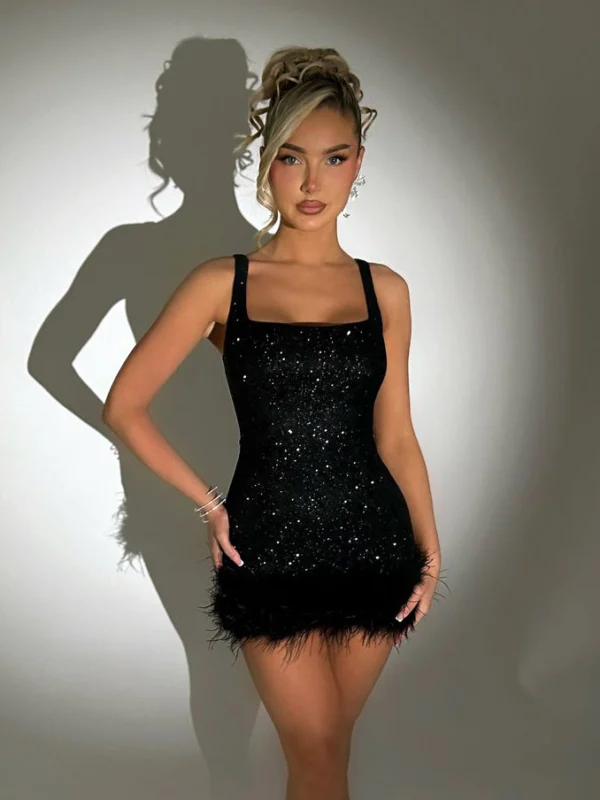
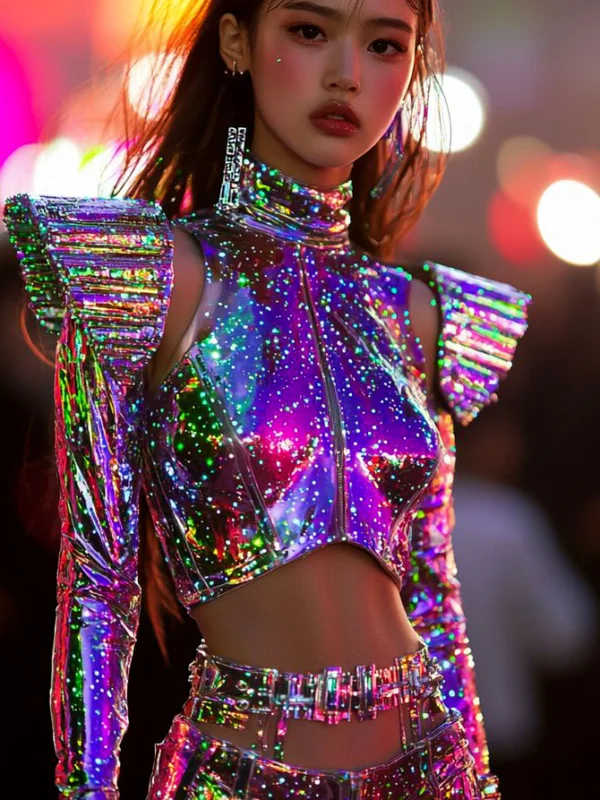
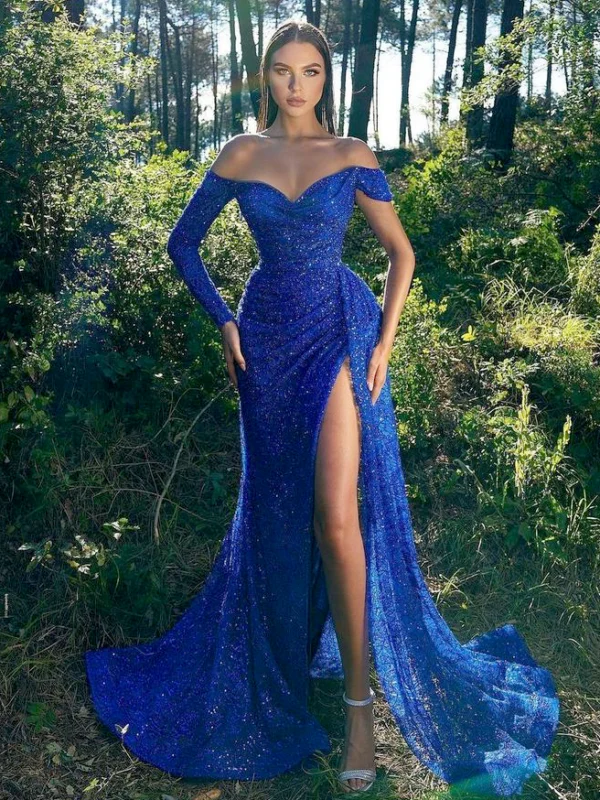
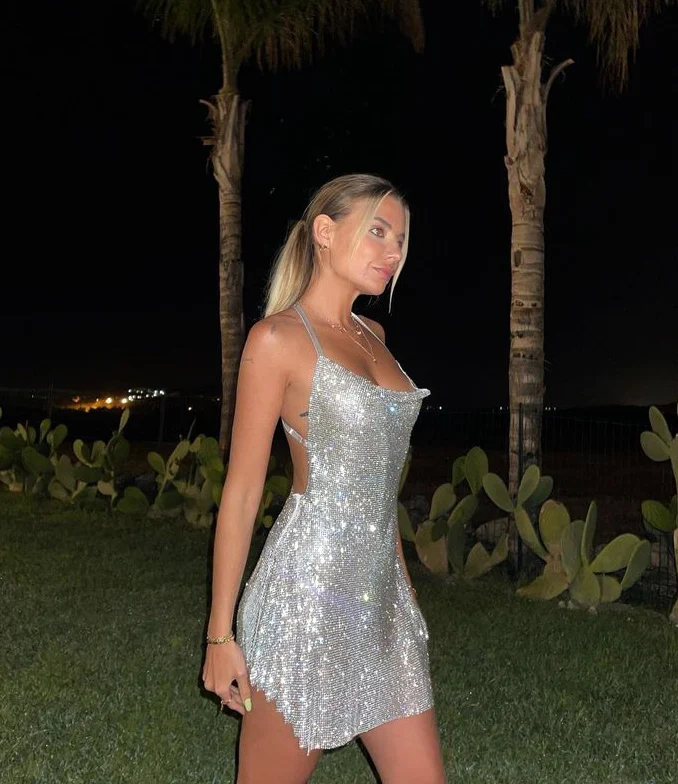
A draped-neck party dress places a shallow folded edge at the front of the outfit. The silver-looking mini reference combines that projecting edge with narrow upper lines and a low side view. Depth is only one decision. Also choose how broadly the fold should sit, where a necklace should end and how much side coverage you want. Four other short dresses provide practical comparisons through straighter, shaped and diagonal upper edges, without requiring you to copy their colours or decoration.
Choose the front fold of a draped-neck party dress
Look first between the upper attachment points and the lowest visible part of the fold. On the silver-looking example the front edge projects slightly, while the side angle reveals a more open section. Name what you like: the shallow centre fold, the fine upper lines or their relationship with the short skirt. You can then look for a different fold depth without automatically choosing every other feature of this particular reference.
As a separate terminology example, Jenny Yoo describes the Evelyn dress with a soft cowl neckline and draped off-shoulder sleeves. Front draping and shoulder arrangement can therefore be named separately; this does not identify the brands of our photographs. Describe the fold you want on the actual garment when shopping. For the dark counterexample’s additional waist openings, the cut-out evening dress guide extends the comparison below the neckline.
Separate neckline depth from side coverage
Try the garment without an additional necklace first. Look from the front and from a slight side angle. A central fold you enjoy may come with a side height you would prefer to change. Ask for both views in a relaxed stance. Then move your arms as you would when putting on a jacket or greeting someone. Check the actual neckline position again rather than judging only your first carefully arranged pose in front of the mirror.
Sit down and carefully lean forward next. Decide which neckline position you personally want in those situations. If you need another solution, discuss the actual construction and possible alterations with the shop. A strap adjustment or additional inner layer is not a feature established by a photograph. Have any offered option demonstrated on the real model before finalising underwear and jewellery. That lets you assess the intended neckline and the available garment together.
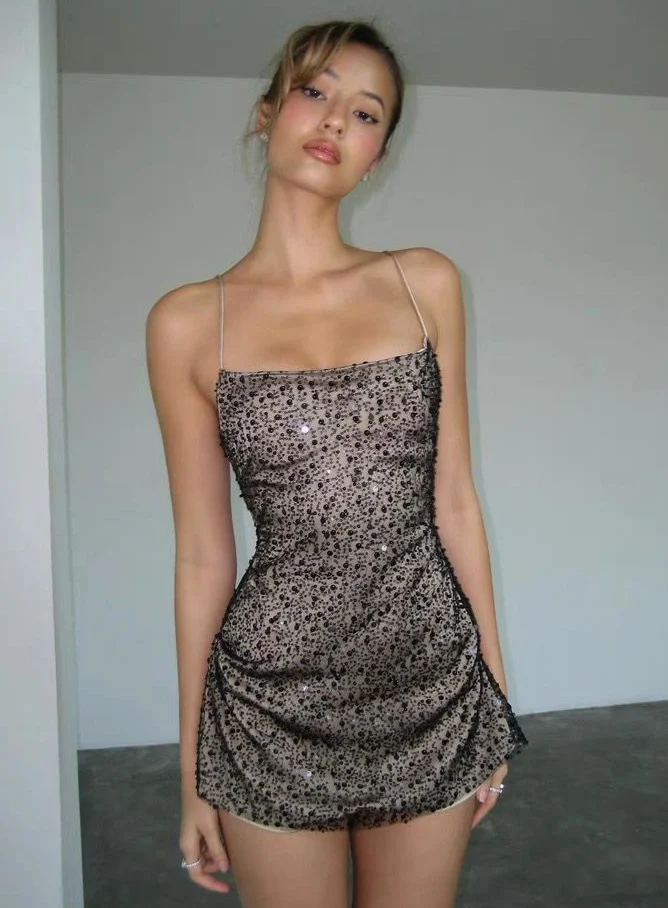
Compare a straighter fine-strap neckline
The taupe-grey mini has a much straighter upper edge between its fine straps. Small dark decorations cover the front, while gathers at the side alter the skirt line. Compare that clearer upper boundary with the shallow fold of the silver-looking dress. Would you rather have extra fabric movement near your neck or a quieter edge below a necklace? You can make that choice independently of the colour and the small pattern across the surface.
Keep your intended shoes and hair arrangement consistent during this comparison. Otherwise the new jewellery or colour combination may be what you prefer. The guide to a shimmering party dress explores the distribution of reflected light in more detail. Here the front neckline remains the main decision. Once chosen, compare a quieter surface with many small decorations or a more reflective overall appearance, rather than treating neckline and shine as a single inseparable feature.
Use shaped and diagonal edges as alternatives
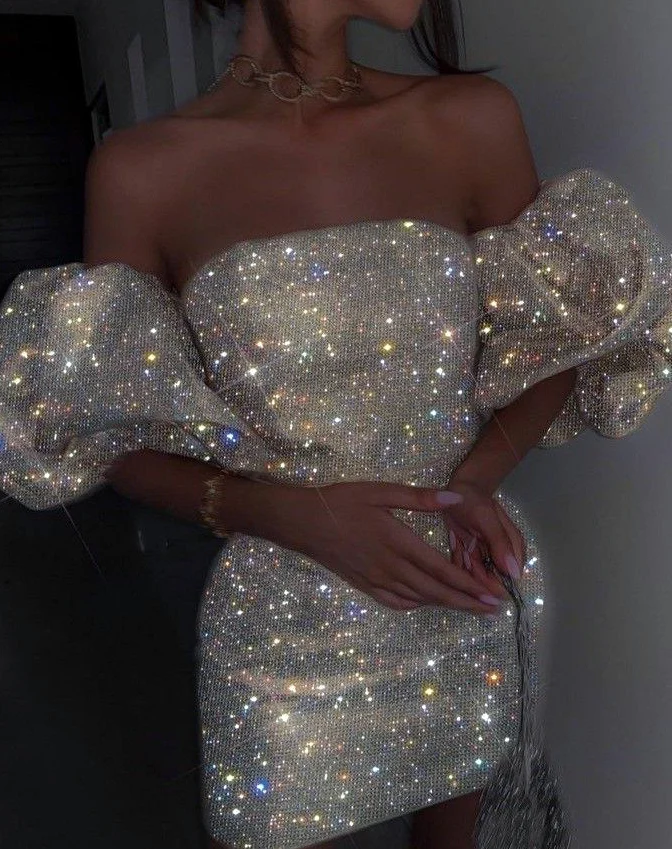
The pale dress with large dropped upper-arm volumes offers a shaped upper edge in place of a shallow front fold. The pink reference has a diagonal edge followed by a pale border. These are more useful distinctions than simply ranking the dresses as restrained or dramatic. Decide whether you want shoulder volume, a sloping line or folded fabric at the front to lead the mini-dress outfit. Then consider the amount of sleeve or strap detail around that choice.
The dark strapless example adds a straighter upper edge and two angled waist openings. Its exposed waist is another choice, rather than a necessary continuation of an open neckline. Compare the neck area first and the coverage below it afterwards. You may prefer a closed waist on your draped-neck party dress. The references help separate those features so that liking one upper edge does not require accepting the whole pictured arrangement.
Try your necklace and jacket around the drape
Several fine necklace lines are visible on the silver-looking reference. For your outfit, compare one necklace with none. Notice where a pendant ends: above the fold, against it or below it. Move carefully in each version and assess whether you enjoy the resulting position. The guide to jewellery with a statement dress offers further ways to choose an accent around the areas the garment already emphasises.
Put on the actual outer layer afterwards. A lapel or closed jacket front may cover part of the drape. Decide whether you intend to keep the jacket on indoors or use it only for the journey, then compare both relevant states. Try the bag on its planned side too. You can see whether its strap sits against an upper dress line and where your hand passes the front fold when taking the bag off.
Complete the short dress outfit for the evening
Finally compare skirt edge, underwear and shoes as one worn outfit. The references range from angled and gathered short hems to feather-like edging. Assess your preferred length while seated as well as standing; these cropped views do not provide complete footwear comparisons. Photograph your actual preferred outfit from the front and side in a relaxed stance. The neckline decision should then rest on comparable views, rather than one unusually favourable pose that you would not normally maintain.
A draped-neck party dress also needs real product information for composition and care. Read its available label with the GINETEX care symbols rather than deriving a washing method from shine. Keep the dress and jacket instructions separately. When front fold, side height, necklace and short skirt work together on the same worn outfit, you have a specific choice for the evening and can discuss any remaining alteration request before ordering.
Choose a draped-neck party dress through the shallow front fold first. Test straps, side coverage and necklace placement on the actual garment in normal positions.
Frequently asked questions
Does my necklace have to sit inside the neckline fold?
No. Compare a shorter necklace above the fold with a longer option. Decide on the worn dress whether you want the two pieces to touch or remain visually separate.
Can shorter straps change the neckline depth?
Ask the shop to demonstrate that option on the actual model. A strap alteration may also change side height and fit, so assess the intended front edge at the same time.
Which outer layer should I try over a folded front neckline?
Try your actual jacket both open and closed. Compare how the fold and visible straps sit in each state, then choose around how you intend to wear the jacket.
What comparison helps if I am uncertain about the front drape?
Try a similarly short dress with a straighter upper edge. Keep shoes and jewellery reasonably consistent so that you are judging the neckline difference.