Before you buy a vintage wedding dress, start with the actual offer. Do you want a documented older garment, or mainly a nostalgic design? These six photographs suggest sleeves, back lines, patterns and skirt shapes. They do not establish a production date or the confirmed condition of an older item for sale. Your visual preference can still be useful: it helps you describe what the real dress should offer. You can then assess its history, measurements and possible work separately, keeping the search connected to something you intend to wear.
Ask about provenance before you buy a vintage wedding dress
Ask what is actually known about the item. Is there a receipt, an older photograph of that same dress, a traceable account of ownership or only an estimated date? Request a distinction between these kinds of information. A seller’s description may answer an initial question without automatically providing independent evidence. Record the basis for the date and the parts of the history that remain unknown. There is no need to fill those gaps with a period that comes to mind when you see a neckline or sleeve.
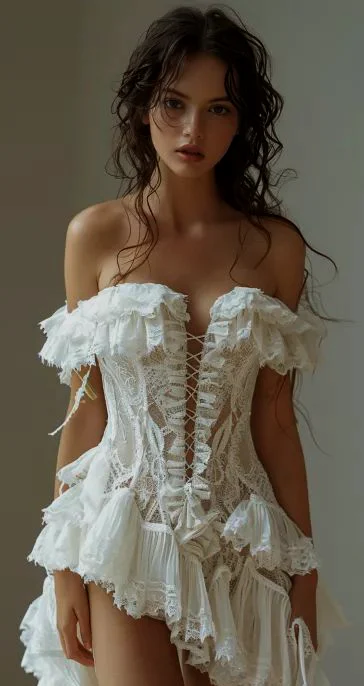
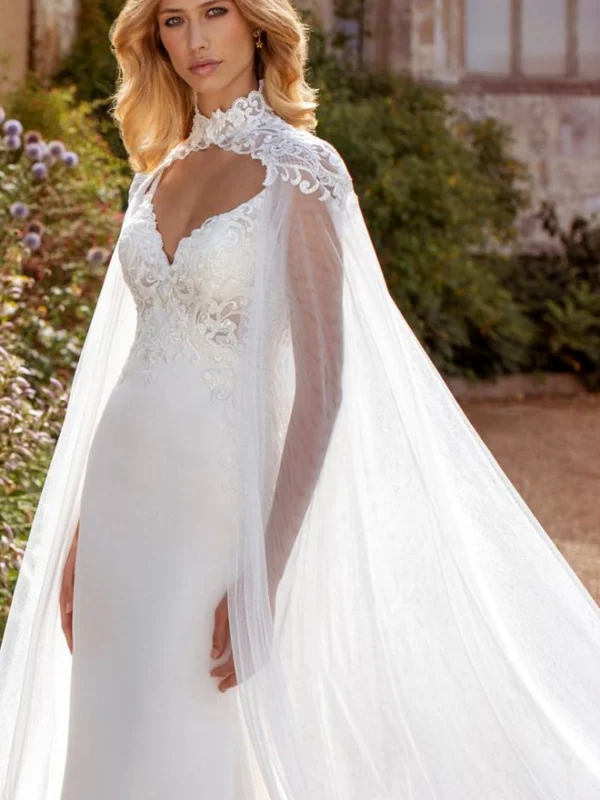
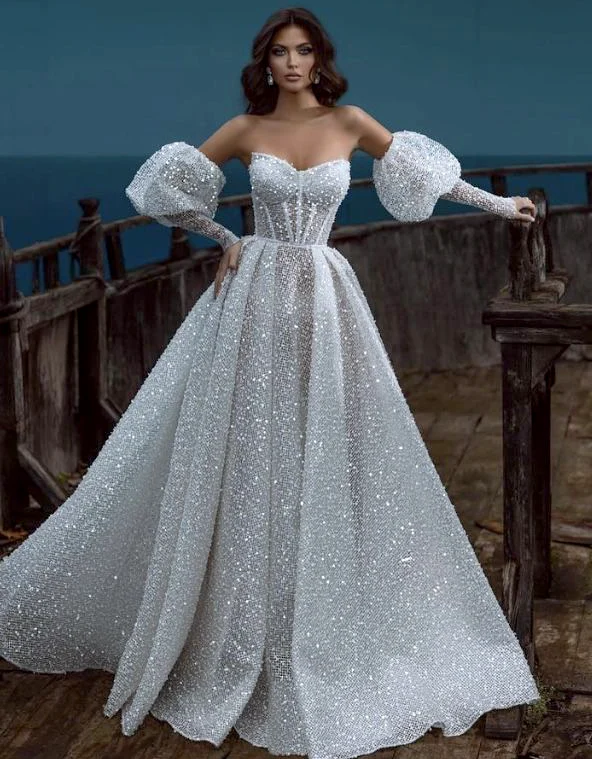
The reference with ruffles and trailing side ribbons, for example, can express a design preference. Those shapes cannot date the garment. Neither the longer sleeves nor the close lower-flaring silhouettes in other images establish their age. If an older original matters to you, resolve the provenance question before committing to that particular offer. If the forms are what you really want, a newer dress with similar design remains an honest alternative. Make that distinction explicit before comparing garments grouped under the same broad shopping term.
Request views of the complete garment and its condition
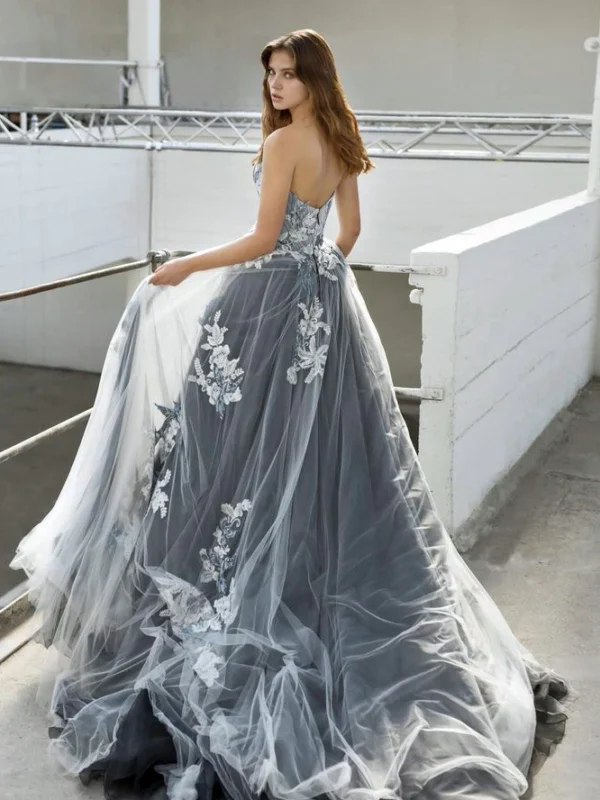
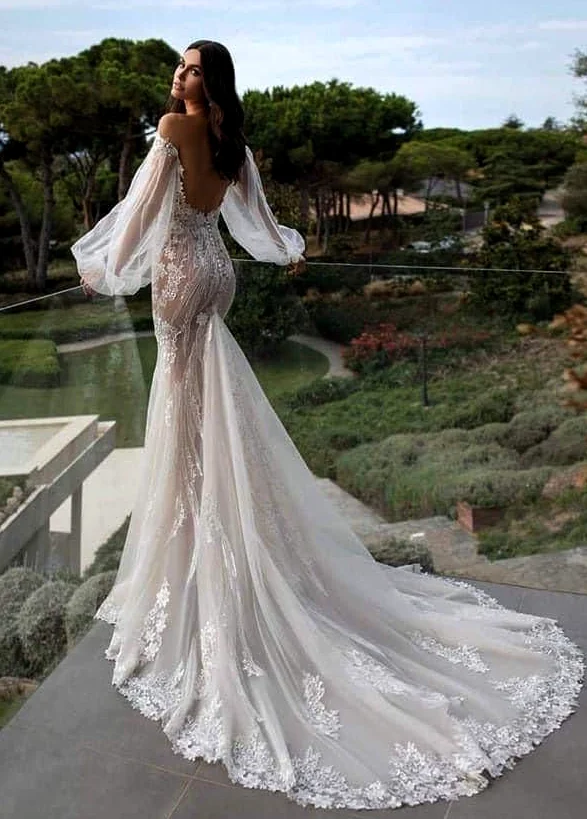
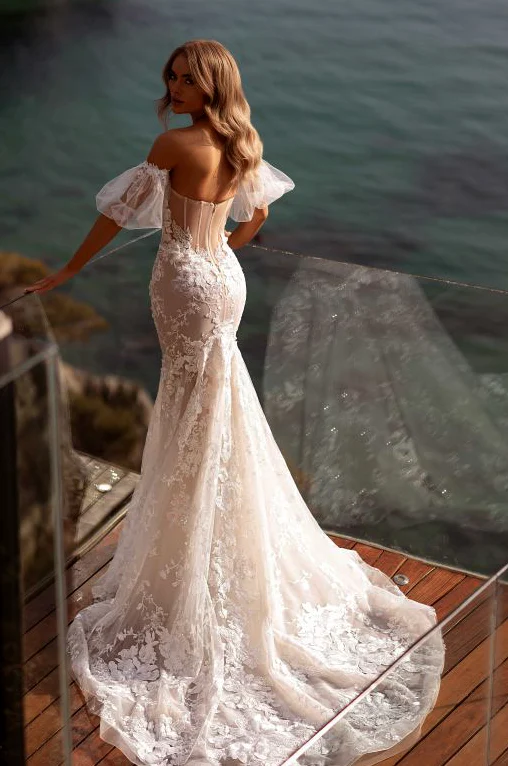
Ask for current full front, rear and side views, together with closer images of relevant areas. Include the lower edge, sleeve ends, fastenings and places hidden in an overall photograph. Ask about known changes, marks, open seams or repairs rather than inferring them from these style references. A rear view with a spread floral border, for instance, explains how motifs occupy the visible area. It does not show the underside of an actual dress for sale or establish that every decorated section is complete and intact.
The Canadian Conservation Institute treats condition and fragility as important foundations when dealing with textiles. The narrow buying lesson here is to clarify actual condition before assuming wear or work is appropriate. This is not a treatment method. Have unresolved concerns assessed on the specific garment by a suitable professional. Discuss the scope and responsibility for any proposed cleaning or repair. A pale or apparently smooth photographic surface cannot supply that assessment or tell you which treatment the piece can tolerate.
Compare current measurements rather than the size label alone
Ask how the garment was measured and where each measurement was taken. Compare its present dimensions with your fitting requirements rather than relying on a label number. Establish bust, waist, the hip measurement relevant to its shape, and length. Sleeved options also need useful sleeve-length and movement information. The closer long references show why a single upper-body measurement cannot settle the whole comparison. A broader lower area may sit below a considerably narrower section, and the apparent amount of skirt does not answer every fit question.
Discuss intended shoes and accompanying garments for an actual fitting. Look at ordinary posture and the skirt’s normal fall before anyone spreads it for a photograph. With a remote offer, obtain understandable measurements and clarify what happens next if they do not suit your needs. The general guide to buying a wedding dress adds ways to organise the search. This decision also requires the dimensions of the particular older item as it exists today, including changes already made to it.
Separate previous alterations from the work you now need
Ask which earlier alterations are known. Has the length changed, has a sleeve been adjusted, or has a section been replaced? Unknown information can remain unknown. Request an assessment from the person who would undertake any new work on this specific dress. Do not infer spare material from a visible seam or fold. A photograph showing generous fullness below does not confirm available room elsewhere. Keep the existing garment and the proposed result distinct until the practical relationship between them has been examined.
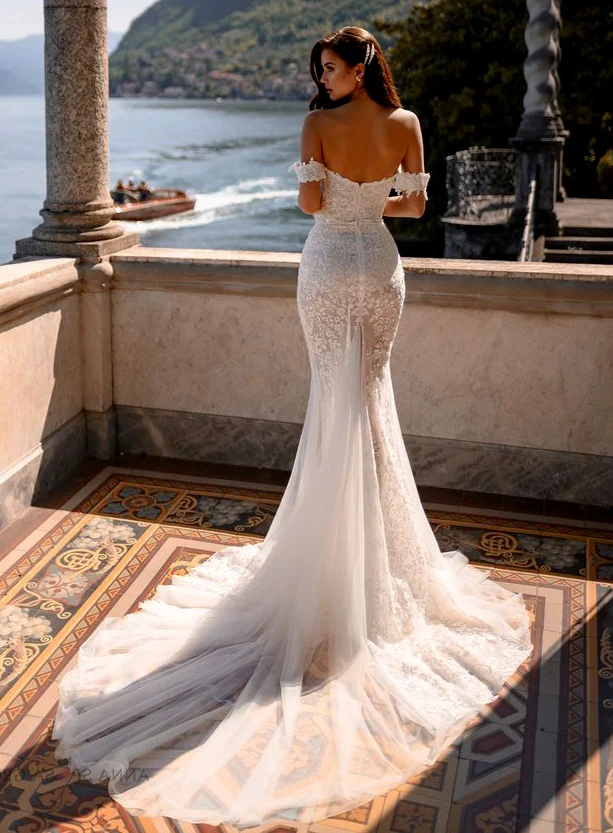
The reference with ruffles at the upper body and hips offers a useful design example. Their placement might matter to you and would need discussion if an alteration affected it. In the longer rear views, length changes could also affect the visible patterned finish. Discuss the desired result together with the details it would touch. Ask about feasibility and workload before purchasing. A low asking price does not establish whether the required work can be accepted within your intended schedule, or whether your preferred result is available on that item.
Assess the real dress through the movements you want to make
If the item is suitable for a fitting, begin without copying a photographic pose. Sit, stand and bring your hands forwards as appropriate and agreed for the specific garment. The longer loose sleeve shapes raise different questions from a sleeveless upper edge. Where would the cuff finish at your hand, and how would the sleeve sit beside your planned bouquet? A neutral view with arms relaxed offers a useful beginning. The answer needs to come from the actual garment rather than the apparent ease of a photographed arrangement.
Examine front, sides and back together. These images show different dresses and must not be treated as matching views of one model. You may like a low back while wanting a different front coverage. In that case, request a real candidate that combines both preferences. The guide to reusing a wedding dress explores further routes involving an existing garment. It cannot decide condition or suitability for this particular offer, but may help you compare that purchase with another practical way of finding your dress.
If form matters more than age, the retro bridal look guide develops the search for visible lines. Choose a specific upper edge or sleeve idea without assuming a historical origin for the new offer. Request the actual garment’s corresponding complete views afterwards.
Decide with the offer, required work and alternatives together
Put unresolved points into a short request: basis for provenance, current measurements, complete condition views and known work. Add the visual feature you most want, such as a rounded back, loose sleeves or a curved patterned border. That allows the response to address the relevant garment precisely. Then establish which work would actually be agreed, who would undertake it and the schedule they give. Describe the desired outcome on the specific piece rather than leaving it as a general promise to make everything fit.
Finally decide whether you want this older original with its documented properties. If provenance or condition remains too uncertain for you, continue looking or choose a newer design with similar lines. That preserves your style preference while separating it from the origin claim. Keep one or two concrete shapes from the references for your next enquiry rather than requesting a whole assumed period. A clear purchase decision connects what can be established about the offered garment with the particular features you actually intend to wear.
For an older bridal garment, check documented provenance, complete condition views, current measurements and known alterations. The photographs are style references rather than evidence of age.
Frequently asked questions
Do ruffles or long sleeves establish a dress’s age?
No. They can express a style preference but cannot date the garment. Ask what supports the age description of the actual item.
Which pictures should I request for a remote offer?
Current full front, rear and side views, plus closer views of relevant edges, fastenings and discussed areas. Request understandable current measurements as well.
Can a visible seam establish sufficient alteration allowance?
No. The person responsible for the work needs to assess construction and available allowance on the specific garment.
What if I mainly want the nostalgic design?
You can choose a newer dress with the desired visible lines. Describe those forms directly without claiming an older origin.