Tuxedo or suit is first a question about the actual invitation. Two outfits can look equally dark in photographs while being assembled in quite different ways. Here, two black combinations with bow ties and shiny-looking lapels sit alongside a dark shirt-and-long-tie outfit and a navy suit with a pale blue shirt. Use those differences to prepare a clear fitting brief: what is expected, what do you want to wear, and which real pieces do you still need to complete it?
Choose tuxedo or suit from the invitation
Record the exact wording before looking for individual pieces. In its British dress-code guidance, Debretts distinguishes Black Tie with a dinner jacket and black bow tie from Lounge Suit with a shirt and tie. This is a useful reference when those terms actually appear on an invitation. Where the wording is translated, personal or simply says festive, ask the organisers which combination they want. Avoid turning one vague word into a detailed rule that nobody has confirmed.
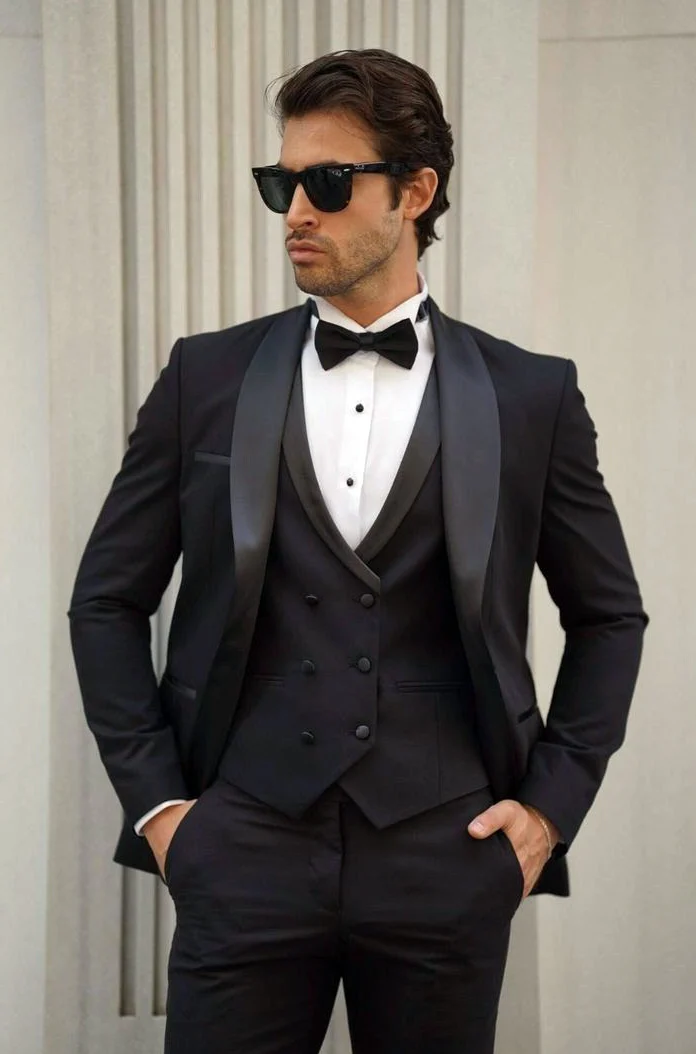
Turn that answer into a practical list: jacket, trousers, shirt and intended neckwear. An upper-body photograph cannot complete the list by itself. Both black bow-tie pictures stop before the footwear, and neither provides a clear trouser hem or rear jacket view. Request full-length views of the actual candidate. This keeps you from choosing an attractive collar arrangement and discovering later that you still need an entire lower half to make the outfit work for the invitation.
Separate shiny lapels from an otherwise dark surface
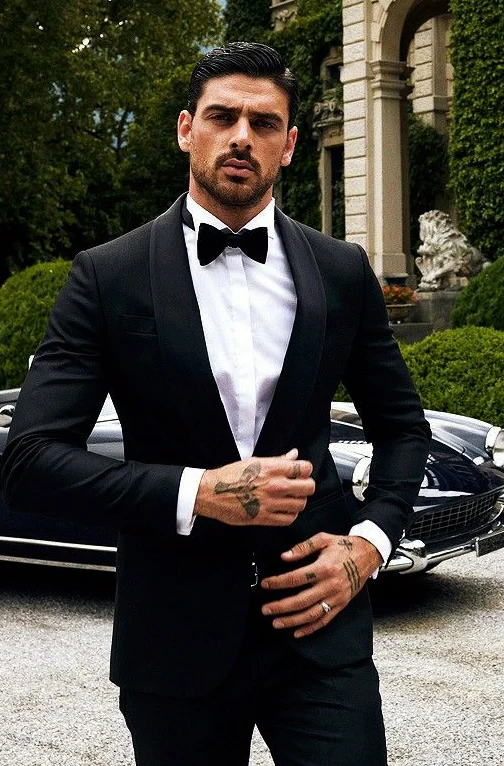
In the first reference, broad shiny-looking lapels frame the white shirt. A black double-breasted waistcoat sits underneath, with the bow tie making a short dark finish immediately below the face. The second reference also has a bow tie and shiny lapel edging, but leaves a larger uninterrupted white centre. There is no clearly visible waistcoat. Compare the width of that light centre and the extra button arrangement, rather than treating the shared black colour as the whole decision.
The seated black comparison works differently: its shirt and long tie remain dark and close in tone. Separation comes mainly through edges, buttons and the small tie pattern. When deciding between a tuxedo and a suit, this picture helps you describe your taste, but cannot confirm an event’s requirements. For another occasion where a dark shirt-and-suit combination is suitable, the dark suit guide develops the choice between a contrasting centre and a more continuous dark upper surface.
Fit the shirt and neckwear as one framed area
Try two shirts under the same jacket and photograph them in comparable light. Look first at the opening between the lapels, then at the collar beside the bow tie or knot. A pale shirt creates a clear centre; a dark shirt continues the surrounding surface. Neither effect automatically suits every invitation. Your choice needs to meet the confirmed request while giving you the picture you actually like, without requiring you to adjust the collar every time you look in the mirror.
Wear the real neckwear and close the shirt as intended. Turn your head, look down and speak a few sentences. Then ask someone to look from the front: does the bow tie stay within the frame you wanted, does the knot disappear between the collar points, or does it become an unexpectedly large focus? In the navy example, the blue tie connects the pale shirt to the darker jacket. That softer colour bridge offers a different route from the first two pictures’ strong black-and-white framing.
Judge a waistcoat with its actual surrounding layers
The black double-breasted waistcoat in the first photograph covers much of the lower shirt area. Its sloping edges and two button columns create an additional centre below the bow tie. Try this kind of layer with the intended jacket, rather than judging the waistcoat alone in a mirror. Check how much shirt remains visible between the dark frames. Look from several steps away as well: small details that you enjoy close up may merge into a much busier upper area at a distance.
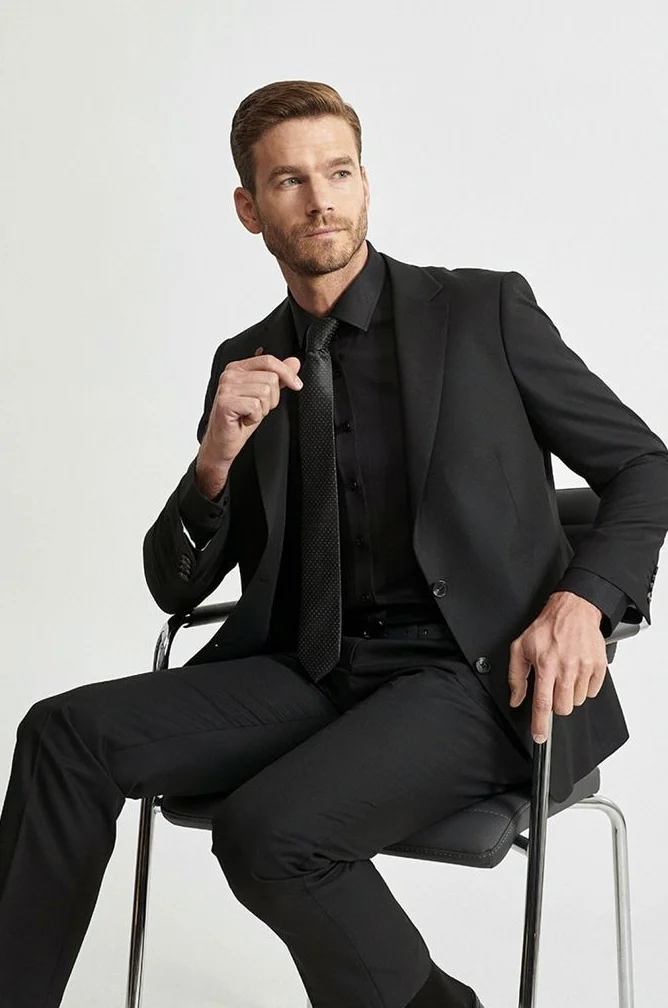
Sit down, stand again and let your hands relax. The dark-shirt photograph is useful for considering a seated view, but it does not show a waistcoat that you can simply add in your imagination. Any new layer needs its own fitting. The two-piece suit guide helps with the basic decision about whether jacket and trousers are enough or another layer serves your purpose. Choose from the complete outfit you have tested, rather than an assumed rule about how many pieces make it finished.
Complete the upper impression with trousers and shoes
Only the full-length navy reference clearly shows a trouser finish and dark lace-up shoes. Dark socks remain visible between the hem and footwear, and the fabric does not pool broadly over the shoes. This is a specific length reference, rather than one required measurement for everyone. Put your own candidate beside it with the actual shoes you intend to wear. Compare the transition standing and walking, and take a side view so the heel and rear hem do not disappear behind the front photograph.
When comparing a tuxedo and a suit as complete alternatives, write down the missing lower-half information for each. The black crops do not document footwear or side-trouser details adequately. Ask for these views of the real tuxedo instead of assuming an ordinary black bottom will automatically complete it. On an existing suit, a different hem length may change the whole impression. Set alterations only after the real trousers, intended shoes and your comfortable standing position have been checked together, followed by a short walking comparison.
Save the final choice as a complete combination
Finish with a full front, side and seated photograph. Wear the same shirt, neckwear and shoes that you plan to use. Remove just one extra detail at a time, such as a pocket square, prominent watch or additional layer. You can then see whether a clear frame is enough or a personal accent is missing. The sunglasses in the first image belong to that photograph; you do not need to copy them to understand the front arrangement or borrow its proportions for your own outfit.
Record one complete decision together with outstanding adjustments. The choice between a tuxedo and a suit becomes a concrete wardrobe task in which the invitation and your taste can agree. Keep the pieces list with the pictures and resolve care questions on the real garments. GINETEX explains care symbols; use the actual label. Before cleaning or pressing, obtain the information for separately chosen shirts and waistcoats too. A shared dark colour does not establish that every component should receive the same treatment.
Choose between a tuxedo and a suit using the confirmed invitation. Then compare the shirt front, neckwear, waistcoat and complete trouser-to-shoe transition on the actual outfit.
Frequently asked questions
Does a black shirt establish a Black Tie outfit?
A dark shirt alone does not establish a Black Tie combination. Confirm the invitation and check the complete intended outfit.
What does a waistcoat change under a jacket?
It reduces the visible shirt front and adds another inner edge. Compare the same outfit with and without the actual waistcoat.
Why does the fitting need a full-length picture?
The black upper-body crops do not show footwear or the full trouser finish. Complete that information on the real candidate.