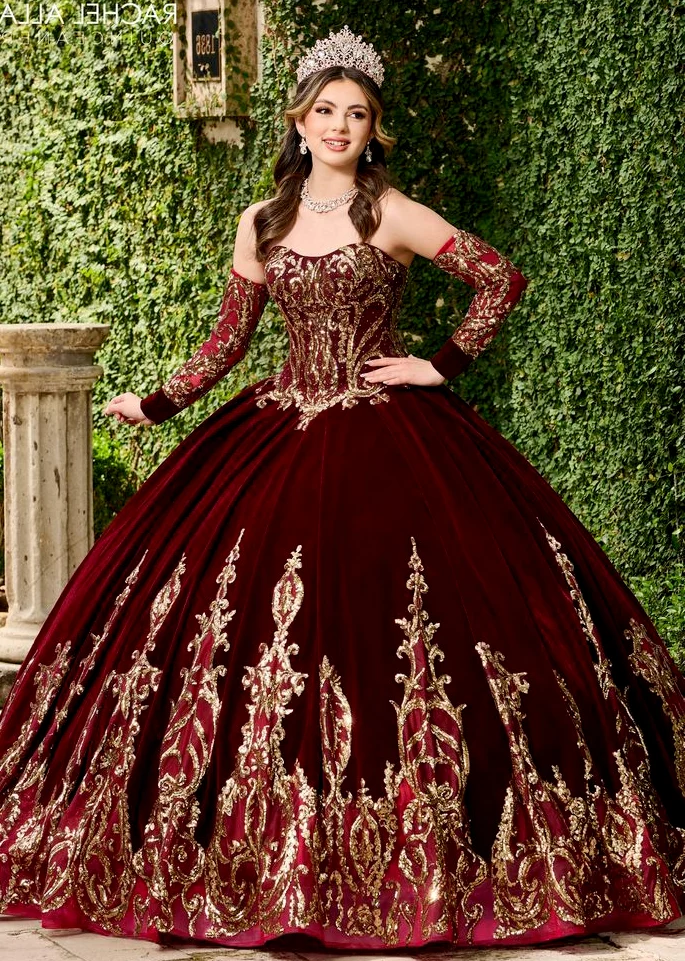
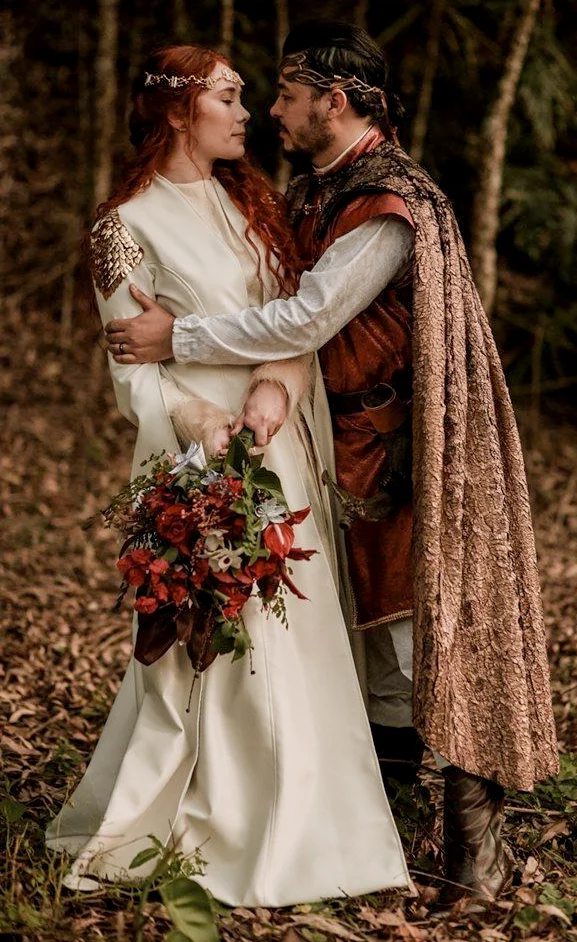
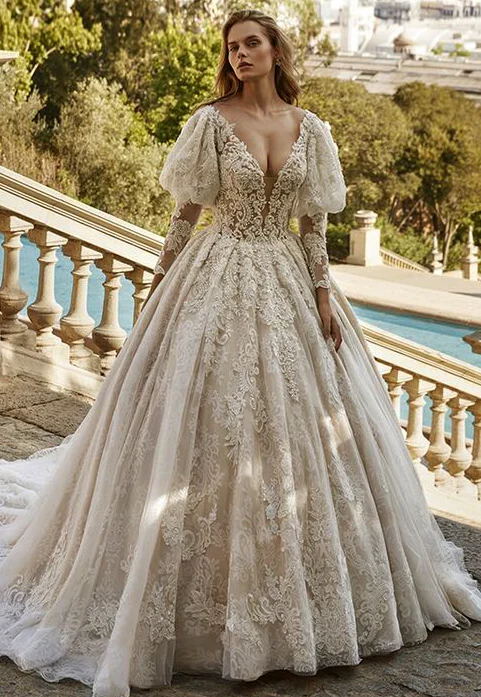
A medieval-inspired wedding dress can be planned as a present-day themed outfit by choosing visible elements deliberately. These four photographs offer quite different directions: a full dark red dress with pale decoration and tall headwear, a narrower pale outfit beside a partner wearing a cape-like layer, a wide pale dress with large upper sleeves, and a quieter long shape with a central motif. None establishes historical authenticity or a particular provenance. The more useful decision concerns which shape, detail and amount of themed decoration you actually want to wear.
Make a medieval-inspired wedding dress your own design task
Begin with a short sentence describing the intended result. Perhaps you want long sleeves and a central motif but no crown. Perhaps a full skirt and dark base colour should lead. Or perhaps the relationship between two coordinated outfits matters most. These descriptions are more concrete than a period label alone. They also help when comparing modern offers whose names may gather very different ideas under the same themed heading. Decide which two elements are essential before looking for further additions.
Separate this styling aim from historical reconstruction. Recreating a specific time and region accurately would require additional documented sources and specialist advice. The photographs considered here do not provide that evidence. For a personal contemporary wedding outfit, however, you can openly work with a freely chosen inspiration. Judge each candidate through visible properties and an actual fitting. An unverified story about fabric, construction or cultural belonging need not replace practical comparison, and an evocative product name need not become evidence for a historical claim.
Choose between a dark field and a pale base
The dark red example distributes pale branching shapes across bodice, sleeves and large areas of the full skirt. The darker base remains clearly visible between them. On the wide pale dress, the brightness of motif and base is closer, creating a different relationship between silhouette and dense surface drawing. Decide whether colour contrast itself should be a main feature. A strong difference between background and decoration can direct attention towards the motifs even from several steps away.
For a quieter themed direction, try a pale base with less obvious contrast. That does not automatically mean less decoration: the wide pale reference still has many shapes and a large skirt. Compare colour and pattern density separately. Put a quiet candidate beside a more strongly drawn alternative and keep headwear and bag unchanged. You can then see whether you want more ornament or a clearer silhouette. These questions can be answered independently before additional accessories are purchased or several appealing ideas become one crowded selection.
Compare upper sleeve volume with long outer lines
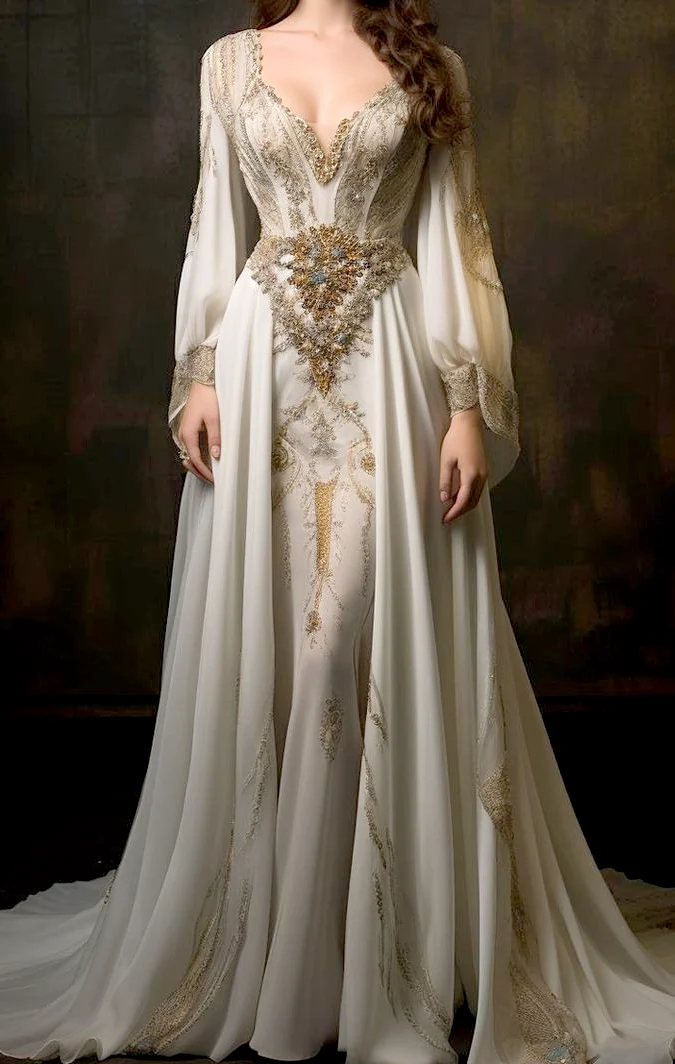
The wide pale reference shows large upper sleeve areas with closer-looking sections at the forearms. The centrally decorated dress instead has longer falling outer lines beside the arms and decorated finishes. Both bring the theme to the sides of the body, but in different ways. One creates volume near the shoulders; the other leads the eye downwards. Choose that direction first instead of searching only for a long sleeve. Afterwards, compare how the intended hairstyle and headwear relate to the chosen upper volume.
On the actual candidate, move your arms forwards, reach for a glass and hold the intended bouquet or bag. Observe where the outer line sits during those movements. If you want the sleeves to lead, begin with small earrings and leave additional bracelets out. Our boho wedding dress guide adds whole-outfit questions, while the bridalwear category helps compare other silhouettes without assuming a fixed historical classification. Use the questions that support your own intended shape.
Choose a central motif or distributed decoration
The quieter pale dress places a large pale and gold-coloured-looking decorated area centrally below the waist. The drawing continues downwards from there, creating a clearly central order. On the dark red example, shapes instead spread across many broad surfaces and the sleeves also carry substantial drawing. Ask which distribution you would like to see across the complete outfit: a strong middle with quieter sides, or repeated motifs around the silhouette. A close view of a beautiful motif cannot answer its overall placement by itself.
Add jewellery individually afterwards. A central dress motif may already emphasise the same area as a long pendant. Try a shorter necklace, small earrings or no additional neck jewellery first. If a larger arrangement appeals, view it from several steps away. The pale shapes do not confirm genuine gemstones, handwork or a particular technique. Their position is enough for the initial styling decision. Clarify actual product details and attachments separately on the garment being offered rather than turning visible ornament into an unsupported material description.
Set a deliberate limit for headwear and partner coordination
The dark red example includes tall pale headwear and additional neck decoration. The couple’s photograph instead shows narrower twig-like forms at the heads; the partner adds a long outer layer and a darker upper combination. Use these differences to consider how far you want the theme to extend. A tall crown changes the outline more strongly than a narrow band. Compare both in turn with the same dress, and include a version without headwear. The preferred arrangement can be quieter than either pictured example.
Coordinating with a partner does not require repeating every detail. One person can pick up a colour or visible line while cut and decoration remain different. Decide together which connection matters: a recurring warm shade, a long outer layer or similarly restrained head decoration. View the outfits side by side. The couple’s photograph offers an idea for that relationship, but no reliable statement about location, ceremony, cultural tradition or the garments’ origins. Build your own plan through the visible choices you both enjoy.
Check the theme through the actual sequence of wear
Wear the important pieces together and test walking, sitting and the intended hand movements. Look at the outfit with and without a bouquet. A full skirt, falling side panels and headwear each change different areas; they need not all be equally prominent. Keep the two original leading elements visible and remove an addition if it displaces the intended effect. The themed outfit can then remain a deliberate personal design rather than a collection of every available motif associated with its name.
Read the care instructions on each real piece as well. The GINETEX explanation of care symbols supports interpreting the labels; historical inspiration or a velvet-like appearance cannot determine treatment. Discuss alterations and unresolved product questions directly on the garment. Your final choice then combines a specific contemporary silhouette, a few clear thematic signs and a tested arrangement whose effect you have seen yourself, giving you a more useful reference than an era label alone.
Create a themed outfit through selected present-day design elements. The photographs do not establish historical dating or provenance.
Frequently asked questions
Are the photographed dresses historically authentic?
The photographs cannot establish that. They are used here as present-day design ideas rather than evidence of a particular period or provenance.
Does the themed outfit need a crown?
No. Headwear is a separate choice. View the combination without it first, then add one piece if you want that emphasis.
How can I make the outfit feel less like a costume?
Choose only one or two strong elements, such as long sleeves and a central motif, and keep other pieces quieter. Check your preferred effect in the complete outfit.