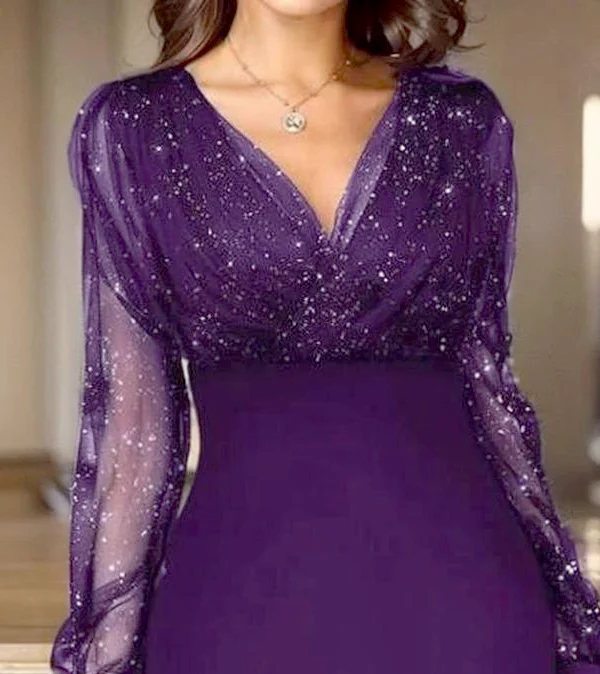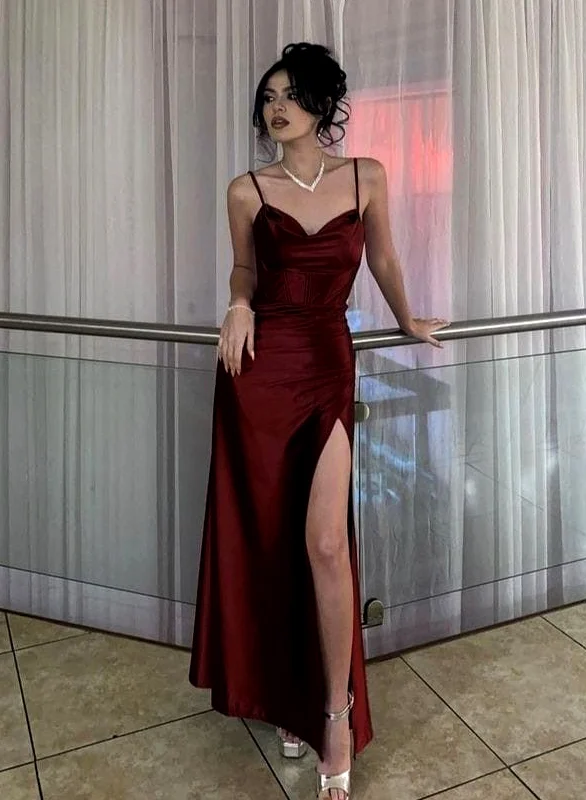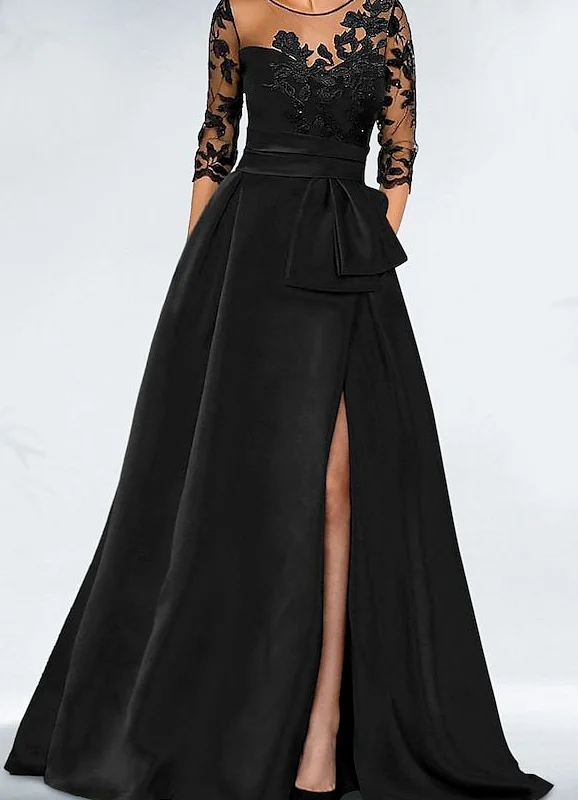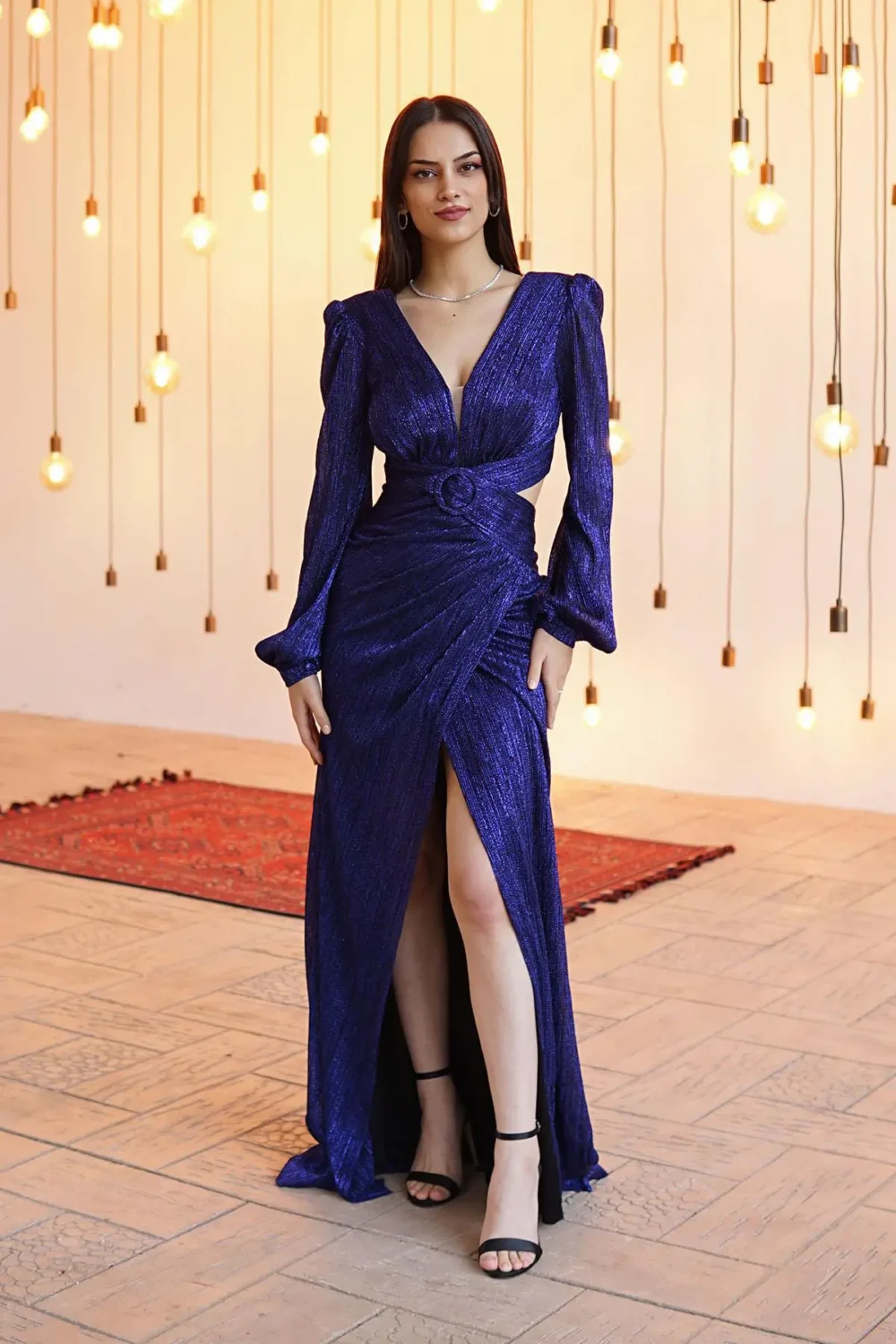
Jewellery with a statement dress is easiest to choose through open and already occupied areas. These four references offer concrete differences: a pink dress with dense sparkle and large short sleeves, a blue dress with a V-neck and round waist accent, a dark silhouette with a strongly textured lower section, and a green dress with asymmetric pale decoration. The useful question is not how much jewellery is universally allowed. It is which area you would like to emphasise next, and how that addition appears across the complete outfit.
Choose jewellery with a statement dress by area
Look at the garment without an additional bag or jewellery first. Identify the area that registers immediately. On the pink example, both the surface and broad short sleeves are prominent. On the blue dress, the deep neckline and round waist detail draw attention together. The dark alternative changes its surface particularly strongly below. The green example places a pale decorated area on one side of the upper edge. These different distributions give you different starting points for the next addition rather than requiring a single accessory formula.

Choose just one additional area first. If you want to frame the face, try earrings with the intended hairstyle. If the open neckline needs another line for your preference, compare a necklace. To emphasise the hands, hold a small bag in front of the body and then beside the hip. Assess each attempt from the same distance. You can then see which change helps, instead of making the decision depend simultaneously on new shoes, another hairstyle and several pieces of jewellery.
Give dense sparkle and large sleeves a quiet companion
The pink dress has many small reflective points across its narrow silhouette. Its short side sleeves add larger rounded areas. A first trial with small earrings and no large necklace can be useful here. The open neck area remains visible while the garment supplies the decoration. This does not exclude a larger necklace. Compare it deliberately as another focal point rather than treating it as an automatic requirement for an evening outfit. Use the same hairstyle so that the relationship remains easy to assess.
For the bag, test two different approaches. A compact quiet surface offers a counterpart to the many small bright points. A similarly sparkling bag continues that structure. Hold both approximately where you would actually carry them. The same object can look different directly in front of the decorated bodice and beside the skirt. Also check whether the handle is comfortable while sitting and whether you can reach the bag easily with the intended sleeve shape. A convincing standing combination should also answer your ordinary movements.
Read the V-neck and waist accent together
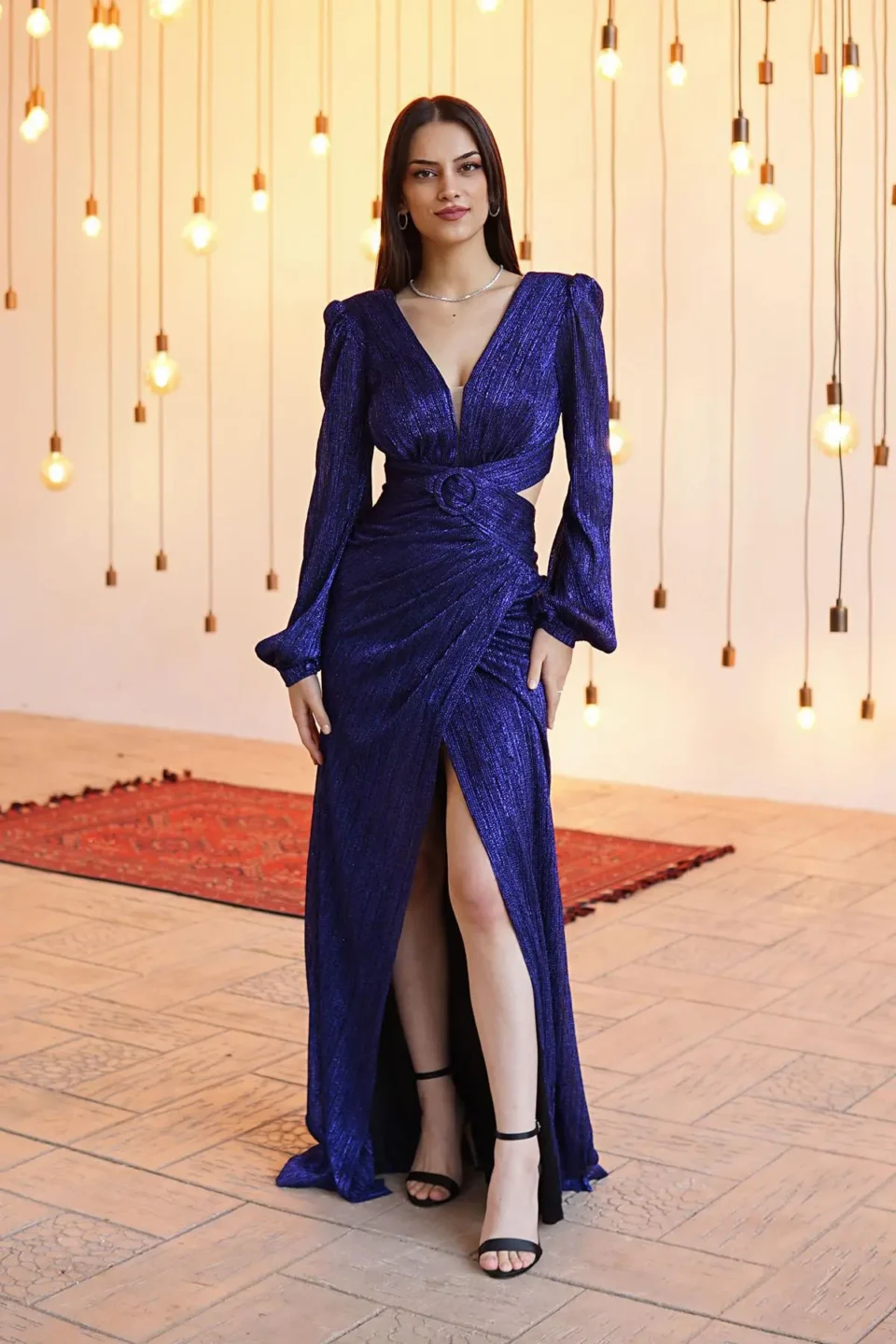
The blue dress combines a deep V with folds, a round waist accent and a front skirt opening. Open areas are visible at the sides. A short pale necklace is already present in the photograph. It sits above the deepest point and draws another small line close to the neck. You can test precisely that relationship: should the upper area remain open, receive a short line, or connect more closely to the V through a longer pendant? Compare the possibilities in turn.
Check them on the actual garment while standing and sitting. A pendant can change position, and the waist accent remains another existing feature. If you particularly enjoy the movement of the folds, choose a bag position that does not continuously cover them. Our corset-look evening dress guide adds questions about the upper structure, while the eveningwear category supplies other shapes for comparing neckline arrangements. Borrow the comparison questions that help you describe your own garment.
Coordinate lower skirt texture with shoes
The dark close-fitting alternative puts many small upper lines beside much larger feather-like shapes lower down. The focal point is therefore not confined to the face. A simple shoe can let the lower texture lead, while a more decorated shoe introduces another accent in the same area. The photograph does not establish that real feathers are present. For the styling decision, begin with the visible question of whether you want a quieter counterpart beside that active outer edge.
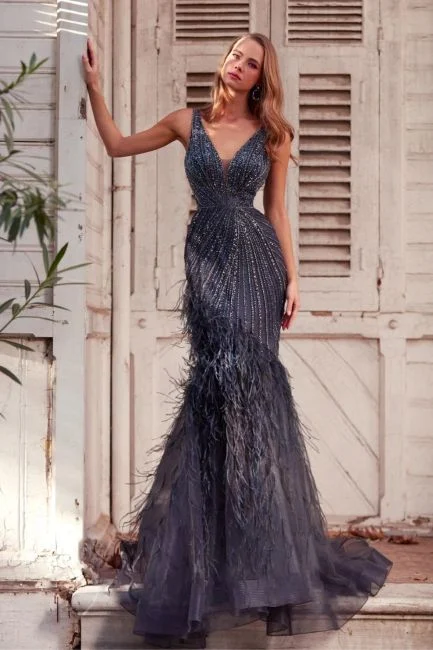
Try shoes with the actual skirt length while walking. A standing picture shows only part of their later visibility. Sit down and take several steps at your ordinary pace. If you are deciding between two pairs, keep bag and jewellery unchanged. The effect of the shoe change remains easier to understand. A short necklace or small earrings can frame the face without directly repeating the textured lower section. Choose that route if you like a clearer separation between upper and lower points of interest.
Separate an asymmetric upper edge from the wrists
The green dress places a pale stone-like decorated section on one upper side and a sloping green section opposite it. Pale details also appear at the sleeve ends, while several button-like points sit centrally. The upper edge already provides a strong uneven distribution. An additional necklace can change that line. Try earrings alone first and look across the whole shoulder width. Decide whether you want the asymmetry to remain visible or whether you deliberately want another jewellery line to accompany it.
Give the wrists their own comparison. When a sleeve end is already decorated, try a bracelet immediately beside it instead of admiring the bracelet in isolation. Move your hands, reach for the bag and sit. You might like the repeated pale points or prefer the sleeve edge alone. Record the chosen solution as a concrete combination. A later replacement can then be compared by size and position as well as colour, helping you retain the distribution you actually approved on the complete garment.
Confirm the full outfit with a short movement trial
Put on the intended shoes and add bag, hairstyle and chosen jewellery. View front and side with your arms hanging freely, rather than only with hands placed at the waist. That ordinary posture shows where the bag and bracelet actually sit. Remove one piece and compare again if you remain unsure. A clear decision could be a single pair of earrings or a larger arrangement. What matters is your chosen order of focal points rather than a general maximum or minimum number.
Read care instructions on the dress and any removable additional pieces before planning treatment. The GINETEX care symbols explain the labelling; visible sparkle or stone-like decoration cannot specify the method. Ask about any uncertain attachments on the real product too. You then have an outfit whose open and decorated areas you have actually seen and moved in, with additions chosen for their positions rather than because a generic eveningwear rule required them.
Choose jewellery around the areas the dress already emphasises. Neckline, sleeves, waist and hem leave different spaces for additions.
Frequently asked questions
Does a deep V-neck need a necklace?
No. View it without a necklace first, then compare a short or longer option if you want an additional line.
How can I combine bracelets with decorated sleeves?
Look at the existing sleeve edge first. Try a bracelet beside the actual cuff and check both its position and your hand movements.
Can the bag be a different colour?
Yes, if you want that additional accent. Compare a quiet option first and then a contrast colour on the complete outfit.