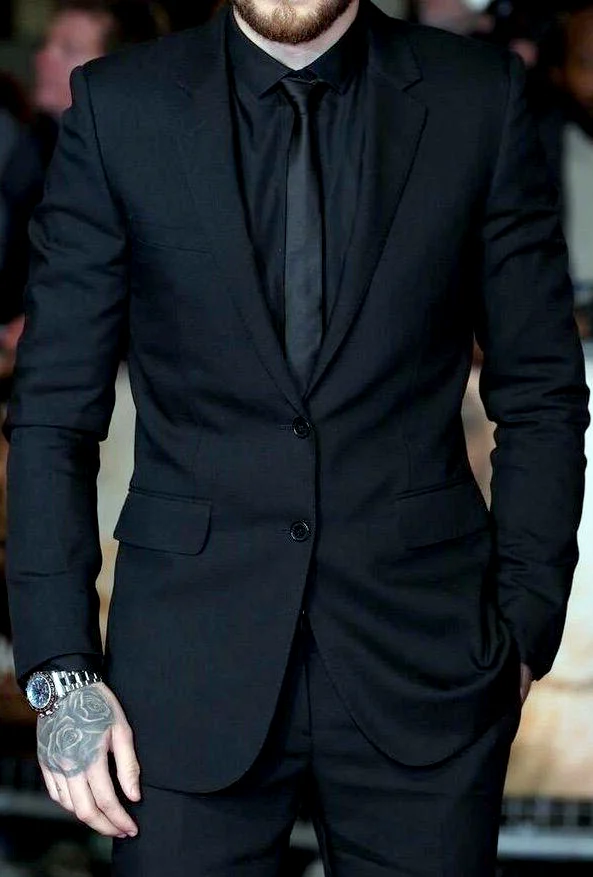
A dark shirt with a dark suit creates a largely continuous upper area in this picture. The narrow tie separates less clearly from the shirt than it would in a pale combination. The jacket looks close to the body and has horizontal lower pocket flaps. One hand remains in a pocket while a watch appears at the other wrist. Use the view mainly to compare contrast and lines.
Try your preferred dark arrangement beside the same outfit with a pale shirt. Keep lighting and posture similar. Decide whether you want a quieter continuous centre or clearer boundaries between pieces. The closeness in the image should not become a target measurement for your own body. Reach and sit in the actual jacket, noting specific pressure points.
A similar effect cannot be selected through dark colour names alone. Compare the real pieces together before adding jewellery. The photograph establishes neither jacket fibre nor an individual pattern. Trouser length is outside the crop and needs a separate assessment with shoes and a full-length view.