Party separates let you build an evening look from a top with a skirt or trousers, followed by a suitable outer layer. The benefit is the ability to make independent choices. You can pair your preferred neckline with a different lower shape and use pieces you already own. In return, the transition at the waist needs deliberate attention. Four dress references offer comparisons of colour, decoration and lines; a green short outfit actually shows a cropped top beside a mini skirt. Use these differences to coordinate thoughtfully instead of treating every occasion outfit as a ready-made dress.
Party separates: establish one starting piece
Begin with a piece you actually want to wear. It might be a patterned top, a full skirt or trousers that already suit you. Lay it beside two possible partners and compare the large areas first. Do you want to continue its colour, create a definite contrast or repeat one small accent? Choose that direction before selecting jewellery. An existing piece gives the comparison a fixed reference. This helps you avoid buying several interesting items that later prove difficult to combine into one coherent look.
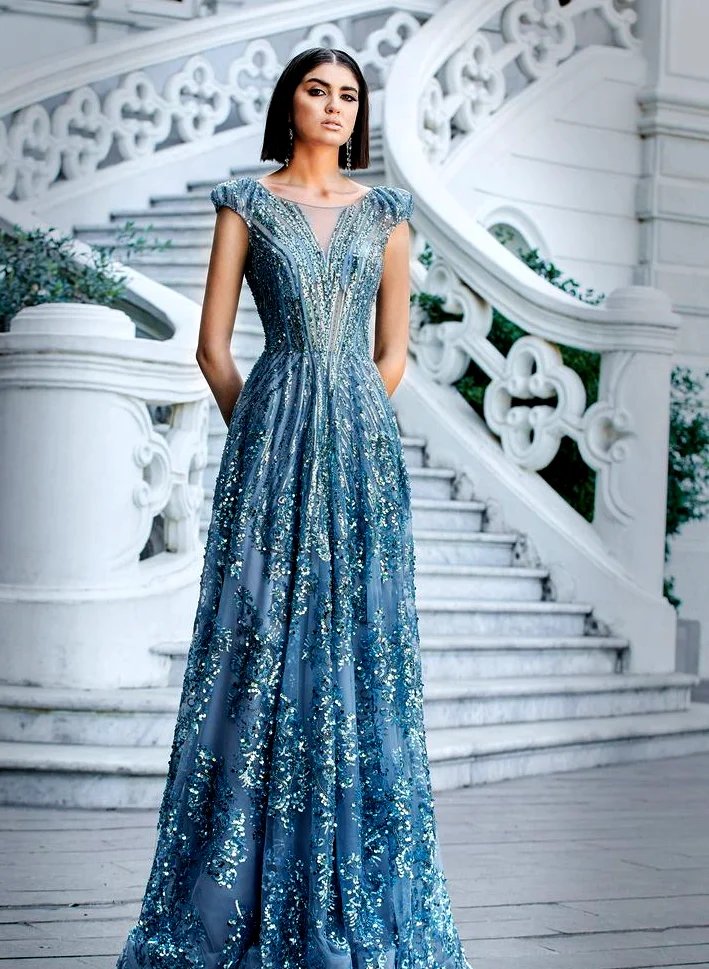
The blue dress with clear pale lengthwise lines suggests a possible focus around the upper body. You could develop that idea into a decorated top with a quieter lower area. Test the translation with real separate pieces; the photograph does not show a detachable outfit. Similarly, the long green dress can suggest a repeated colour connection. Identify exactly what interests you: an overall green effect, a clear waist line or a moving outer area. Those preferences can lead to different partner pieces rather than one compulsory recreation of the pictured dress.
Design the transition between top and waistband
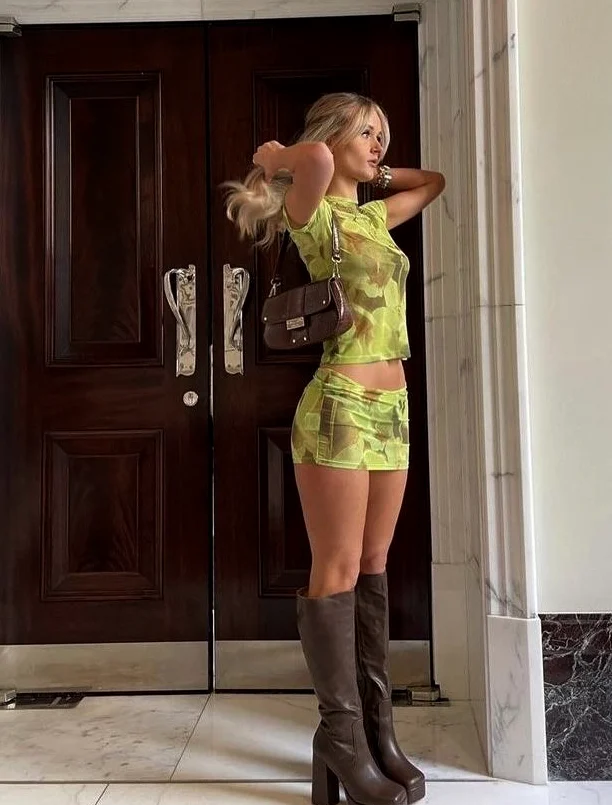
With two pieces, the middle becomes its own design area. Decide whether the top should be tucked in, overlap the waistband or leave a deliberate gap. The short green outfit shows exposed space between top and skirt. If you like that effect, test it while sitting and with relaxed arms. If you prefer coverage, look for enough overlap and try reaching upwards. A narrow gap while standing may look different in motion. Assess the actual combination rather than assuming that two individually suitable lengths will work together.
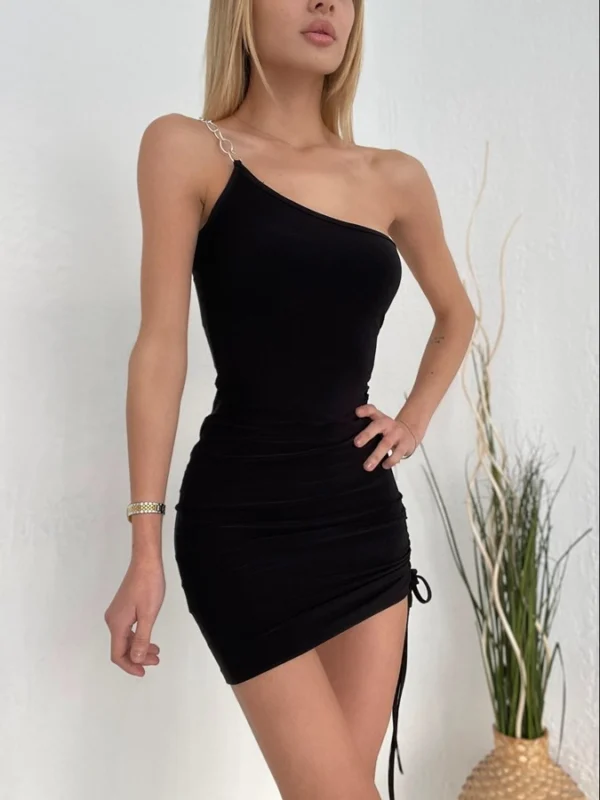
A tucked top may create additional volume around the waistband. Check the complete front and back instead of arranging only a small area at the front. For trousers, consider waistband height and seated room; for a skirt, include how it rests around the hips. A belt can make a visible connection but is optional. The green dress gathers its lines with a waist tie. Borrow that design idea selectively. Adding a new bow does not solve an awkward relationship between two garments; establish their actual fit together first.
Choose upper and lower volume independently
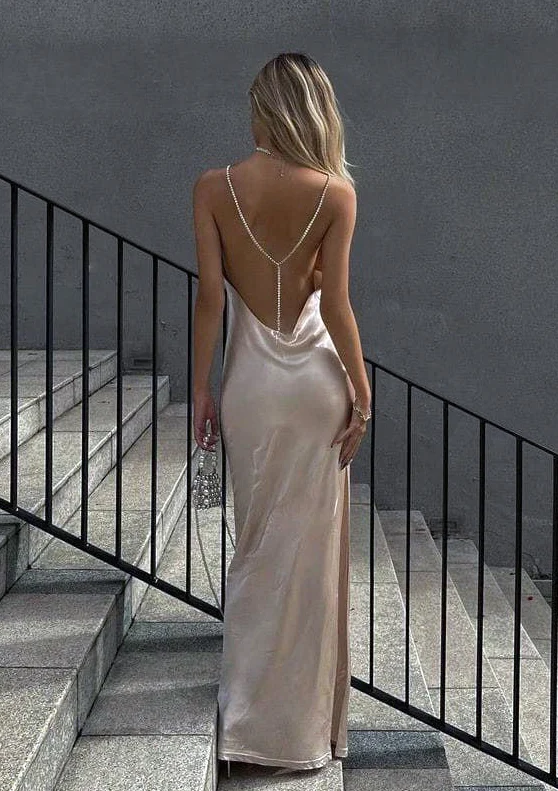
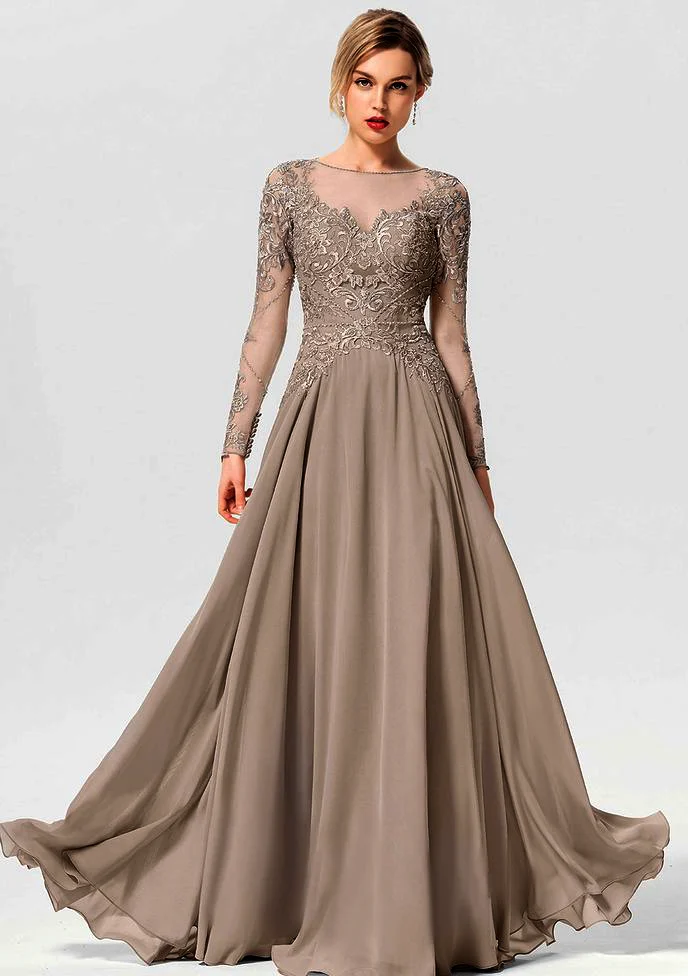
A full skirt with a closer top creates a different outline from wide trousers with a loose top. Either route may suit your purpose; choose the shape in which you want to move and be seen. The long beige reference connects a more decorated upper area with a broadly falling skirt. You can use it to compare a patterned top with a quieter, wider lower piece. Your own version might be much shorter. The useful idea is the relationship between areas, rather than reproducing the complete photographed dress.
With wide trousers, compare top length from the front and side. When several loose areas overlap, a clearer edge around the waistband may reveal the structure you want. If you prefer a soft continuous area, greater overlap may be appropriate. Try both using available pieces. The party outfit guides provide other starting shapes. Two completed alternatives are often enough for a focused decision. Many loose options spread out at once can make the comparison harder, especially when their shoes and waist transitions have not yet been tested.
Compare colour and surface in shared light
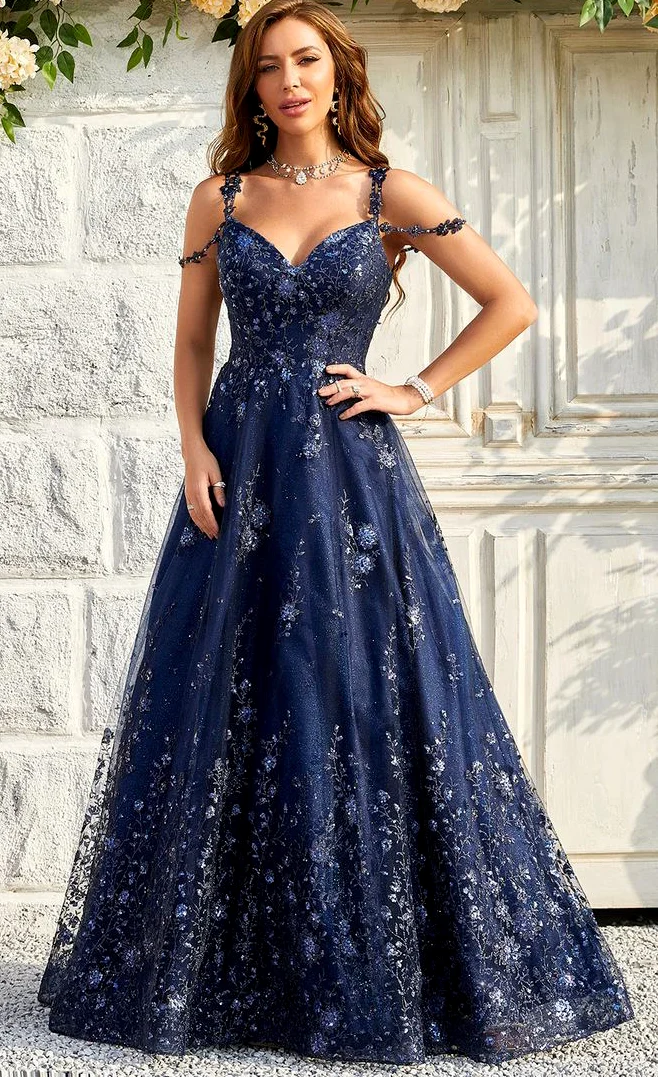
Similar colour names do not guarantee a relationship you will enjoy. Put top and bottom beside each other, then wear them in the same light. Look from some distance before checking close details. On the dark blue dress, pale motifs run across the upper area and skirt. For separate pieces, you can repeat a small colour instead of searching for an identical pattern. An intentional difference may suit your preference better than two almost matching blues whose distinction keeps bothering you. Decide on the actual visible relationship, rather than the names on labels.
A shiny-looking surface beside a quieter one can be used deliberately. Check which area draws attention first and whether that matches your intention. Read material information on the actual product; shine or transparency cannot establish a fibre. Test two transparent areas with your intended underwear as well. The high-low party dress guide adds comparisons of uneven hemlines if you want to explore similar movement through a skirt and top. Take the relevant design questions without assuming that the whole dress form needs to be recreated.
Test one new piece against two things you own
Before choosing a new top, try it beside two existing lower pieces, such as quiet trousers and a full skirt. Identify why an almost suitable pairing misses your preference: colour, excess fabric at the waistband or a top that rises when seated. Replace only the relevant partner and compare again. This gives each trial a clear purpose without rebuilding the whole outfit.
Use jacket, shoes and bag to complete the connection
Try an outer layer both open and closed. It may temporarily hide a decorated top and bring the skirt or trousers forward as the main feature. Decide whether you enjoy both states. A shorter jacket can leave the waist relationship visible, while a longer one bridges a larger area. Compare its actual hem beside the lower piece. In the short green outfit, darker tall boots and a brown bag add distinct colour areas. For your own version, repeat one of those areas or deliberately choose a quieter companion instead.
Finish two specific evening outfits. One might feel more continuous and the other more contrasting. Wear each with suitable shoes and a bag containing what you need, walk a few steps and sit down. Notice which connection needs constant correction and which stays comfortable. Care for each actual piece according to its label; GINETEX explains care symbols. Your finished combination may differ substantially from the references. It works when the pieces relate deliberately and you have tested them through your own practical experience of wearing the complete outfit.
An outfit made from separate pieces needs a deliberate connection through colour, waist position and volume. Borrow specific ideas from dresses rather than copying the whole shape.
Frequently asked questions
Must a top and skirt be exactly the same colour?
No. Compare the actual pieces in the same light. A shared colour or deliberately repeated accent can connect them.
How do I avoid an unwanted gap at the waist?
Test top length and waistband height while sitting and raising your arms. Choose enough overlap if you want the middle covered.
Can I translate a dress idea into a trouser outfit?
Yes. Start with its colour or neckline, then choose trousers with an appropriate waistband height. You do not need to reproduce the entire dress silhouette.
How many statement pieces do I need?
One deliberate focus is a useful starting point. Add other details separately and compare their effect in the complete outfit.