A mermaid wedding dress is especially useful to compare through the transition from a closer body line to a wider lower area. These four references show that change with different bodices: softly arranged shoulder sections, small floral arm edges and two longer patterned sleeves. Find the lower contour you actually want to wear first. Decide on pattern and neckline afterwards. Similar pale colour does not make the pictures identical garments, and a still front view cannot answer every question about your actual wedding-day sequence.
Choose a mermaid wedding dress through where the width begins
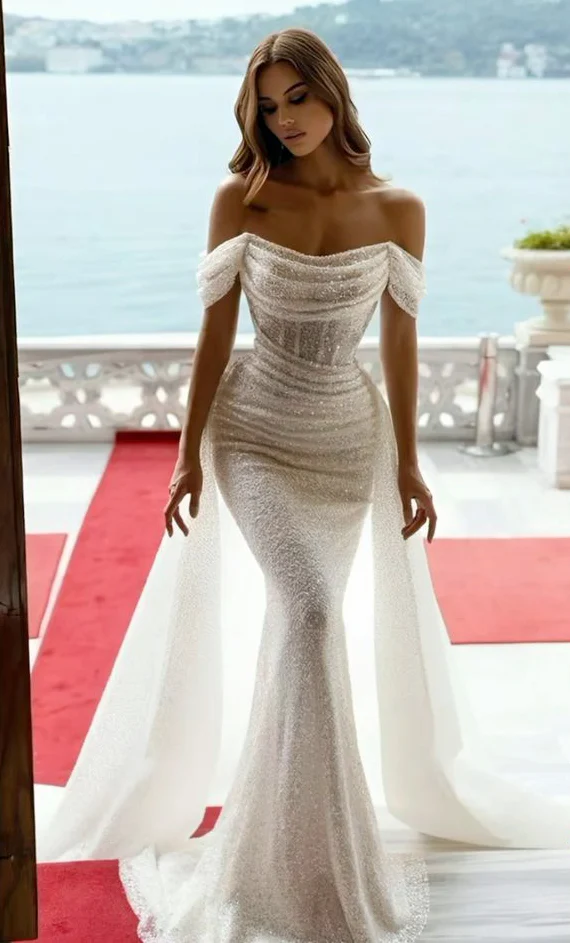
Inspect a complete garment from the front and side. Where does its closer line end, and where does the larger lower surface begin? Compare that relationship on your body instead of transferring one photographic height to every wearer. In the finely reflective model, a comparatively quiet close contour runs downwards; the floral references interrupt it with larger motifs. Record the transition you want first, even if a neckline was the detail that initially attracted your attention.
Compare two actual options with the same shoes. You may prefer a distinct later transition or want more room higher up. Describe the difference through the visible outline and your own fitting. A silhouette name establishes neither available stride nor fit. Have the concrete execution shown and choose the option connecting your shape preference with your plans. You do not need to adopt a general rule about an allegedly correct body shape in order to explain your choice.
Compare pattern and contour in separate passes
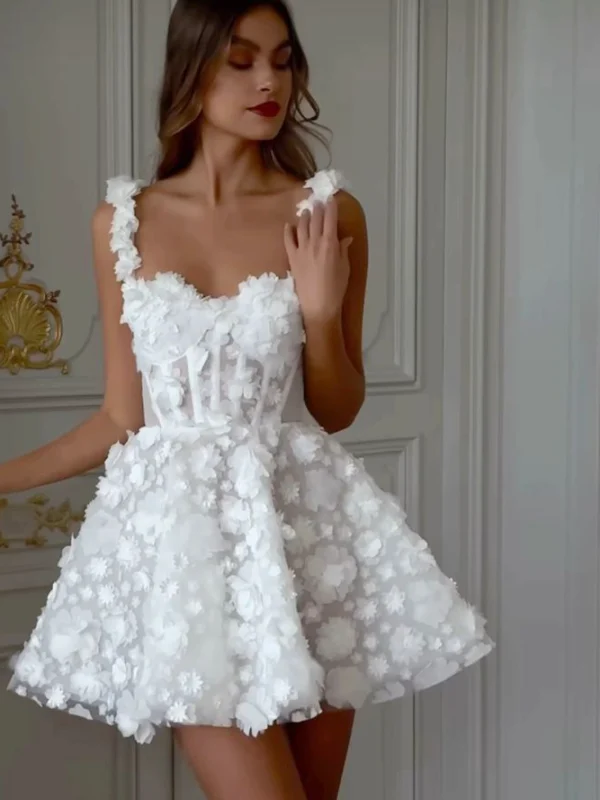
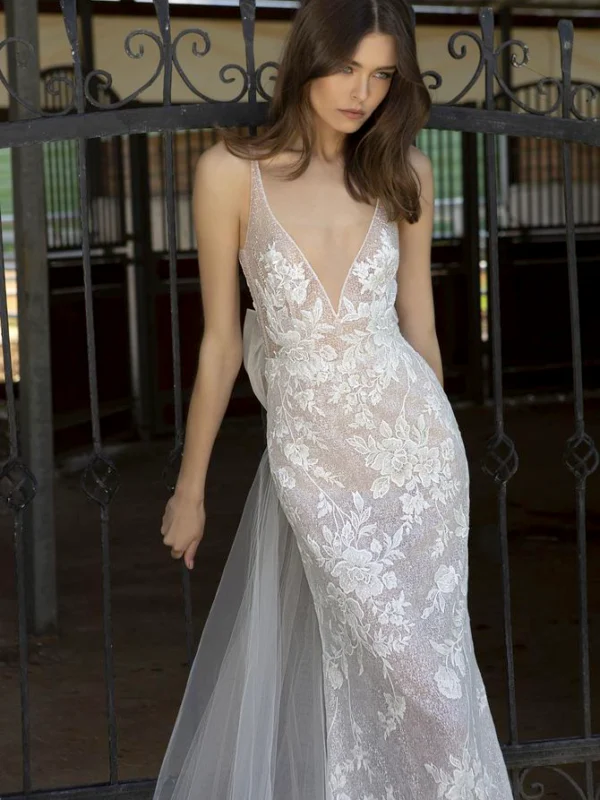
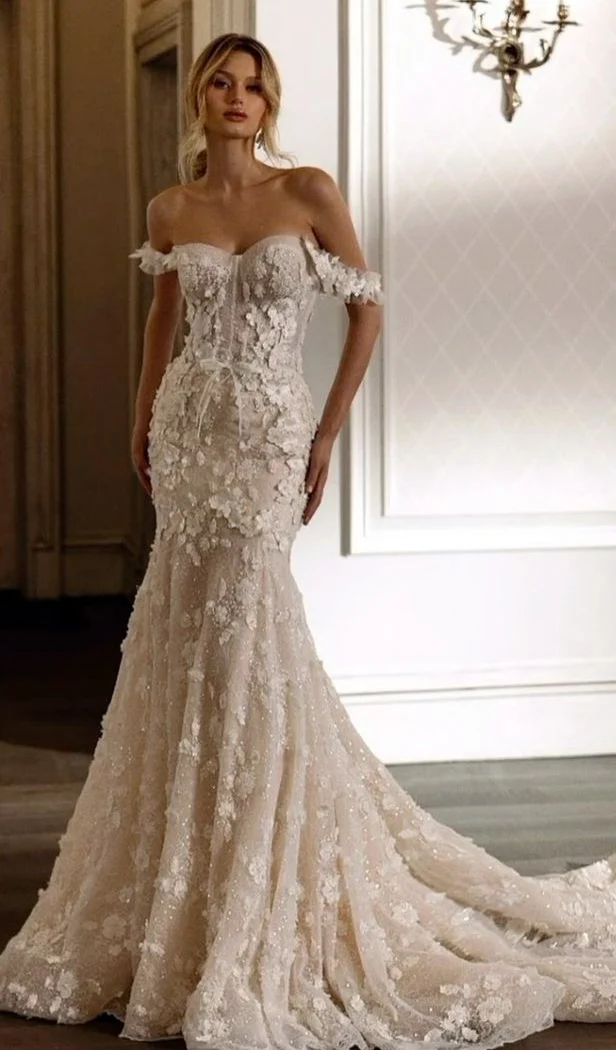
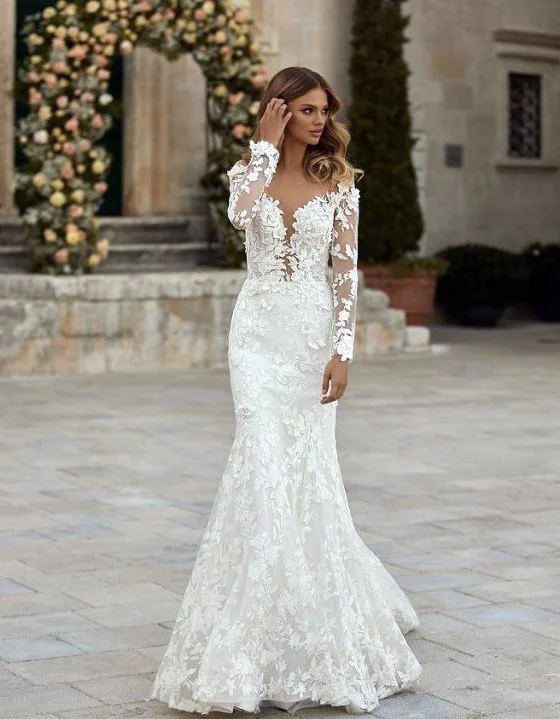
The floral references show pale motifs of different sizes over a closer middle and widening lower area. In the example with small decorative arm sections, distinctly raised-looking shapes cross the surface. Another view continues smaller pattern across longer sleeves. Look at the outer contour from a little distance first. Move closer afterwards and decide whether the motifs appeal equally. An attractive surface detail then cannot quietly replace the more fundamental choice about where width or length should begin.
You may enjoy the mermaid outline while seeking a quieter surface. Alternatively, you may like floral pattern while wanting more lower width. Record those preferences separately and ask about suitable actual garments. Photography establishes neither a particular fibre nor how the pattern was manufactured. For a styling choice, start with the clear observation of where pale motifs make the outline busier and where a larger continuous area remains visible. That description can guide your search without inventing a product specification.
Connect upper edge and sleeves to ordinary movement
Two references leave the shoulders bare while carrying smaller areas across the upper arms. One arranges the neckline in several soft lines; the other places floral details beside it. The longer covered arms in the remaining pictures create another frame, even where pattern allows skin to remain visible. Choose your preferred open neck and arm areas separately from the lower contour. You can retain a bodice idea while seeking a different skirt arrangement rather than copying every part of one image.
Try the chosen version while greeting someone, reaching forwards and lowering your arms again. Inspect the upper edge afterwards before rearranging it. Ask about actual inner layers and connections on the garment. Visible vertical bodice divisions do not automatically explain support. If a mermaid wedding dress with another rear area appeals, our backless wedding dress guide adds relevant questions. Assess front and back as one connected arrangement instead of two independent attractive photographs that may not explain the same product.
Plan train and side areas for your actual route
The pictures show lower areas extending by different amounts. In the finely reflective reference, additional long pale surfaces lie beside and behind the closer middle. Other views continue the patterned skirt backwards into a visible train. For the actual offer, have included pieces and their connections explained, along with their possible handling during the day. A neatly spread area confirms neither a removable outer layer nor a fastening for lifting it. Those are details to establish for the particular garment you intend to wear.
Consider your route and rehearse it where possible: a doorway, change of direction, chair and space beside other people. If someone will help, practise with the intended arrangement together. Decide when you want a longer spread contour and when another handling method is needed. A preference for a train need not disappear because the day contains several situations. It needs a clear plan tested with the chosen actual dress before the occasion, rather than relying on a useful-looking detail that no one has demonstrated.
Assess shoes, sitting and possible alterations together
Choose real shoes before the final length decision. Feet disappear beneath the lower area in several references, which establishes no recommended heel height. Compare two preferred pairs with the garment, viewing the hem standing and walking. Sit on an ordinary chair and stand again before arranging the skirt. Check your preferred coverage and identify where you need more or less room. One successful standing photograph cannot replace that personal decision about the clothing you will actually use.
Discuss alterations at the closer middle and lower opening as a connected task. Ask which outer and inner layers are affected and arrange another fitting with the same shoes. Do not rely on an unconfirmed assumption that every intervention will be small. You may prefer to compare a different execution before changing anything. For a mermaid wedding dress, the finished outline after work matters as much as the original preference for a particular transition or train. Record both so the conversation stays specific.
Complete two clear versions of the bridal outfit
Finally compare two complete possibilities with the same hairstyle and a similar amount of jewellery. Add the veil, remove it again and view the dress from every side. Hold the intended bouquet in its real position so it is not simply placed beside the silhouette for a picture. Our boho wedding dress guide supplies further questions about assembly. You can use its comparisons of garment and additions without adopting that style direction or every accessory shown in its references.
Clarify transport and care through the actual label. The GINETEX explanations separate washing, bleaching, drying, ironing and professional textile care; floral or reflective appearance does not prescribe a method. Finally record preferred width transition, upper line and train handling. You can then choose a mermaid wedding dress through understandable differences and a complete real fitting. The finished plan should explain both what you want to wear and how you intend to use it through the sequence of your day.
Choose a mermaid wedding dress through where the lower width begins. Then test bodice, shoes and train handling while walking, sitting and greeting.
Frequently asked questions
Does the silhouette name establish available stride?
No. Test the actual execution with your shoes along your ordinary route.
Are long side areas always removable?
The photograph establishes no such feature. Ask about included pieces, connections and their intended handling.
Can I seek patterned sleeves with another skirt width?
Yes. Describe arm line and width transition separately and compare actual garments connecting both preferences.
When should alterations be assessed?
On the specific dress with chosen shoes. Clarify affected outer and inner layers and arrange another complete fitting.