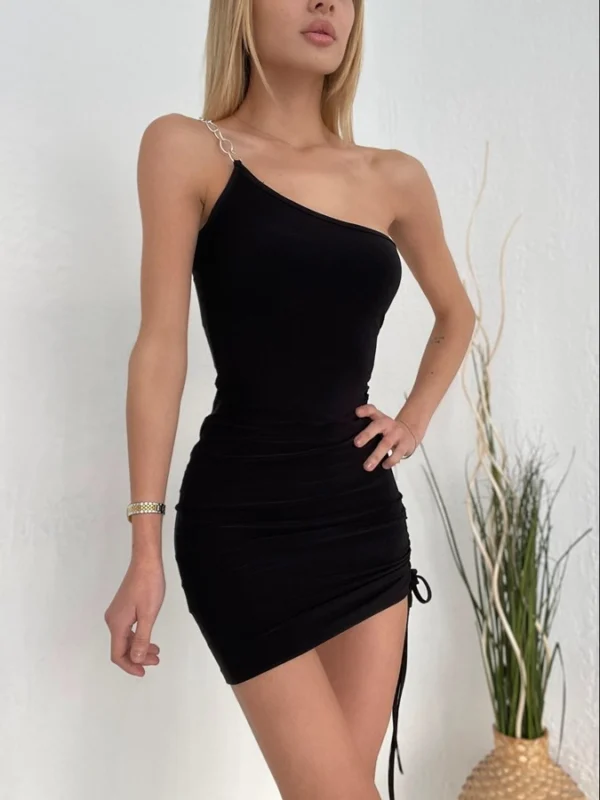
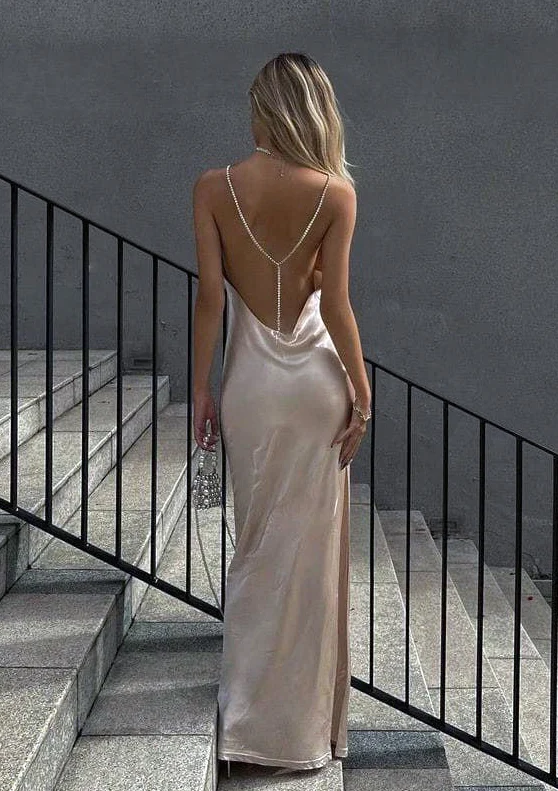
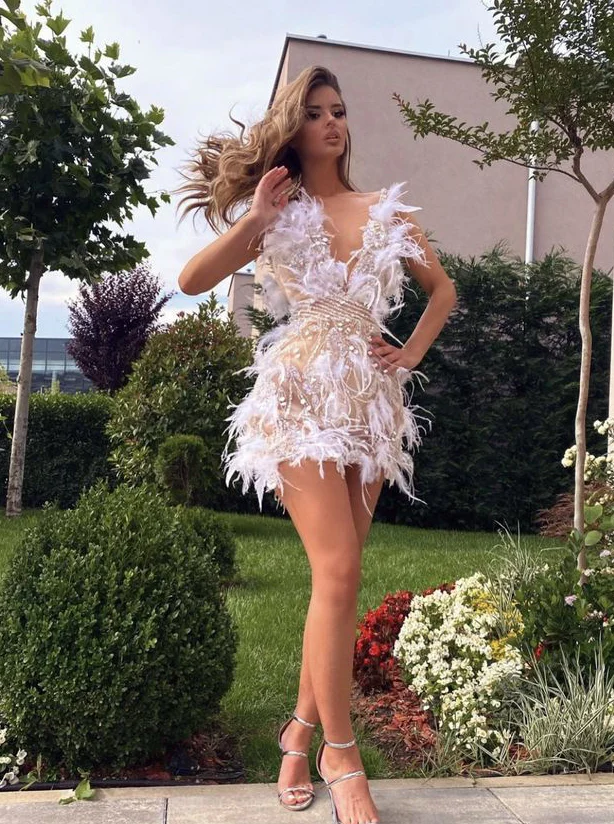
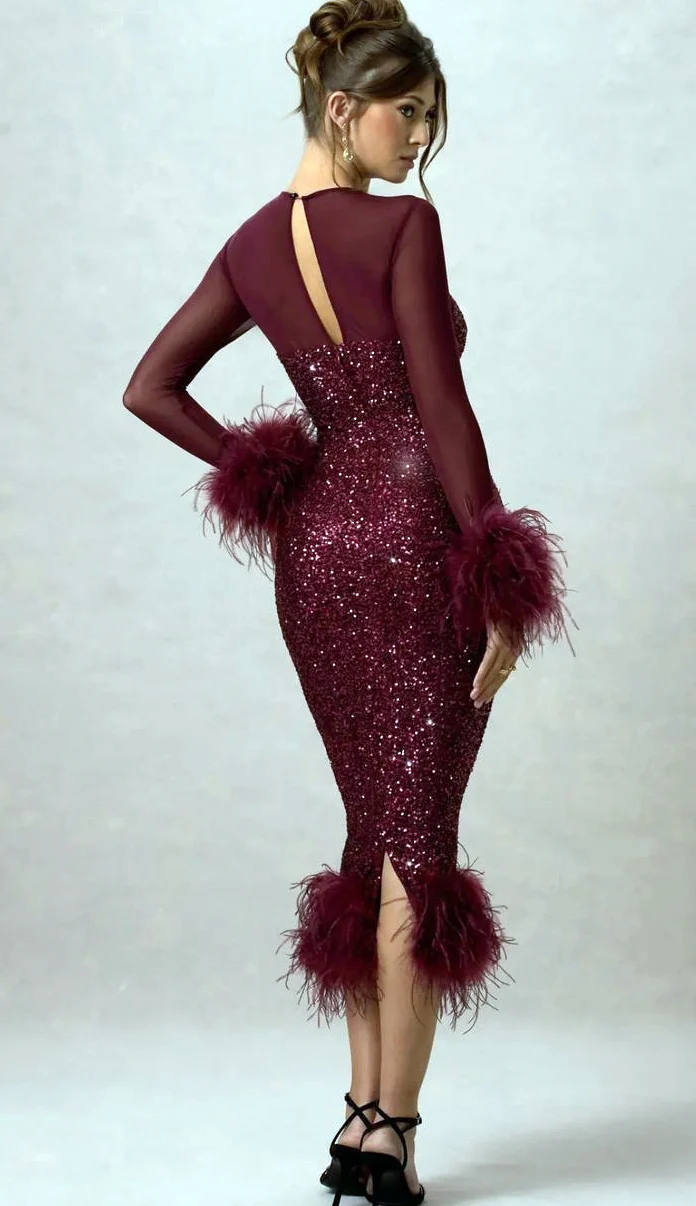
Choose a New Year party dress for a specific evening rather than only a photograph with substantial shine. These references offer different starting points: black surfaces with broader projecting edges, a pale short decorated form and a burgundy dress with accents at sleeves and hem. Use the ideas for your own invitation. The pictures establish no capture date or particular event venue. Decide which areas you want visible through the evening and how dress, shoes, bag and outerwear will be used together.
Connect a New Year party dress to the actual invitation
Clarify the setting first. Will you remain mainly in one room, move between places or spend some time outside? Ask about expected clothing and cloakroom arrangements if information is unclear. Record what you actually need afterwards. A seated meal creates another task from a mostly standing reception. There is no need to derive a fixed New Year rule. Your real sequence identifies which length, arm line and bag arrangement to test first rather than accepting one styling formula for every celebration.
Assemble two options with accessories you already own. During a long evening at a table, an upper accent may interest you more than an elaborate lower area spread for a photograph. For several changes of location, you may especially want to assess the outfit with outerwear. Both are personal priorities. Record the leading one before collecting further references. Another appealing detail then need not automatically become an additional job that the completed outfit must somehow perform as well.
Select one visible accent for the whole combination
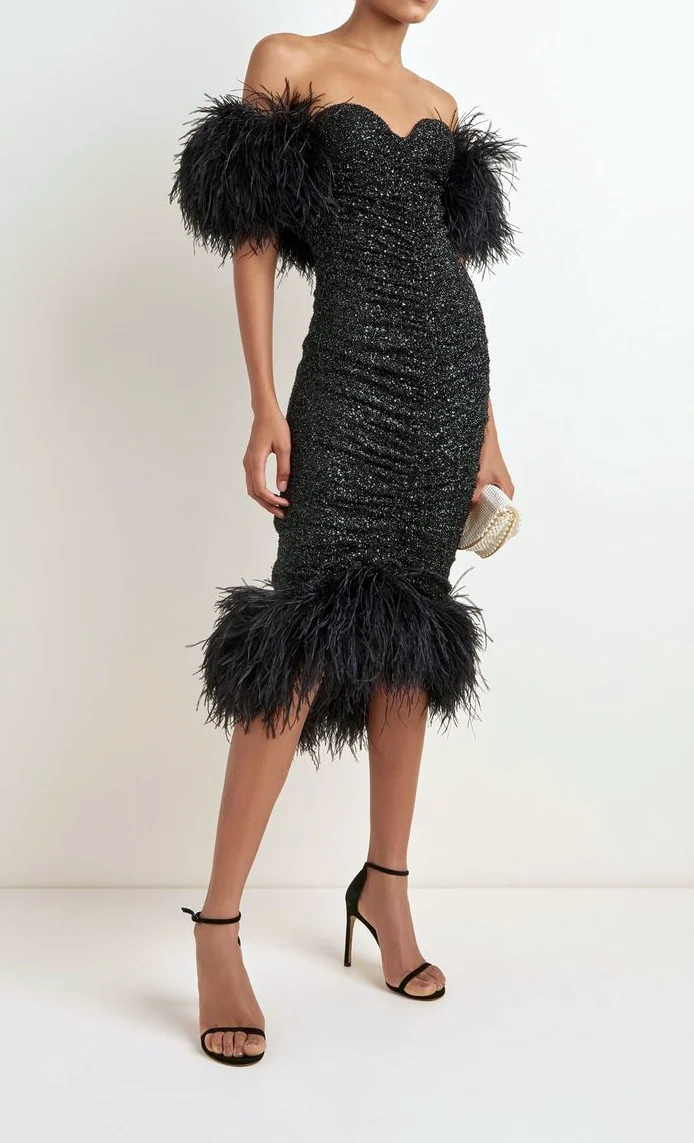
The shorter black dress distributes projecting dark details across upper arms and hem. The long black form instead lets its upper edge lead while keeping the middle quieter. The pale mini has several decorated areas; burgundy places accents at sleeve ends and lower edge. Compare these distributions without extra jewellery initially. Decide whether you want a neck frame, a more animated-looking finish or several deliberately separate locations rather than treating every noticeable feature as the same kind of decoration.
A New Year party dress does not need every type of shine and trim together. If the quieter long black area appeals, you can select one additional contrast. If several areas are already strongly arranged, inspect the dress with simpler additions first. Projecting details appear feather-like; their actual composition belongs to the specific offer. Visible distribution is enough for the initial styling choice without inventing a feather type or manufacturing process that the images cannot establish for the actual garment.
Plan hands and bag for greetings and travelling
Consider what you really want to carry throughout the evening. Test the bag with those contents and in its intended position. The shorter black reference shows a small pale handheld bag; the other pictures prescribe no particular arrangement. Compare the pale area with a quieter colour on the complete outfit. A bag can create an accent or recede beside the dress. Your preferred use of your hands belongs to the same decision, rather than being something to solve after the photograph looks complete.
Practise greeting someone, picking up a glass or cup and reaching your phone. Where does the bag go each time, and will you want to put it down temporarily? Clarify the actual sequence rather than assuming a solution from the pose. A shoulder strap occupies a different area from a handheld bag. Try both with the decorated part you want retained. You can then choose a visible position and tested use as well as an attractive colour relationship.
Assess outerwear before and after removing it
Put your coat or jacket on completely during the fitting. Notice where it lies over the upper edge and sleeves, then inspect the dress after removing it. In the burgundy rear view, larger projecting details sit at sleeve ends, making their relationship to your actual outer sleeve particularly relevant. The picture establishes no universal handling method. If you notice an uncertain area, show it on the concrete garment and ask about an appropriate solution instead of relying on a general styling assumption.
If your plan includes time outside, choose that complete combination and the indoor state deliberately. They need not look identical. A New Year party dress may show differently beneath outerwear while shoes and bag remain in both states. Check which additions you want to keep wearing and where removed pieces will be placed. Do not infer a cloakroom service or available surface from a background in the photographs. Your actual invitation or selected venue must answer that practical question.
Test hem and shoes for sitting, steps and the return journey
Compare actual lower length with your shoes. The pictures show a very short pale form, shorter black and burgundy finishes and a longer black dress with an open leg area. These are different options rather than one compulsory New Year hem. Walk and sit on an ordinary chair. Inspect the hem after standing before arranging it again. Choose your preferred coverage in those situations, testing an opening separately from decorative lower trim rather than assuming that one feature explains the other.
Choose the actual shoe pair through your route and personal trial. Pictured high shoes are style references, not verified comfort recommendations. If planning another pair, try both with the same garment and decide where the spare will be kept. Another height can change the visible relationship with the hem. Discuss possible alterations on the actual model. Your New Year party dress then has a fully selected lower arrangement instead of being assembled only for one quiet standing picture without the rest of the evening.
Record two complete states instead of accumulating accessories
Finally compare arrival and celebration as complete states. Retain the same hairstyle for the first pass and change outerwear alone. Add one jewellery piece afterwards and inspect the neck area again. If considering another garment form, our party jumpsuit guide offers a comparison. High-low party dresses also show different lower finishes. Use each alternative to answer a specific question rather than compressing every design idea into one outfit whose main purpose becomes difficult to explain.
Read actual care labelling before cleaning or pressing. GINETEX explains the symbol groups; reflective or feather-like projecting appearance does not select a method. Record length, leading accent, shoes, bag and outerwear for your chosen New Year party dress. Decide through the two tested states and your real route. An evening look may contain many details or few; what matters is knowing their jobs and actually wanting to wear the complete combination you have selected.
Plan a New Year party dress through the actual invitation. Choose length and leading accent, then test bag, shoes and outerwear for arrival and celebration.
Frequently asked questions
Must a New Year party dress shine strongly everywhere?
No. Select the leading area first and compare it with quieter additions of your own.
Do the pictures establish a specific New Year event?
No. Use visible clothing features for your invitation without deriving date or setting from the background.
When should outerwear join the fitting?
Once you choose the main form. Put it on and off completely, then assess both full outfit states.
Should I plan another shoe pair?
That depends on your actual route and preference. If you want one, try both pairs with the garment and plan storage.