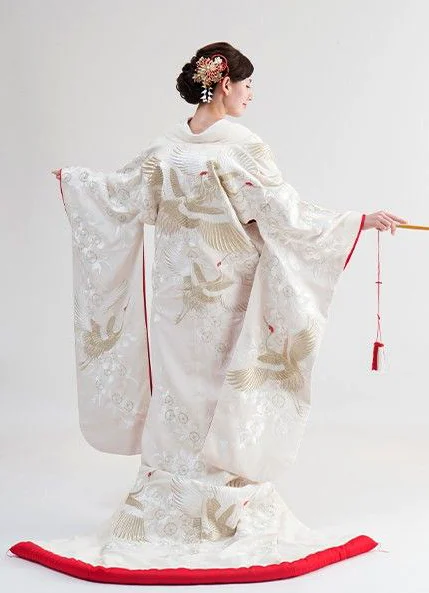
A bird-patterned robe shows large golden-looking figures over a long pale surface in this rear view. Small red points appear within some motif areas, with a strong red edge tracing the lower line. Broad long sleeve areas hang beside the spread arms. A closed fan-like object is held at the side, and a smaller coloured accent sits in pinned-up hair. The photograph mainly explains the relationship between back, sleeves and long hem. It establishes no precise bird species, particular symbolism, fibre or historical date for the photographed robe.
Decide whether you want the stronger emphasis at the back or a more even distribution. Compare the red lower edge separately from the larger figures because it creates its own visible boundary. An actual offer also needs a front view with the same upper arrangement. Ask which pieces belong together and how motifs on the real garment are identified. If meaning matters to your choice, clarify it there specifically. For visible form, you can already record how large the rear figures should be and how strongly the lower colour boundary should appear.