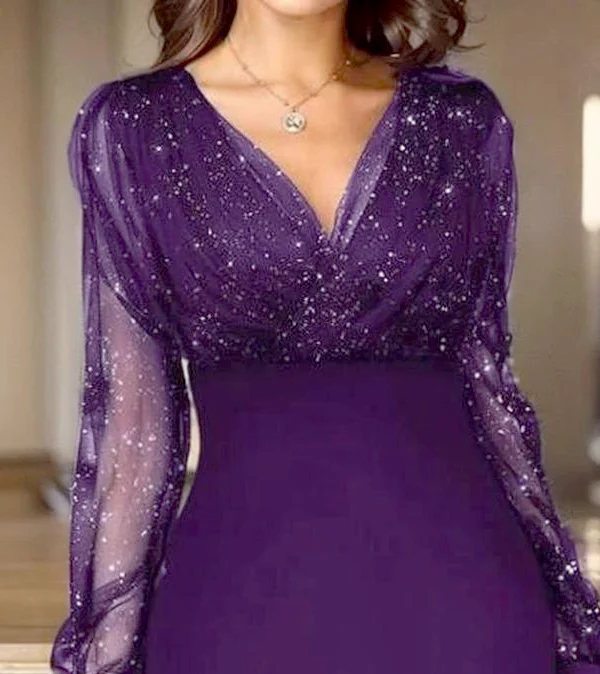
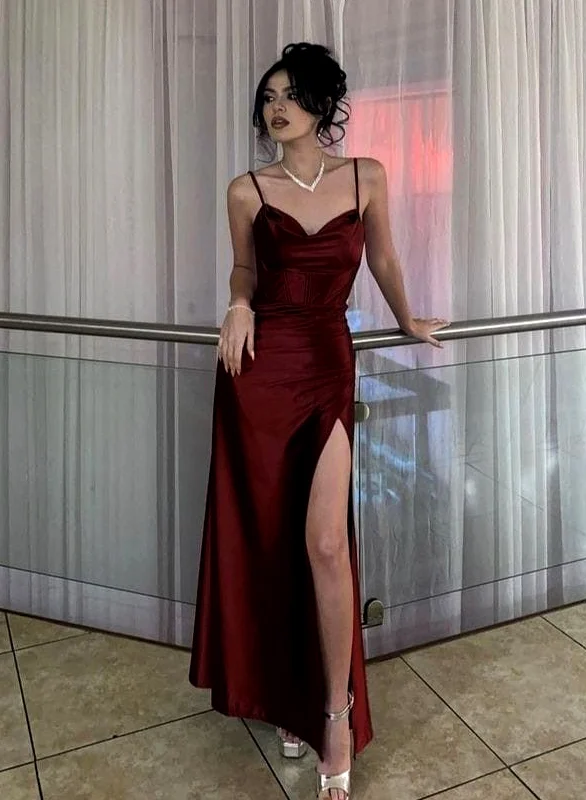
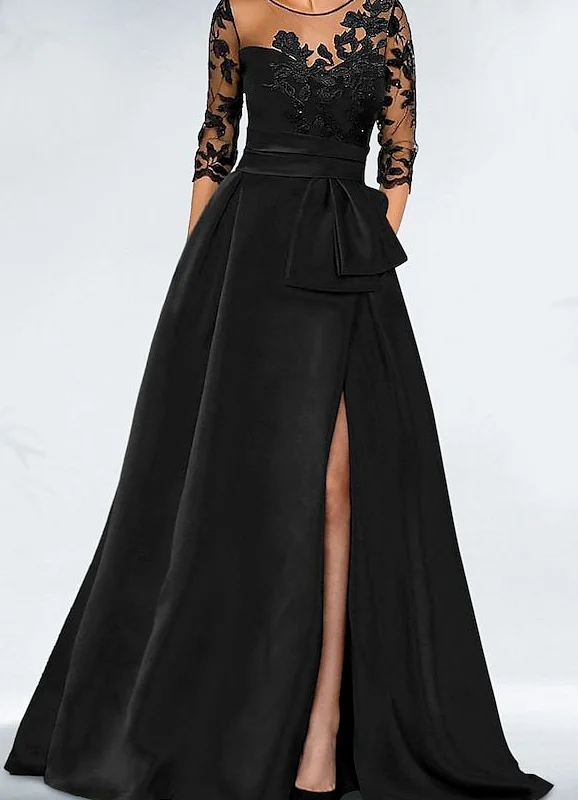
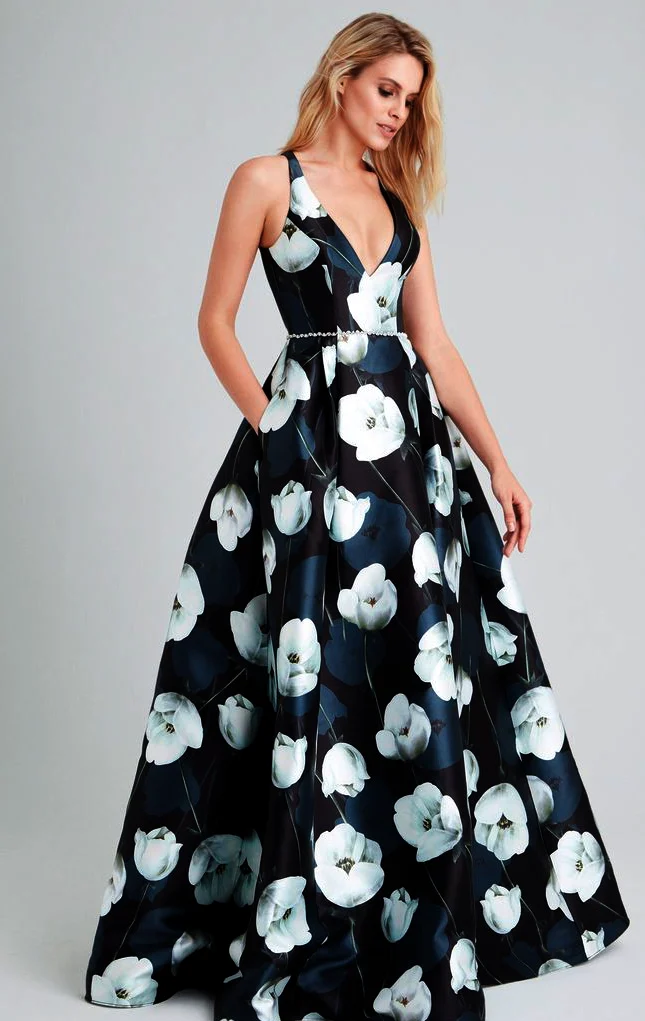
A geometric evening dress can build its effect through repeated angles, clearly bounded fields or larger lines across the body. The useful question is which forms you actually want. The angular long reference provides a clear starting point; large pale flowers on a dark ground, a finely reflective surface with crossed back straps and smaller pattern on blue deliberately offer different comparisons. Use them to distinguish an angular motif from light points, organic shapes and individual construction lines, rather than giving every noticeable surface the same name.
Choose a geometric evening dress through its main visible lines
Begin with the complete angular reference. Broad decorated bands travel in different directions across bodice and skirt, leaving paler skin-toned-looking areas between them. Some lines lead towards the middle while others create repeated side angles. Ask whether the large directions or numerous smaller bright details within the bands matter more to you. These are separate preferences. Similar brightness could appear on another shape entirely, while the angular sequence determines the larger order across this particular garment rather than simply its amount of reflection.
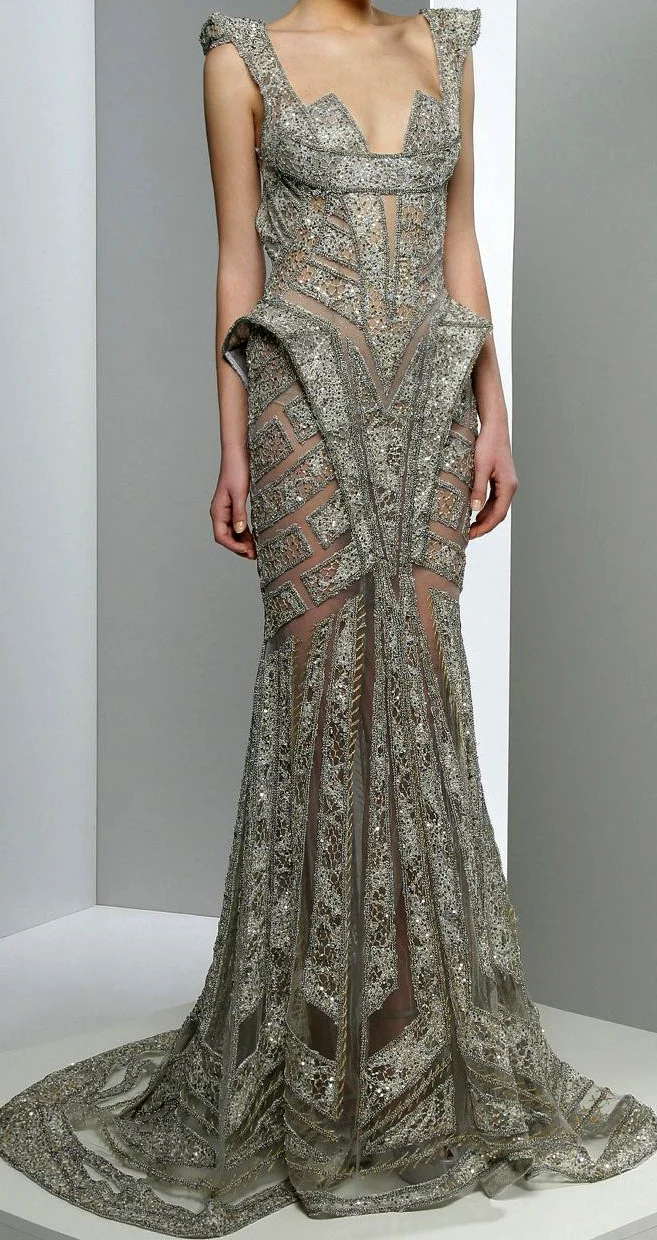
Describe your preference through two features, such as broad diagonal bands and clearly visible intervals. Request complete actual designs where those qualities remain readable next. The dark floral reference supplies a counterquestion: perhaps you mainly enjoy a large contrasting motif rather than straight boundaries themselves. Its organic flowers are not presented as the same angular route. Naming a clear difference helps set aside attractive pictures that show another leading idea, keeping a useful distinction between something appealing and something that illustrates your particular search.
Compare pattern scale separately from viewing direction
Large angular fields lead attention differently from many small repeated motifs. The blue one-shoulder view has a denser smaller structure, while the dark reference carries clearly recognisable large flowers. Compare scale alone first: should individual forms read at a distance or become a more continuous surface? Decide direction afterwards. A large motif does not have to be angular, and fine repetition does not necessarily create the effect of broad diagonal bands. Separating the questions makes it clear which difference you are examining during the fitting.
View a geometric evening dress from conversational distance before looking closely in the mirror. Keep camera distance and lighting similar between candidates. Check which lines remain visible when you are not zooming into decoration. A small image of one appealing detail does not explain its relationship to the whole body. Record preferred size and line direction separately. This description can be applied to new real suggestions even when colour and individual decorative points differ, leaving room for an alternative that retains the idea without copying every part of the first reference.
Separate inner angles from outer skirt width
The angular reference adds projecting side areas at the hips and a wider lower finish. The outer contour therefore changes alongside the pattern. The dark floral form and blue one-shoulder view instead have broader falling skirts creating another overall outline. Decide whether you want the angular drawing on the surface or also the additional side area. Both can occur together without having equal priority in your choice. The broad word geometric alone does not describe this difference between inner arrangement and the outer boundary of the dress.
Try an actual option with your shoes standing, walking and seated on a chair. Inspect the side view so a noticeable front does not determine the whole outline alone. If only the motif appeals, seek a quieter contour with a similar direction. If the shaped sides are the attraction, record their position independently of pattern. A geometric evening dress then involves two verifiable decisions: the order within its surface and the shape of that surface’s outer edge when actually worn. Those descriptions remain useful if you later discuss an adjustment.
Examine intervals, neckline and back lines specifically
Skin-toned-looking fields between angular bands can appear differently open in a photograph. Establish which actual areas are lined and the coverage you want. Inspect them in comparable light with your planned inner layers. The finely reflective reference offers another route to openings: a deep front line, a leg opening and narrow crossed bands at the back. Those bands are visible back lines rather than the same large angular surface pattern throughout the whole dress. Name fine crossing connections and broad decorative fields separately to keep their contributions clear.
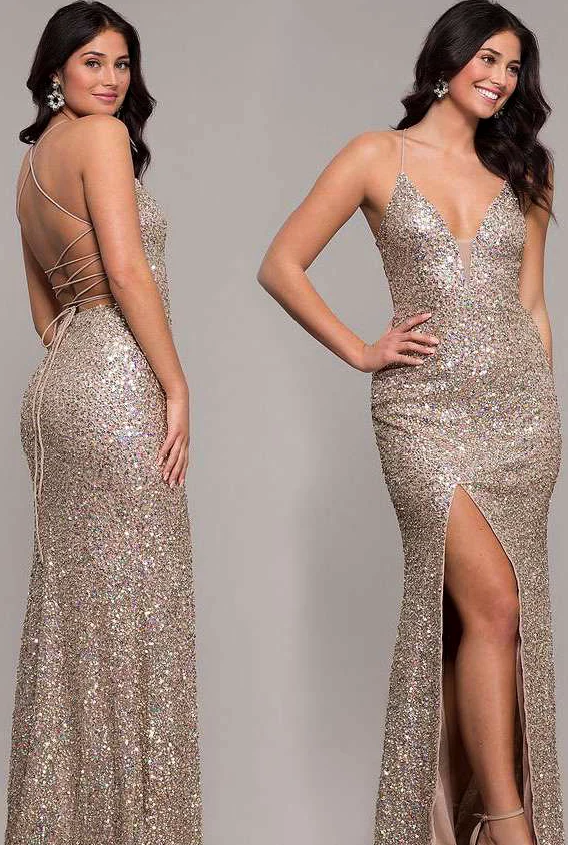
Compare front and rear as individual views. You might want strong graphics in front and a quieter back, or mainly enjoy the narrow crossed route behind. Request both complete sides of an actual offer rather than mentally supplying one from a single photograph. Preferred coverage also cannot be judged solely through the number of decorated bands. Try ordinary positions and intended movement before settling on a particular upper or side opening. This connects the visible idea with the area you actually want seen in your own use.
Choose accessories through their area rather than the same motif
A geometric evening dress does not require a collection of further angles at ears, neck and bag. Start with one addition and inspect the main lines again. A quiet surface can leave larger graphics readable, while a deliberate small accent may repeat them. Choose which area you want to notice first. The dark floral reference already includes a narrow pale waist line. It shows how a small additional boundary can have a separate role without replacing the large motif or requiring identical shapes on every other piece.
Test the actual carrying position if taking a bag. A strap across the middle can cross several directions; a handheld bag leaves more surface clear there. Add outerwear afterwards and inspect open and closed states. A jacket edge may obscure part of the pattern or create another frame. Decide through your complete combination rather than only the coordinating colour of one item. Jewellery involves the same questions of location and size; an identical pattern is not necessary. Change additions individually so each one’s effect remains understandable beside the main design.
Give two pattern ideas a final comparison on equal terms
Compare two clear solutions, such as large angular fields on a quieter contour and a finer continuous surface with a prominent back. Our corset-look evening dress guide shows other upper divisions; a ruffled evening dress compares another outer field. Take one appropriate question from each to the fitting. Keep shoes, inner layers and viewing distance reasonably similar so the pattern decision remains readable instead of disappearing beneath several simultaneous accessory changes. Repeat the same movement sequence to assess each actual garment consistently.
Read the actual care information before cleaning or smoothing. The GINETEX guide explains washing, bleaching, drying, ironing and professional textile care; bright bands or sheer-looking fields select no treatment. Record the preferred forms’ size and direction, your coverage choice and the accessory combination tested. Your geometric evening dress becomes a concrete selection when the main lines appeal within the whole worn silhouette and both front and rear suit your plans. A single detail photograph does not have to carry that decision without complete views and your own fitting.
Choose the scale and direction of a geometric evening dress first. Assess outer contour, intervals and both views separately.
Frequently asked questions
Do all four references show the same geometric pattern?
No. The angular bands provide the starting point; flowers, fine surface and smaller motifs are explicitly compared as other designs.
Do skin-toned intervals prove genuinely bare skin?
No. Establish lining and preferred coverage on the actual garment with your inner layers.
Are crossed back cords the same as broad angular fields?
No. Narrow rear lines are another design level from broad decorated bands across substantial garment areas.
Must jewellery have geometric forms too?
No. Compare a quiet addition with deliberate repetition and choose its location and size within the complete outfit.