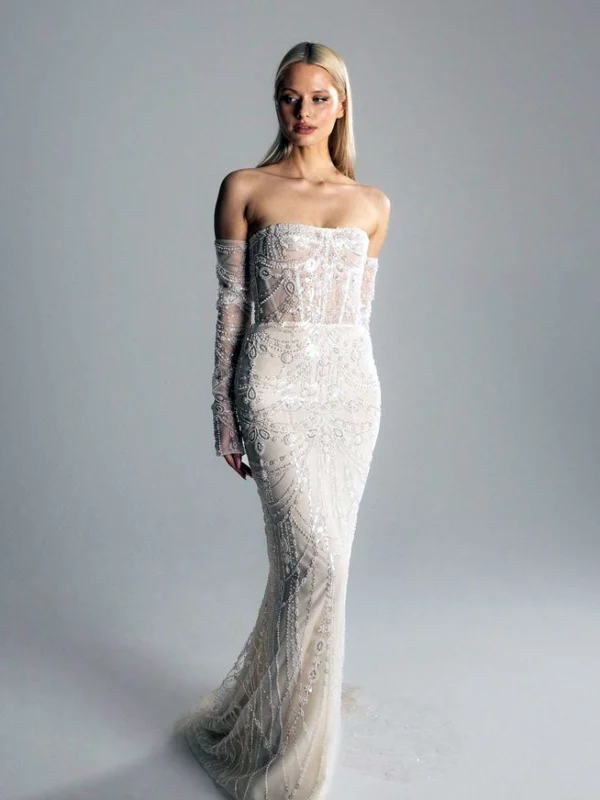
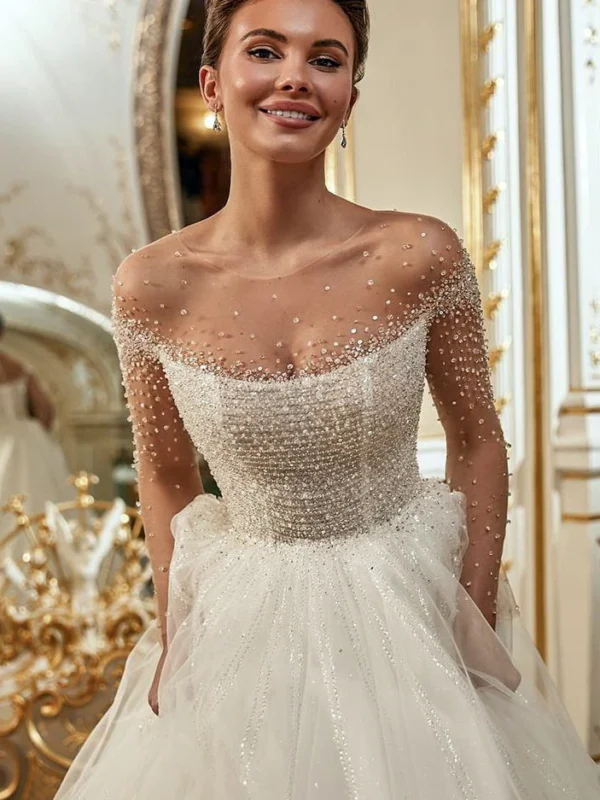
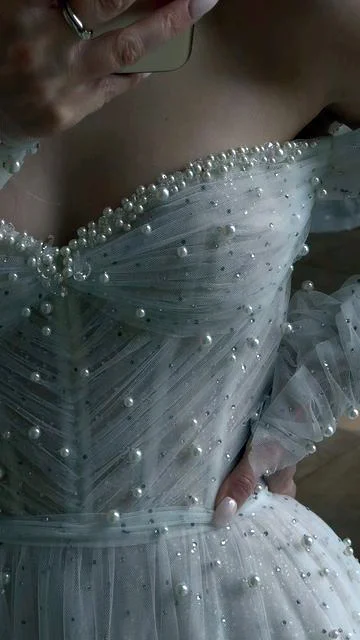
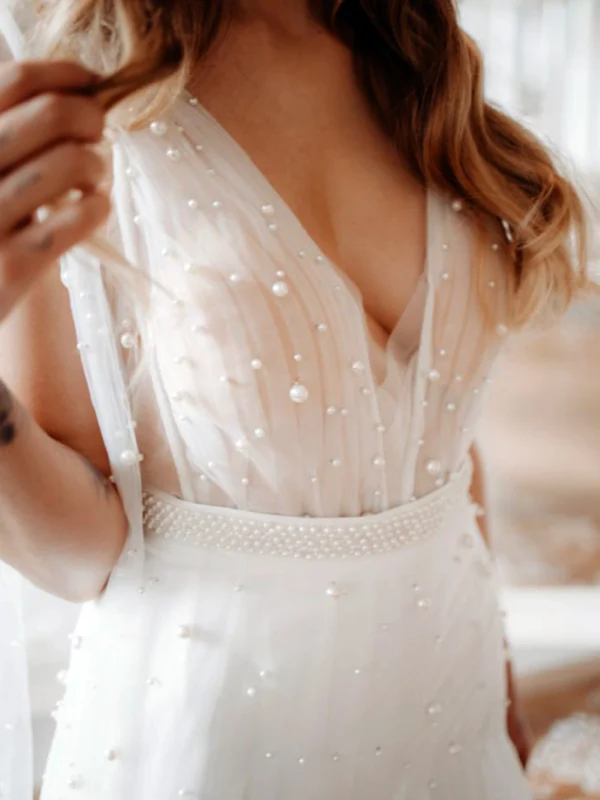
Bridal bodices show different routes towards a clearly readable middle in this selection. The long narrow reference has vertical areas and a straighter upper edge. The densely decorated example adds a sheer-looking zone over shoulders and arms. A close view carries diagonal folds across the middle and places round pale points along the edge. The softer V bodice deliberately remains another upper solution with gathered lines and a narrow waist strip. The pictures compare visible design rather than confirming a particular internal support arrangement.
Choose the leading direction first: vertical division, diagonal route or a softer V line. Decide neck area and arm coverage afterwards. Both close views need an additional full view for a length decision, so use them for their specific upper questions. At the actual fitting, compare two bodice ideas with a reasonably similar lower area and bring the inner layers you want from the beginning. Add bouquet, veil and jewellery later. This separates the line you want from the practical execution that still needs explanation or adjustment on the real garment.