A green evening dress can look deep and clear, muted and greyish or distinctly olive. Its design also changes how much attention the colour receives: a decorated bodice, broad glossy folds or a quieter wrap-like outline creates a different emphasis. These four pictures provide three green directions and a mauve comparison. If you are considering an outfit for a spring occasion, use them to describe your colour preference more precisely. Rather than selecting by a colour name alone, compare the actual surfaces and lines within the complete outfit you intend to wear.
1. Choose a green evening dress by its visible shade
Start with a simple description of the three green views. The long dress with a decorated bodice appears in a deep, strong green. The off-shoulder look has an olive tone with bright reflections. The waist-tied dress looks more muted and grey-green. Those distinctions help explain a selection request in a shop. Ask to see actual swatches or dresses beside each other. The words green or olive alone leave open how light, dark or restrained your preferred option should be, so establish that part of the comparison first.
Look at the pieces under the same lighting and from a similar distance wherever possible. A bright reflection on a fold should not be mistaken for the base colour of another dress. Examine quiet surfaces as well as strongly lit areas. If photography is allowed, record candidates beside each other rather than on different days in unrelated settings. The images then remind you of a real comparison. Make the final judgement on the actual garment, particularly if you have previously seen only a screen image or a small section of a product photograph.
2. Separate decoration from the main colour field
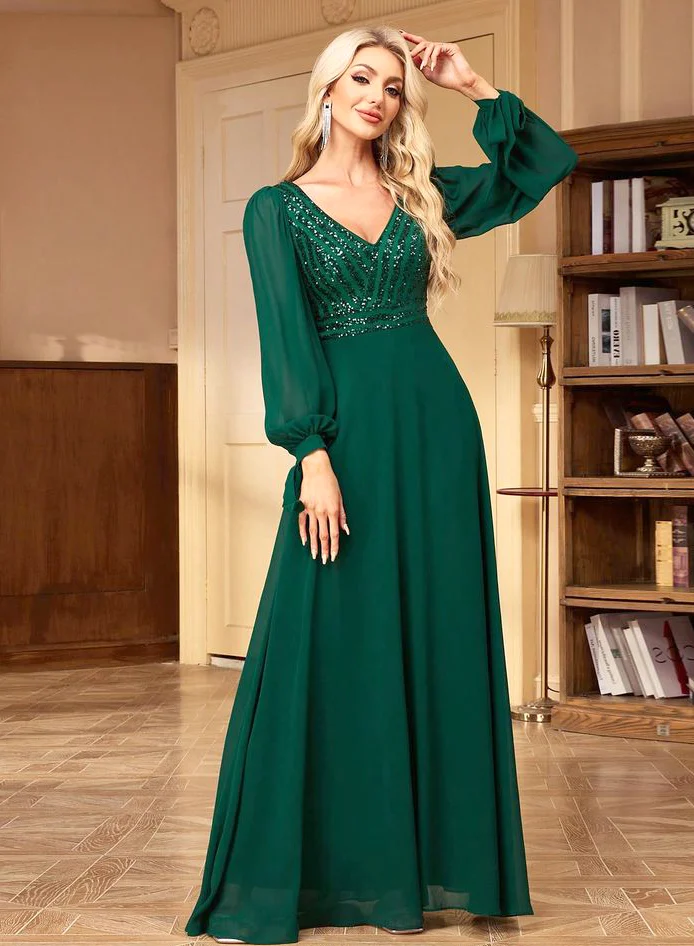
The deep green long dress places several rows of reflective detail on the bodice. They follow the V-neckline and lead towards a narrower emphasised waist area. The skirt remains much quieter below. First decide whether you like that distribution: an active upper section above a larger continuous colour field. Do not remove the skirt from consideration by zooming only into the decoration. Its length and quiet surface belong to the relationship between the two areas and affect how strongly the green itself appears across the complete look.
A green evening dress with a prominent bodice benefits from a practical jewellery comparison. Start with earrings and add a necklace in a second step. Check whether its line stays in the open neckline or lands directly among the reflective rows. Compare the bag as one further change. A quieter surface can leave more attention on the upper dress; additional shine creates repetition. Either may suit you. Decide whether you prefer one clear focal area or several related accents, rather than changing every accessory at once and losing track of what altered the effect.
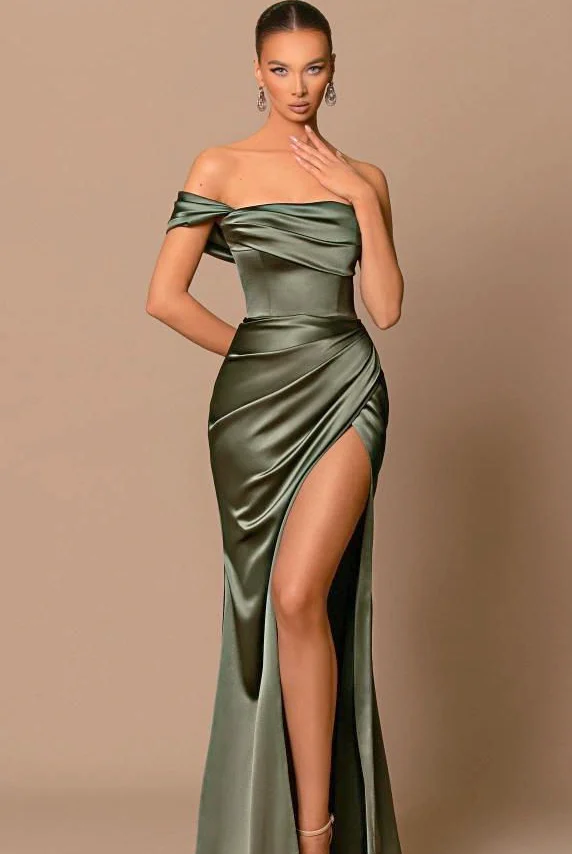
3. Examine olive colour with the broad glossy folds
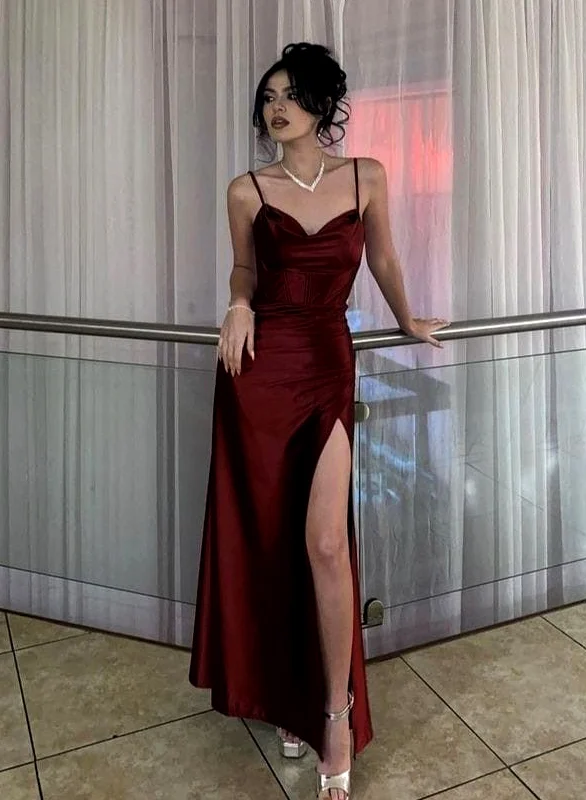
The off-shoulder green look has large reflective folds across the upper body and diagonal draping over the hip. Unlike the decorated design, much of its visible contrast comes from changes in the direction of the surface. Examine the darkest and brightest areas together without interpreting them as different fabric types. The broad folded neckline edge and high skirt opening create further strong lines. At a fitting, ask whether you want this shaped, active surface near your face or a larger quiet field of colour. That separates preference for the shade from preference for the construction outline.
When trying similar draping, walk a few steps and sit down. Folds arranged for a photograph may differ from the way the garment sits during an event. Ask to see the intended silhouette in a neutral stance, and test the opening with your planned shoes. Notice whether you keep wanting to rearrange the shape or whether it feels straightforward for your schedule. A favourite green and a favourite cut do not have to coincide in the first dress you try. Compare alternatives through both features rather than accepting unresolved fit questions because the colour is appealing.
4. Compare muted green with a softer waist treatment
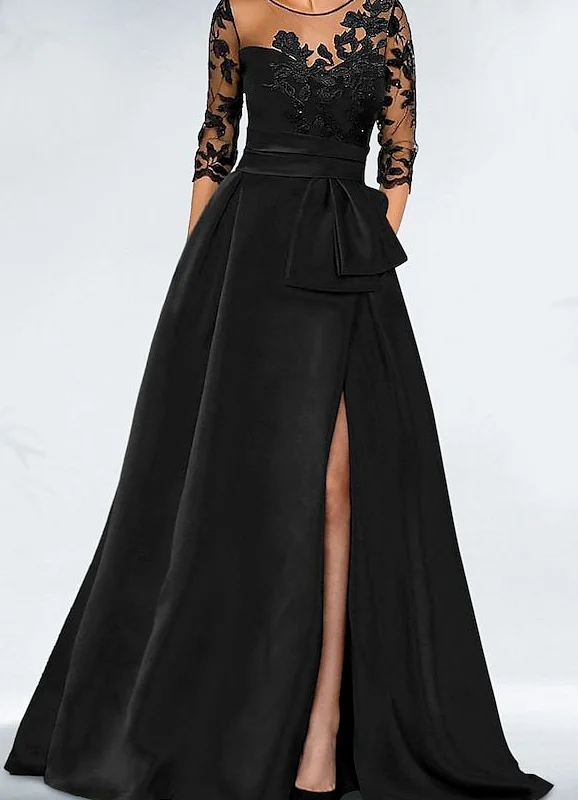
The grey-green example combines a V-neck with loose long sleeves and a waist tie. Overlapping skirt sections create a diagonal line, with a softly moving shape along the edge. Concentrate on how the tie looks beside the restrained shade. Do you want a visible knot, or should it recede into the complete surface? Try the intended arrangement on the actual dress and inspect it from the front and side. This keeps the comparison attached to a specific design decision rather than allowing a colour name to stand in for every quality of the outfit.
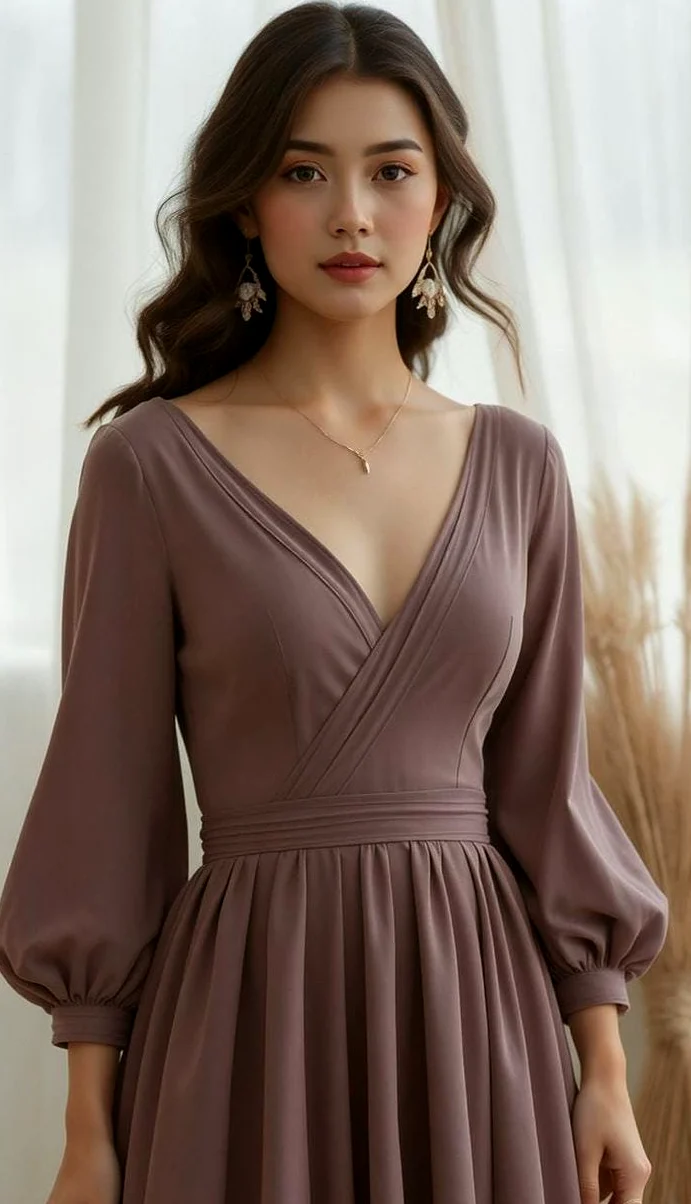
5. Use the mauve alternative as a colour comparison
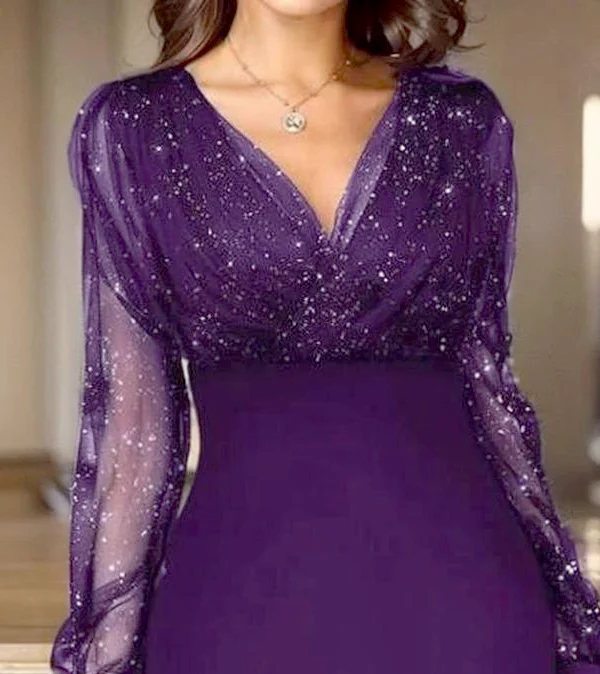
The mauve close view shows a V-shaped neckline, loose long sleeves and a broad folded waist area. Those lines provide a useful comparison with the green looks without establishing an identical silhouette. Ask whether you mainly want green itself or are drawn to the combination of an open neck area and soft long sleeves. A second colour can make that preference easier to identify. Another view is needed for the complete length of the mauve option, because the pictured crop does not show its hem. Keep this particular comparison focused on the visible upper section.
If a green evening dress remains your favourite, record the colour direction and the cut details you prefer as separate points. You might want to compare the deeper tone with a quieter upper surface, or a muted tone with stronger decoration. This is a more useful request in a shop than asking for an unidentified photographed model. You can assess new suggestions against those points without rebuilding the first picture in full every time. Note which quality has priority and where you are willing to explore other solutions, so small differences do not obscure the main preference.
6. Select accessories under the same conditions
Place jewellery, bag and shoes beside the actual dress individually. Compare one change at a time and keep the lighting reasonably consistent. This reveals whether a metallic-looking accent repeats the existing shine or introduces another visible direction. Consider its size as well: a small pale bag adds a different colour area from a broad jacket. The corset-look evening dress guide and ruffle comparison offer alternative lines when your chosen colour and preferred silhouette have not yet appeared together. Borrow individual ideas rather than treating every detail as necessary.
7. Bring colour, fit and care into the final choice
A green evening dress should appeal in its selected shade and work within the complete outfit. Record the neckline you tested, the surface effect you want and the waist finish alongside the colour. Wear the full combination for a few minutes, move around and check the same areas again. If you want alterations, describe the particular point on the worn dress. This supports a clear discussion of the intended cut and keeps enthusiasm for a colour from concealing fit questions that still need an answer before the occasion.
For care, follow the information on the actual garment. The GINETEX care-symbol explanation helps interpret its label; visible shine or a sheer-looking sleeve does not establish a treatment method. Resolve questions before the event. The final choice comes from the comparisons you have recorded: the green direction you prefer, the balance of quiet and active surfaces, and accessories with a clear role in that arrangement. You can then wear the colour deliberately, based on what you saw and tried rather than relying only on its name in an online shop.
A green evening dress can be selected through its shade, reflections and balance of quiet versus decorated surfaces, rather than a colour name alone.
Frequently asked questions
Which pictured look has the most prominent bodice decoration?
The deep green long dress has several rows of reflective details around the V-neckline and above the waist area.
Does a glossy green dress have to be silk?
No. A reflective surface does not establish fibre content; check the composition information for the actual product.
Why include the mauve view in this comparison?
It shows a V-neck and loose long sleeves in another colour, helping you decide whether green itself or that particular outline is the main attraction.