A romantic occasion dress need not always be pink and heavily ruffled for your taste. You may mean a softly falling neckline, a quieter pale area or a clear red for a special evening. The four references offer different routes: a pale strapped midi, a long red shape with reflective points, a short pink ruffled dress and a rust-coloured asymmetric look. Translate your intention into visible features first. You can then choose between actual shapes without treating someone else’s complete outfit as the only correct interpretation of romance.
Choose a romantic occasion dress through your intended effect
Record two or three concrete preferences before ordering a dress or arranging a fitting. Do you want small moving edges, a softer neck line or a restrained colour area? Add a decision about length. Those details communicate more than the word romantic alone. Then compare two dresses differing mainly in one feature. A similar colour with fewer ruffles, for example, helps reveal whether colour or the animated upper outline creates the impression you want. Keep the comparison tied to features you can actually describe.
Decide which existing accessories you intend to use as well. Your shoes and an already chosen bag can provide the first comparison conditions. View both dresses with them from the same distance. Describe what you want retained rather than simply ranking the whole pictures. You may enjoy one short dress’s bodice and another shape’s quieter length. Seek those features in real models; combining two photographs does not establish an actual offered garment with every desired characteristic, attachment and proportion already resolved.
Treat ruffles as a visible line rather than a complete styling formula
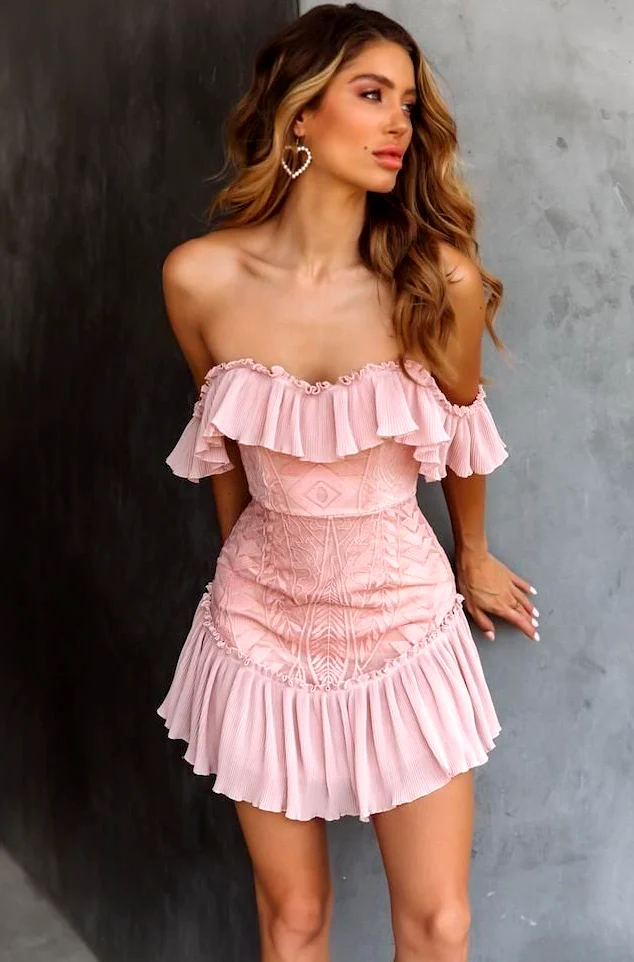
The short pink reference distributes ruffles across its top edge and lower finish. Between them sits a closer, visibly patterned central area. Decide whether that framing is the feature you want. Compare a similar upper line with a quieter hem, or a quieter shoulder shape with a moving lower edge. This helps choose the amount of ruffling that suits your intention. The effect also depends on how much space remains between the two emphasised borders and where you want attention to rest.
Try the upper shape with your planned hairstyle and without an additional necklace. Add earrings afterwards if desired. A heart-like ear shape supplies a separate small accent in the picture; you can consider that idea independently of the dress. Our evening dress with ruffles guide adds questions about moving edges. Use the relevant comparison without inferring the ruffles’ exact making or attachment from the photograph. The visible outline is enough to begin describing a preference at your own fitting.
Test a quieter pale shape as another romantic possibility
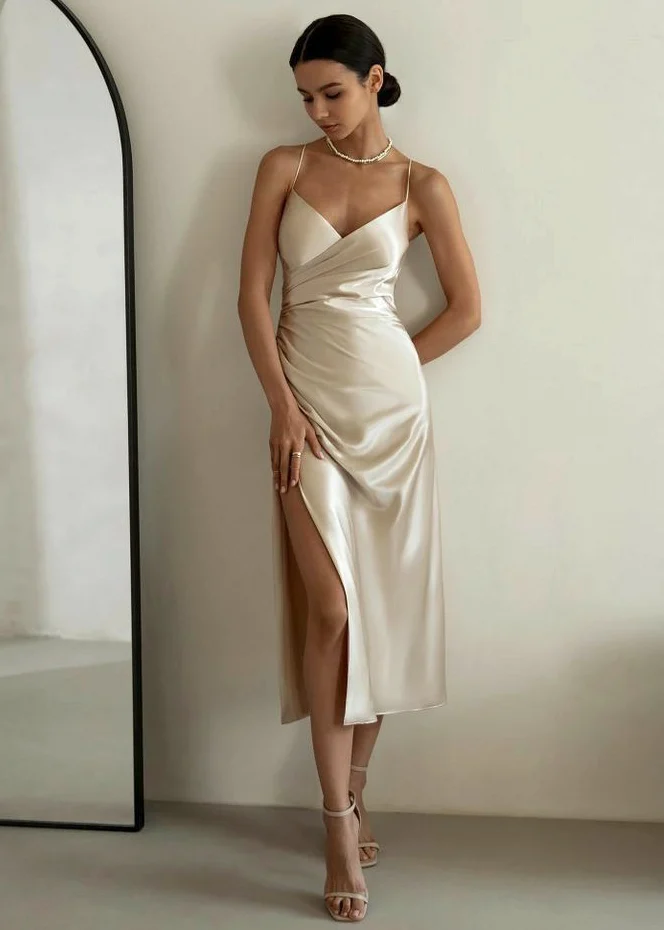
The pale midi shows fine straps, a front V neckline and fabric collected at the side. Its main area looks quieter than the double ruffle framing. If you want a less decorated route, compare those lines deliberately. Look from neckline towards waist, then at the leg opening. You may enjoy the soft front arrangement without copying the complete combination of necklace and shoes. Start with pieces you actually intend to wear and consider whether the quieter area should remain the defining feature.
Sit and stand before rearranging the side fabric. Compare the shape with a longer alternative in the same posture. For you, a romantic occasion dress may emerge through a manageable midi length and a clear neckline. Check underwear and a direct rear view on the real model. Pale colour alone establishes neither transparency nor internal construction. Choose coverage through the actual garment so that the quieter styling route works as a complete outfit rather than only as an appealing front image.
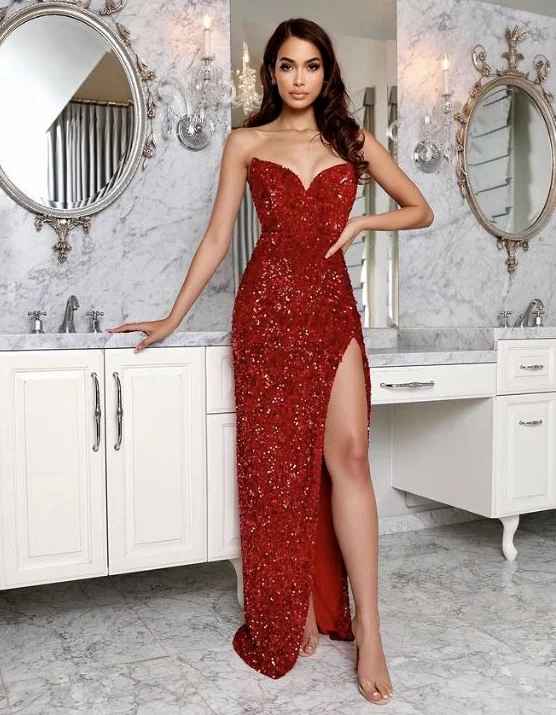
Compare red through reflective surface and softer neckline
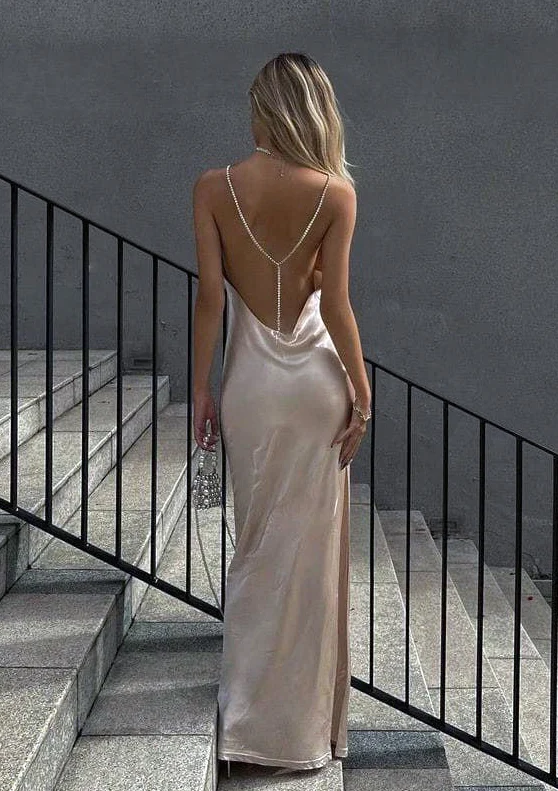
The long red reference places many small bright points across a close outline with a leg opening. The rust-coloured version works more through a falling front line, asymmetric shoulder and middle folds. Either may suit your personal romantic intention, in different ways. Do you want more attention on colour and surface or on the neckline’s route? Compare that question before selecting further reflective accessories. A photograph does not need to prove the same emotional effect for every person to become useful for your own preference.
Separate the shown colour from the complete garment you want too. The rust-coloured crop leaves the full lower finish outside the view. Request ordinary full pictures and ask about actual offered length. The red long model needs the opening included in walking and seated comparisons. A romantic occasion dress is not decided by stronger picture colour alone. You can enjoy red while seeking a quieter surface or another lower outline for your actual evening. Describe those choices individually when comparing real models.
Connect length and accessories to the same occasion
Compare short ruffles, midi and a long option through your actual sequence. Will you stand often, sit through dinner or move elsewhere afterwards? Avoid assigning an automatic styling rank to those lengths. Wear the same shoes and try the routes that matter. Our high-low party dress guide adds questions about front and rear length. Take the useful task even if your chosen dress has no uneven hem. The comparison should answer your own plan rather than require another decorative feature.
Introduce bag, earrings and outerwear one at a time. With ruffles, a bag beside the skirt may create another distribution from a strap crossing the bodice. On the quieter pale shape, a longer pendant may become more prominent. Try those relationships instead of declaring every accessory small or every detail bold. Decide how the outfit looks without the jacket too if you will remove it later. The intended style should stay clear in the states you really plan to use throughout the occasion.
Record the selected combination in ordinary views
Finally wear dress, underwear, shoes and additions together. Walk, turn, sit and greet someone. Observe the area carrying your styling idea: upper ruffle, quiet front surface or falling neckline. A romantic occasion dress becomes your considered choice when you enjoy that relationship through ordinary actions too. Photograph front, side and rear and note the actual pieces used. Discuss strap, length or middle alterations separately on the real garment rather than assuming the pictured shape settles every possible adjustment in advance.
Clarify composition and care through the specific dress’s information. GINETEX explains care symbols; visible ruffles or reflective points prescribe no treatment. Ask about work, cost and another fitting before agreeing to alterations. Repeat the comparison with the same additions afterwards. Your selection then connects a personal romantic effect to a concrete shape, instead of using a general style word as a substitute for your own decision. The feature you actually enjoy remains the basis for the complete outfit.
Choose a romantic occasion dress through the effect you want. Compare ruffles, quiet surface and red separately, then test length, bag and jewellery on real models.
Frequently asked questions
Must a romantic outfit be pink?
No. Describe the intended effect through visible features. A quieter pale area or red can belong to your personal interpretation.
How can I decide the amount of ruffling?
Compare a similar colour with another upper or lower edge. Keep shoes and accessories unchanged so that the ruffle difference stays clear.
What is missing from the rust-coloured reference?
The complete lower finish and a clear rear view. Request both for the actual model offered.
When should I add jewellery?
After the main shape is clear. Add one piece at a time rather than changing necklace, earrings and hair simultaneously.