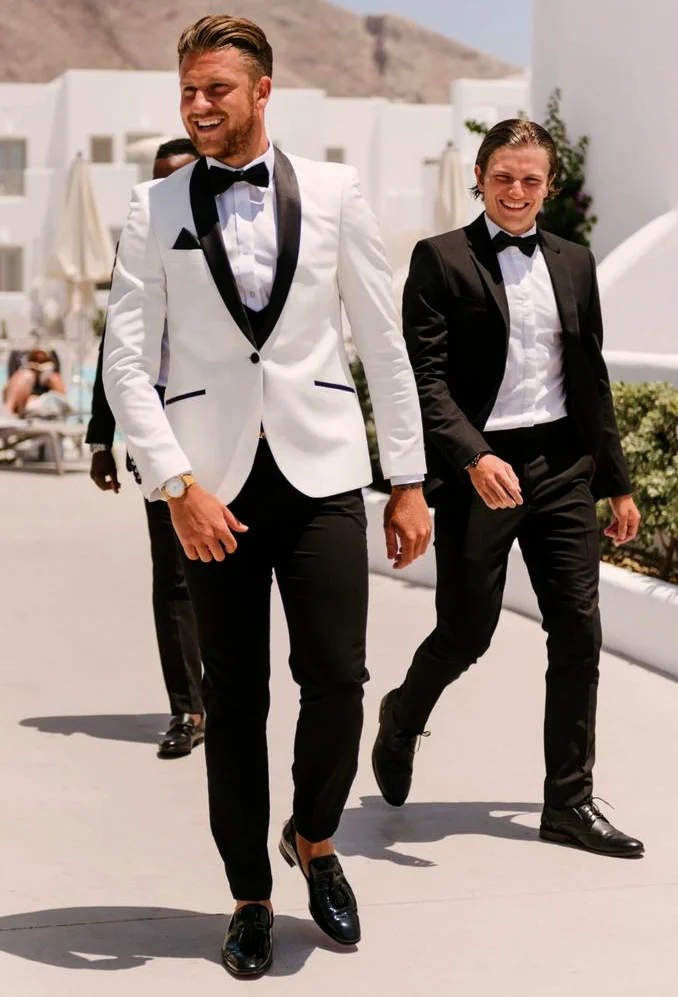
A pale jacket with a dark lapel appears beside a darker outfit in this outdoor photograph. In front, the rounded dark lapel area, bow tie and trousers create clear counterpoints to the light jacket. Dark lines also mark pocket areas. The second person wears a dark jacket with a light shirt and bow tie. Both are pictured walking. This direct comparison helps identify the larger light-and-dark distribution without deriving a universal dress code or material claim from the sunny setting.
Start the consultation by deciding whether the jacket should be a pale leading area or whether you prefer a continuously darker direction. Compare existing shirts and trousers on the actual garment for that purpose. Add bow tie and small chest accent afterwards. The fastened jackets do not show the version after opening or removal; check that state too when it belongs to your plans. Name the relationship you enjoy: a strong dark frame around a light surface or a quieter overall colour. This turns the paired picture into a concrete discussion point rather than a requirement to buy both complete photographed outfits.