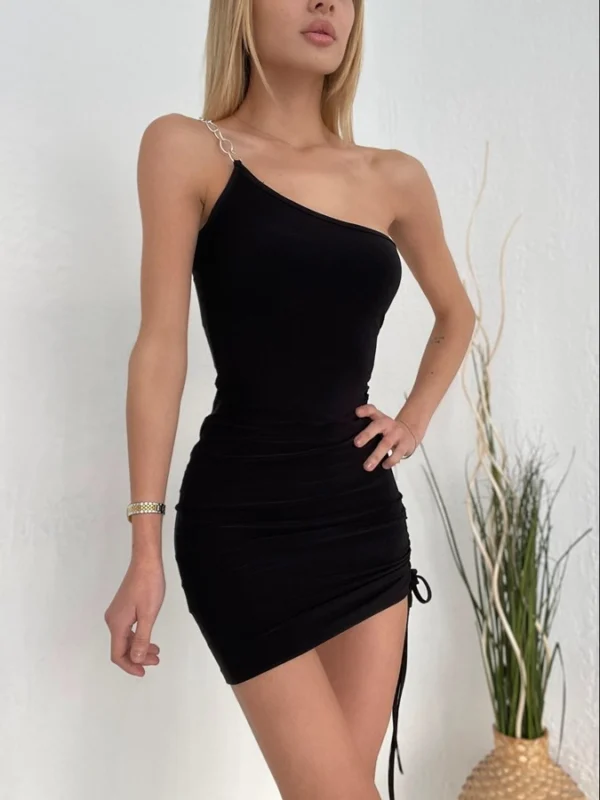
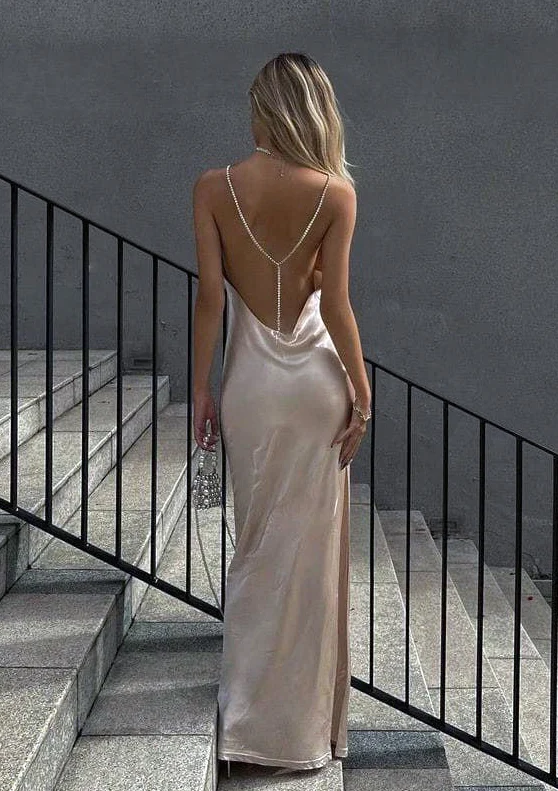
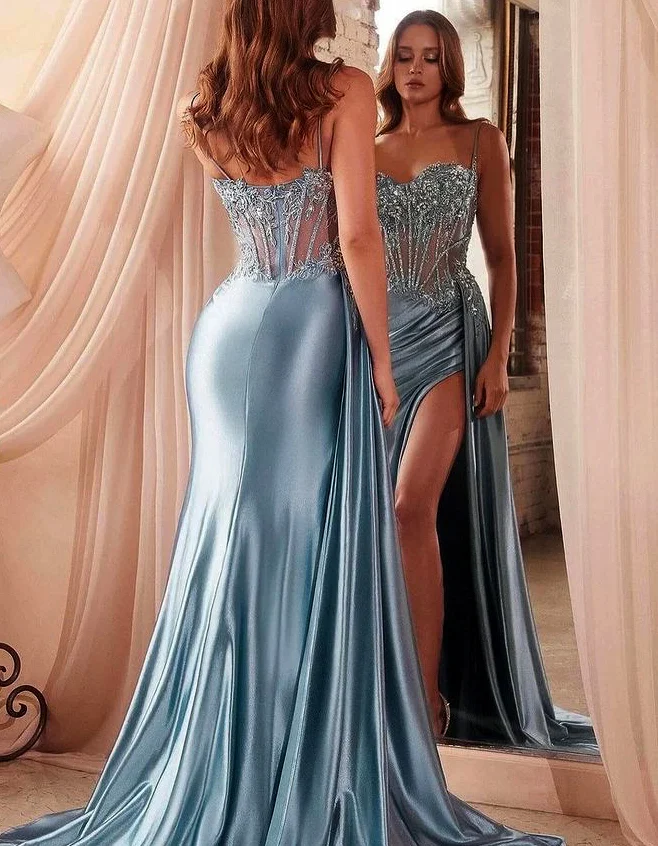
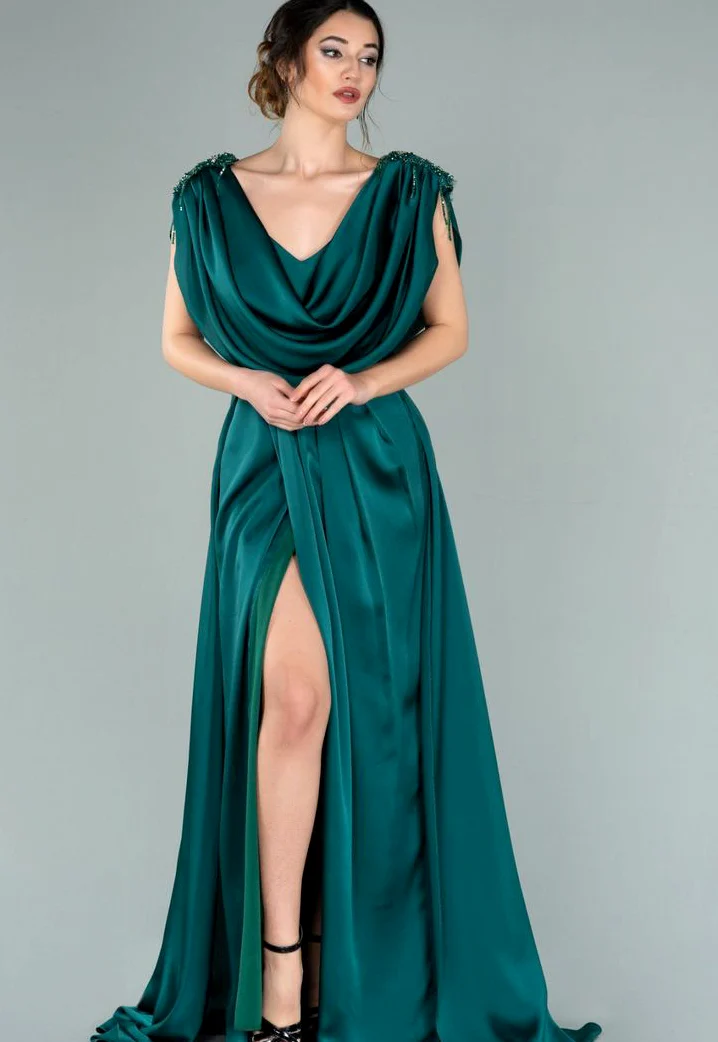
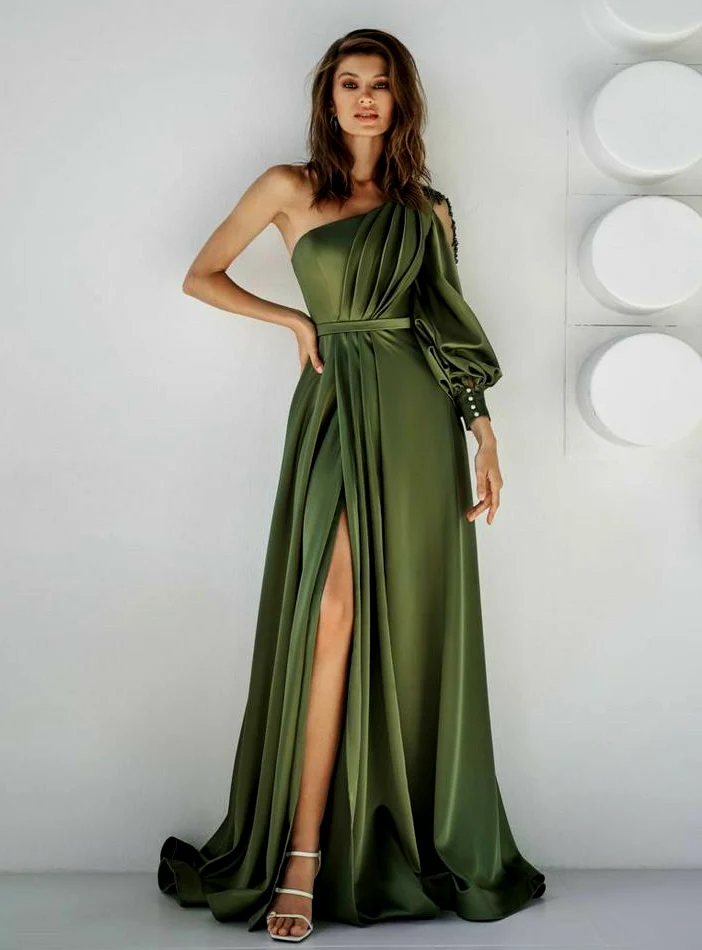
Choose a flowing party dress through its actual drape during your own movements. The four references offer different starting points: a long blue look with rear bodice lacing, exposed upper back and mirror view, a dark green dress with a falling neckline, an olive one-shoulder form and a shorter pale strapped dress with side gathering. Compare more than colour. Decide where fabric collects, where it runs freely downwards and how much length you actually want to carry. A photograph offers the shape idea; a fitting connects it to your evening.
Assess a flowing party dress without held fabric first
Have the actual dress shown in ordinary standing posture. Hands and arms should be relaxed so that you see its fall without deliberate spreading or lifting. Compare front, side and back. Identify the area you especially enjoy: a quieter rear surface, folds at the waist or a softly falling neck line. This turns a general wish for flowing fabric into a concrete shape preference you can compare across other actual models, without needing to like every detail equally.
Then walk a few steps and stop. Turn and wait until you are still again. Notice where fabric settles and whether you want to rearrange it. A picture may show a carefully selected moment; you also need the ordinary sequence. Compare two dresses through the same actions rather than seeing one only standing and another only moving. This keeps the question about preferred drape understandable and connected to the real fitting instead of a single photographed pose.
Compare the waist and gathered area separately
The olive reference collects visible folds around the middle. The dark green model creates different areas around neckline and upper waist. Look first at where the gathering begins and where its lines continue. Do you want a clear middle emphasis or a quieter continuous area? You can enjoy either, but they call for different comparisons. Try a similar colour with another fold arrangement if you cannot yet explain your preference, separating enjoyment of colour from enjoyment of construction.
Sit and stand without immediately straightening the fabric. Look at the resulting form and decide whether you enjoy it. A flowing party dress needs to work in your ordinary postures, beyond a carefully arranged standing view. Check whether bag, arm or an extra band falls exactly over the folds you want visible. Have alterations at the middle assessed on the actual garment so that your preferred line is considered in the new shape rather than simply carried over from the original picture.
Treat length and opening as a shared choice
The long blue shape and green floor line raise different length questions from the shorter pale reference. Begin with your route: arrival, stairs, table and dance area may require different actions. Wear your planned shoes and walk with your normal stride. Compare more than a standing hem; include how you want to stop and turn. A shorter form can be your preferred practical choice even if a long picture first attracted you. Your actual sequence deserves its own assessment.
Test a leg opening while walking and seated, including a side view. Decide coverage according to your preference. A longer stride and a quiet seated posture reveal different arrangements. Our high-low party dress guide adds questions about front and rear length. Use it for comparison. Opening and your own shoes belong together in the real fitting before you agree to shortening or another change. You can then choose through use rather than estimating a measurement from a still picture.
Connect upper drape to back and underwear
The dark green reference frames the upper area with a falling neckline. The olive form distributes shoulder and sleeve asymmetrically, while the pale dress uses fine shoulder lines. Compare those arrangements separately from colour. Try your intended underwear and inspect the back. An appealing front fold cannot answer which attachment or coverage you want behind. Include that question in the first bodice comparison. You may enjoy a similar lower shape while preferring a different upper arrangement for yourself.
Reach for a glass, bend slightly and greet someone. Notice whether you frequently want to rearrange the upper area. In the blue reference, a mirror adds a front view to the exposed upper back; still request clear direct views for an actual offer. A reflection does not explain every attachment. If you need another underwear arrangement, try it before final dress alterations. Both parts influence the real combination you will wear, and any change should be assessed through the resulting garment.
Test bag and outer layer against the folds
Add the actual bag in its intended carrying position. A hand-held bag and shoulder bag create different postures. Compare where hands and straps fall across visible folds. You may want the upper drape unobstructed or need both hands free for greetings. That task helps choose accessories through use and effect rather than simply looking for a surface similar to the dress. Decide where the bag you enjoy will actually sit in your own plan.
Put on the planned jacket or other outer layer afterwards. Check open and fastened, sit and remove it again. A flowing party dress may appeal with a shorter layer or look quieter beneath a longer one. Our tiered party dress guide adds questions about overlapping areas and accessories. Transfer only the comparison that helps. You need not add more layers when the dress’s existing arrangement already serves your plan, and the outfit after removing outerwear deserves attention too.
Clarify composition and changes on the actual model
Visible surface cannot supply fibre, weight or a particular wearing sensation. Ask for the offered model’s information and details about inner layers. Decide whether you want that actual composition once it has been explained. You can enjoy a dress’s fall while still resolving a product question before buying. Record the concrete version so that later discussion refers to the same piece. Both visual preference and real product information can remain clear parts of the choice.
Discuss hem, straps or waist alterations separately. Show the fold area that matters to you and ask about the intended result on the actual dress. Clarify scope, cost and another fitting. After changes, bring the same shoes, underwear and bag back into the comparison. This makes it possible to check whether chosen silhouette and ordinary actions still work together. An earlier photograph cannot replace that final test, even when the alteration was described as small. Assess the area you wanted retained on the finished piece.
Rehearse the complete evening sequence briefly
Finally wear the complete combination and repeat a few important actions. Walk, turn, stop, sit and pick up the bag. A flowing party dress is deliberately chosen when you know how it settles after those actions and what rearrangement you may want. Save ordinary front, side and rear views. Note shoes and outerwear so that you can recreate the choice with the same pieces later, without confusing another accessory’s effect with a change in the garment.
Read the care label on the actual dress. GINETEX explains the symbols. A glossy or soft-looking fall supplies no washing or steaming method. Ask about unclear information for the finished model. Your selection then connects visible fold distribution, desired coverage and suitable length to concrete use. The appealing picture idea becomes a combination whose behaviour you have tested under your own conditions, with care information attached to the same actual piece.
Choose a flowing party dress through its fall after walking, turning and sitting. Compare folds, opening and length with your own shoes and bag.
Frequently asked questions
Does a flowing look have to reach the floor?
No. Compare a shorter form with visible gathering too. Choose length through your actual route and shoes.
How should I test waist folds?
Sit and stand without immediately straightening the fabric. Inspect the resulting shape and where bag and hands fall.
Is a mirror picture enough for the back?
No. Request clear direct views of the actual model and have important connections explained.
When should bag and outerwear join the fitting?
After you have seen the basic fall. Test both in real carrying positions and repeat movements in the complete outfit.