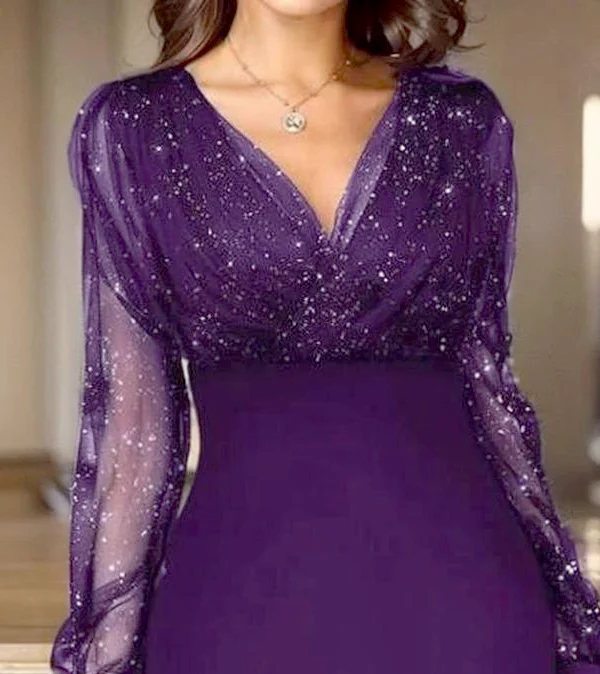
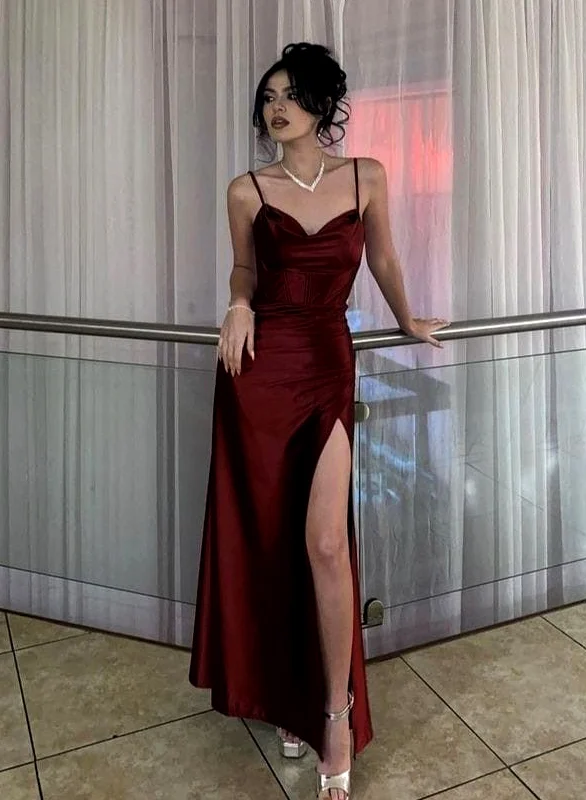
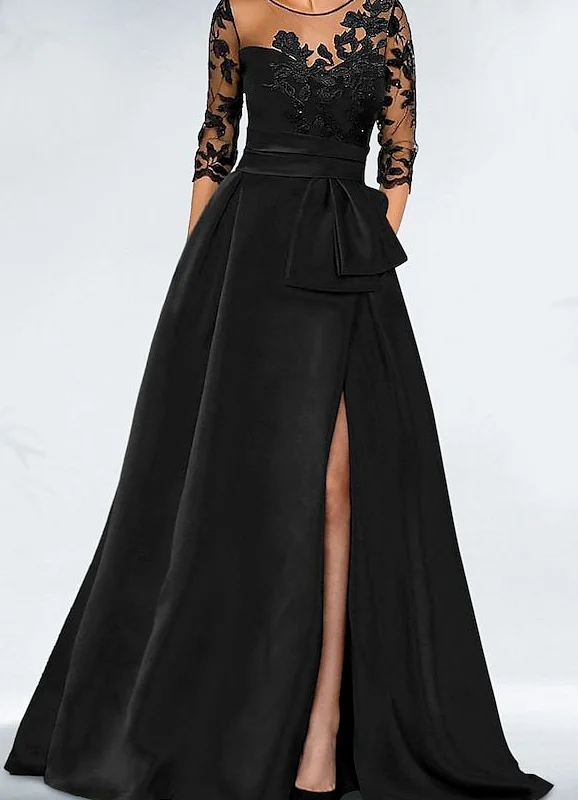
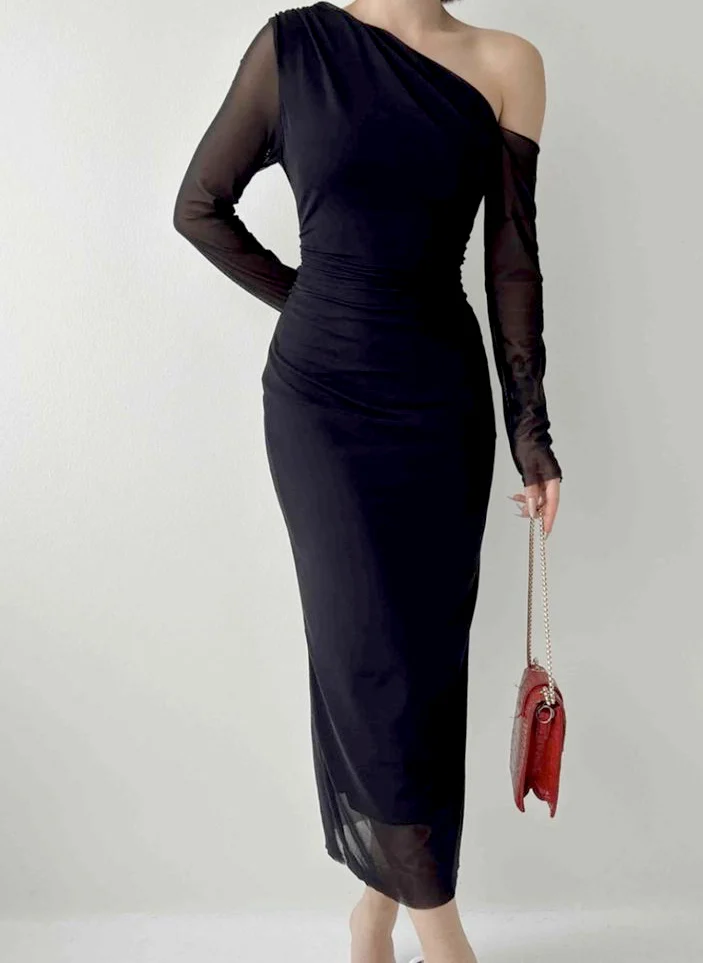
A pleated evening dress becomes easier to choose when you first describe the folds you want. Do you mean many fine repeated lines, a few broad placed folds or draping across the bodice? These effects can look related in a small photograph, but they are not interchangeable product descriptions. The four references offer different surfaces and fold distributions: a quieter black look, a shorter fuller skirt, a blue draped upper section and an open-back view above a longer skirt area. Use them to distinguish visible forms. No picture here is treated as proof of a specific pleating method or permanently fixed creases.
Define a pleated evening dress through its fold pattern
Begin with a concrete description instead of a fabric word alone. If you want a dense regular repetition, write that explicitly. If you prefer a few larger lines below the waist, record that too. Ask which term describes which area of the actual dress. A pleated detail in the bodice is different from a skirt built that way throughout. This distinction helps comparison and prevents an order based only on an unclear headline.
The Kent State University Museum exhibition Pretty Pleats explains varied pleat forms and identifies stitching and heat treatment as possible methods. That supplies no care instruction for your own dress. For shopping, ask about the actual construction rather than inferring a method from a picture. A visible fold arrangement can be useful design information while its making and care still require separate product details.
Pleated evening dress: distinguish draping, gathers and skirt volume
In the blue dress, several directed lines sit at the bodice while the longer skirt falls differently. The short pale example has larger areas below its waist. The black reference provides a quieter contrast. Compare these regions separately. The presence of a fold does not establish that the whole dress has the repeated pleating you intended. Request a clear close view without strongly changing light for an online offer.
Use simple questions: where does the fold begin, how far does it continue and does it repeat across a larger surface? Look at front, side and back as well. Your preferred effect should be visible or clearly described in a pleated evening dress offer. If only the desired movement is similar, consider another fold solution deliberately. You can then choose an effect without presenting two different constructions as the same product feature.
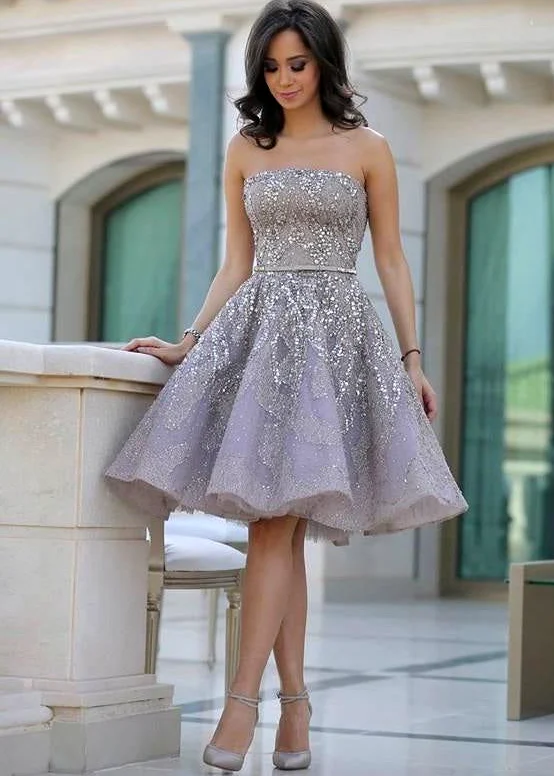
Check waist position and ordinary standing before the pose
Let the skirt hang freely before spreading it sideways or leading it with a hand. Compare where the folds start below the waist and how much space they occupy in ordinary standing. Does the emphasized line sit where you want it? A tightly placed waist or raised strap can move other areas. Check several regions together before assigning an unwanted arrangement to one isolated point.
Sit on an ordinary chair and stand again. Look before arranging the surface with your hands. Do you enjoy its return to an ordinary fall? Describe the result concretely at the fitting. A photograph of a broadly spread skirt cannot replace that experience. The decision depends on your preference and the actual garment, rather than a universal rule assigning fold types to particular bodies. Repeat the same test in another option to make the comparison clearer.
Compare length and openings with the same shoes
The shorter reference exposes different leg areas from the long blue versions. Choose length separately from the fold idea. Wear your intended shoes, walk normally and make a small change of direction. With a slit, also check sitting and a side view. A long hem without an obvious opening still needs a walking trial; folds alone guarantee no particular stride length.
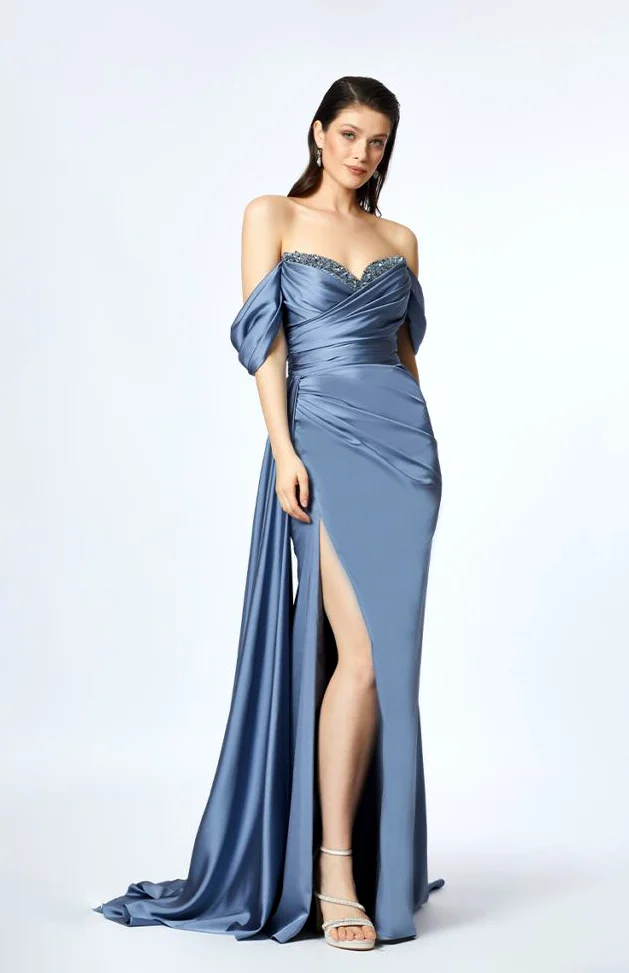
If your pleated evening dress needs shortening, ask about the future lower edge before agreeing. Will work happen there or elsewhere, and what will the fold pattern look like afterwards? Have the answer explained on the actual model. An orderly line in a photograph does not establish easy alteration. Record the agreed length with the shoe pair used so that the final fitting repeats those conditions instead of introducing a different heel or posture.
Resolve bodice, back and underwear separately
The back reference shows narrow crossing lines over a larger open area. Its front also appears in the mirror, but that is another viewpoint rather than an explanation of internal support. Ask how the actual back arrangement opens and closes. Try planned underwear and check coverage while seated and leaning forward. An interesting skirt surface cannot answer these upper-body questions at the same time.
With the shoulder-focused blue version, test arm movement and the top edge too. Our corset-look evening dress guide adds questions about bodice construction, while the evening dress with ruffles comparison explores another distribution of volume. Use these shape references to name your priority. They establish neither internal structure nor a pleating method in any of the images shown here.
Choose accessories that leave the surface readable
Begin with a bag and relatively few additional lines. A strap crossing the body can interrupt the view of the folds. You might deliberately enjoy that contrast or prefer to leave the surface clearer. Hold alternative bags beside the dress first and then test the real carrying position. Decide from the complete outfit rather than from the beauty of an accessory on its own.
Compare your pleated evening dress with and without an outer layer as well. Put on the jacket or wrap and sit in it. Notice which skirt area remains visible and whether you can use the layer without continually rearranging it. Neck jewellery belongs to the neckline decision; it does not automatically need to repeat the fold pattern. A clear personal emphasis can be more useful than collecting as many similar textures as possible.
Base care and storage on the actual product
Read the label before cleaning, ironing or using steam. GINETEX explains the care symbols. A manufacturing technique that can use heat is not permission for a treatment at home. If instructions are unclear, ask about the complete dress, including lining and decoration. A smooth or shiny photographed surface supplies no additional care instruction.
Discuss transport and storage with the provider too. Ask how the skirt should be supported and what you may do after unpacking. Keep composition, care details and agreed alterations together. The result should combine a clearly described fold pattern, suitable length and a working bodice. You then choose a dress for an effect you understand and have tested in the actual garment, instead of reading every visible fold as the same product promise.
Define the fold repetition you want in a pleated evening dress. Compare it with draping and gathers, then check the actual garment’s fit, length and care.
Frequently asked questions
Does every visible fold establish fine pleating?
No. Compare the repetition and extent of the lines and ask about the actual model’s construction. The pictures show different fold effects.
Does heat in manufacture mean I can steam the dress?
No. A making method is not care permission. Follow the finished garment label and seek a suitable explanation from the provider.
What should I know before shortening?
Where the work would happen and how the lower edge and fold pattern would look afterwards. Have the solution explained on the real dress with your shoes.
Why let the skirt hang before arranging it?
To see its ordinary fall. Check it after sitting and standing as well, before smoothing the surface with your hands.