A satin evening dress can make its impression through a broad reflective surface, pronounced draping or an unusual neckline. The five references here show these design ideas in gold, blue and green tones. Their visible sheen cannot establish a particular fibre, so check the actual garment’s composition and care information as well as its appearance. This guide concentrates on choosing a shape: where do you want the light to emphasise the silhouette, which openings do you want and how does the draping behave when you move? Those questions lead to a more useful comparison than assuming that every shiny dress delivers the same appearance or wearing experience.
Choose a satin evening dress by its overall surface
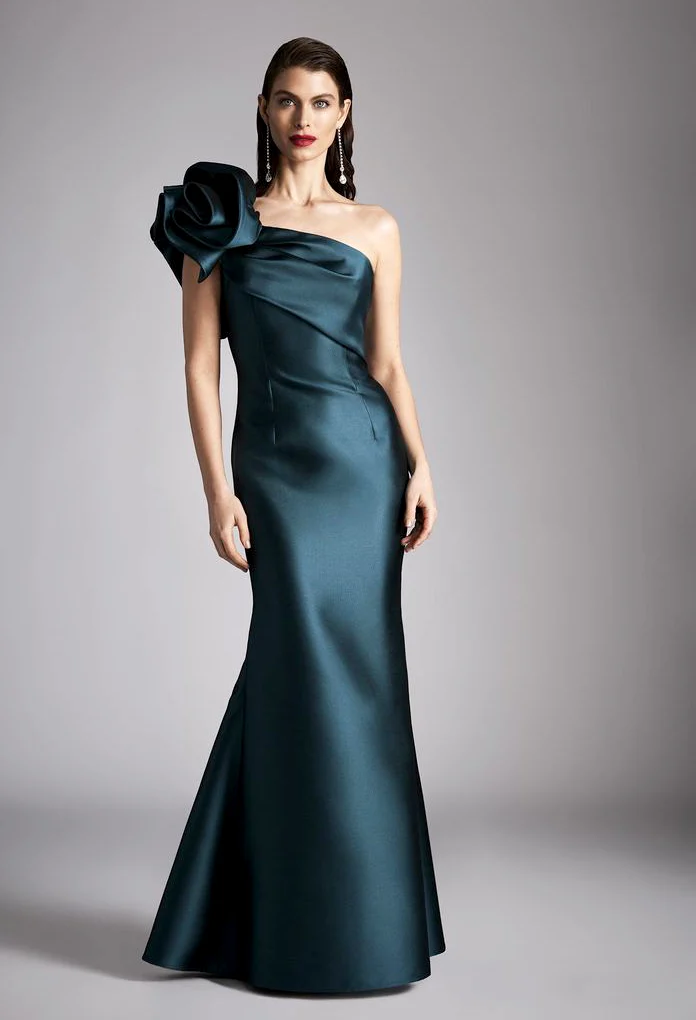
Look at the complete dress before committing to a particular decorative detail. A long, relatively uninterrupted front directs attention differently from openings between the chest and waist. The gold reference divides the centre with cut-outs, while the dark blue example creates a more continuous narrow line with a shoulder flower. Imagine both with the same simple bag. Which arrangement would you most like to preserve? Once that is clear, consider colour and jewellery. This order makes it easier to build one coherent outfit. Collecting separate attractive details first can leave you with accessories and clothing that all pull attention in different directions.

Compare shine under more than one light
A bright streak in a photograph may reflect lighting, the position of a fold or the camera angle. It does not prove quality or composition. For an online offer, ask for additional views; where possible, examine the real dress in even daylight and ordinary indoor light. Turn slowly and see which areas become brighter. The purpose is to understand the appearance you enjoy, rather than follow a rule about flattering shine.
Take an unfiltered comparison photograph if you want a record for later. A single studio image, particularly of a smooth reflective surface, gives limited information about how the complete garment will look when you wear it in another setting. When choosing a satin evening dress online, request relaxed front and rear views with consistent lighting.
Distinguish intentional draping from unwanted tension
Soft folds at the neckline or waist may be part of the design rather than evidence that a dress is too large. Equally, an unexpected line of tension should not automatically be dismissed as decoration because the surface is shiny. Ask for an assessment on the actual garment and compare standing with sitting.
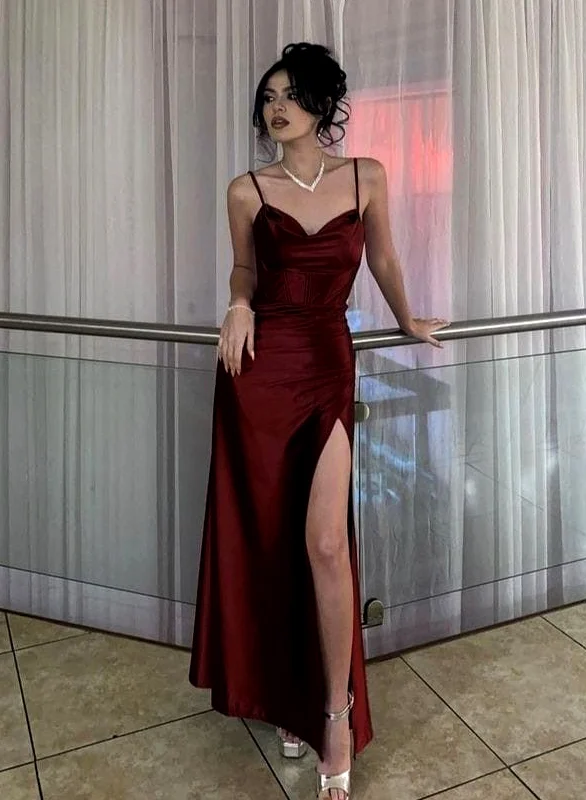
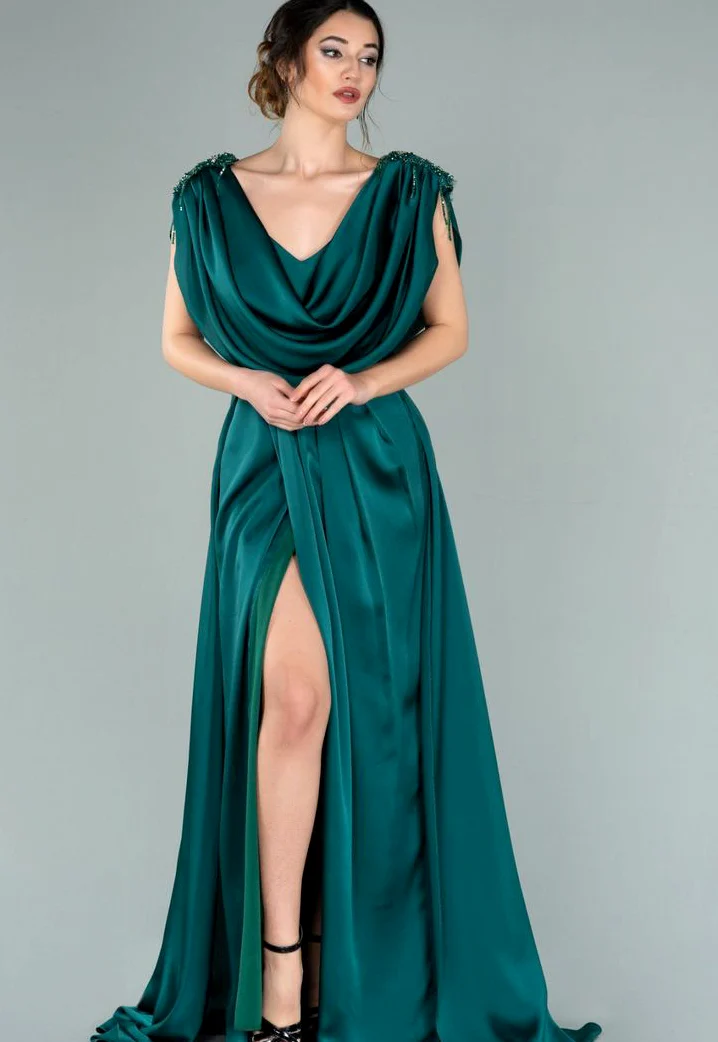
The deep green reference has a broad falling neckline, whereas the pale green example uses narrow straps and several horizontal folds. Consider how much movement you want around those areas. An adjustment to a strap or hem may alter the way other folds sit, so any proposed alteration should be checked in the complete dress rather than judged as an isolated change.
Plan exposed shoulders and underlayers together
A diagonal neckline, narrow straps and a halter arrangement raise different questions about what to wear underneath. Decide the support and coverage you personally want, then try that arrangement under the real dress. The photographs do not reveal a reliable internal construction. A visible seam or a smooth bodice cannot promise a particular level of support. Raise your arms, lean slightly forward and sit down. If you repeatedly have to rearrange the upper edge, ask about fit or compare a different solution. For asymmetric designs, look from both sides. A front view only partly explains the effect of the exposed shoulder and where another layer would sit.
Try cut-outs and slits while moving
The gold dress uses openings around the middle, while several green references open the skirt over the leg. These are different design decisions. For a cut-out, check where its edge sits when seated and whether you retain the coverage you want. For a slit, try your walking stride, stairs and a side view. Use the planned shoes throughout.
An opening that looks high in a posed image can fall differently on the actual wearer, and a quiet standing pose does not show how much it changes during a step. Make the decision using your own comfort level and the event’s expectations, rather than treating the apparent position in a photograph as a garment measurement.
Connect jewellery and bags to the main feature
The dark blue reference already gives considerable attention to a large shoulder flower. Start with little extra volume nearby, then compare a stronger accessory if you want one. The gold example directs the eye through narrow connections and openings; a bag strap across the body might partly cover that arrangement. Hold different bags beside the dress first, then test their real carrying position.
Against a draped green neckline, a long piece of jewellery may rest on the surface or disappear between folds. These observations are options rather than prohibitions. A satin evening dress with a large shoulder accent may call for a different bag position from a version with an open middle. They help you decide which area you want to keep visible and whether an addition contributes to the overall composition.
Plan satin evening dress length, care and transport
Check the hem with the intended heel height and walk a route similar to the one at the venue. A skirt spread out for a photograph says little about negotiating a doorway or a space between chairs. Have necessary shortening assessed on the actual garment. Also read its care label before planning any treatment or pressing.
GINETEX distinguishes washing, bleaching, drying, ironing and professional textile care. A shiny appearance does not provide a separate instruction. If you are uncertain about packing or storage, ask the provider or an appropriate professional about this particular dress. The morning of an event is a poor time to experiment with an unfamiliar treatment on its most visible panel.
Decide between two complete versions
Before committing to a satin evening dress, build two actual outfits: perhaps a narrow shape with shoulder decoration and a draped shape with a leg opening. Use the same shoes if the lengths allow it, then add the appropriate bag and outer layer to each. Record which is easier for sitting and walking as well as which appearance you prefer. For another bodice comparison, see our corset-look evening dress guide; for more volume ideas, explore evening dresses with ruffles. The GINETEX symbol guide explains care markings. Choose the dress whose visible design and practical handling work together for your evening, with remaining questions resolved before the final commitment.
Compare a satin evening dress through reflective areas, draping and neckline. Test movement and hem on the real garment, then check its composition and care label.
Frequently asked questions
Does shine prove a silk composition?
No. Visible reflections cannot establish a particular fibre. Read the composition for the specific offered garment.
Do horizontal folds always mean poor fit?
No. They may be intentional design features. Have unexpected tension assessed on the actual garment and compare standing with sitting.
What should I test with cut-outs?
Check edges while sitting and leaning slightly forward, with your intended underwear. Decide using the coverage you want.
How can I style a large shoulder flower?
Compare hair, earrings and outerwear on the actual dress, then choose further accents once the shoulder feature works as intended.