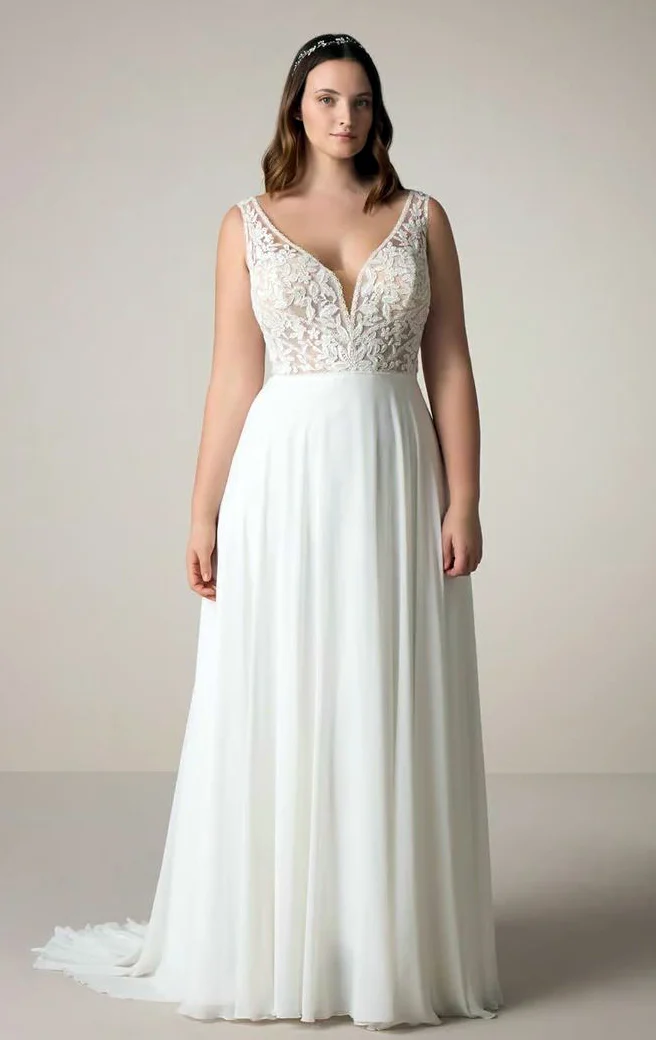
Broad shoulder sections, a low central neckline and a patterned upper area define this front view of a pale dress. A distinct waist transition leads into a comparatively uninterrupted skirt, with a small amount of fabric extending onto the floor. The contrast between the detailed top and quieter lower area is the useful visual feature. The photograph does not identify the fibre or show the back construction.
For a similar model, begin by asking how the neckline and shoulder sections are supported. Try reaching forward while watching the underarm and centre opening. Decide whether the balance of the broad shoulder shape and lower neckline matches the coverage you want. These are separate preferences; liking one does not require accepting the other unchanged.
When discussing material, ask whether the label covers the patterned upper layer and the skirt equally, and whether the lining is listed separately. A smooth-looking lower surface cannot answer that question. Save the composition beside this reference so you remember which parts were actually documented and which were simply visual inspiration.