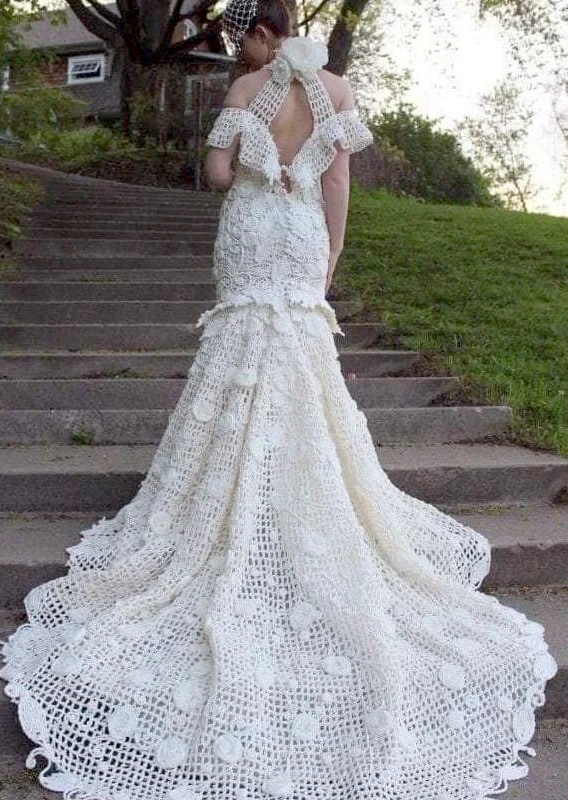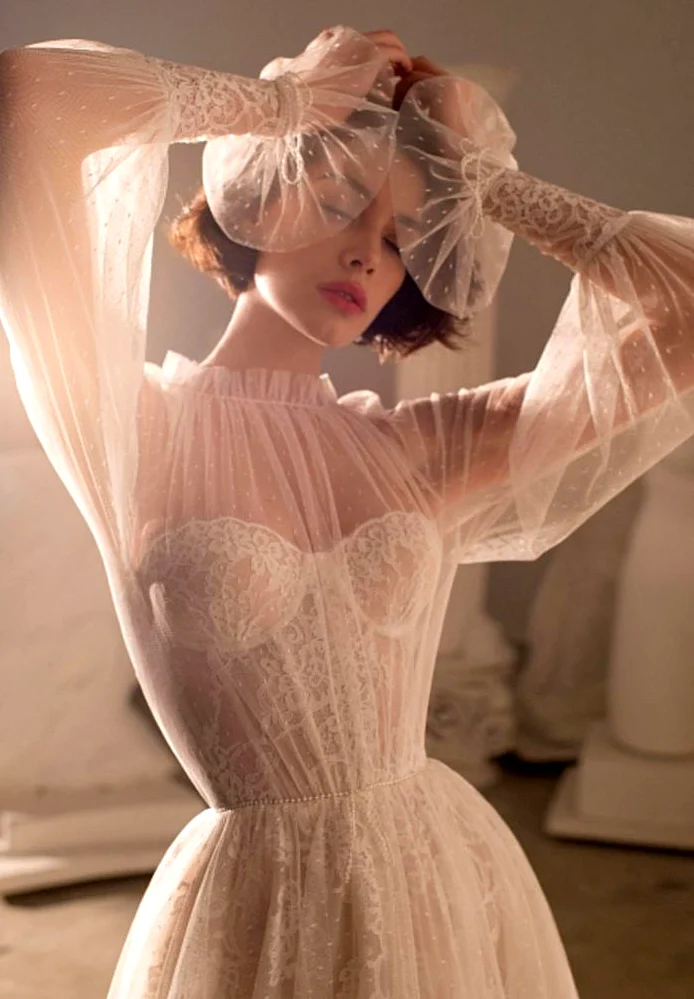
A boho wedding dress can be compared through the details you can actually see: a patterned bodice, an open shoulder line, flared sleeves or a chosen headpiece. A romantic pattern alone does not tell you how a dress will feel during a ceremony, dinner or dancing. Start with the details you enjoy, then compare how each dress works when you move.
This guide compares three existing images: a patterned sheer bodice with long sleeves, an off-the-shoulder dress with a full skirt, and a closer-fitting silhouette with bell sleeves and a hat. These are visual styling references. The photographs do not establish a brand, fibre composition, price, availability or how the garments are constructed inside.
Boho wedding dress: which details shape the look?
Look at a full-length photograph before concentrating on lace or jewellery. Notice where the waist is defined, how the skirt falls from that point and how much space the sleeves occupy. A wide skirt and a narrow skirt create different outlines even when both have a similar floral pattern. Neither shape is a requirement for a boho look.
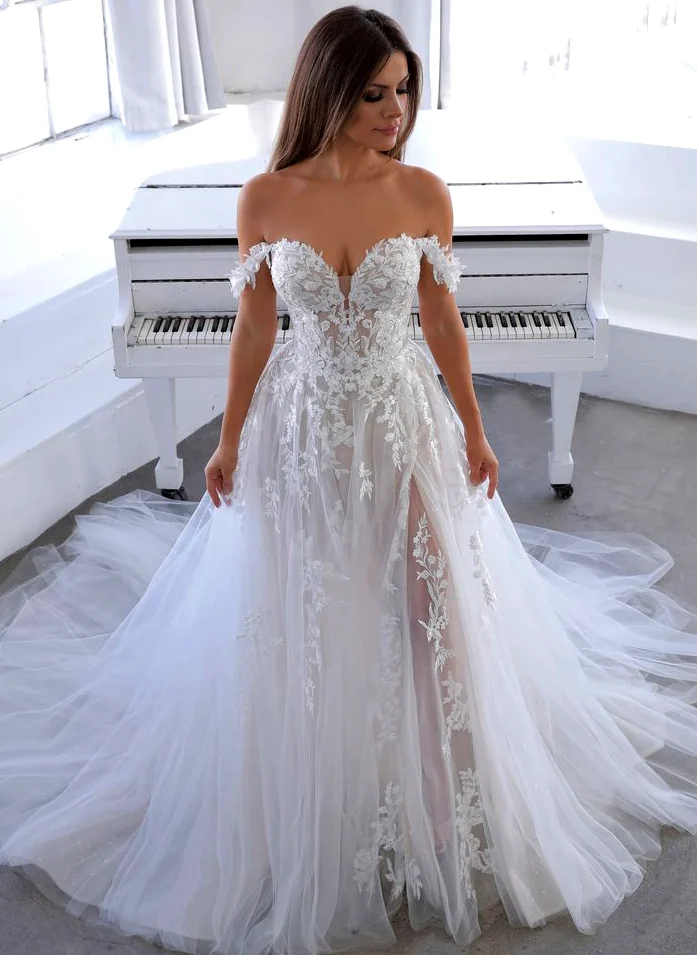
For your first fitting, choose two contrasting silhouettes rather than several nearly identical dresses. Try a fuller skirt alongside a straighter shape. Record which lets you sit and walk comfortably, and which details you would keep. This gives you a useful direction without turning a body-shape label into a rule about what you should wear.
Compare the three looks
The first look places most of its detail around the upper body. A pale pattern stands out against sheer areas, long sleeves frame the neckline and a clear waist divides the bodice from the skirt. Use it as a reference when you want to explore transparency. At a fitting, compare the actual lining and your intended underwear in different light.
The second look combines a heart-shaped neckline, an open shoulder line and a full skirt. The visual emphasis is on the transition from a close bodice to a wider lower half. Check whether a similar neckline stays where you want it when you sit, reach and turn. A photograph cannot confirm the support or fastening of the real dress.
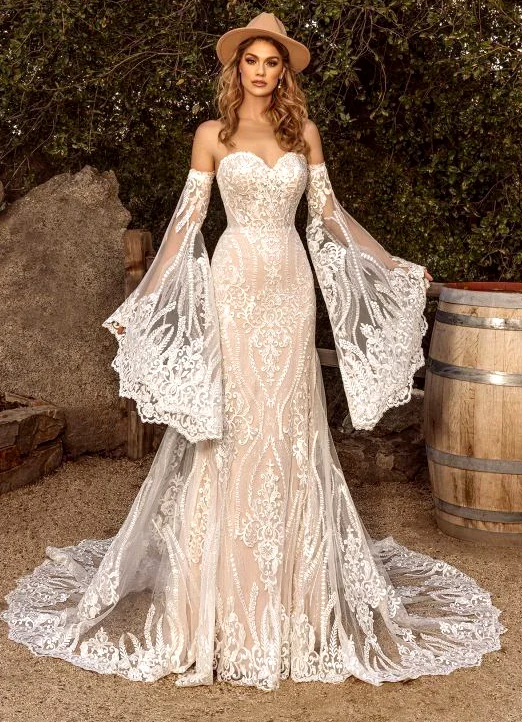
The third look combines wide bell sleeves with a narrower silhouette, a long train and a light-coloured hat. The sleeves and headwear compete for attention in an interesting way. Compare the outfit with and without the hat, then test whether your arms can move freely while holding a bouquet or a glass.
Make the fitting reflect your day
Walk several paces, turn slowly and sit down for more than a moment. Reach forward as if greeting a guest. Ask whether a train can be managed for the parts of the day when you need more freedom. Practical questions are easier to resolve before alterations are agreed than after the finished garment arrives.
Bring shoes with a similar height and shape to the pair you expect to wear. If you have not chosen them, tell the fitter instead of guessing a final hem length. Look at the dress from the front, side and back, with your arms relaxed. Ask permission before taking photographs so that your comparison is consistent with the boutique's policy.
Check transparency in useful light
A sheer-looking panel in a styled image may be lined differently in a shop sample. Examine the actual garment against your skin and with the underwear you plan to use. Compare daylight with indoor lighting, and include a photograph from a normal conversational distance. You are checking the appearance you want, rather than looking for an abstract level of coverage.
Ask which parts can be lined or adjusted and how those changes might affect the pattern. Avoid assuming that an extra layer can simply be added everywhere. Get the proposed change and its cost clearly described before committing. The answer depends on the individual garment, its seams and the work the alteration specialist can offer.
Build accessories around one focal point
Start with the dress alone. Add earrings, a necklace, a veil or a hat one at a time, photographing the same view after each change. With a heavily patterned bodice, a small piece of jewellery may be enough to complete the composition. An open neckline gives you room to compare a necklace with a pair of stronger earrings.
A hat can change the outline more than a small accessory, particularly beside wide sleeves. Check the combination from several angles and consider when you will wear it. If you want both a veil and a hat, try the complete arrangement rather than judging two separate photographs. Styling should support your preferred look and remain manageable during the day.
Plan for the setting and the timetable
Think through the route between the ceremony, photographs and reception. Steps, outdoor ground and a narrow vehicle doorway are useful prompts for fitting questions. Ask how you will carry or arrange the skirt when moving between locations. If you plan a second outfit, decide which activities each dress needs to accommodate before finalising alterations.
Make a small checklist with the dress, shoes, underwear, jewellery and any outer layer. Mark each item as chosen, still to compare or awaiting adjustment. This turns a collection of inspirational images into decisions you can act on. Leave space for the practical advice of the person altering the actual garment.
Care and storage depend on the garment
A photograph cannot tell you whether a dress is washable or suitable for a particular cleaning method. Read its care label and ask the seller about the finished garment, including decorative areas. GINETEX explains the meanings of textile care symbols; the instructions on your own dress remain the relevant starting point. Do not choose a cleaning treatment solely because the surface looks like lace.
Before storage, ask how the dress should be supported and whether its weight calls for a particular arrangement. Keep the supplier's care information with the purchase and alteration records. After the event, discuss visible marks with a suitable professional rather than trying an unverified treatment on a prominent area.
Decide with observations, not a score
After each fitting, write three concrete notes: a detail you love, a movement that felt comfortable and a question still unresolved. Compare those notes with the full-length images. A dress can be visually beautiful and still need a different neckline, length or sleeve for the experience you want.
Open the linked gallery to examine each reference separately. Its detail pages explain what is visible and suggest specific checks for a fitting. Use them to sharpen your own questions; make the final choice using the real garment, its verified information and your comfort in it.
Compare the complete silhouette before neckline, sleeves and accessories. Check movement, transparency and proposed alterations on the actual dress.
Frequently asked questions
How can I test bell sleeves when trying on a boho wedding dress?
When trying on a boho wedding dress, raise your arms, reach forward and bring a hand towards your face as if drinking. Notice where the wide sleeves fall. Add planned jewellery and any jacket or wrap to assess movement and sleeve detail in the complete outfit.
What should I compare when a boho wedding dress has a sheer-looking bodice?
Check the actual boho wedding dress with your intended underwear in daylight and indoors. Compare a close view with the effect from conversation distance. If you want more lining, ask what is possible on that model and how the change would affect the pattern, neckline and drape.
How can I compare a hat, veil and jewellery without changing everything at once?
Look at the dress on its own first, then add one accessory at a time. Check the full silhouette as well as the feature you want to emphasise, such as the neckline or sleeves. Keep your shoes and the other pieces consistent so you can judge the effect of each addition.