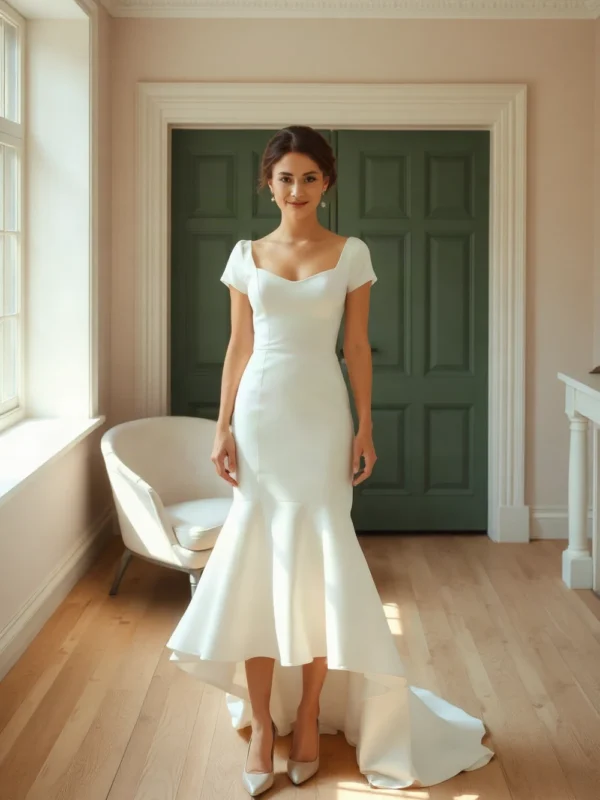
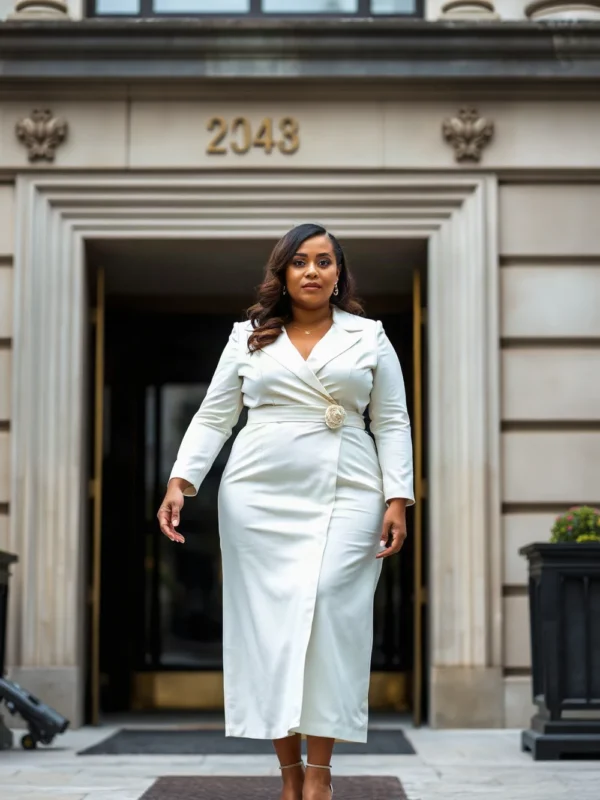
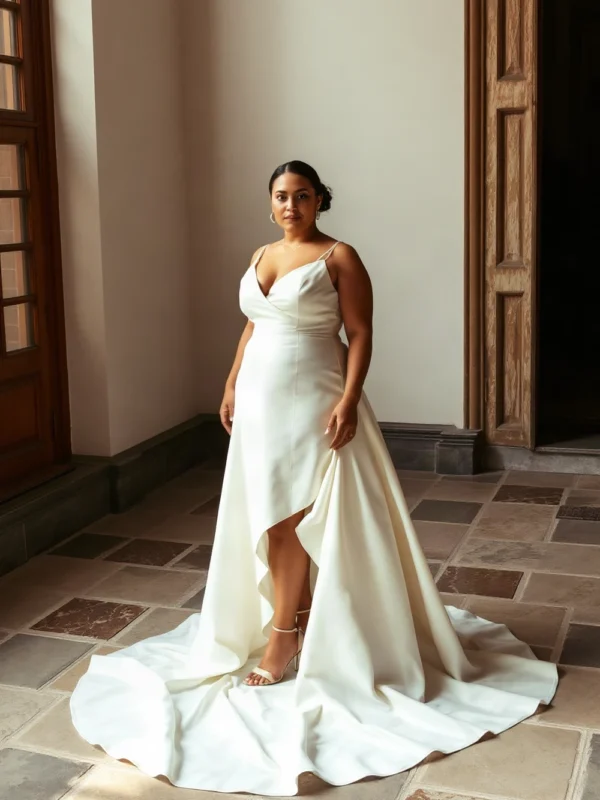
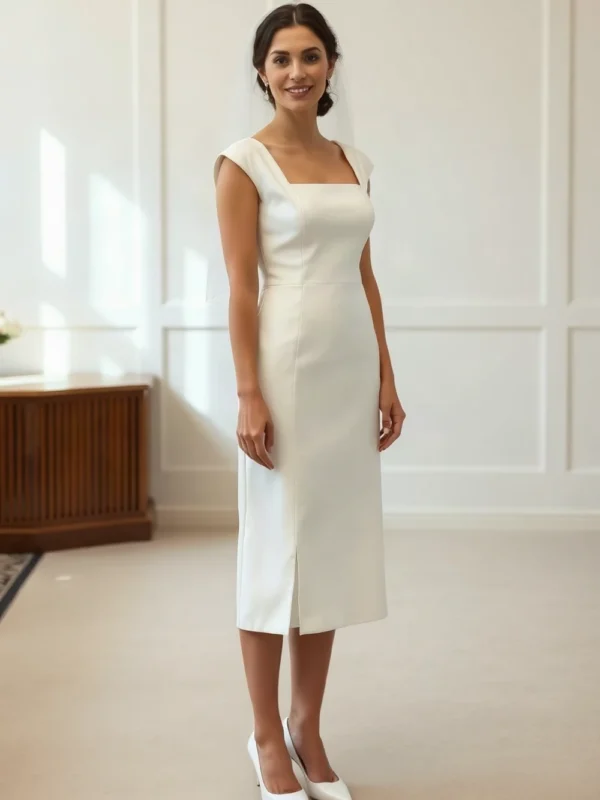
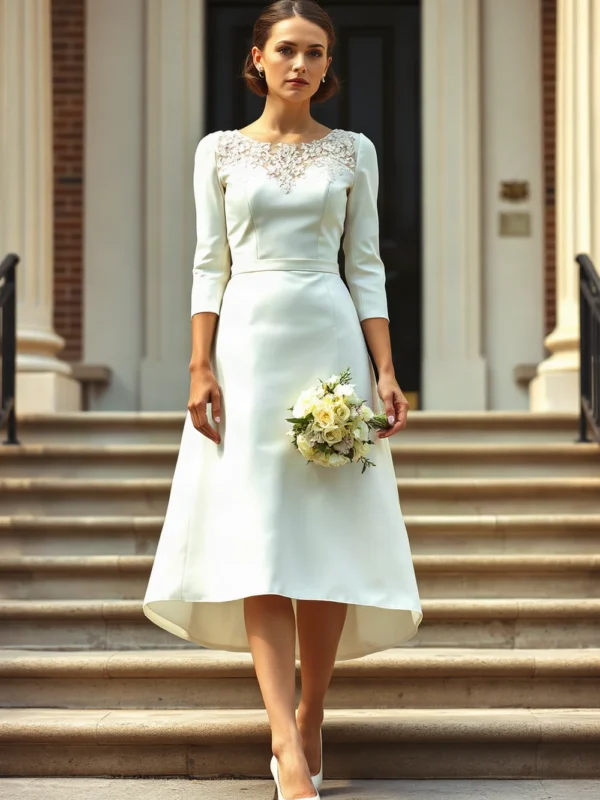
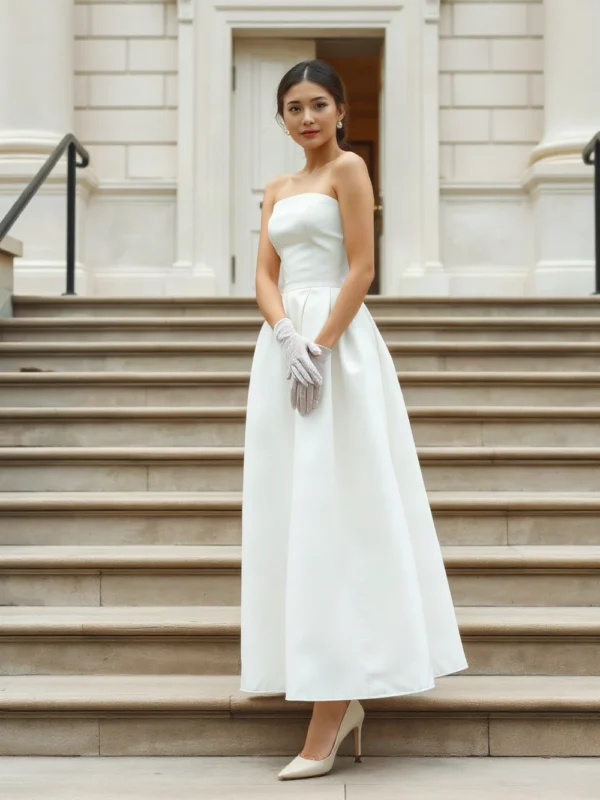
The shared theme in this gallery is a wedding dress hem that reveals the ankle, displays the shoes or creates a deliberate contrast between front and back. The light, largely unembellished surfaces keep attention on silhouette, neckline, sleeve coverage and the way each skirt occupies space.
The first look combines a fitted upper shape with a flared midi front and a floor-reaching back. The second replaces bridal volume with the structured lines of a long wrap jacket dress. The third creates the strongest high-low contrast: a leg-revealing front opening flows into broad side panels and an expansive train. These options move progressively from controlled flare to pronounced drama.
A square neckline and narrow midi skirt make the fourth look particularly restrained, with a small front slit supporting movement. The fifth balances three-quarter sleeves and a decorated neckline with an A-line skirt that drops slightly lower at the back. The sixth uses a clean strapless bodice, a broad near-ankle skirt and short gloves for a more classic ceremony composition.
When choosing among these proportions, consider how much of the shoe you want to show and how the skirt should behave beyond a standing pose. A fixed midi hem is generally simpler to manage than a sweeping train. A high-low skirt can preserve the visibility and lightness of a shorter dress while retaining length at the back, but the train needs room for turning and stairs.
Test the complete look with the intended shoes. Walk at a normal pace, sit, take a long step and climb stairs if the venue includes them. Check a fitted skirt for stride room, a wide skirt for clearance and a strapless or slender-strapped bodice for security. The strongest choice will support both the desired outline and the actual movements of the event.