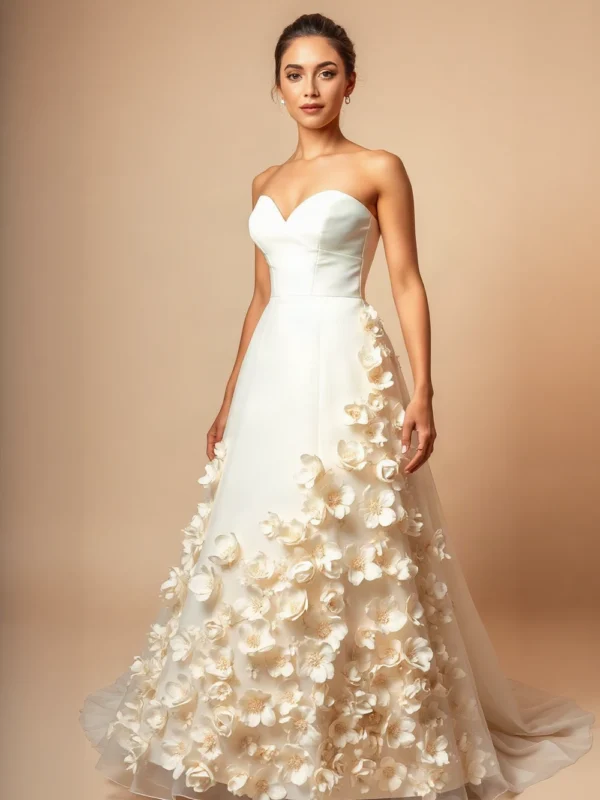
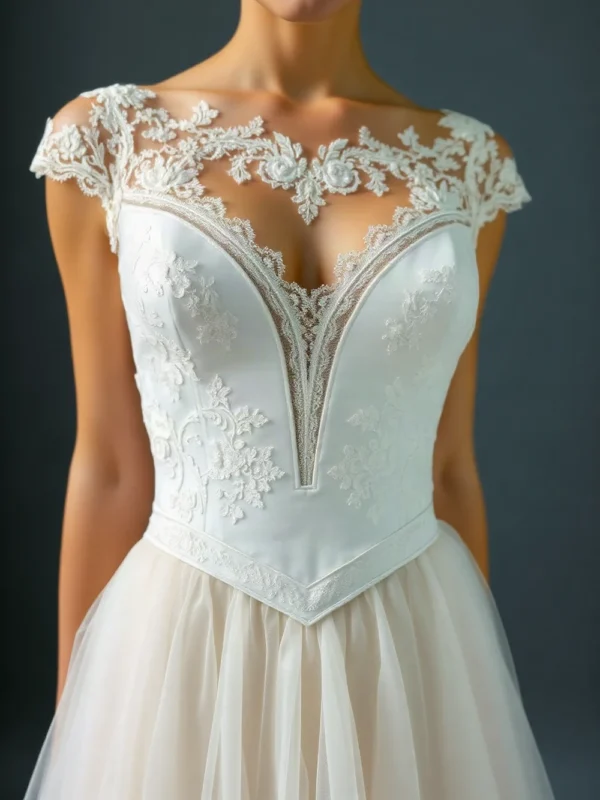
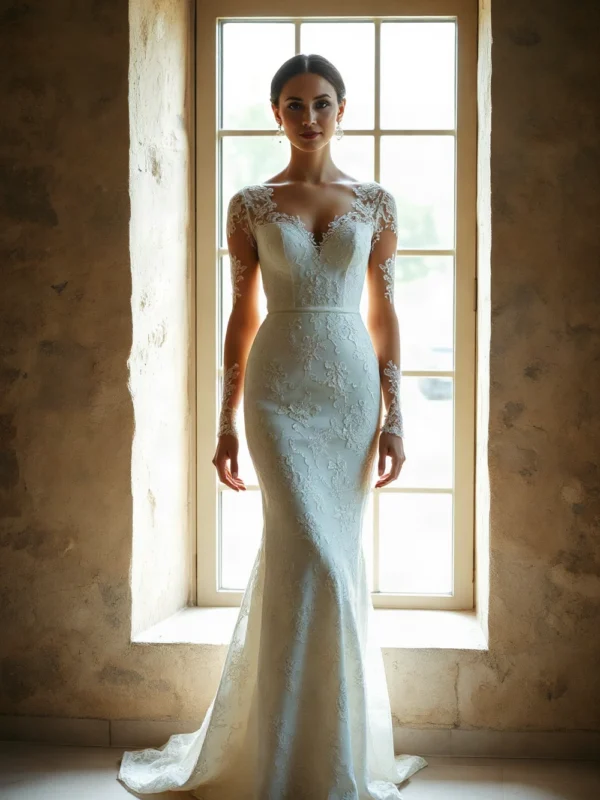
Sculptural mermaid wedding dresses depend on more than a close fit through the torso and hips. Neckline direction, a waist break, vertical seams, reflected light and the point where the skirt widens can give the same silhouette very different character. These six images move from lace-like layers to clean surfaces, a high halter to an open back, and bare shoulders to translucent sleeves. The aim is to see where each detail directs attention.
Compare side and rear views with the front, and movement with still poses. The narrow section’s length affects stride; train width affects turning space; neckline or back depth influences possible inner support. Testing these ideas against movement, coverage and ceremony setting makes inspiration practical.
Framing a Fitted Center with Layers
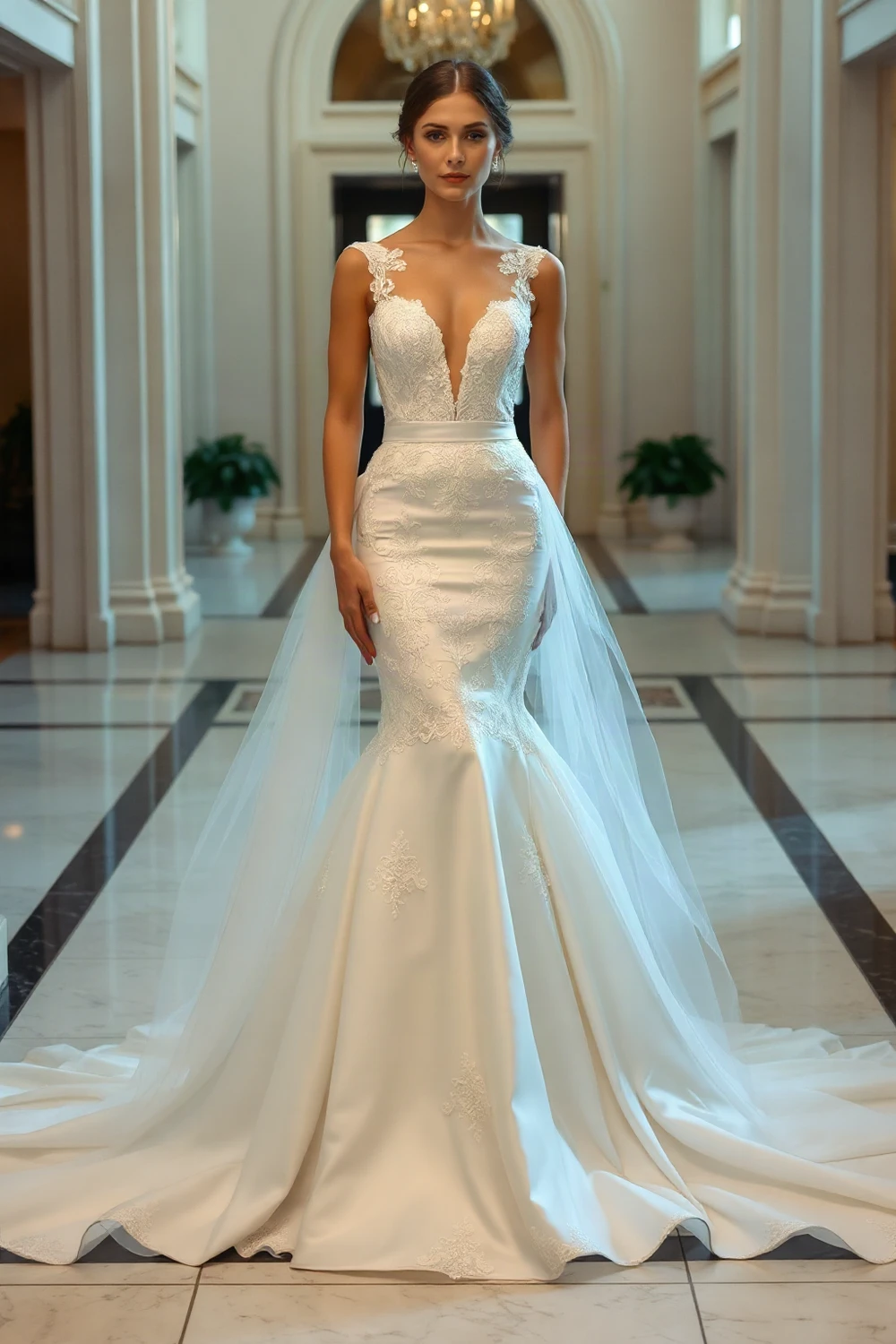
In the first look, a plunging V neckline and lace-like bodice pull attention to the upper center. A smooth waistband interrupts the texture and establishes where the hip line begins. Sparse motifs continue down the skirt, which widens near the knees into the main mermaid outline. Translucent pieces fall from both sides of the waist, tracing a broader second silhouette. The front therefore reads as a narrow central dress within an airy frame.
This feels more ceremonial and animated than a smooth design. Judge the outer panels while walking: note how they meet the skirt, catch near the legs or add waist bulk when seated. Confirm that the deep neckline stays stable when bending and sitting. Because texture, transparency and a broad train already compete for attention, restrained accessories preserve the sculptural layering.
A Halter Neckline and Unbroken Surface
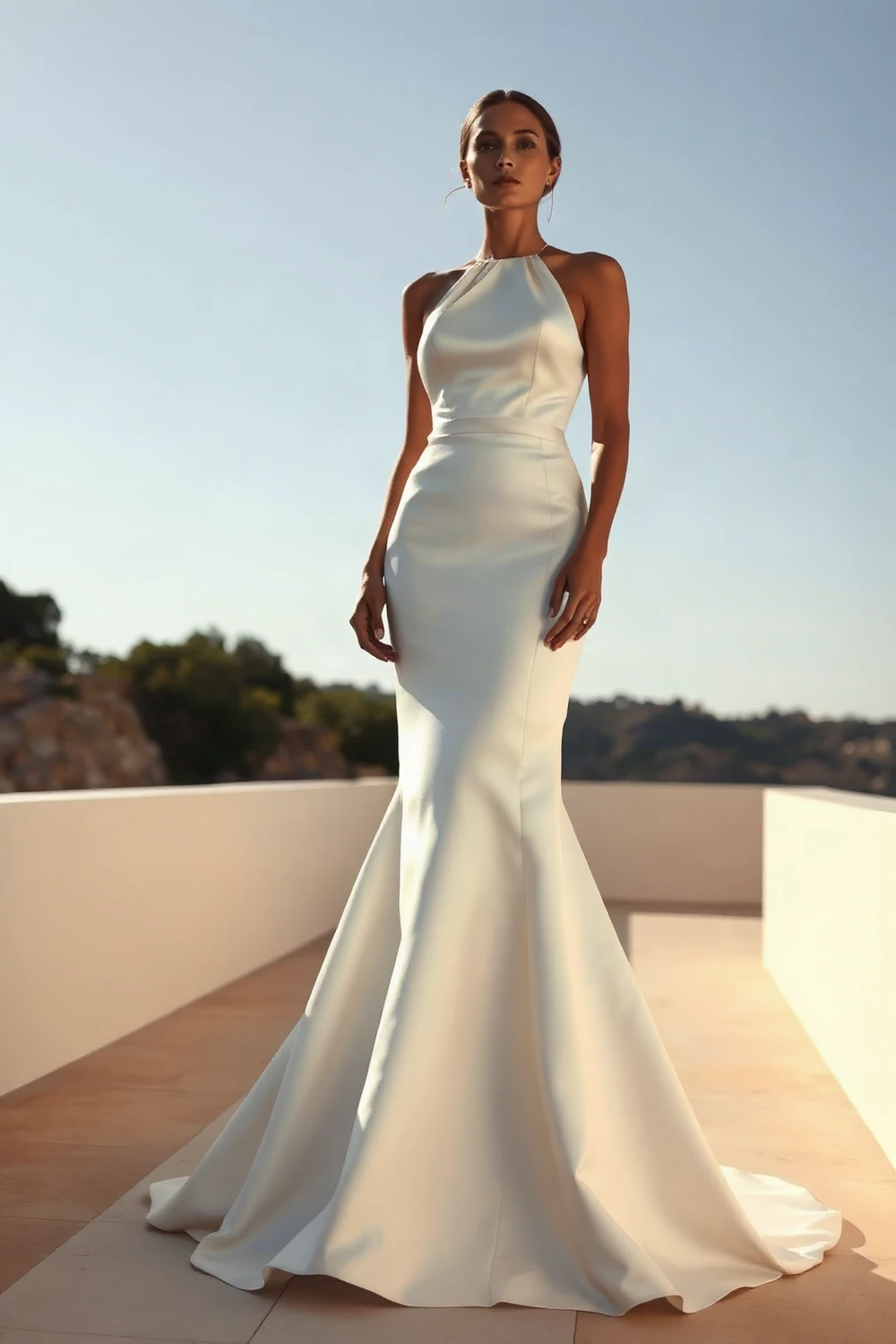
The second look builds form through cut and reflected light rather than embellishment. Its halter neckline opens the shoulders while guiding the eye toward the neck and bodice center. A horizontal waist seam establishes proportion; the lightly lustrous, uninterrupted surface then follows the hips to a flare beneath the knees. With no motifs breaking the vertical direction, that widening becomes the main visual event. Outdoor light reveals soft folds, but the impression stays calm and architectural.
Simplicity makes seam accuracy and balanced fit especially important. Check that the waist does not ride up, the neckline does not press into the neck and the bodice does not rotate as the arms rise. Test the narrow knee area with normal steps, stairs and sitting. Since the halter strongly frames the upper body, small earrings or another limited accent may suit it better than a large necklace, preserving the long line and controlled flare.
Concentrating Embellishment on the Bodice
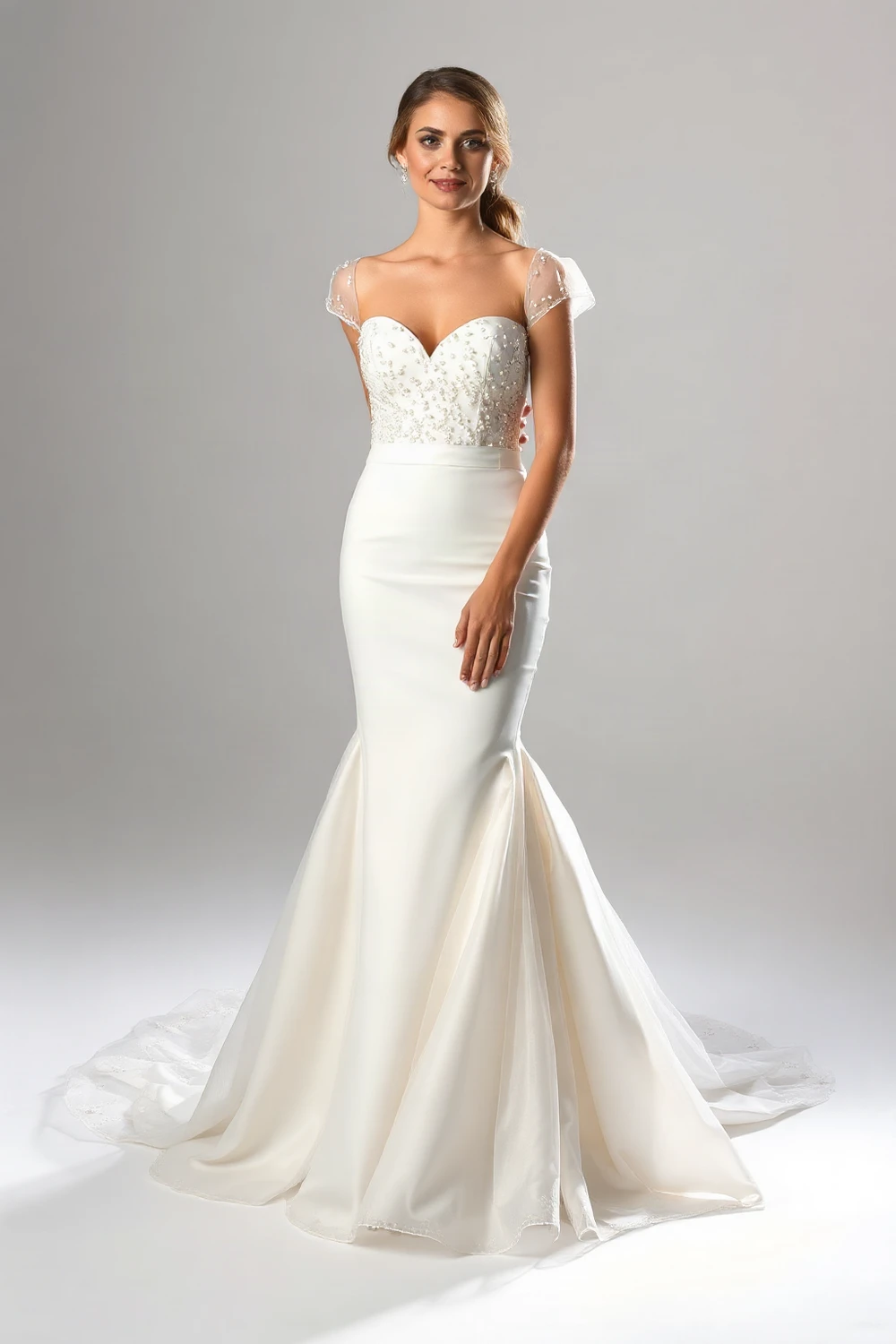
The third design focuses attention near the face with a sweetheart neckline, small reflective details and transparent cap sleeves. Below the distinct waistband, the skirt is smooth and quiet. The sculptural outline thus has two readings: a delicate decorated frame above and a clean route from hips to flare below. Side panels make the knee-level widening explicit, while the uninterrupted front preserves visual length. Ornament remains present without obscuring the central mermaid shape.
This balances the extremes of a fully embellished surface and a completely minimal one. The cap sleeves frame the shoulders, but their appearance does not establish support; assess the bodice structure separately. Check that sleeve edges stay comfortable and stable as the arms move, the neckline remains secure when leaning forward and the waistband does not fold while seated. Jewelry and hair details can echo the small points of light without rivaling them, leaving the bodice as the focal area.
Letting the Train Define a Plain Back
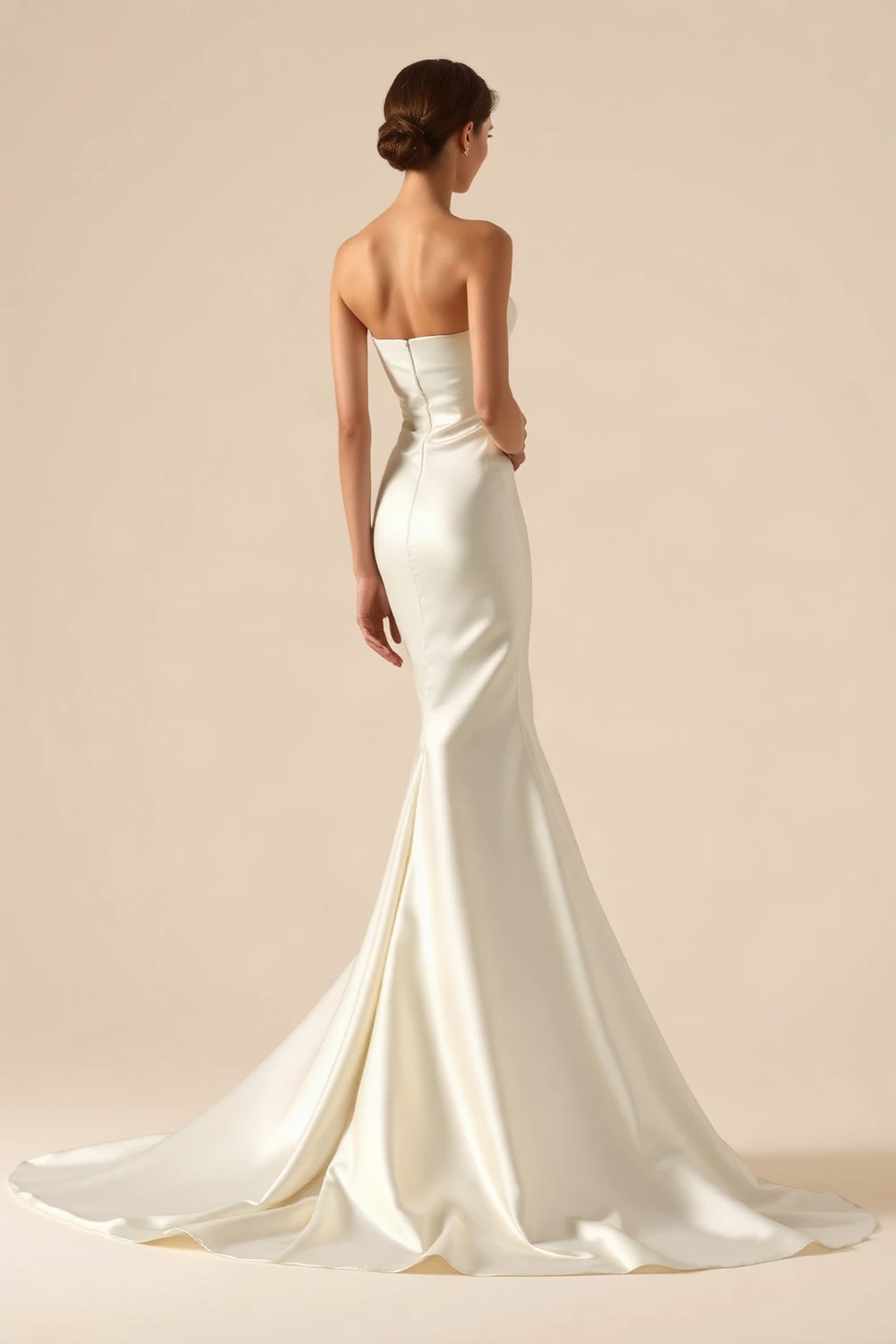
The fourth image offers the most reduced rear interpretation. A straight strapless back runs uninterrupted from bare shoulders toward the central closure and fitted hips. Without embellishment, reflected light, the vertical seam and skirt folds define the form. The outline widens around the knees into a long train spreading to both sides. Its breadth and drape provide the drama that lace, buttons or a neckline might create elsewhere.
A minimal back makes small fit issues more visible. Ensure the upper edge stays secure, the closure lies flat without pulling and hip seams look balanced from behind. Any internal support for the strapless bodice must suit the back height. Also assess aisle width, stairs, flooring, turning space and how the train will be gathered later; a still image cannot resolve these needs. For a stronger rear focal point, compare this plain surface with the next look’s deep scoop and buttons.
Balancing a Deep Back with a Vertical Detail
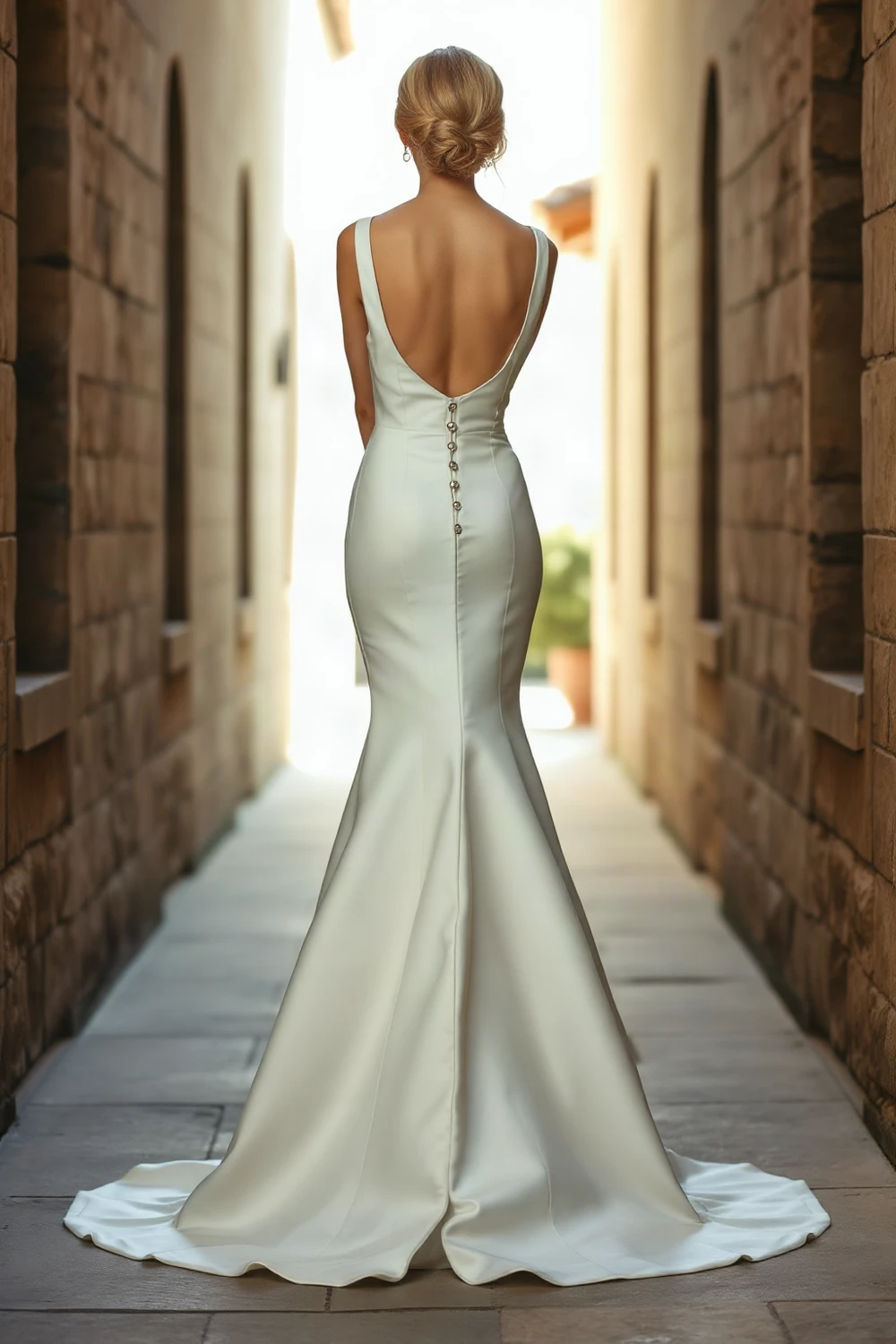
In the fifth look, wide straps frame a deep rounded back. Decorative buttons below the opening and the continuing center seam guide the eye toward the waist, then the flare beneath the knees. Against the smooth surface, the small button row reads as precise rather than overwhelming. Parallel lines in the stone passage reinforce the connection among back, waist and flare, making the long central direction easy to read.
A deep back must be coordinated with support and closure. Confirm that the straps stay on the shoulders through arm movement, the scoop edges lie flat and any underlayer remains outside the visible opening. Test the spinal buttons while sitting so they do not create pressure. This design is more linear than the plain strapless back and more controlled than the lace-layered option. Keeping hair above the opening or away from its center preserves the deliberately exposed line.
Creating Horizontal Motion with Bell Sleeves
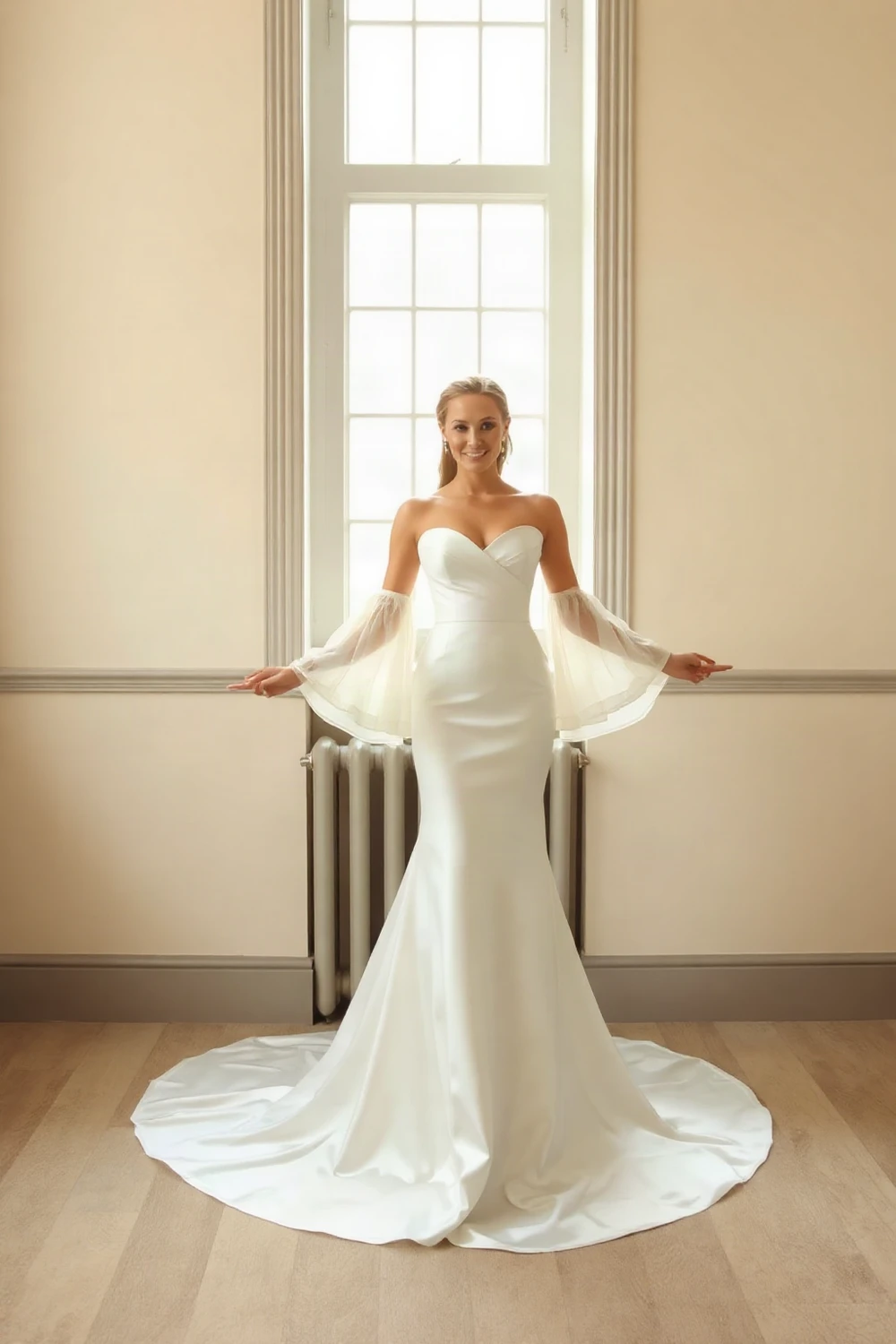
The sixth look adds translucent bell sleeves below the shoulders of a clean sweetheart bodice. Its solid center stays smooth and close through the hips, while the sleeves extend sideways and animate the upper body. Their horizontal width echoes the skirt opening near the knees: airy, transparent volume above meets denser volume spreading across the floor below. Daylight from the tall window clarifies this contrast without surface decoration.
The sleeves create a romantic focal point without covering the dress in lace or sparkle. Because their wide ends may meet a table, bouquet or wrist accessories, test reaching forward, lifting the arms and sitting. Ensure the upper sleeve bands remain comfortable and do not shift the neckline. With neckline and sleeves already defining the frame, a comparatively open neck area may maintain balance. Walking with both rounded train and sleeves reveals whether their combined movement feels expressive yet manageable.
A sculptural mermaid dress succeeds when its details support a shared visual direction. Lace-like layers create a richer frame, while clean halter and strapless versions expose the importance of seams and proportion. Choosing one strong focus—a sweetheart neckline, deep back, button line or bell sleeve—and quieting nearby areas can make the whole shape easier to read.
Do not decide from the front alone. Examine the back, walk normally, sit, turn and raise your arms. When flare placement, inner support, train width and sleeve volume suit both the venue and your comfort expectations, a striking concept becomes a practical, personal silhouette rather than a static image.
Compare six sculptural mermaid wedding dress concepts to see how necklines, waist seams, embellishment, backs, sleeves and flare placement reshape the same fitted silhouette.
Frequently asked questions
Where should the flare begin on a mermaid wedding dress?
A higher flare can provide more visible skirt volume and potentially more room, while a flare below the knee preserves a longer fitted line. Compare both through normal walking, sitting and stair tests rather than relying on a standing pose.
Should I choose a smooth surface or lace-like embellishment?
Choose a smooth surface if you want seams and proportion to lead the design. Localized embellishment can direct attention to the bodice or another chosen area. If the neckline, sleeves or train are already dramatic, limiting decoration may create clearer balance.
How can inner support work with a deep back?
Determine the needed support before finalizing the back depth. During fittings, check that the scoop edges lie flat, straps remain stable and no support layer becomes visible from the front, side or back as you move.
Are bell sleeves practical for a wedding day?
Bell sleeves add expressive movement but may meet tableware, flowers or jewelry. Test reaching, lifting the arms and sitting, and confirm that the upper bands remain comfortable without pulling the bodice out of position.
What should I consider when choosing a mermaid dress train?
Consider aisle width, flooring, stairs, turning space and how the train will be gathered for dancing or later movement. Practice walking and turning with its full width instead of judging it only in photographs.