The first quality we often register in a wedding dress is not a flower, lace motif or hint of shine, but the outline it draws around the body. A slim gown with narrow straps can feel calm and uninterrupted, while a corseted ball gown creates deliberate volume. Flowing sleeves show movement, an open back changes the rear view, and a long veil can bring the architecture into the composition. Choosing among silhouettes therefore involves more than fixed body-shape rules: venue, walking distance, seating, photography angles, support and freedom all matter.
These six images compare clean surfaces with floral lace-like texture. Rather than naming one shape universally correct, they show how neckline, waist, sleeves, back, skirt flare, train and veil modify one another. They also sharpen fitting questions: Does the dress retain its shape while walking? Is the focal point in front or back? Does its volume suit the space, and can its defining details be managed comfortably throughout the event?
A Draped Neckline on an Uninterrupted Minimal Shape
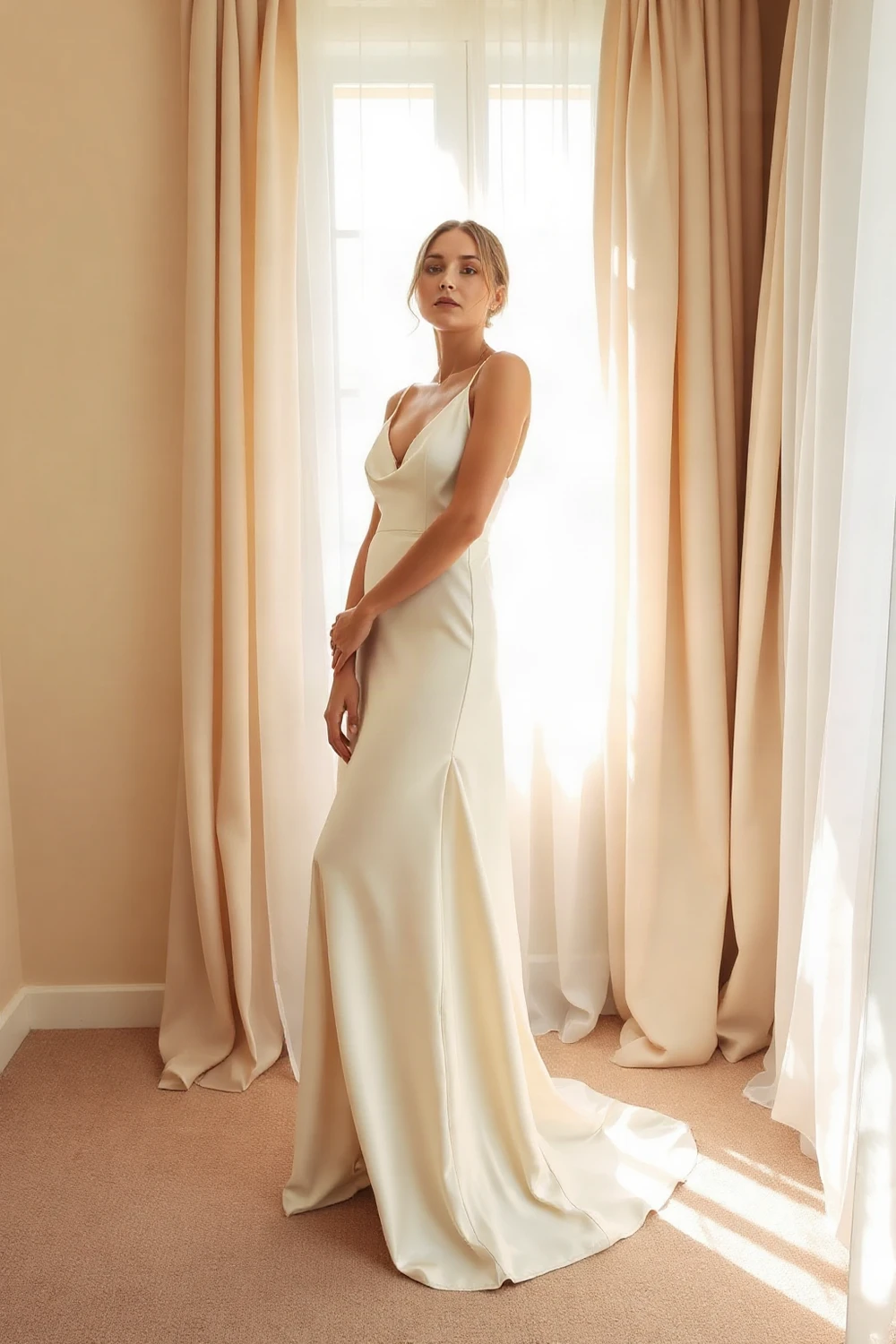
The first look pairs a slim-strapped cowl neckline with an undecorated skirt that stays close to the body. Soft folds at the neckline offset the long vertical seams and continuous pale surface. The skirt widens in a controlled way lower down, making room for a modest train without approaching an A-line gown’s breadth.
With little decoration, exact fit carries the design. Check strap length, neckline movement, waist position and comfort through the hips together. The plain surface gives earrings, a hairpiece or veil room to register, but can make undergarment lines and seams more noticeable. The draped neckline softens an otherwise close silhouette. Walking, turning and sitting will show whether the lower flare provides enough movement.
Floral Volume Built Around a Strapless Bodice
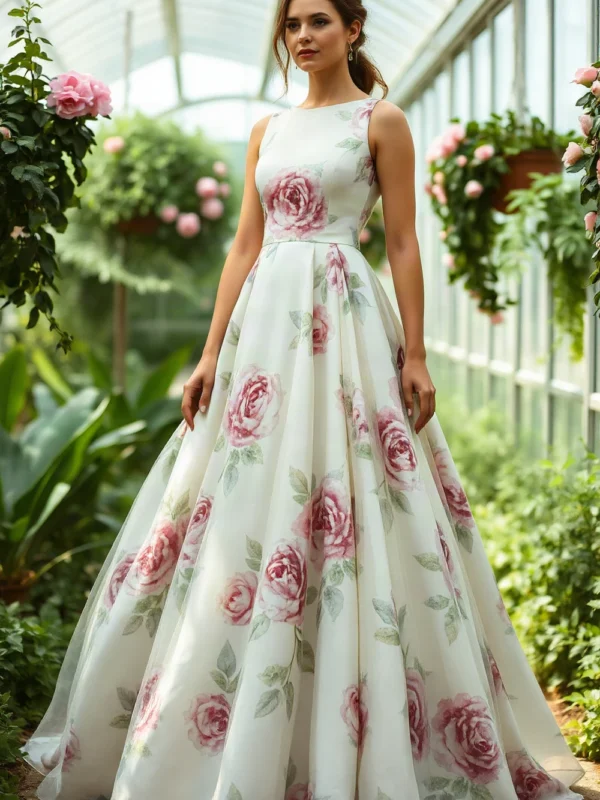
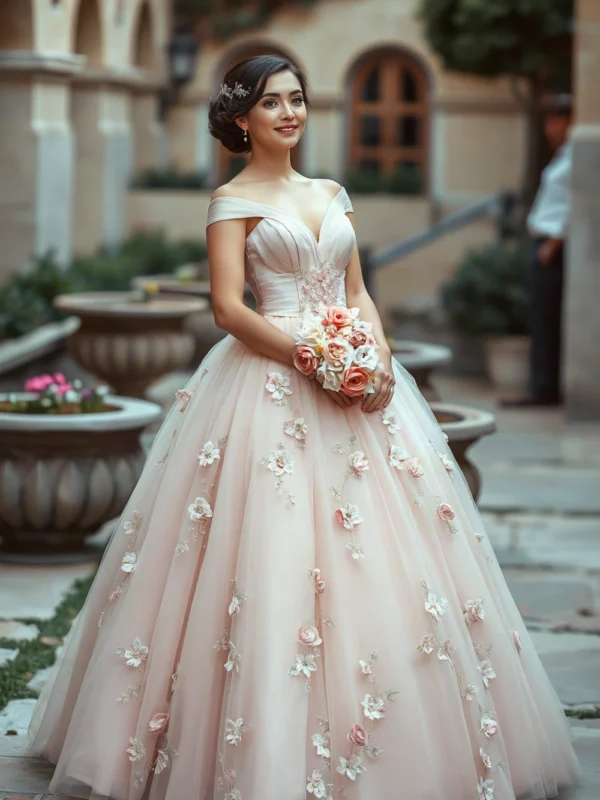
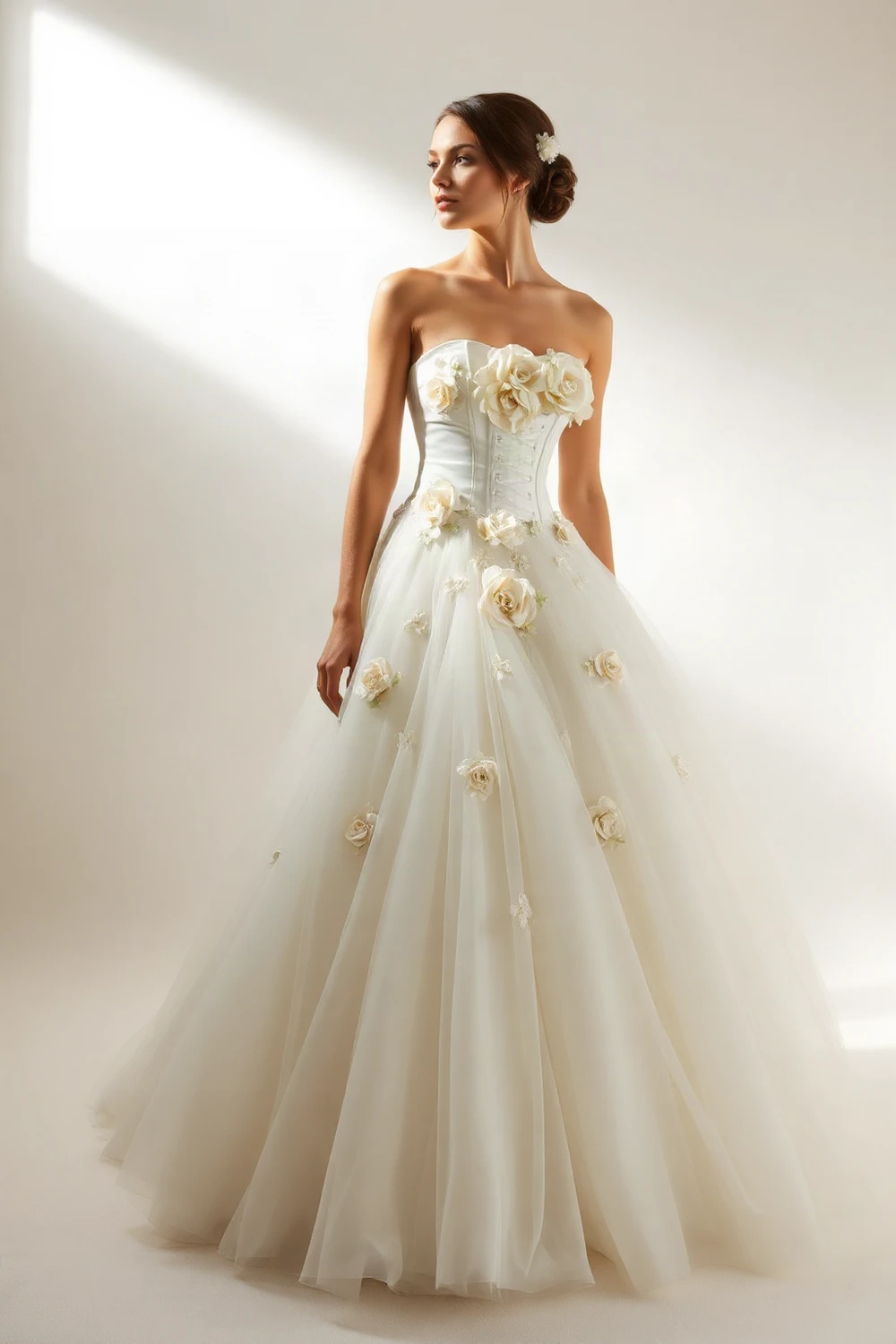
In the second look, construction and decoration share a focal area. A strapless corseted bodice defines the waist before the skirt expands into substantial volume. Large flowers along the upper edge direct attention to the face and shoulders, while widely spaced blooms continue down the skirt. The open surface between motifs prevents the gown from reading as uniformly patterned.
A broad skirt needs planning in a narrow aisle, vehicle or crowded dining area. The bodice should remain secure when the arms rise without excessive waist pressure. Because the flowers already dominate, an oversized bouquet, statement necklace and elaborate hairpiece could compete; quieter accessories let the structure lead. In a smaller venue, fewer dimensional motifs or a less expansive skirt could preserve the idea while improving navigation.
Flutter Sleeves and a Tied Waist in Motion
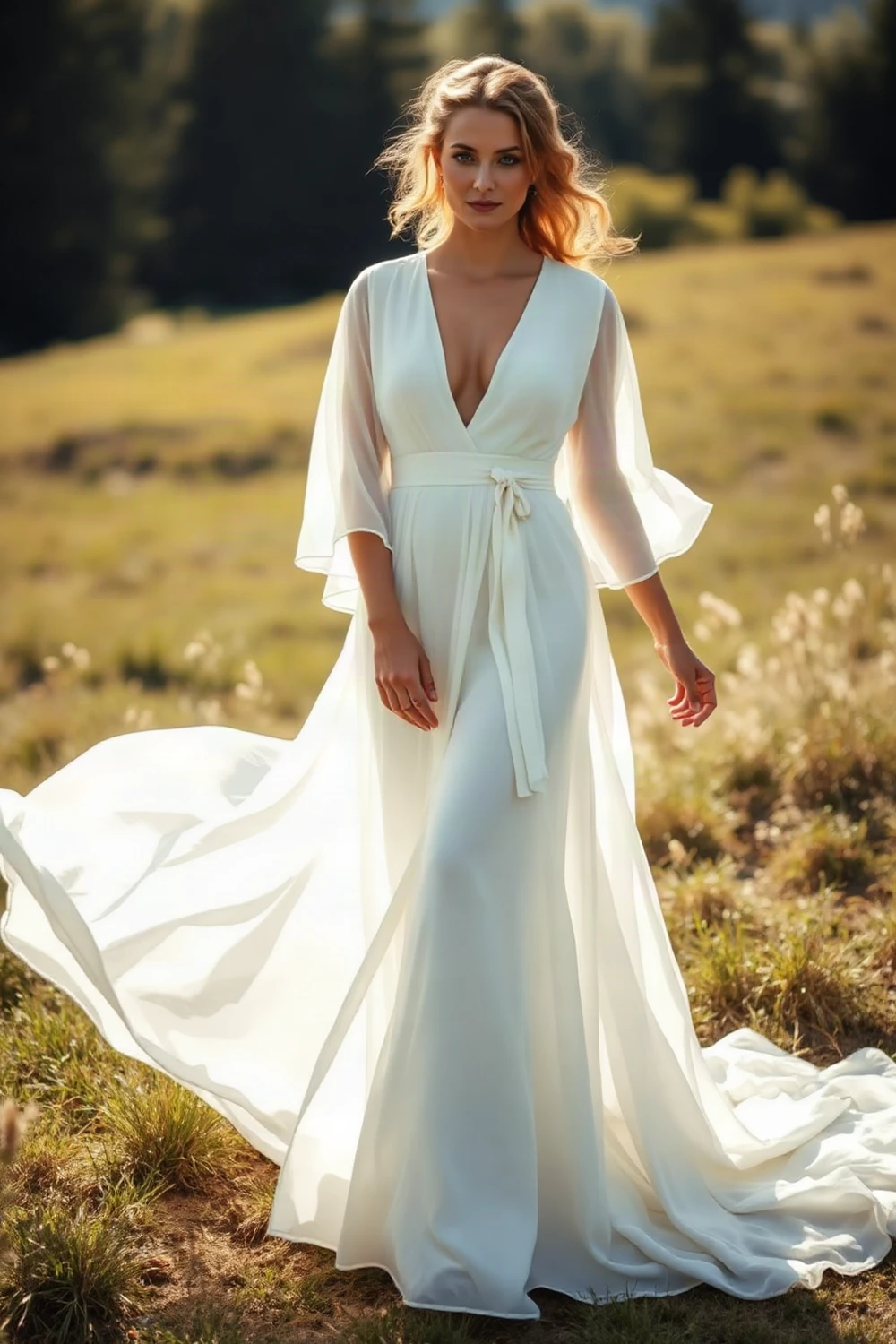
The third look uses a deep V-neck, widening sleeves and a tied waist for relaxed flow. The skirt does not closely trace the body, and its long train forms broad folds in the breeze. Moving sleeve edges echo the skirt’s sweep, linking the gown’s upper and lower portions. The open landscape leaves that motion visible rather than compressing it against a busy background.
Check the neckline while bending and sitting, the tie during turns, and sleeve edges while dining or holding a bouquet. The train can look expressive on grass, but stone paths, sand or slopes may require another length or a way to lift it. A short walking trial on a venue-like surface helps test movement, waist security and train management.
How a Long Veil Expands a Plain Fit-and-Flare Gown
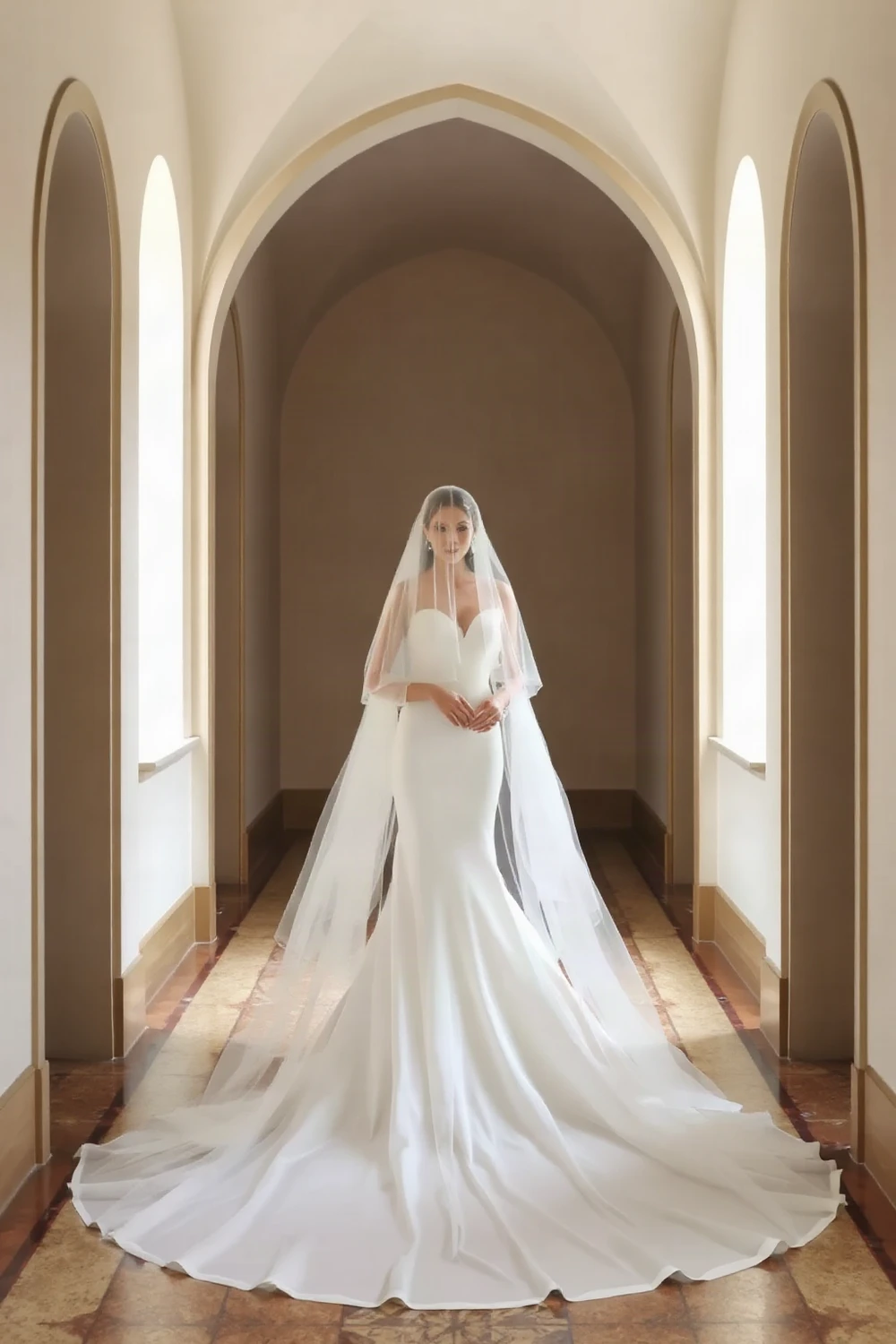
The fourth image shows how an accessory changes a minimal dress’s scale. A strapless sweetheart bodice meets a fit-and-flare skirt that follows the torso and hips before spreading across the floor. The long veil crosses the face and divides around the shoulders, drawing a second outline beyond the gown. A symmetrical arched corridor strengthens the centered vertical composition and makes the train part of the architecture.
For a long veil, transparency and layering matter as much as length. Dense material may obscure the silhouette; a lighter veil preserves it while adding ceremonial breadth. Test attachment-point weight, visibility through the front, and behavior during turns or wind. Arrange veil and train together to detect tangling or imbalance. If removed after the entrance, the veil can give a restrained gown two distinct readings.
Halter Ties and Corset Lacing on an Open Back
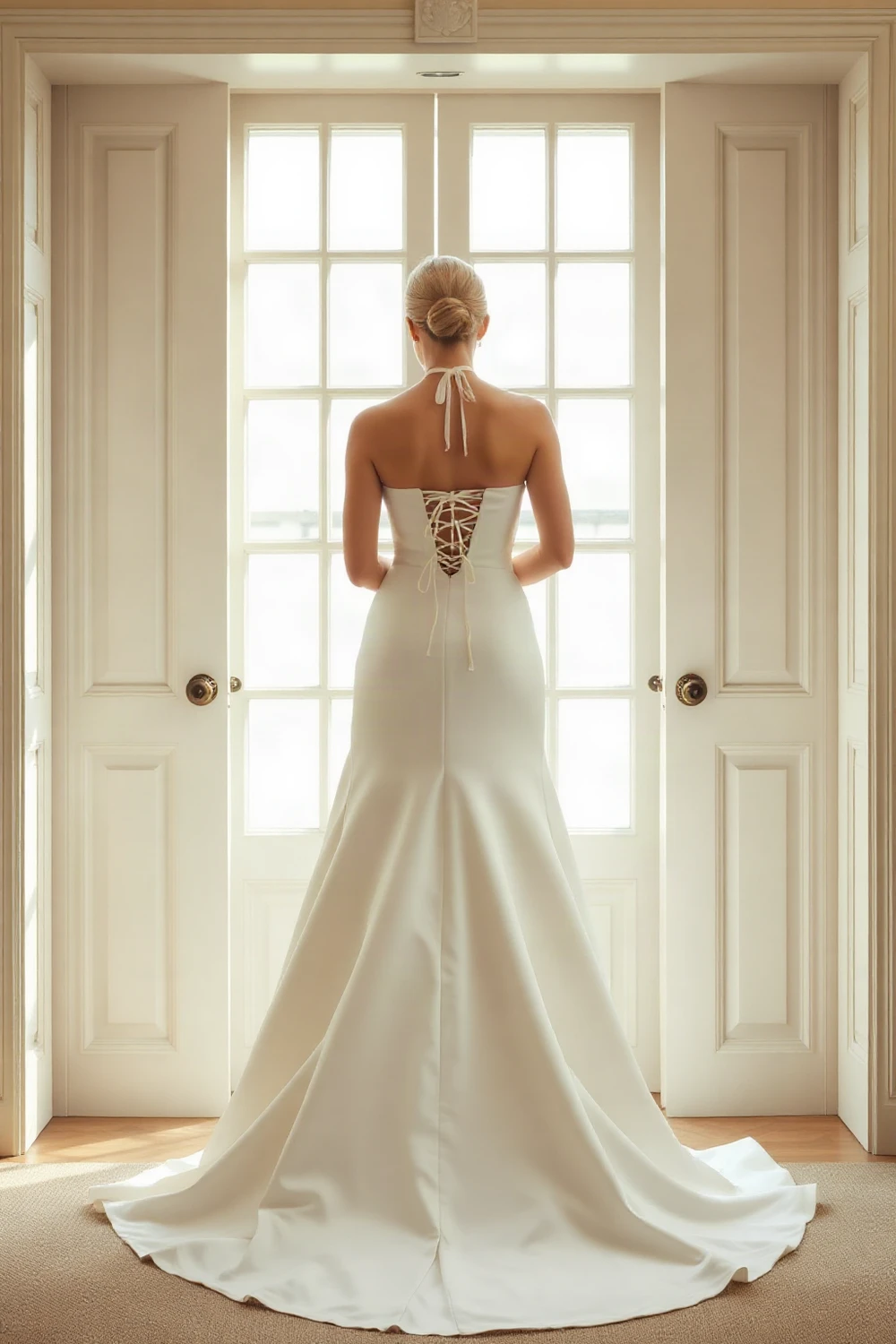
The fifth look gains identity from the rear. Ribbons tied at the nape leave the shoulders open, while a central opening and crossed laces create a graphic focus on the smooth surface. As the skirt widens after the hips, the narrow upper section contrasts with the rounded train. The bright doorway’s symmetry reinforces the vertical laced line.
Examine support alongside appearance: whether the neck tie creates pressure, the bodice shifts in motion, or the lace ends become uncomfortable while seated. Hairstyle alters the design directly; an updo reveals every line, while loose hair partly softens and conceals it. A long opaque veil may hide the lacing, whereas a short or transparent veil can preserve the rear focal point. Try the finished hairstyle and intended veil together at a later fitting.
Balancing Floral Lace with a Defined Fit-and-Flare Shape
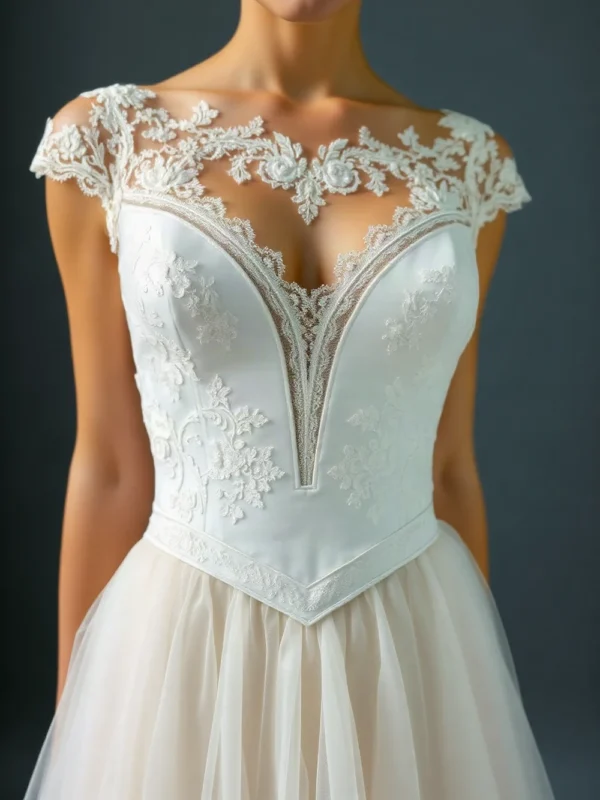
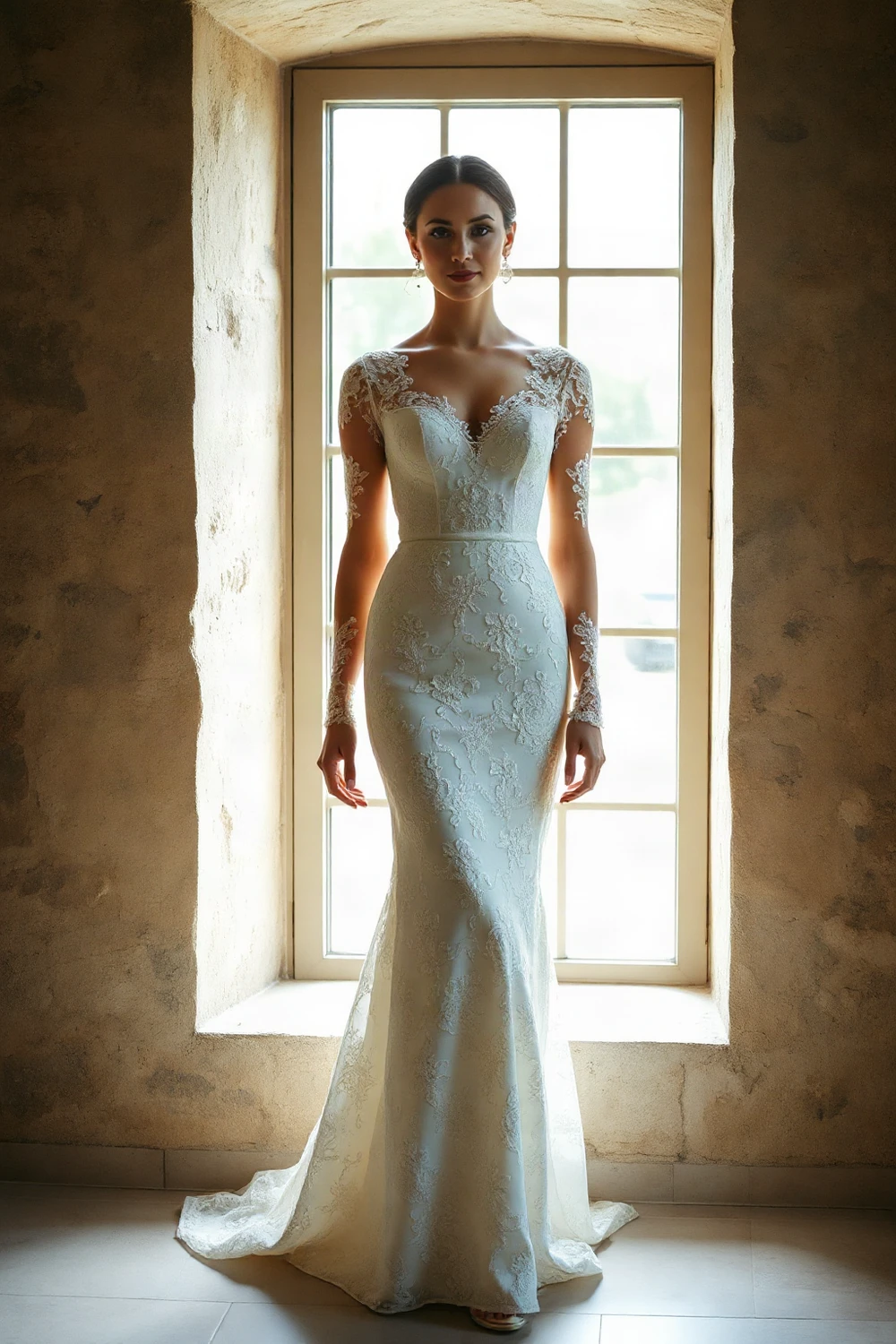
In the sixth look, floral lace-like texture extends beyond the bodice across the neckline, sleeves and skirt. A translucent-looking upper section softens the sweetheart inner neckline, while motif-edged lines direct attention inward. The upper body and hips stay closely defined before the skirt widens below the knees. Unlike the ball gown’s separate dimensional flowers, this pattern follows the silhouette, creating a more integrated, finely detailed effect.
Distance changes the balance: wide photographs emphasize the outer line, while close portraits bring forward the neckline and sleeves. Sleeves give visual coverage, but their stretch and construction still control mobility, so test arm raises, embraces and dancing. Smaller earrings or restrained hair accessories can balance the detail near the face. The result suits a narrow, defined shape without a completely plain surface.
Across these six directions, there is no single hierarchy from plain to ornate or fitted to voluminous. The cowl-neck gown emphasizes line; the floral ball gown, volume; flutter sleeves, movement; the long veil, ceremonial scale; corset lacing, the back; and continuous motifs, the surface. Judge each not only in a still mirror pose, but while walking, sitting, turning and being photographed from several angles.
Before a fitting, set three priorities: ease of movement, intended focal point and venue compatibility. Then test neckline security, waist placement, sleeve range, back support and train management through real actions. If favorite details compete, choose one principal feature and let the others support it. The strongest silhouette should work with the ceremony’s rhythm while meeting the wearer’s expectations for comfort, coverage and expression.
Compare fitted minimal shapes, a voluminous floral skirt, a flowing outdoor gown and lace-covered fit-and-flare ideas. Use the contrasts to evaluate necklines, waists, backs, sleeves, trains and veils according to your own ceremony and comfort priorities.
Frequently asked questions
How can I choose between a fitted gown and a full skirt?
Compare movement and venue scale first. In a fitted gown, test stride length and seated comfort; with a full skirt, check aisles, chair spacing and transport. Also decide whether you want photographs to emphasize a continuous body line or substantial skirt volume.
Will a long veil hide a minimal wedding dress silhouette?
That depends on its density, transparency and attachment point. A light, transparent veil can preserve the outline while adding scale; denser layers may partially conceal it. Test the veil with the dress and train from the front, side and rear while moving.
What hairstyle and veil work with an open back?
An updo and a short or transparent veil keep the back detail visible. Hair worn over the shoulders creates a softer, partly covered effect. Make sure the halter ties, bodice edge and lacing do not catch or feel compressed beneath the accessories.
How do large floral appliqués differ from fine lace motifs?
Large floral elements create dimensional accents that remain visible from a distance. Smaller continuous motifs are more noticeable nearby and tend to follow the silhouette. Venue scale, typical photography distance and the strength of other accessories can guide the choice.
Which movements should I try with a deep neckline or strapless bodice?
Raise your arms, bend, sit, walk, embrace someone and try a short dance sequence. The neckline should remain stable, and the bodice should provide support without excessive pressure. Do not assess security from a motionless mirror pose alone.