No single feature defines a romantic wedding dress. A light skirt, clean long sleeves, a light-catching neckline, a muted color accent or a large floral print can each create softness. The important question is how silhouette, surface and proportion relate to the wearer, venue and expected movement.
These six concepts range from an ankle-length A-line and a close long-sleeved shape to beach tiers, sparkling illusion panels and a full rose print. Comparing neckline, sleeve, volume, color and styling helps show how support, walking space, lighting and accessory scale turn appealing details into a coherent look.
Ankle-Length A-Line: Lightness with Clear Structure
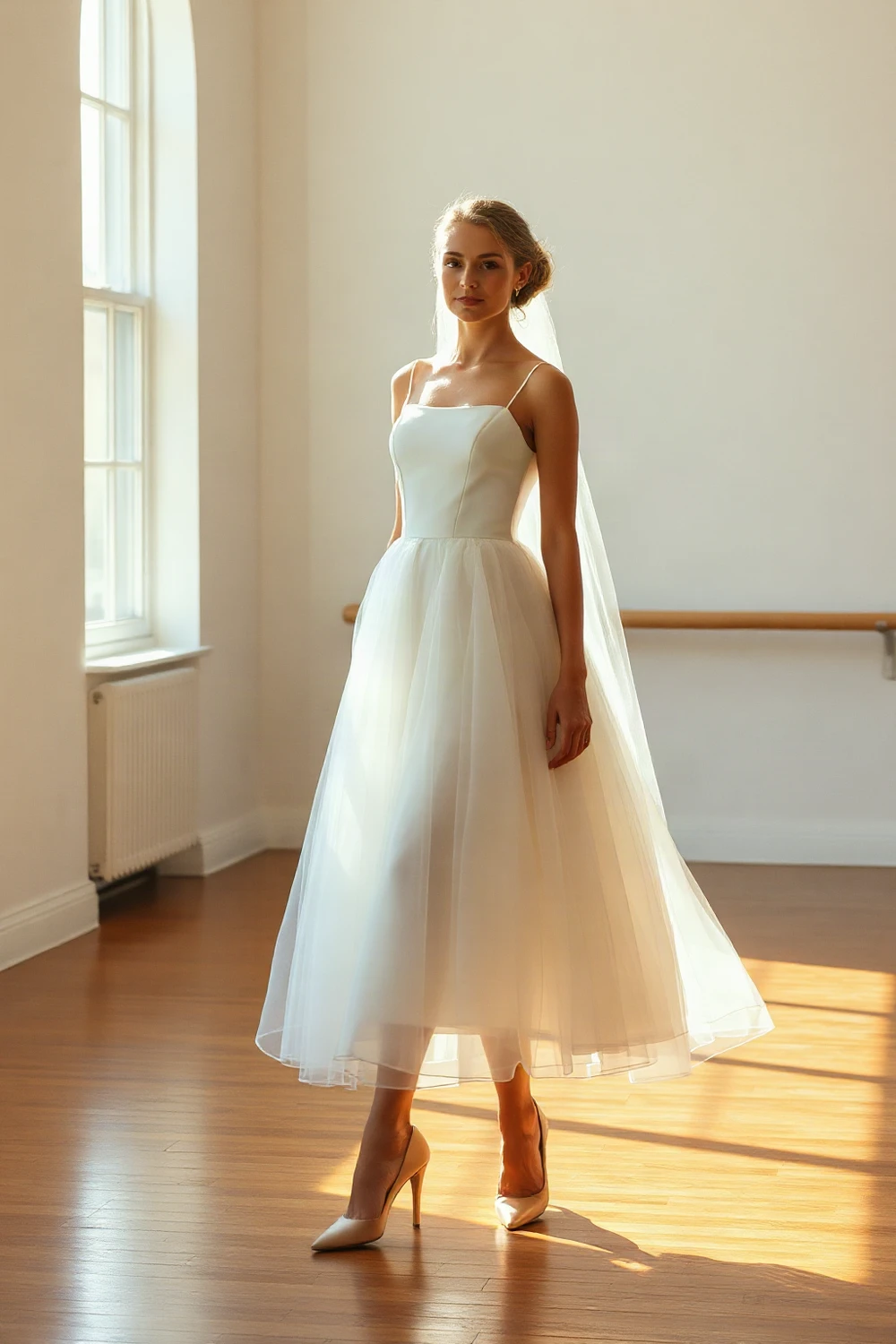
Fine straps and a straight neckline meet a defined waist and layered A-line skirt. The ankle-length hem retains romantic volume while bringing the shoes and lower leg into view. A restrained bodice and airy skirt show that softness does not require dense lace or decoration. The long veil restores a vertical line, while sunlight clarifies the layered edges.
Because the shoes remain visible, heel height, toe shape and color affect the whole composition. During fittings, vary your stride, turn and try steps if possible. Check the fine straps and fitted bodice for support. This shape suits someone who wants to dance freely, avoid a long train or appear distinctive without visual heaviness.
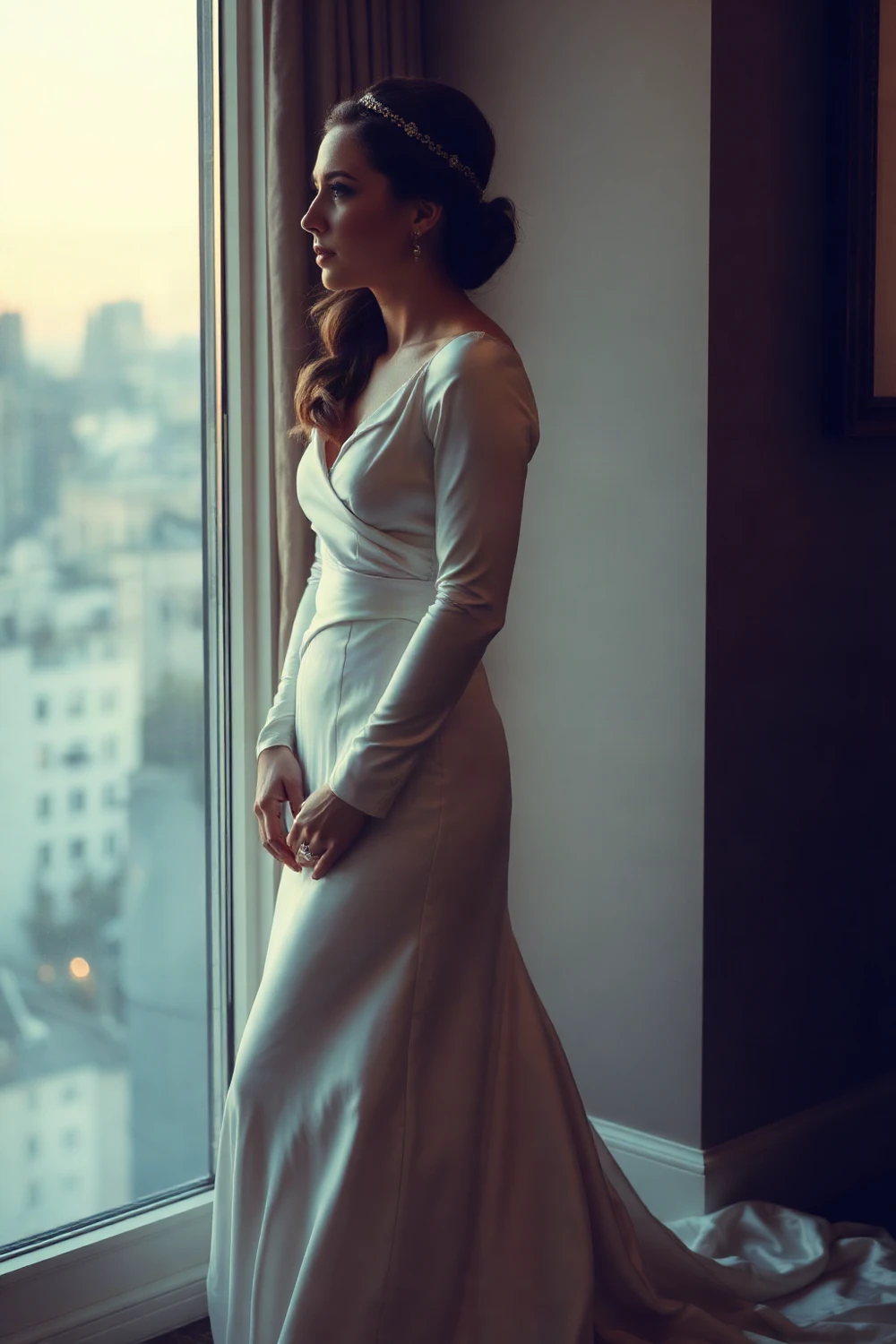
Long Sleeves and a Wrap Bodice: A Sculpted Line
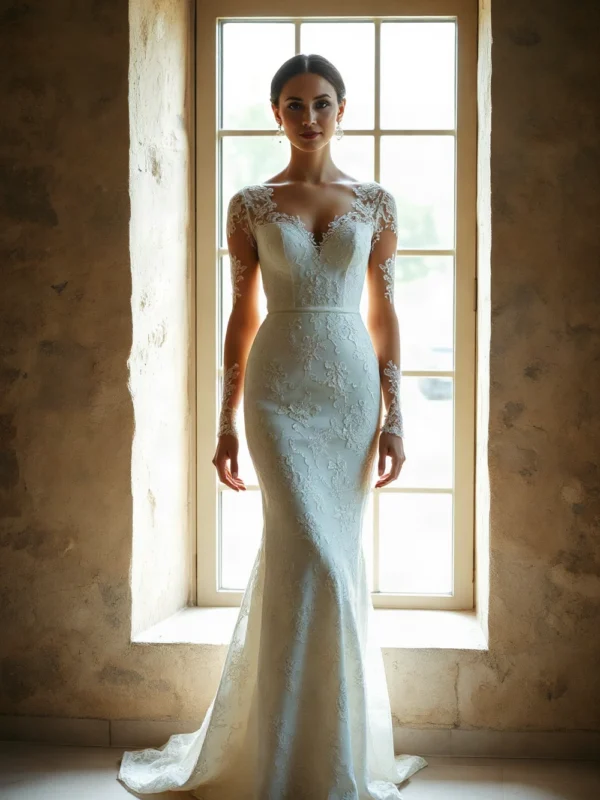
Long sleeves and a wrap-effect V-neck create a close, elongated silhouette. Diagonal panels meet at the waist, and the smooth surface keeps their direction clear. A gradual lower flare and floor-length train establish a quieter, more formal rhythm than the ankle-length skirt. Window light emphasizes the continuous outline and subtle folds.
Covered arms balance the open neckline, offering restraint without fully closing the upper section. At fittings, raise and extend your arms, sit and take long steps to test the shoulders, neckline and walking width. Plan how the train will be carried or bustled in busy areas. A narrow headband and small earrings preserve the wrap line; for more legroom, compare the tiered beach skirt or wider A-lines.
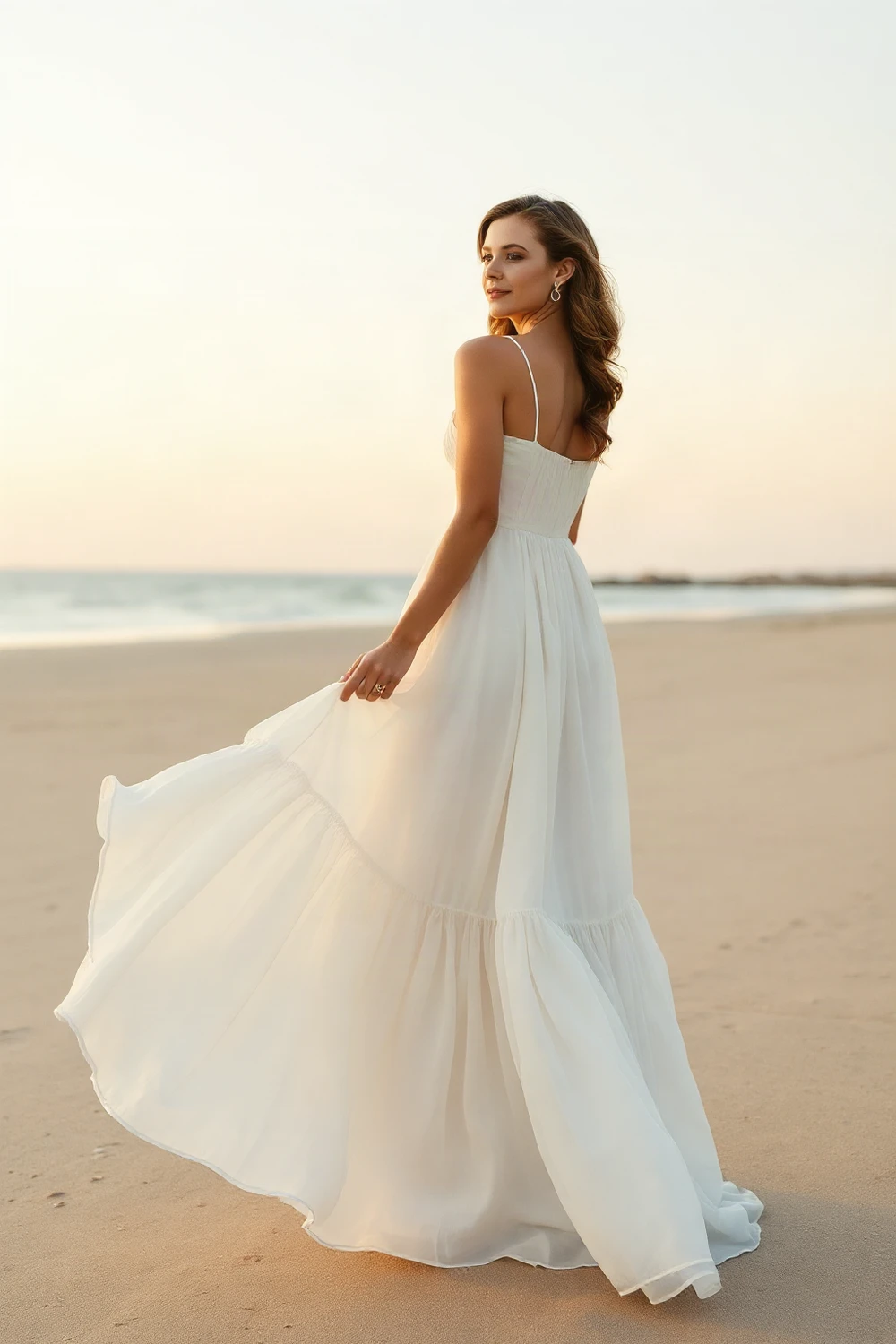
Beach Tiers: Making Movement Part of the Design
Here, romance comes mainly from movement. Fine straps and an open back keep the upper portion light, while a low tier seam expands the generous skirt. Its lifted edge shows how the pale layers respond to light and breeze. Sand, sea and warm sky provide natural neutral tones around the white silhouette.
A long hem behaves differently on sand, grass, decking and steps, so practice turning, walking quickly and gathering the skirt with one hand. Determine how the open back and narrow straps will provide support, and whether inner construction shows under strong light. Because the skirt supplies the main gesture, small earrings and relaxed hair may suffice. The first look offers similar softness with less hem management.
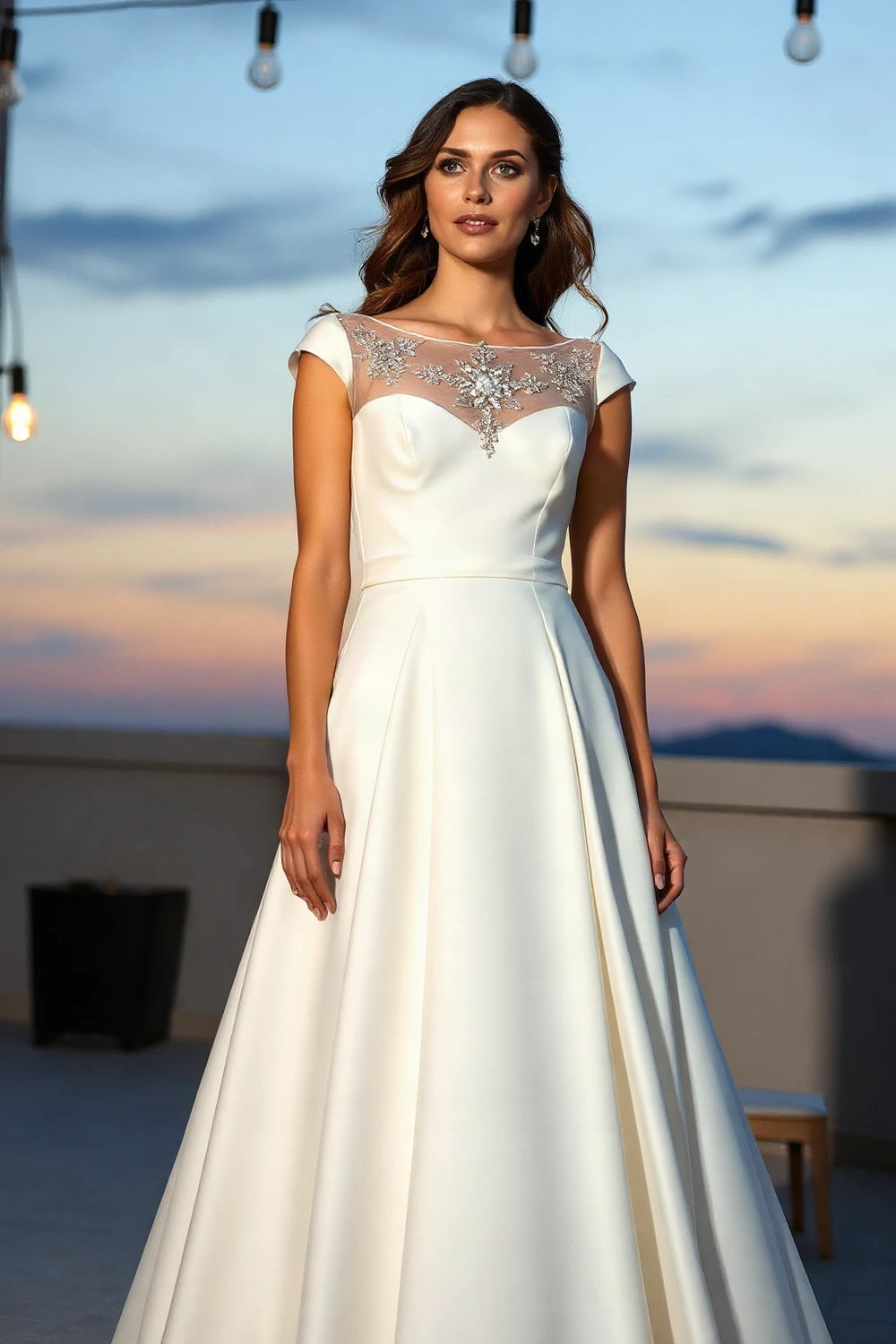
A Sparkling Illusion Neckline: Drawing Focus Upward
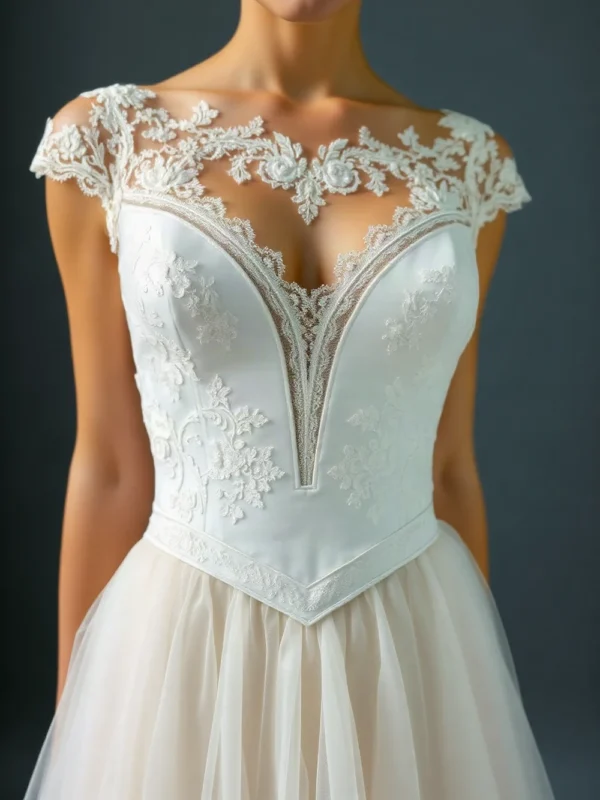
Silver-toned star forms across a sheer-looking panel concentrate decoration around the neckline. A sweetheart-like curve divides this detail from the smooth bodice, while cap sleeves soften the shoulders. The broad A-line opens in quiet folds, creating a substantial but simple base. Terrace bulbs and evening light reinforce the sparkle.
The neckline frames the face without a necklace, so coordinate earrings and hair accessories with its motif. Inspect the panel in daylight, warm indoor light and brighter photographic conditions from front and side. Test movement at the cap sleeves and the skirt’s floor-space needs. It appears more ceremonial around the face than the long-sleeved wrap, but more controlled in color and focus than the rose print.
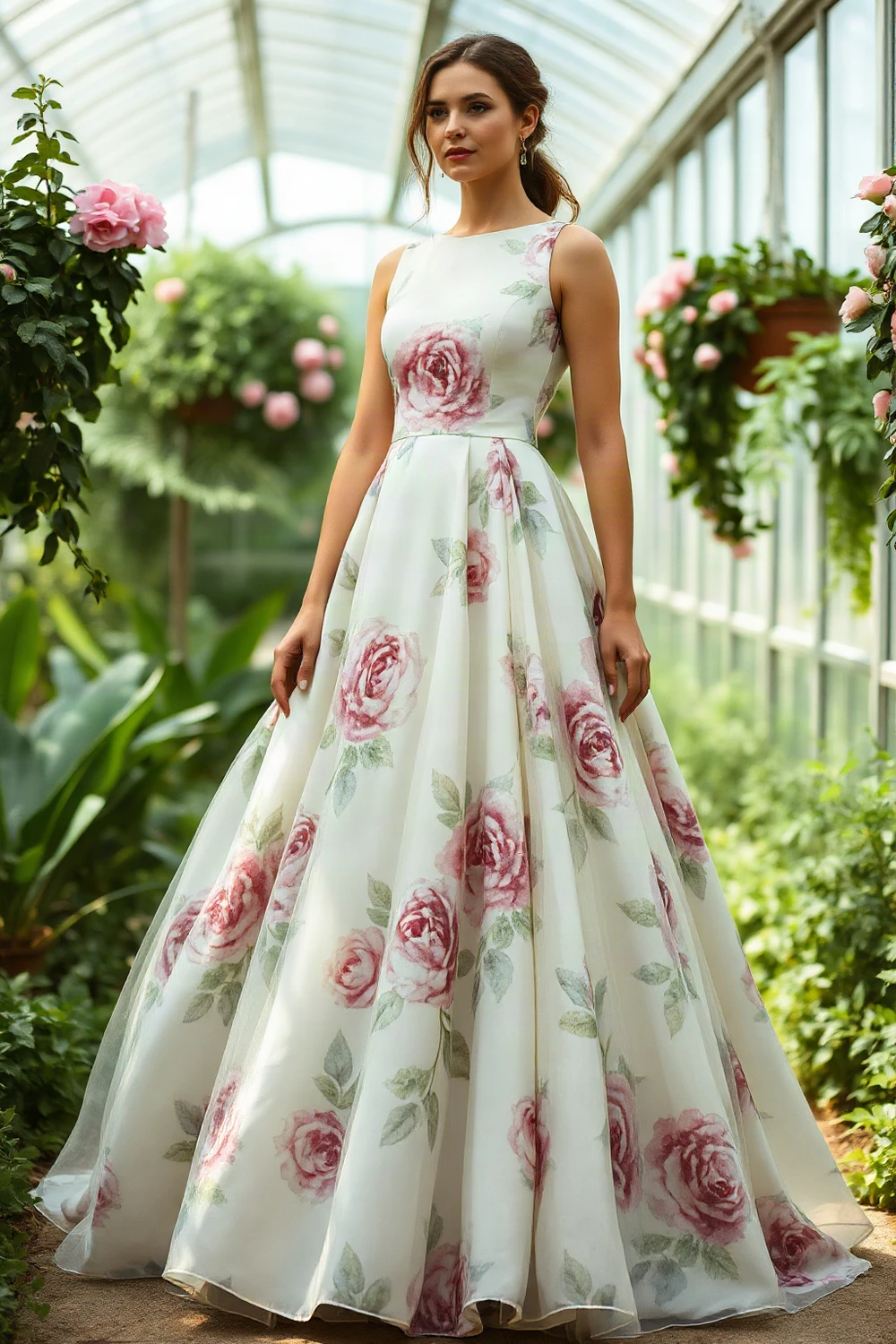
Rose-Print Volume: Letting Color Lead
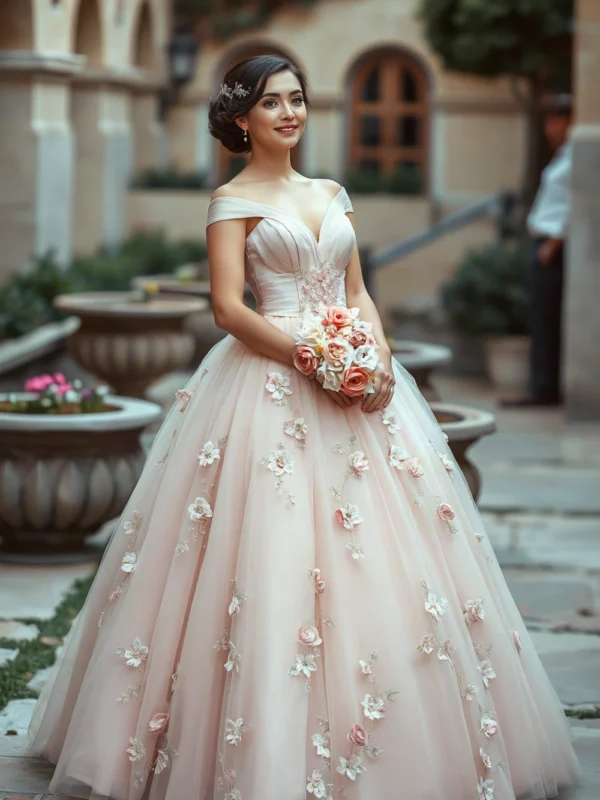
Pink roses and muted green leaves spread across this entire silhouette. A sleeveless, relatively high neckline provides restraint above the narrow waist, while the broad skirt gives the pattern room. Deep folds conceal some blossoms and bring others forward as the wearer moves. Greenhouse foliage and pink flowers repeat the palette.
With a pattern this large, reconsider every other floral element. A dense, multicolored bouquet may compete, while a quieter arrangement leaves the printed roses more space. Check how major motifs meet the waist and appear from the sides, because placement affects balance. Also consider the full skirt in narrow aisles and around dining chairs. When mostly white fabric with limited warmth is preferred, compare the final dress’s blush sash.
A Blush Sash and Illusion Neckline: Restrained Contrast
The final white silhouette contains two details: a finely sparkling illusion panel and a blush waist sash. The sweetheart bodice remains visible beneath the shoulder-capping panel. At the waist, the sash creates a warm horizontal division before the long A-line falls in slender folds to the floor and extends slightly behind. The plain studio background leaves both accents unobstructed.
A sash introduces color without a full print, but its tone and position require testing. Shifting it higher or lower changes the perceived proportions of bodice and skirt. Compare its color with the dress, skin and intended flowers under several lights. Discreet earrings can complement the face-framing panel without a necklace. This look is subtler than the star-like neckline and far less colorful than the rose print, keeping romance orderly, warm and quiet.
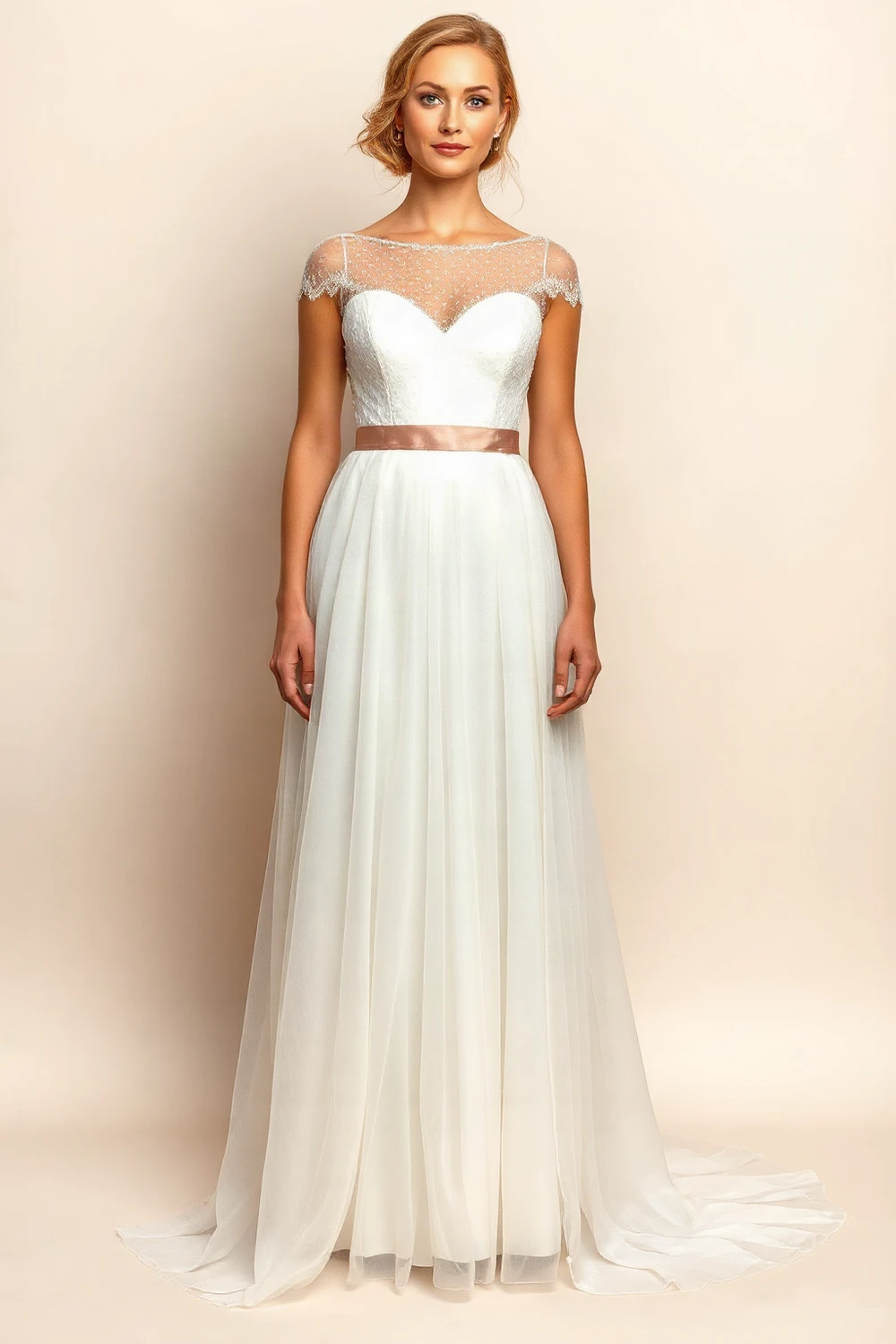
Choose a romantic wedding dress by considering how its details cooperate. An ankle-length hem highlights shoes, long sleeves calm the outline, tiers create motion, sparkle draws attention upward, a large print makes color central, and a blush sash provides a contained accent.
Compare dresses by walking, sitting, turning and raising your arms, then view each from front, side and back under changing light. Relate the results to the venue’s surfaces, pathways and lighting. The strongest choice is not simply the most romantic still image, but the dress whose volume, support, decoration and color remain balanced with your movement and intended atmosphere.
Compare romantic wedding dress styles ranging from an ankle-length A-line to a rose-print ball gown, with practical guidance on necklines, sleeves, movement, color and setting.
Frequently asked questions
What shoes work with an ankle-length wedding dress?
Because the shoes remain fully visible, consider toe shape and color as well as heel height. Test them with the actual hem while walking and turning, and balance their visual weight against the airy skirt without sacrificing all-day comfort.
Can a long-sleeved wrap wedding dress restrict movement?
It depends on the sleeve cut, shoulder construction and fit through the skirt. During the fitting, reach forward and upward, sit down and try wider steps. Check the V-neck position at the same time rather than evaluating each area separately.
Is a tiered long skirt practical for a beach wedding?
It can create beautiful movement, but sand and wind make hem management important. Practice lifting the skirt with one hand and consider the walking distance. An ankle-length alternative is easier to manage, while the long tiered option produces more visible sweep.
Should jewelry be worn with a sparkling illusion neckline?
The neckline may already provide enough detail near the face. Small earrings can preserve a clear balance, while a necklace may compete with the panel. Evaluate the embellishment under both daylight and the venue’s evening lighting before deciding.
How do I choose between a floral print and a blush sash?
A floral print makes color and pattern central to the entire styling plan, affecting bouquet and venue choices. A blush sash keeps the dress predominantly white and confines warmth to the waist. Choose according to how visible you want color to be.