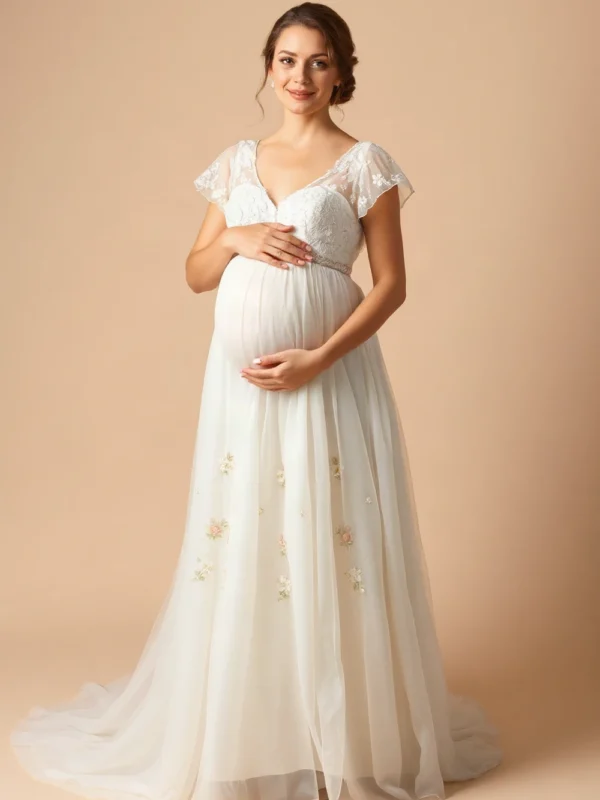
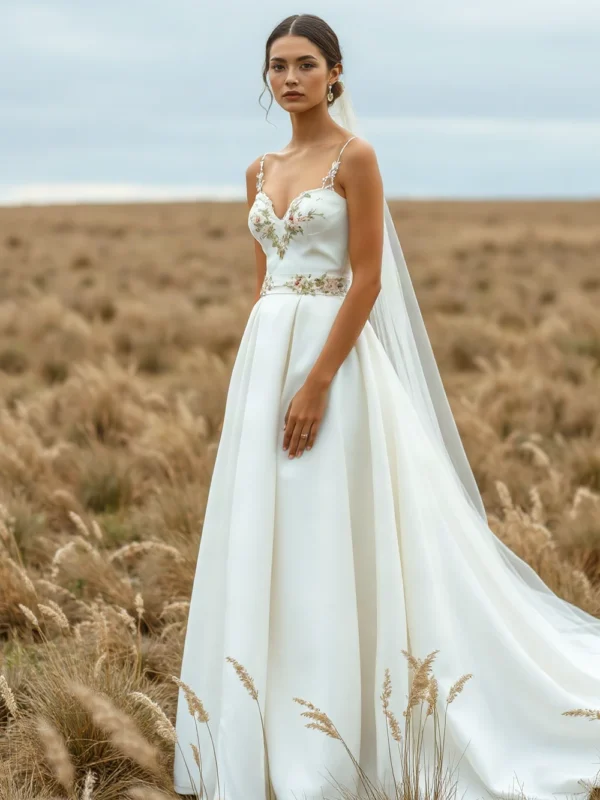
The shared idea across these six images is that a floral motif can do more than decorate a dress: its color, density and position can change how the silhouette is read. Flowers may direct attention toward the shoulders, define a waist or create weight around a hem. It is therefore useful to choose the line you want to emphasize before choosing the type of bloom.
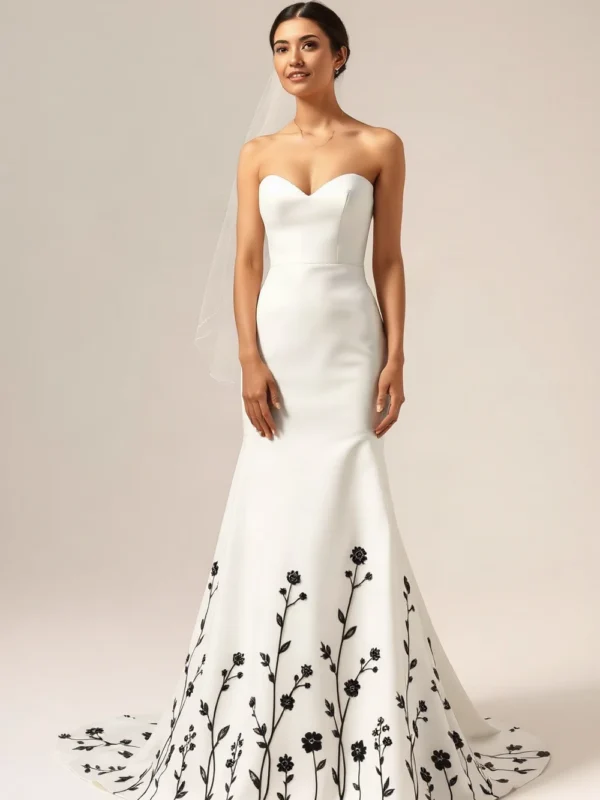
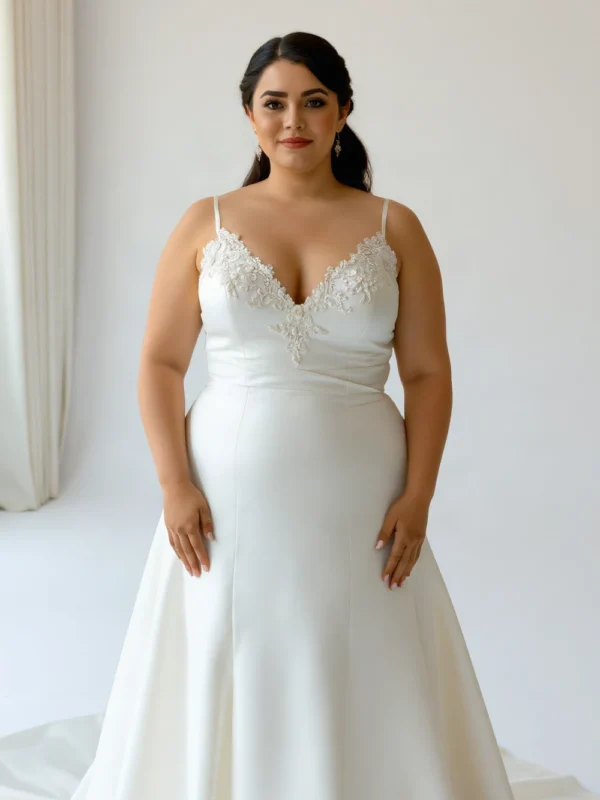
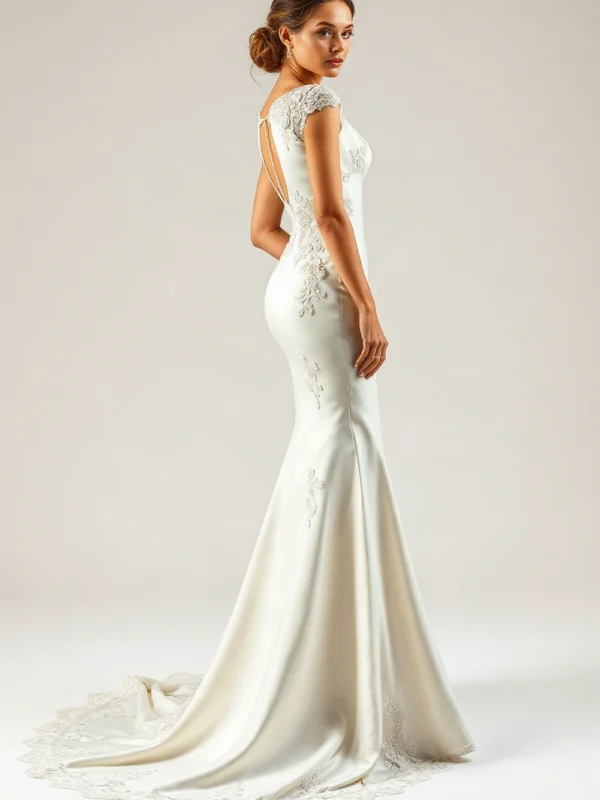
The first concept creates the strongest contrast, placing black stems against the flared lower portion of a white fitted dress. In the second image, white-on-white embellishment frames a deep V-neck and eases into a quiet A-line skirt. The third uses tonal motifs at intervals from shoulder to hip and train. Their route follows a close mermaid shape, while the open back becomes another focal element.
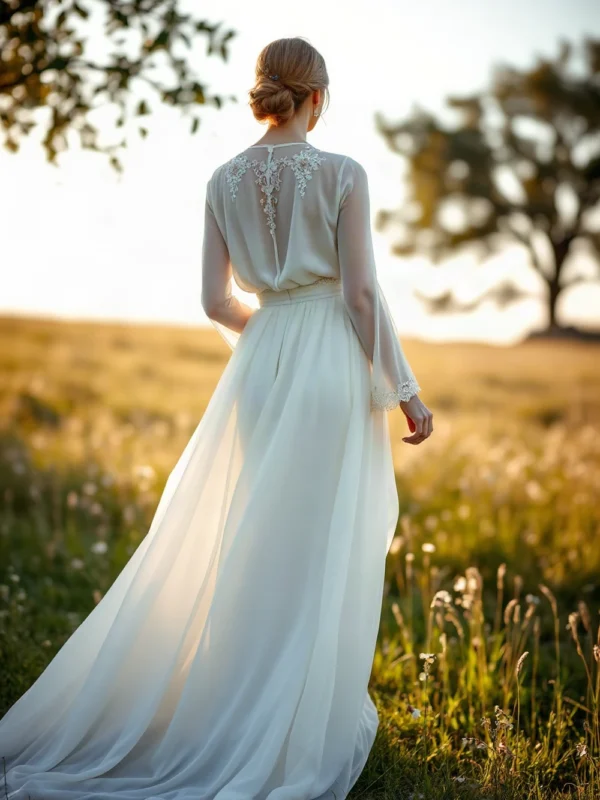
The fourth look concentrates detail around the upper back and cuffs, leaving its long, fluid skirt comparatively calm. A high empire line, short translucent-looking sleeves and sparse pastel flowers give the fifth image a gentler rhythm. In the sixth, small colored motifs gather on the straps, bodice and waist, while a broad, mostly plain skirt gives those details room to register.
When comparing these ideas, consider how visible a motif will remain from a distance, whether it competes with the face in close photographs and how it intersects likely alteration lines. Strong black contrast can be balanced with restrained accessories; tonal white decoration produces a more integrated effect. With pastel or colored flowers, a bouquet need only repeat one or two shades rather than the entire palette. Finally, assess the front, side and back while walking so that an attractive detail also works with the complete moving silhouette.