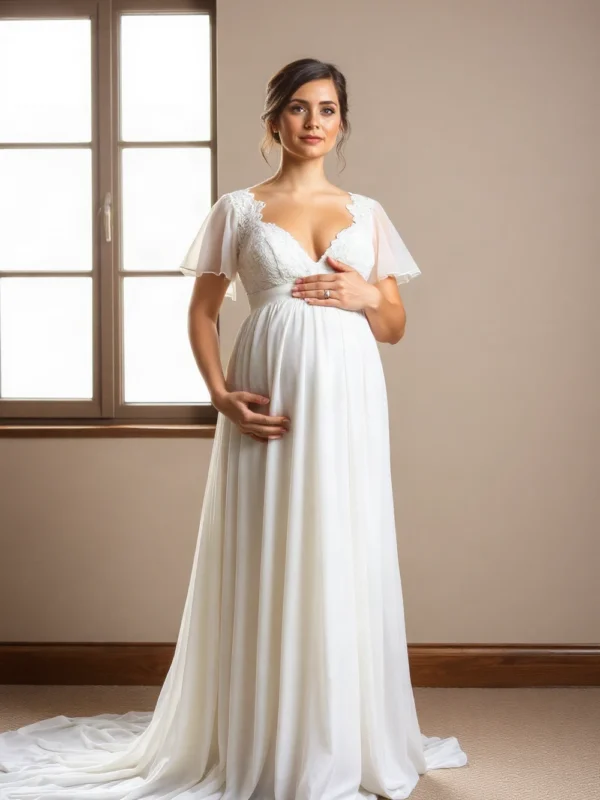
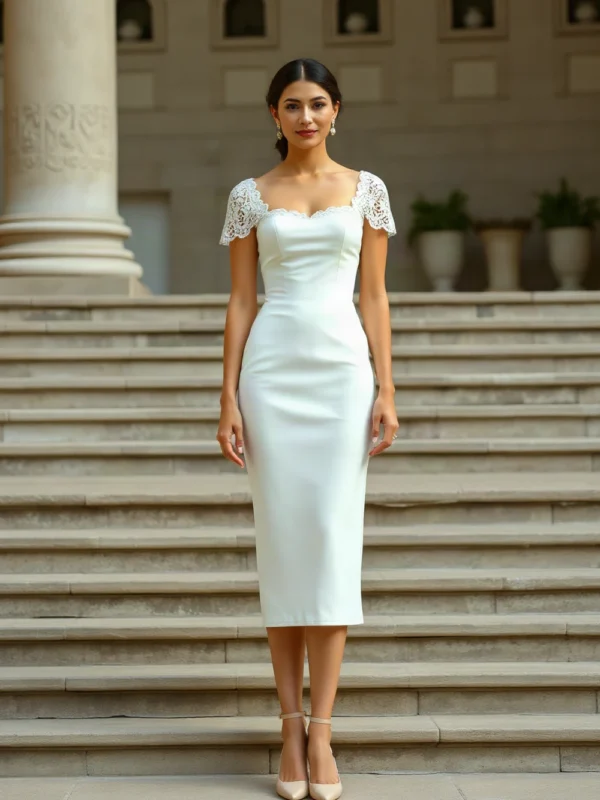
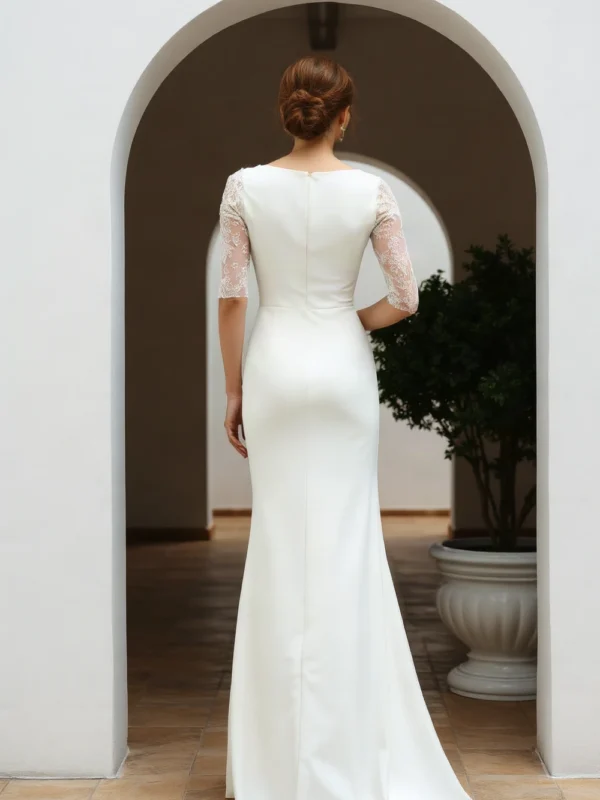
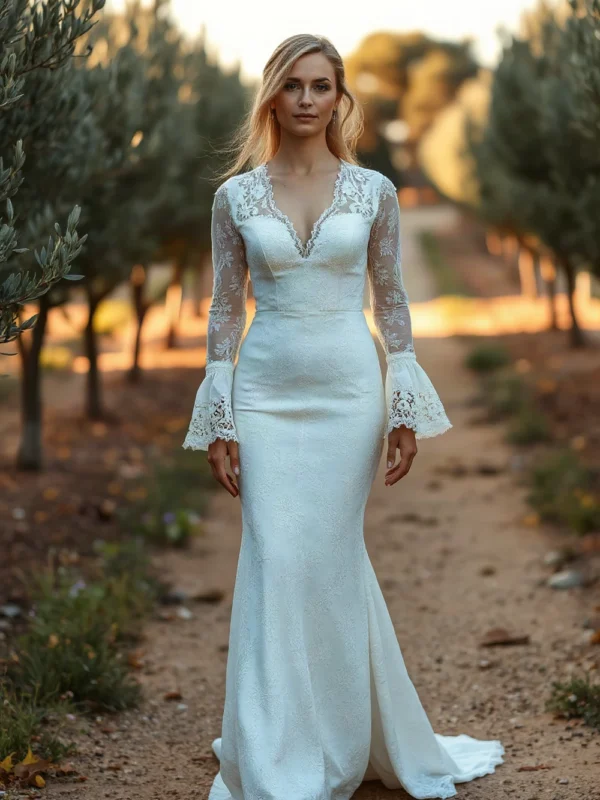
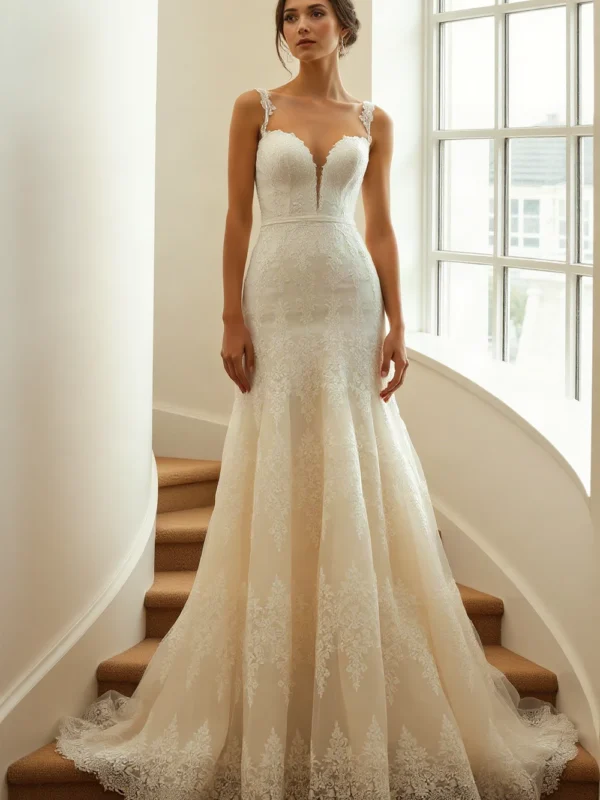
The six images share a romantic white or soft ivory palette, yet they use lace-like pattern in distinctly different ways. On some looks, motifs frame only the neckline or sleeves. On others, they continue across the body and into the skirt, making surface pattern part of the complete silhouette rather than a small accent.
The first concept prioritizes ease through a raised waist and fluid floor-length skirt, while the second is compact and city-minded with a fitted midi hem. The third shows how a smooth covered back can be lightened by semi-sheer patterned sleeves. Together, these looks demonstrate that romance does not depend on a full skirt or an elaborate train.
The fourth and fifth images create more pronounced outlines. Long patterned sleeves end in flared cuffs beside a deep V neckline, producing a relaxed, slightly bohemian direction. The narrow-strapped fit-and-flare look is more structured: dense motifs follow the torso before the skirt opens around the knees. When comparing them, consider both arm movement and the amount of restriction around the hips and stride.
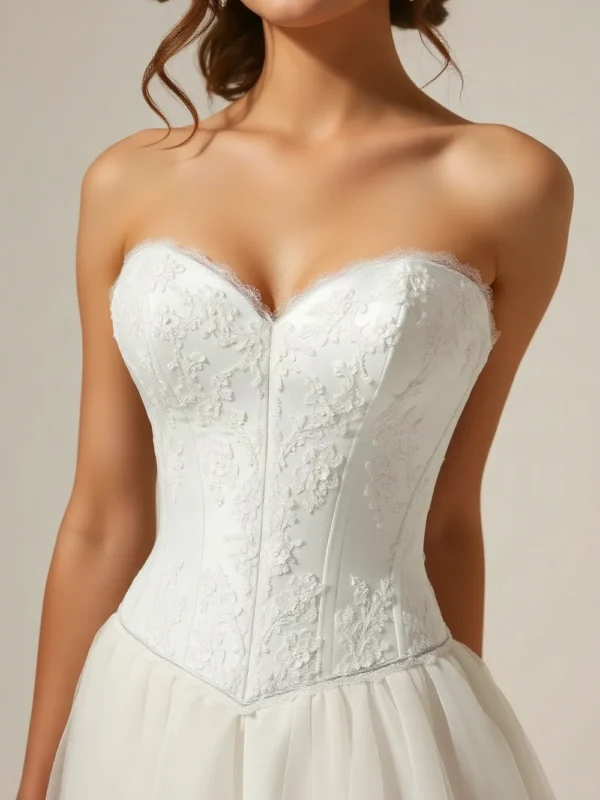
The final close-up shifts attention from overall shape to bodice construction. Curved sweetheart edges, vertical seams and a pointed lower edge frame the torso. A strapless neckline exposes the shoulders and creates room for jewelry, whereas lace sleeves add coverage and more visual texture near the face. Neither approach is automatically more formal; proportion and styling determine the result.
Begin by considering the venue, ground surface and length of time spent walking or seated. Then compare neckline depth, sleeve range and waist placement during the same fitting. These AI-created images are best used as visual concepts for proportion and detail placement, not as evidence of specific materials or available products.