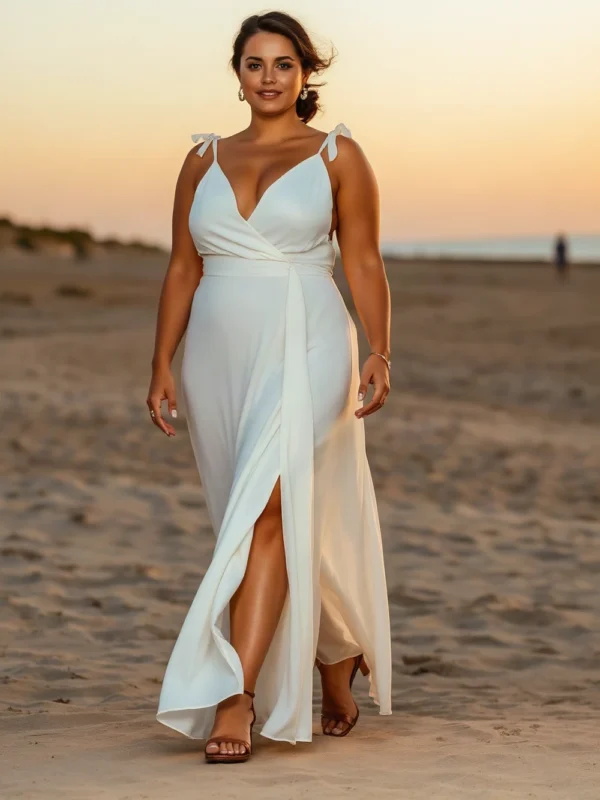
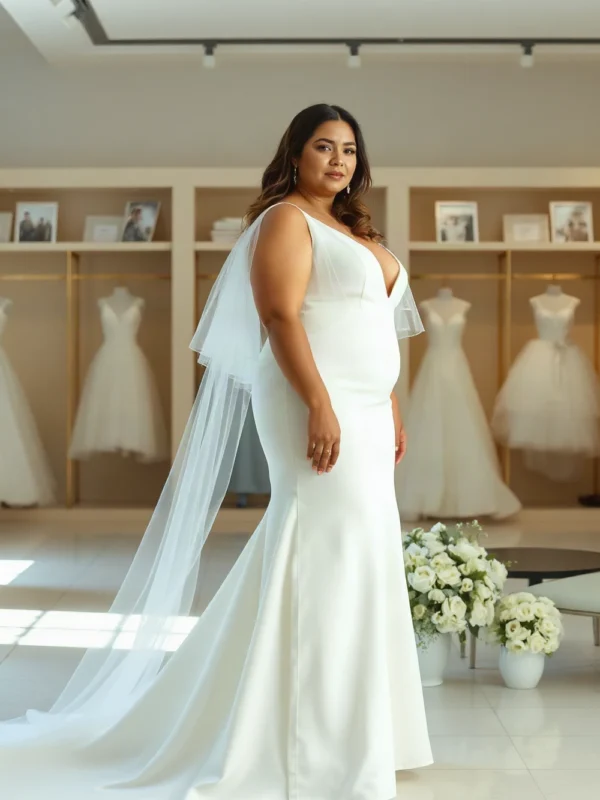
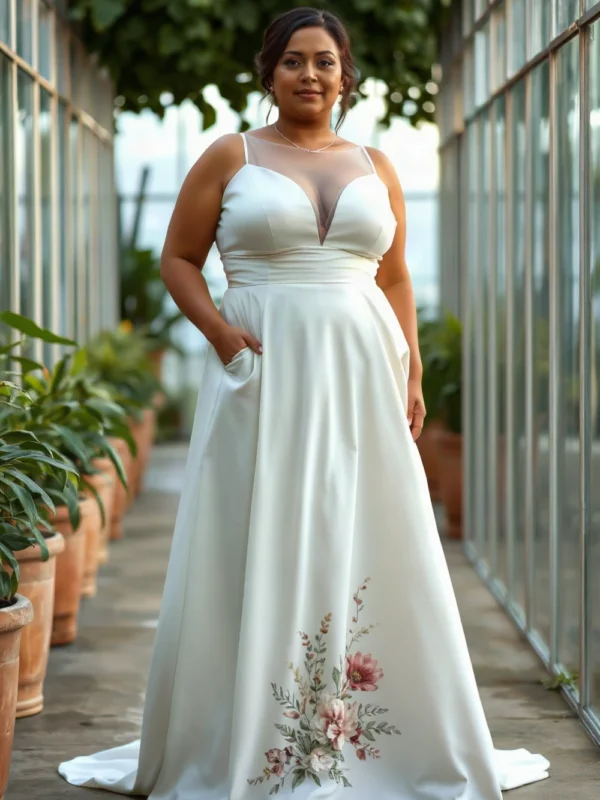
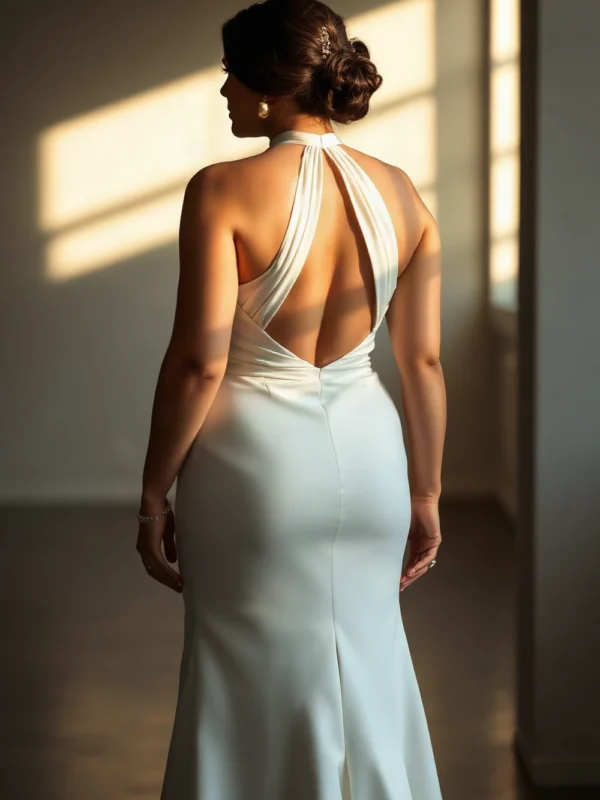
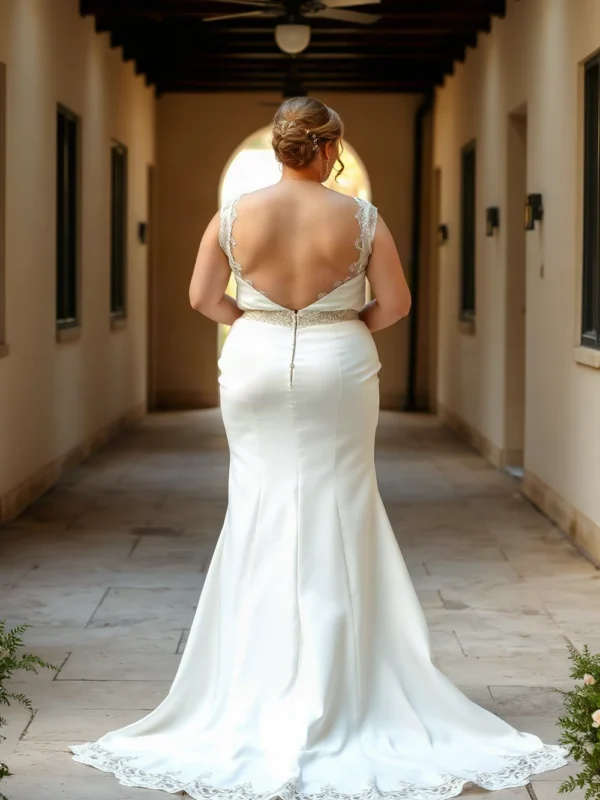
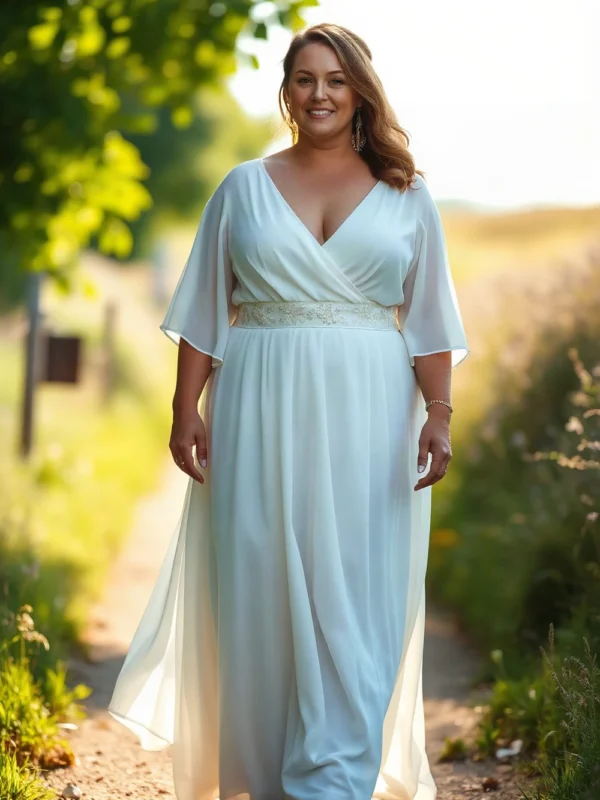
The shared theme of this gallery is the relationship between silhouette and focal detail in plus-size wedding dress design. Although white and ivory tones connect the images, skirt width is not the only meaningful difference. The treatment of the shoulders, neckline, waist, back and train changes the direction of each look.
The beach design feels the most relaxed and mobile, with a wrap bodice and a front opening. By contrast, the second concept combines a close-fitting, flared shape with a sheer shoulder cape that moves behind the dress. The first may suit someone prioritising lightness and an informal outdoor mood; the second creates a more defined outline and a stronger ceremonial entrance.
The third image uses a wide A-line skirt, a pocket and concentrated botanical decoration to introduce colour without covering the entire surface. The fourth relies on cut rather than ornament: halter drapes frame a long open back. One creates a focal point that is primarily seen from the front, while the other becomes especially noticeable during turns and rear-facing photographs.
In the fifth concept, lace-like edging around the low back connects visually with the defined waistband and decorated train. The final dress takes a softer approach through a wrap V-neckline, elbow-length wide sleeves and an embellished-looking waist panel. That comparison is useful for anyone seeking arm coverage without the structure or visual weight of a close long sleeve.
Do not base a choice only on a front-facing image. Consider sitting, walking, raising the arms and turning, then relate the back opening to the intended support solution and the train to the venue surface. Testing visual preferences against these practical actions during a fitting helps establish which details deserve priority.