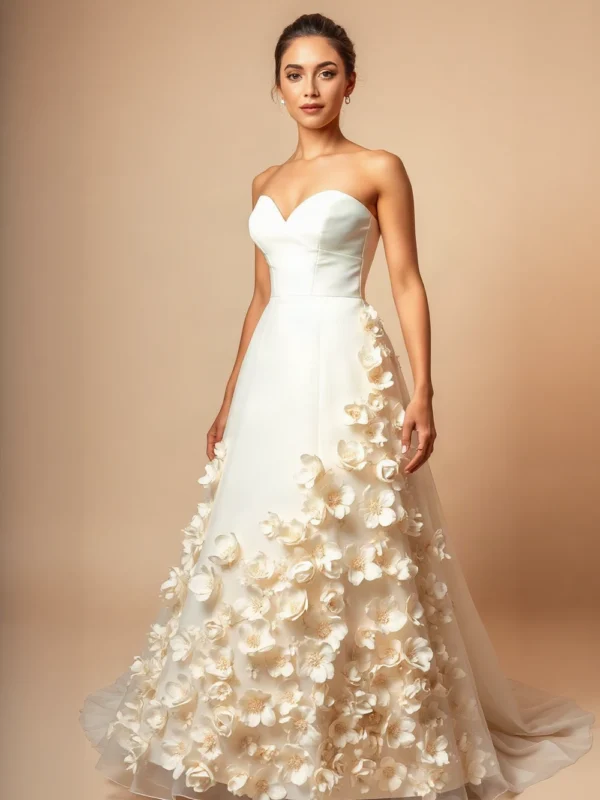
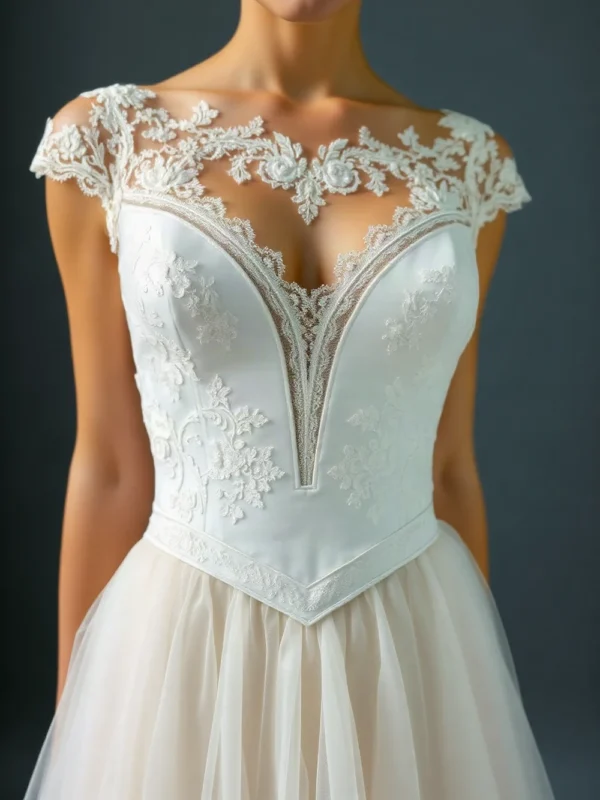
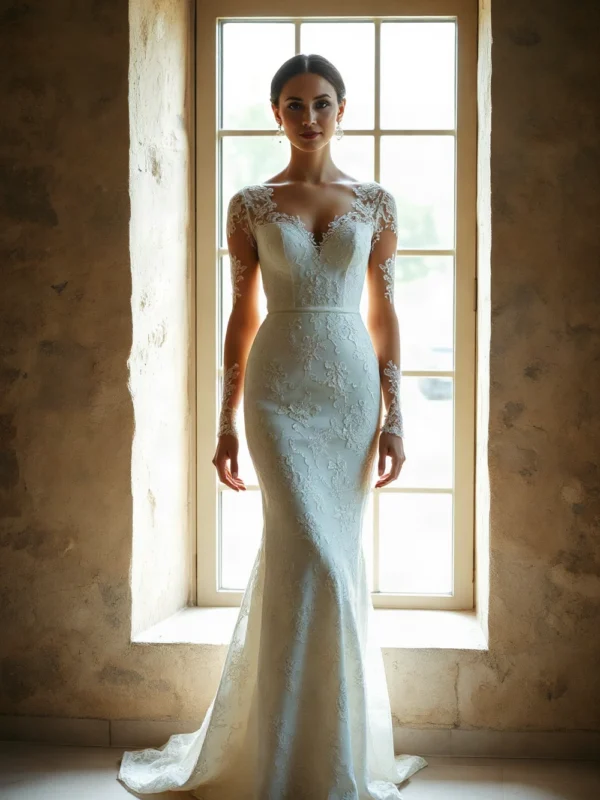
Comparing plus-size wedding dress styles requires more than sorting them into fitted or full categories. The direction created by the neckline, the point where the waist is marked and the height at which the skirt begins to open all shape the same silhouette. These six visual concepts range from one-shoulder draping and a pocketed A-line to off-the-shoulder volume, diagonal mermaid ruching, a textured V-neck and a pointed basque waist. The purpose is not to hide a body or present one proportion as ideal. It is to read how the design lines work, then build a fitting checklist around personal comfort, movement and visual preference. Because the images primarily show front views, an actual choice should also consider the side and back, seated posture, walking space and support.
Directing the Eye with One-Shoulder Draping
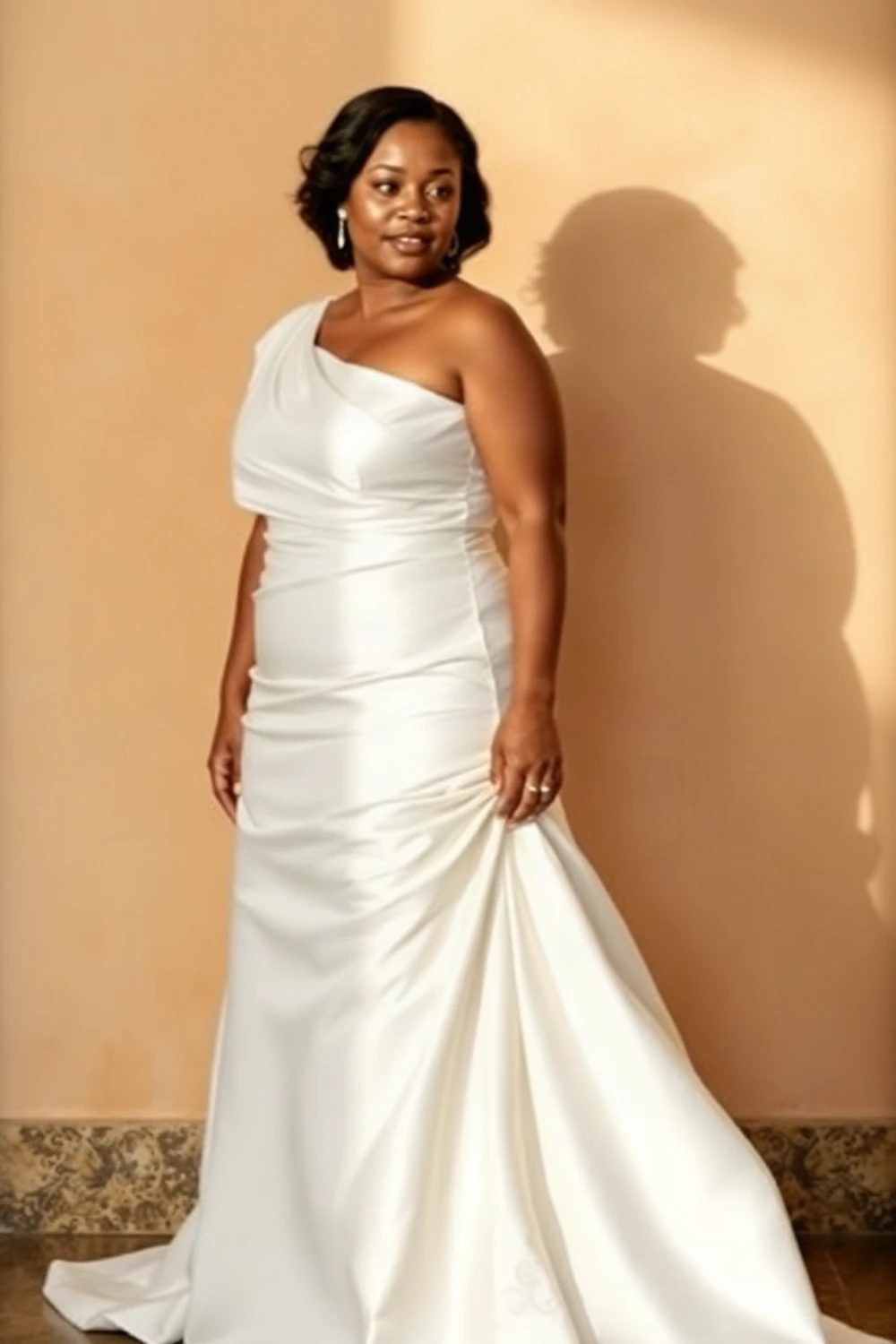
The first concept sends the eye from one covered shoulder across an asymmetric neckline and down the close-fitting body. Shallow horizontal folds soften that diagonal route, while a generous release of fabric at the lower side gives the skirt movement. The result is more sculptural and deliberately unbalanced than a symmetrical V-neck. Hair placement, earrings and the hand used to carry a bouquet can either reinforce or compete with its single focal direction. At a fitting, check that the upper edge remains secure when the arms move, the covered side does not press at the neck and the necessary support stays concealed. The side drape should also be tested while walking and turning, not judged only in a still pose.
Keeping a Pocketed A-Line Clean and Mobile
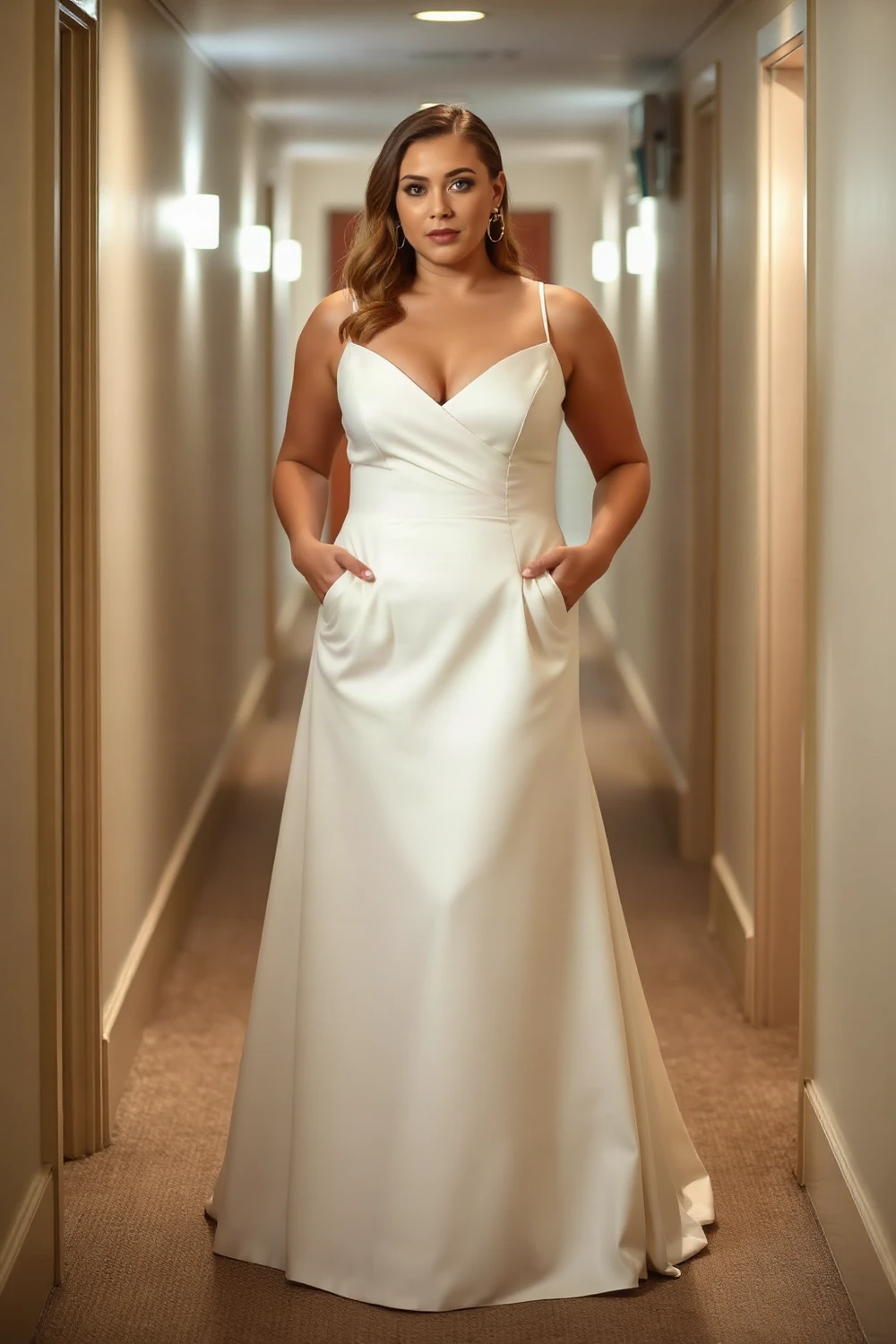
The second look combines slim straps and a wrap-like V-neck with an unembellished A-line skirt. Its clean surface makes the seams, pocket openings and controlled widening the main design features. Compared with a mermaid cut, the A-line can provide more room around the hips and legs; compared with a very full skirt, it generally needs less space between tables or in a vehicle. Pockets should be assessed with the hands both inside and outside, since their use can change the side profile. Also test whether the straps share support with the bodice, the neckline stays close when leaning and the upper edge does not gap. These checks turn apparent simplicity into a genuinely functional choice.
Balancing an Off-the-Shoulder Band and Full Skirt
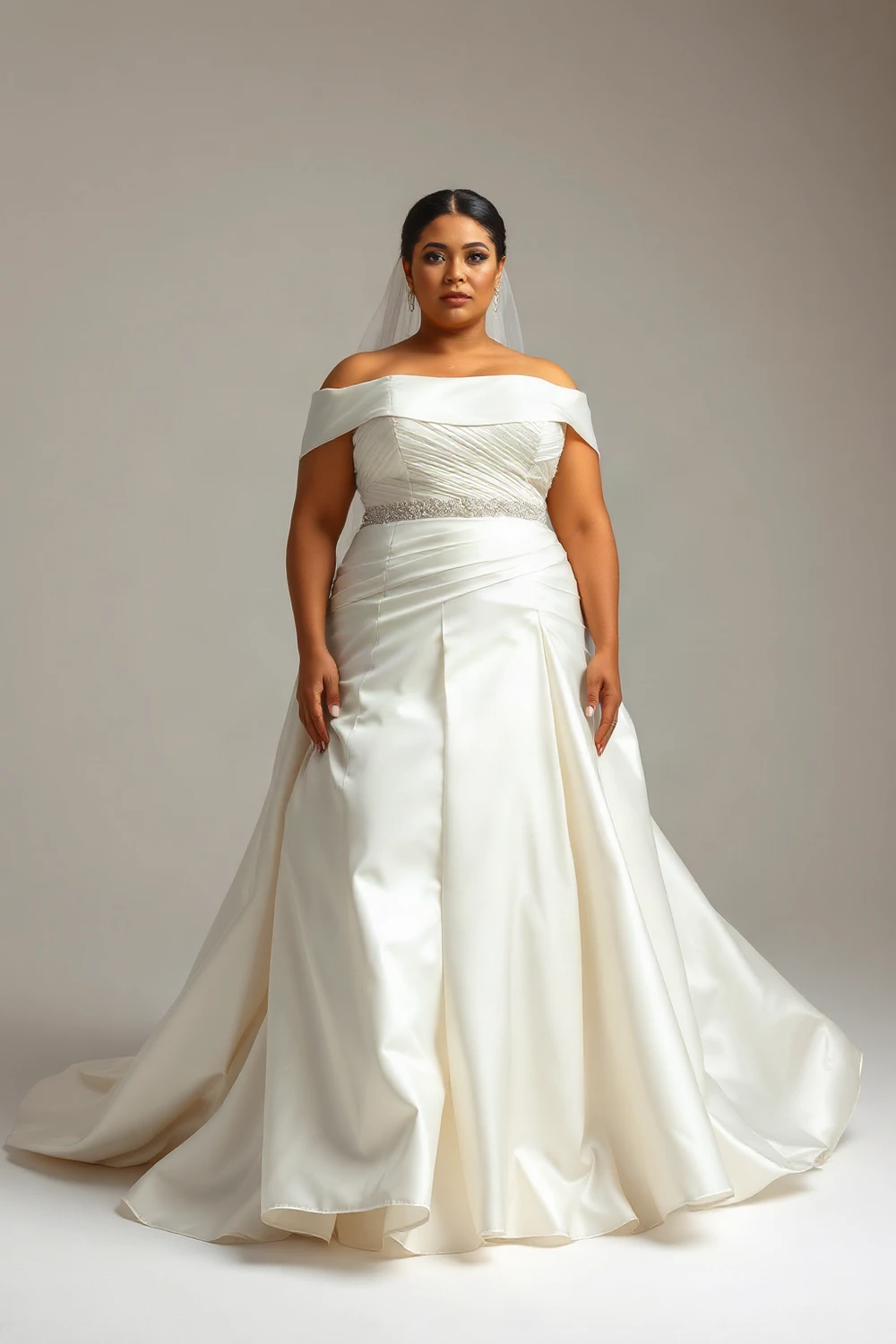
In the third concept, a wide off-the-shoulder band creates a firm horizontal line, while diagonal bodice gathers and a narrow reflective belt draw attention toward the centre. Deep folds then expand into a more ceremonial skirt volume. The belt acts as a visual pause between two strong areas rather than as an isolated decoration. During a fitting, raise and extend the arms to see whether the neckline shifts, then check that the gathers remain relaxed and the belt lies level. The skirt’s width should be considered against aisle space, chair spacing and plans for dancing. If a veil is added, a lighter or less densely layered option may preserve the clarity of the neckline, waist and hem rather than making every area equally prominent.
Testing Diagonal Ruching and a Mermaid Flare
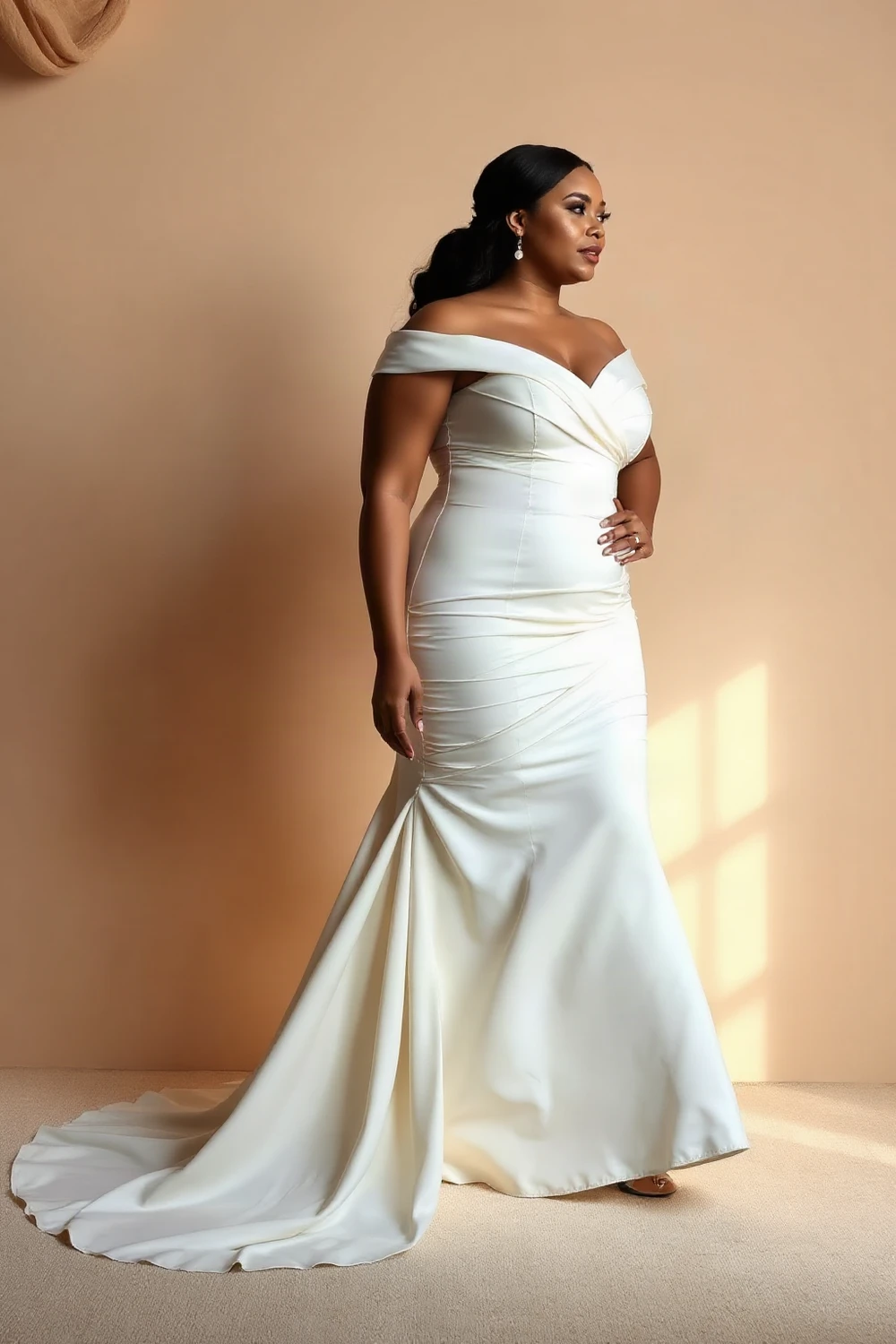
The fourth look continues the V direction of its off-the-shoulder neckline through diagonal ruching across the body. It stays close over the hips and upper legs before opening near the knee, creating one continuous curved route from neckline to hem. In this silhouette, flare placement matters as much as overall size. A higher opening produces a softer mermaid effect, while a lower one may reduce stride length. A fitting should include ordinary walking, stairs, sitting and a dance turn. Observe whether the gathers flow cleanly rather than pulling into the seams, whether the neckline permits arm movement and whether the concentrated side sweep suits the route through the venue. Movement reveals information that a front-facing pose cannot.
Moving from a Textured V-Neck to a Quiet Skirt
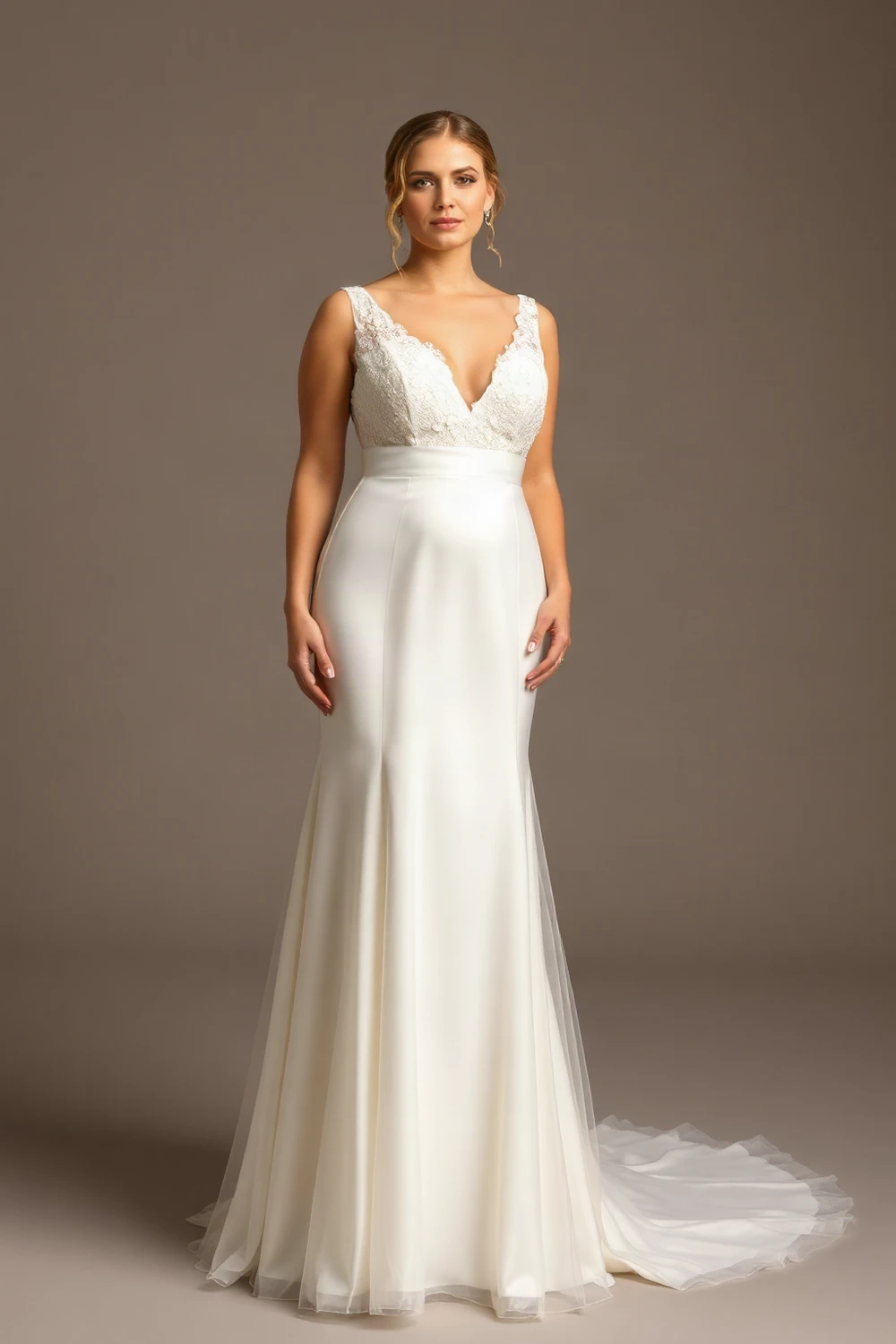
The fifth concept concentrates detail on a lace-textured V-neck bodice, then uses a broad smooth waistband to transition into a restrained skirt. This separation makes the upper body visually distinct while leaving a long, calm line below. Substantial straps frame the neckline differently from slim ones, although comfort depends on placement and internal structure rather than width alone. Test the V-neck while seated, leaning and moving, and make sure the waistband remains flat rather than rolling. Since the bodice already supplies a clear focal texture, compare accessories one at a time. Small earrings, a simple veil edge or an understated hair detail may support the neckline more effectively than combining several decorative elements around the face.
Placing Volume Below a Pointed Basque Waist
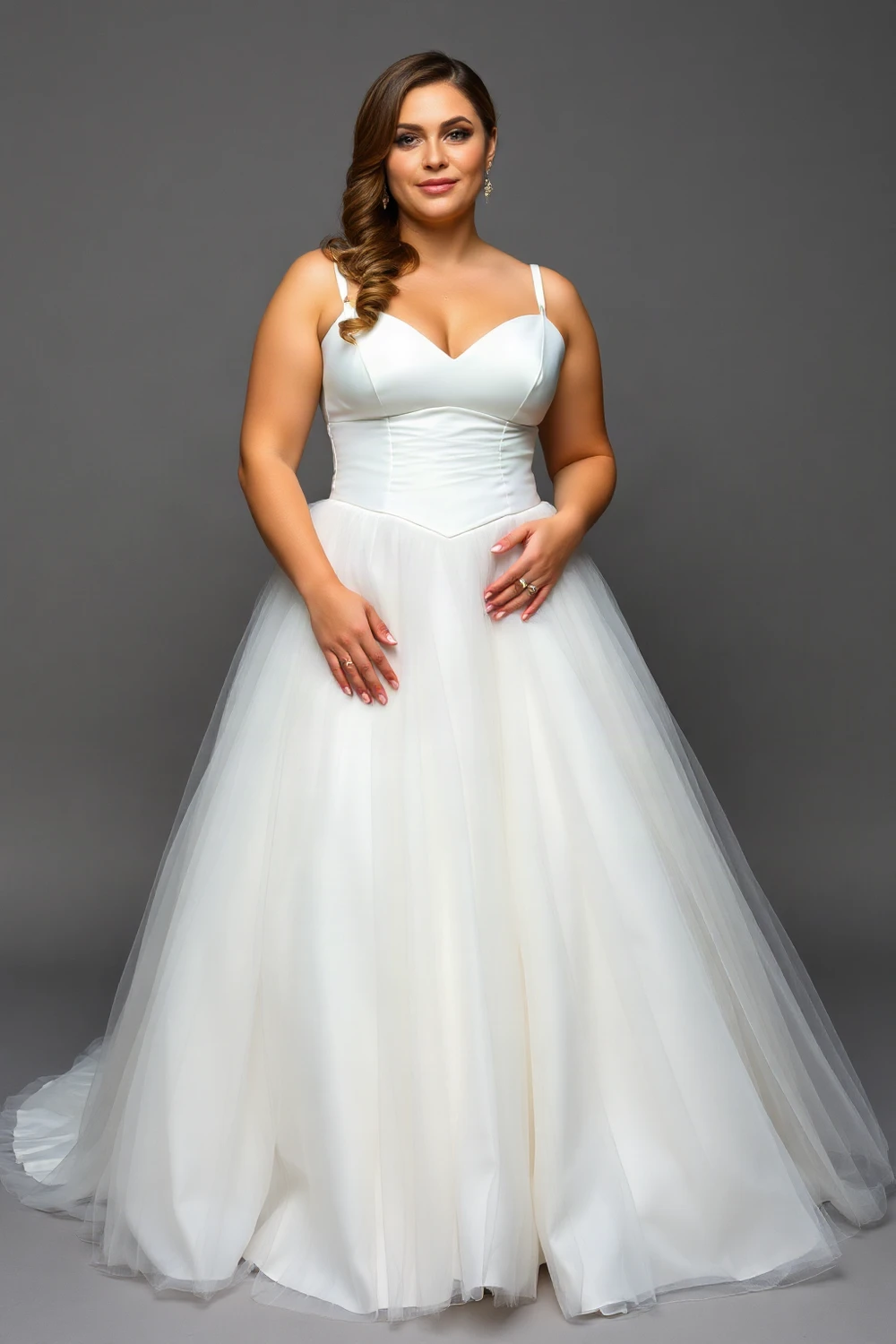
The sixth look links a sweetheart neckline and vertically seamed bodice to a waist that dips into a central point. Unlike a straight waistband, the basque shape visually extends the torso and lowers the apparent start of the layered full skirt. The contrast between defined structure and soft volume is the principal idea. For a clean result, the point should sit at the intended place without folding when seated, and pressure should feel balanced around the bodice rather than concentrated in the straps. Test the skirt’s circumference through turns, narrow passages and chair use, while wearing the planned heel height. These practical checks determine whether the geometric waist organises the generous skirt successfully or becomes restrictive once the wearer begins to move.
When choosing among these approaches, begin with the day’s movements rather than the silhouette name. Neckline security, arm freedom, the behaviour of the waist while seated, pocket placement and available stride can all be tested in one appointment. Once those needs are clear, it becomes easier to select a personal focal point such as asymmetry, bodice texture, diagonal ruching or a pointed waist. Compare front and side images, sit in an appropriate chair and walk for several minutes instead of relying on one still view. The most balanced plus-size wedding dress style is not simply the one that produces a striking photograph; it is the one whose proportions support the venue, planned activity and the wearer’s preferred way of feeling throughout the event.
From a one-shoulder fitted line to a pocketed A-line, lace-textured V-neck and pointed basque waist, these six concepts show how necklines, waist placement and skirt volume shape distinct bridal silhouettes.
Frequently asked questions
How can I compare an A-line and a mermaid dress for movement?
An A-line generally leaves more space around the hips and legs, while a mermaid silhouette remains closer through the upper legs. Test a normal stride, stairs, sitting and a dance turn in the intended heel height rather than comparing only stationary front views.
Will an off-the-shoulder neckline restrict arm movement?
That depends on the cut and placement of the band. During a fitting, move the arms forward, outward and overhead. If the neckline shifts considerably, presses into the arms or requires repeated adjustment, a different placement or neckline may be more practical.
What should I check when trying a wedding dress with pockets?
Compare the front and side profile with the pockets empty and with your hands inside. The pocket bags should not show prominently, the openings should not flare at the hips and a light item should not pull the skirt out of line.
How can I assess support with a deep V-neck?
Do more than stand upright: sit, lean forward and move the arms. The neckline edges should remain close to the body, the straps should stay in place and any chosen support should remain concealed. Model-specific alterations should be discussed during the fitting.
Who can wear a pointed basque waist?
A basque waist is not reserved for one body type. What matters is where its point ends, how the extended bodice distributes pressure and whether it stays smooth while seated. Compare different point depths with a straight waist from the front, side and seated position.