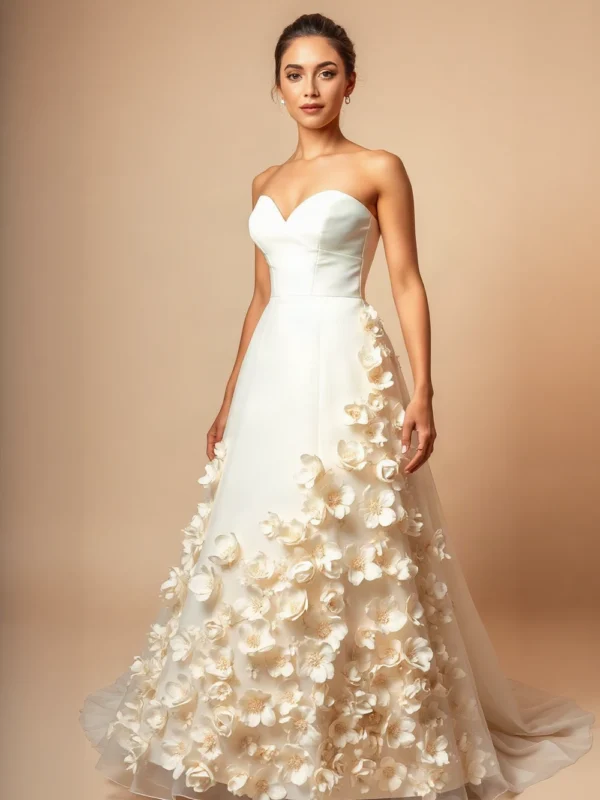
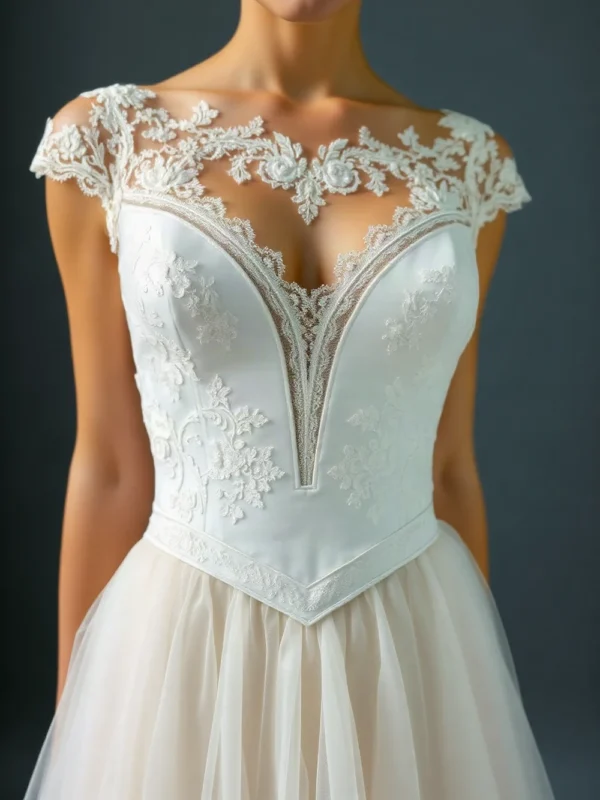
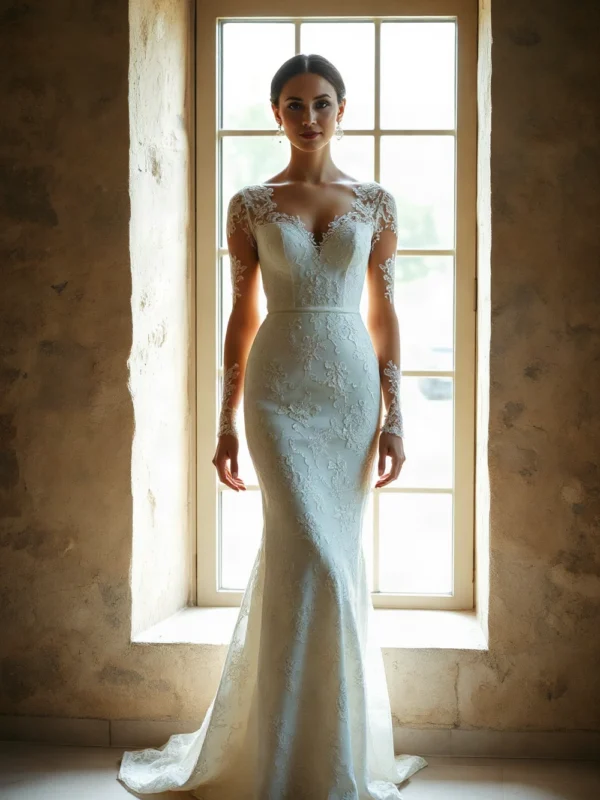
A square neckline makes horizontal and vertical lines visible at once, framing the collarbone and clarifying how straps, bodice, waist and skirt relate. Its character changes with cap sleeves, off-shoulder puffs, broad sleeveless straps, narrow shoulder bands or long embellished sleeves. Skirt shape shifts the balance again: a gentle flare feels restrained, whereas a mermaid flare, front slit or ball-gown volume creates a stronger focal point.
The six images offer both visual alternatives and practical fitting questions about shoulder stability, arm movement, waist construction, stride and required space. No silhouette is universally better; the useful choice connects the neckline’s geometry with preferred coverage, movement and setting. Treat each image as inspiration, then assess its features while standing, sitting, turning and walking rather than relying on one posed view.
Cap Sleeves, Clean Lines and Useful Pockets
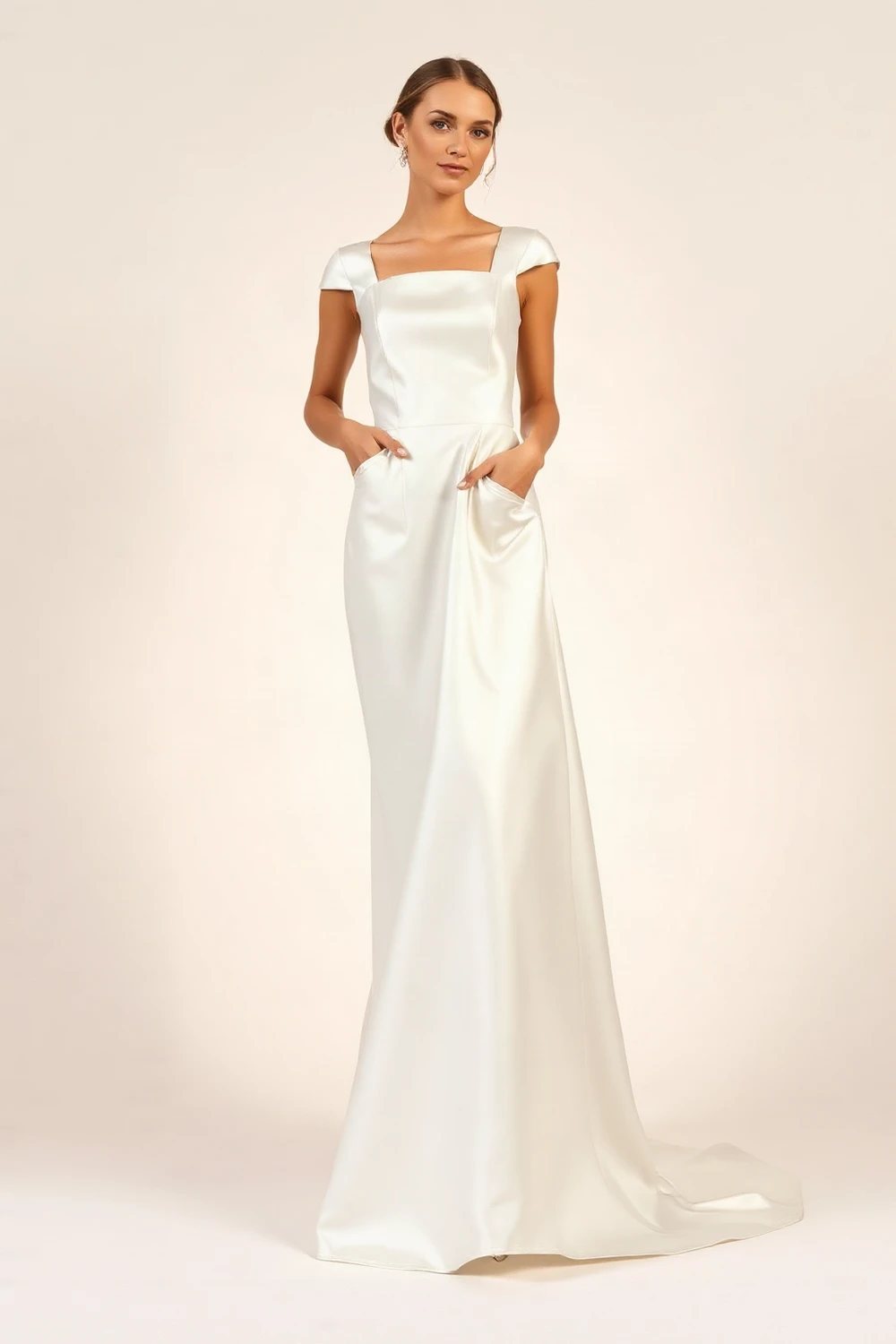
The first look uses short cap sleeves to finish the square neckline without making its corners severe. Vertical bodice seams continue into a skirt that widens gradually below the hips, maintaining a line from shoulder to floor. Pockets add function to an otherwise undecorated surface; hands inside create slight folds around the openings, affecting posture and photographs.
At a fitting, use both pockets, sit and raise the arms. Check whether pocket bags add bulk, sleeves restrict movement or the neckline lifts away. The quiet upper section accommodates visible earrings or a polished hairstyle, but its smooth-looking surface may expose tension lines, so inspect the bodice from the side and back. The gentle flare sits between a narrow column and a highly voluminous gown.
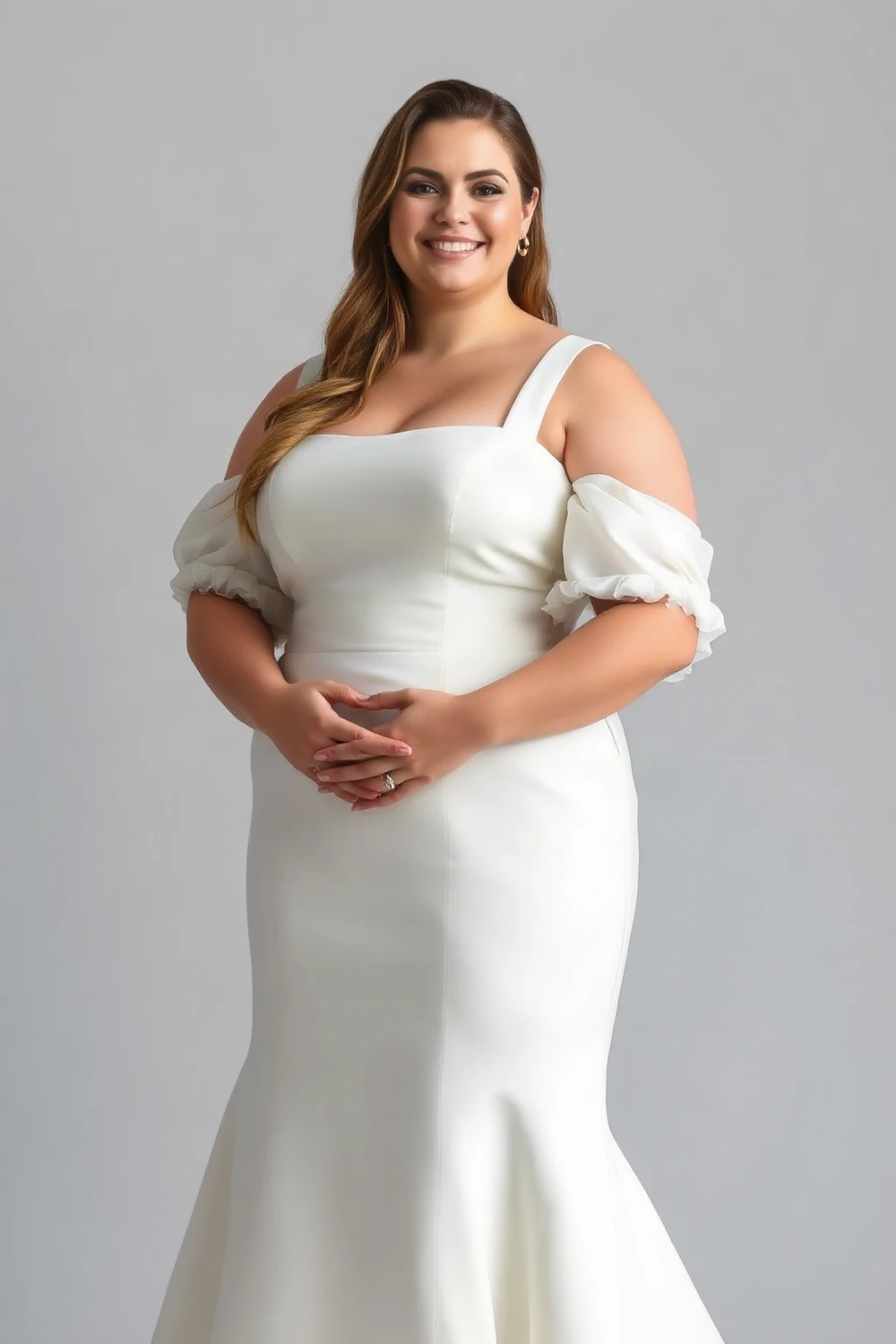
Soft Puff Sleeves against a Close Fit
In the second image, broad straps define the square neckline while short puff sleeves sit below the shoulders. Their rounded volume contrasts with the fitted body’s vertical line, although the skirt opens lower down. Emphasis stays around the upper arms, giving the neckline a softer, romantic border without full coverage.
A still image cannot show how the sleeves behave. Reach forward and sideways to see whether they ride up, squeeze the upper arms or collide with the straps. Hair over one shoulder creates the pictured asymmetry; an updo exposes both sleeves equally. Because the skirt remains close through much of the body, test sitting comfort and fit around the waist and hips separately from sleeve comfort. Neither feature offsets restriction in the other.
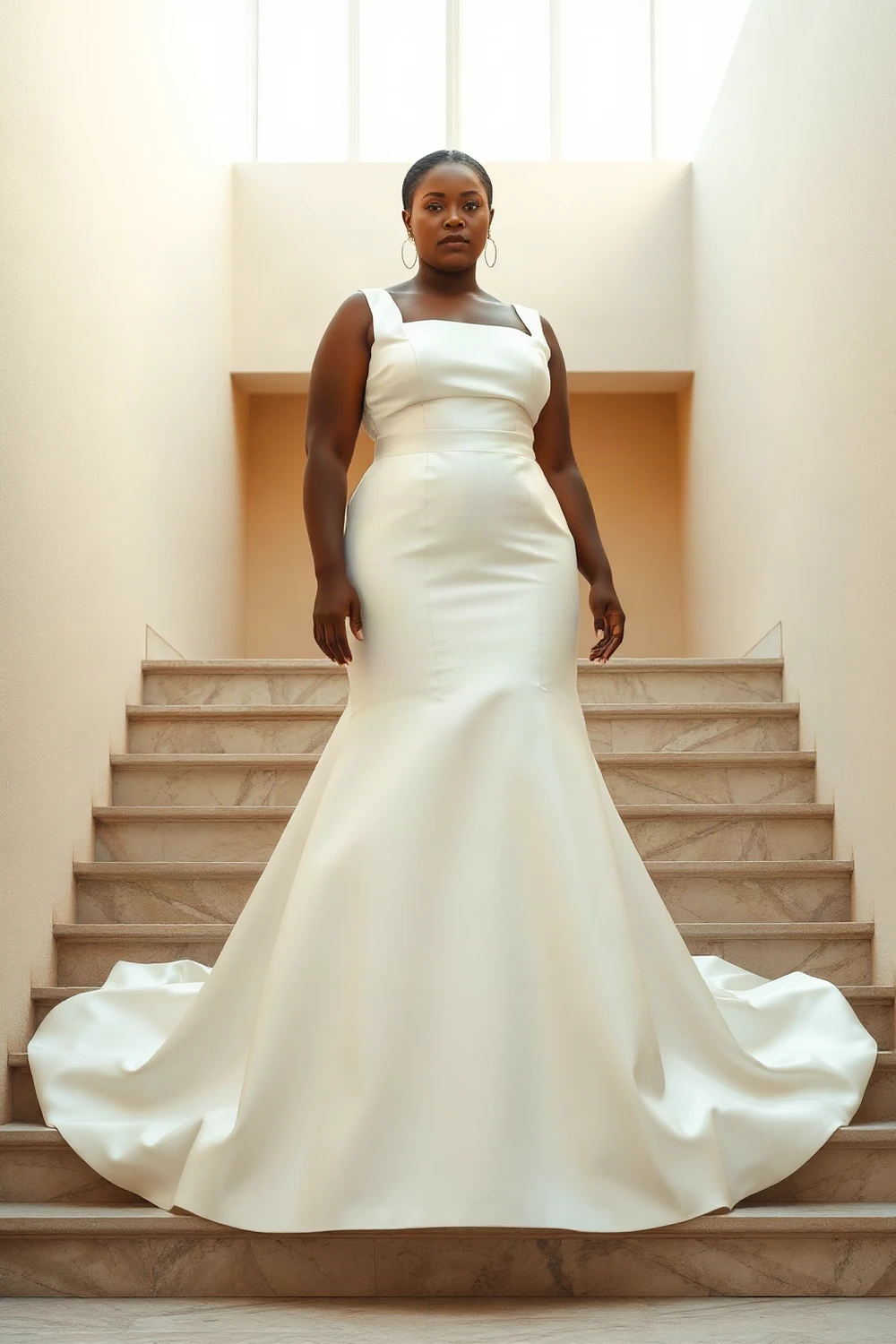
Wide Straps with a Sculptural Mermaid Flare
The third look gives a sleeveless square neckline a substantial frame through broad straps. A horizontal under-bust section and wide waistband draw attention to the body’s centre. The skirt stays fitted through the hips and thighs, then expands dramatically near the knees. Its train spreads across the staircase, creating a sculptural base beneath a comparatively spare upper body.
Check side and back views to ensure the waistband lies flat without gapping and remains comfortable while sitting and breathing. A very low flare may shorten the stride; a higher start changes movement and silhouette. Test stairs, turns and longer steps, and plan how to handle the substantial train in narrow passages. The open neckline leaves space for earrings, but several large accessories could compete with the skirt’s deliberate shape.
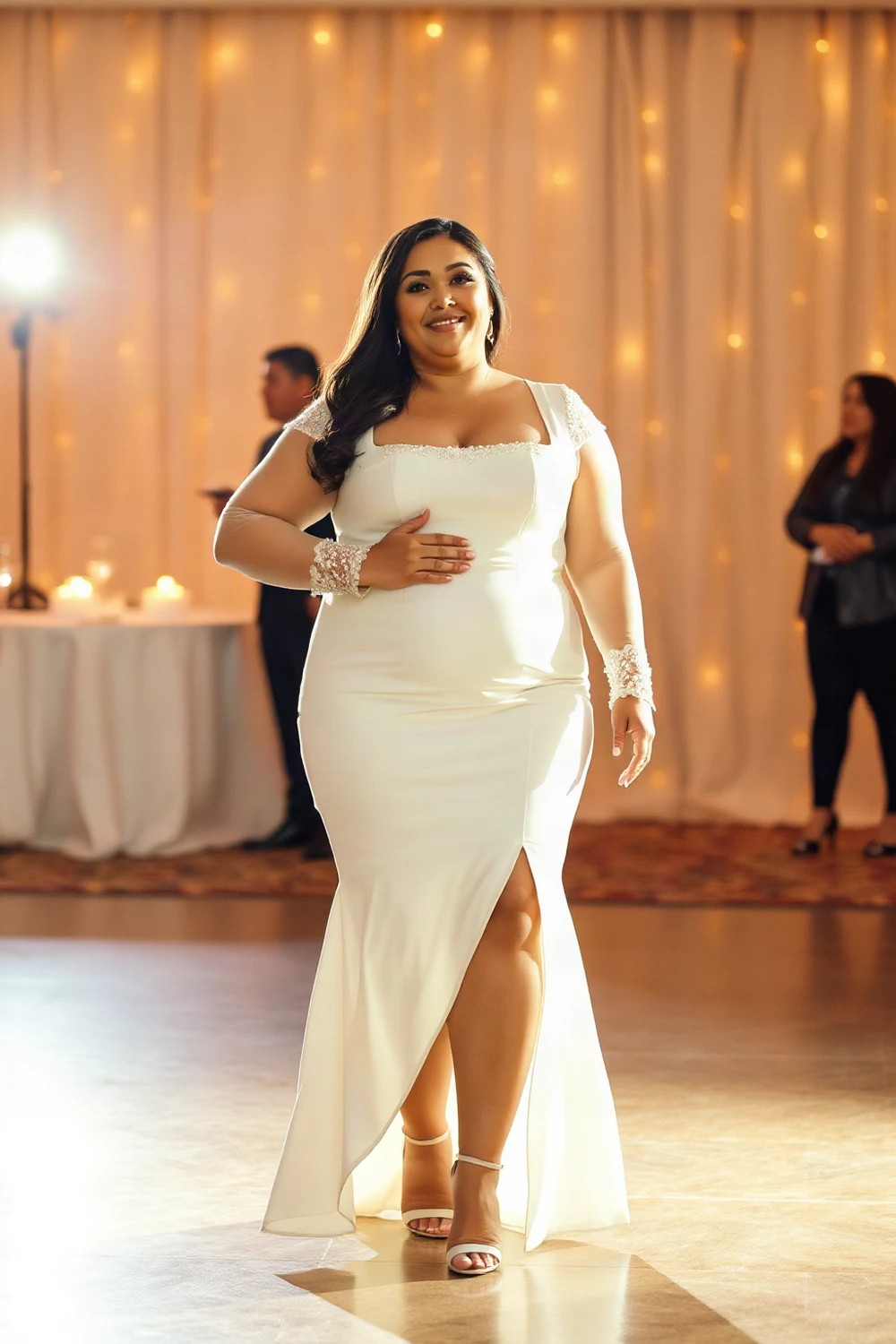
A Front Slit That Highlights Every Step
The fourth image joins a square neckline to a fitted body and high front slit. Textured-looking cap sleeves and small bright details around the neckline frame the torso, while the opening produces a vertical line with each step. Attention moves among face, neckline and visible shoes. Warm event lighting makes folds and reflective details more prominent than neutral studio light might.
Standing shows only a slit’s starting height. Test ordinary and longer strides, sitting, turning, dancing and climbing steps to see how the opening changes. Because shoes remain visible, coordinate their comfort, straps and height with the final hem. Compare any decorative cuffs with the neckline’s visual weight. Also inspect horizontal creases: some may signal fit tension, whereas others come from posture or the moment of walking.
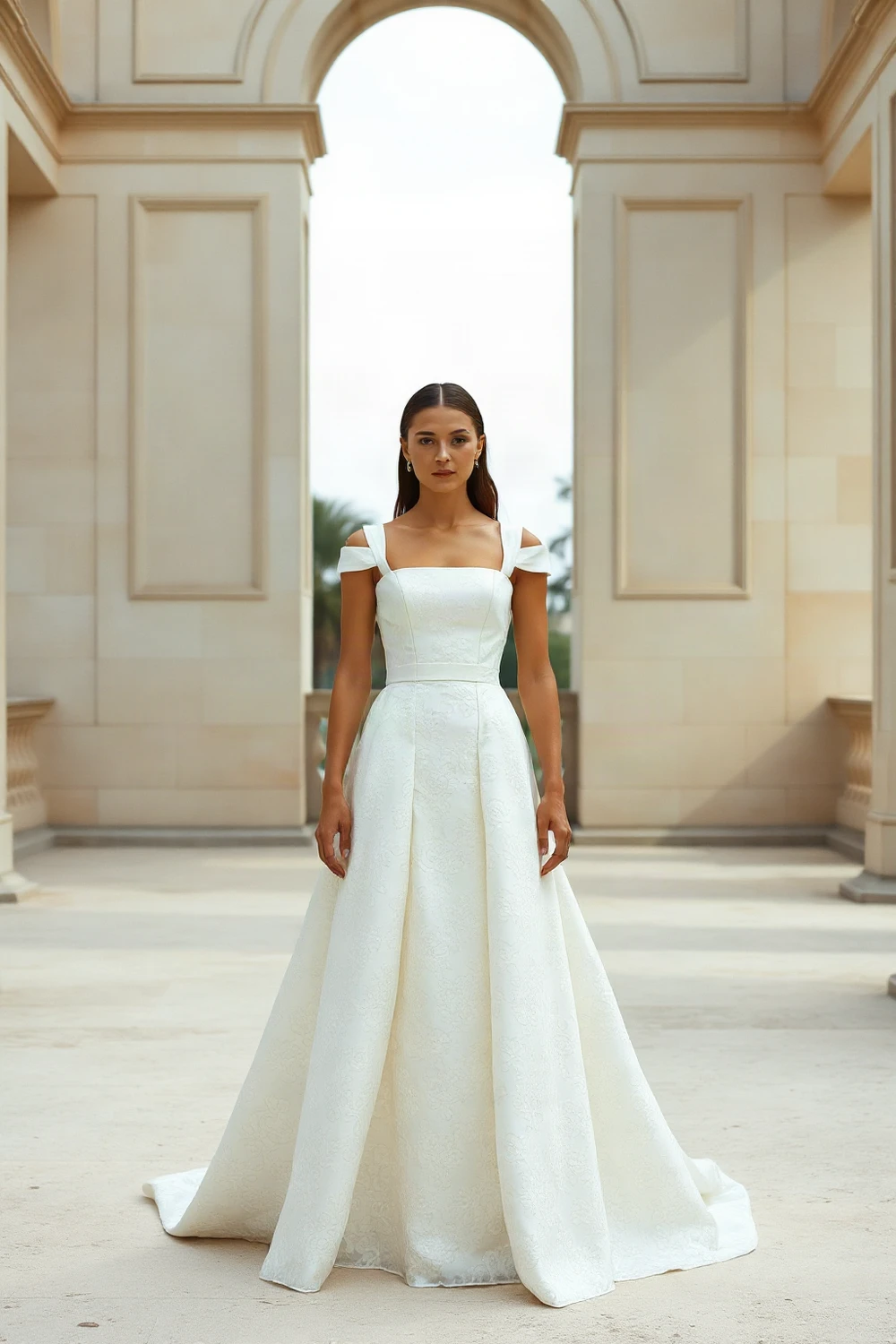
Shoulder Bands above Architectural Volume
In the fifth look, vertical straps and short bands below the shoulders layer the frame around the square neckline. The fitted bodice meets a defined waist before opening into a broad, deeply folded skirt. A subtle tonal pattern adds quiet surface movement. Behind the figure, a symmetrical arch repeats the dress’s organised lines, reinforcing the balance between geometric structure above and romantic volume below.
Shoulder-band placement matters: tight bands can limit the arms, while loose ones may twist or fall. Reach forward, sideways and upward, watching whether the neckline pulls away. A full skirt can provide step room and emphasise the waist, but its external volume affects tables, corridors and transport. With the pattern and shoulder construction already visible, restrained accessories preserve the architectural effect. This silhouette contrasts waist emphasis with a wider skirt’s practical footprint.
Embellished Long Sleeves with Layered Fullness
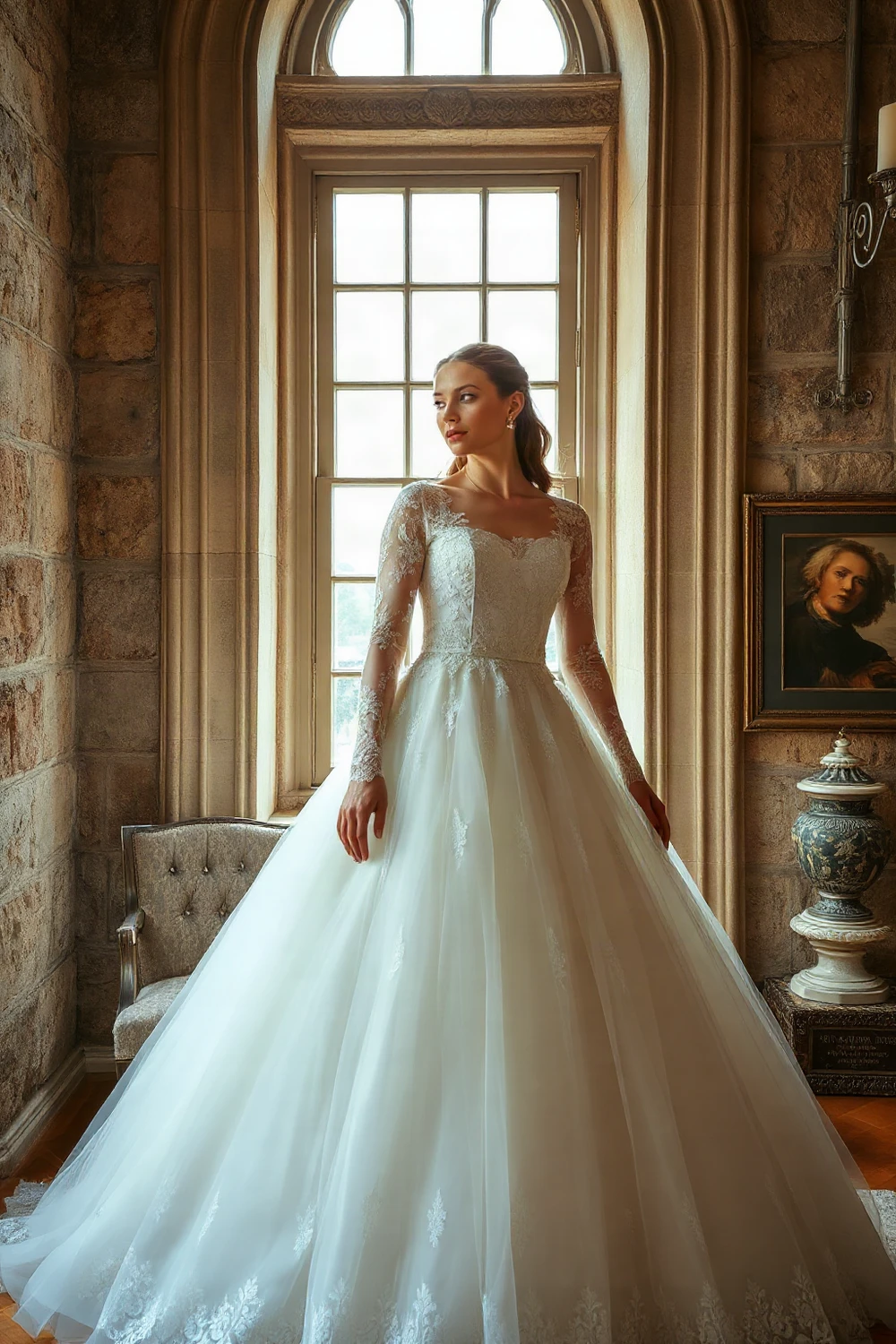
The final image pairs the square neckline with long, sheer-looking embellished sleeves and a broad ball-gown skirt. Dense botanical motifs cover the bodice and meet the waist, scatter through the skirt and strengthen near the hem. Against dark stone walls and an arched window, the pale layers appear especially expansive. The sleeves connect the romantic surface to the setting’s historic mood.
For movement and pattern placement, bend the elbows, reach forward, embrace and sit, checking whether the sleeve-to-bodice junction pulls. Wrist openings should allow natural hand movement. The layered skirt occupies a broad circle while turning, so consider the venue and dance plan. Long sleeves may feel warm even when sheer-looking. Because prominent motifs already surround the neckline, small earrings, swept-back hair or no necklace can preserve its square boundary rather than adding another decorative focal point.
A balanced square-neck wedding dress depends on more than the neckline. Sleeve construction and volume below the waist determine whether it feels minimal, soft, structural or ornate. Cap sleeves and pockets add quiet function; puff sleeves bring rounded volume; broad straps strengthen the frame; embellished long sleeves create a romantic border. Mermaid skirts, front slits and full ball-gown shapes make different demands on stride and space.
Use a preferred image to identify fitting questions, not as a result to copy exactly. Raise the arms, sit, turn, try stairs and walk in shoes of the intended height. View the neckline from the side and front, and consider how the skirt suits the actual venue. When the neckline stays secure, the arms move comfortably and the skirt supports the day’s activities, visual proportion and practical ease reinforce each other.
Compare how a square neckline works with cap, puff, sleeveless and long-sleeved bodices, then see how straight, slit, mermaid and full skirts change the balance.
Frequently asked questions
How can I tell whether a square neckline fits correctly?
Its edge should remain close to the body, the straps should not slip and the bodice should not lift sharply when the arms rise. Check it while sitting, reaching forward and turning, using front and side views.
Are puff sleeves or wide straps likely to feel more secure?
Security depends on the construction and individual fit. Wide straps can create a more continuous bodice structure, while off-shoulder puff sleeves may shift or press on the upper arms. Both should be tested through real movement.
How should I choose between a mermaid skirt and a full skirt?
A mermaid skirt follows the body closely and may limit stride, whereas a full skirt occupies more external space. Consider aisles, seating, transport, dancing and train management alongside the silhouette you prefer.
What should I test with a front-slit wedding dress?
Observe the slit during walking, sitting, turning and climbing stairs, not only while standing. Check its changing exposure together with the intended shoes, heel height, hem length and movement of any inner layer.
Does a square-neck wedding dress need a necklace?
No. The geometric neckline can provide a strong frame by itself. Detailed sleeves or surfaces may work well with small earrings and no necklace; a very minimal bodice can be tested with a fine, unobtrusive piece.