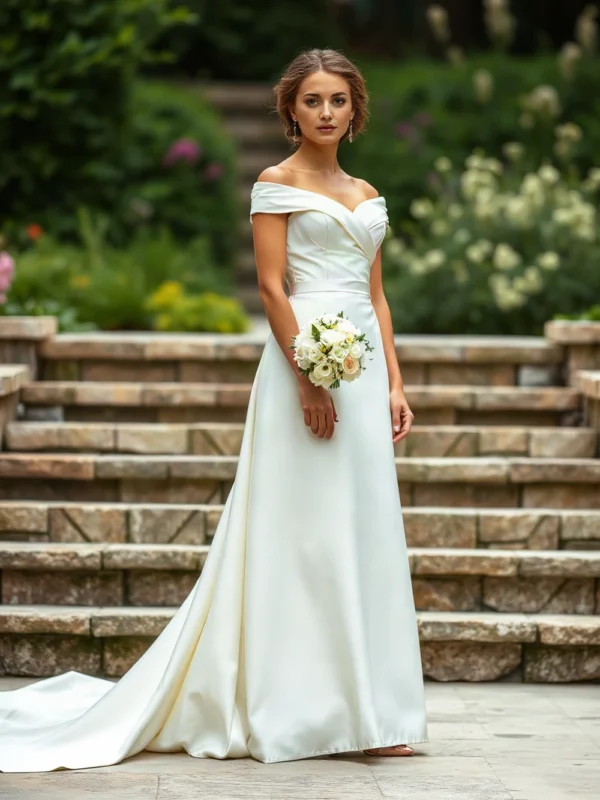
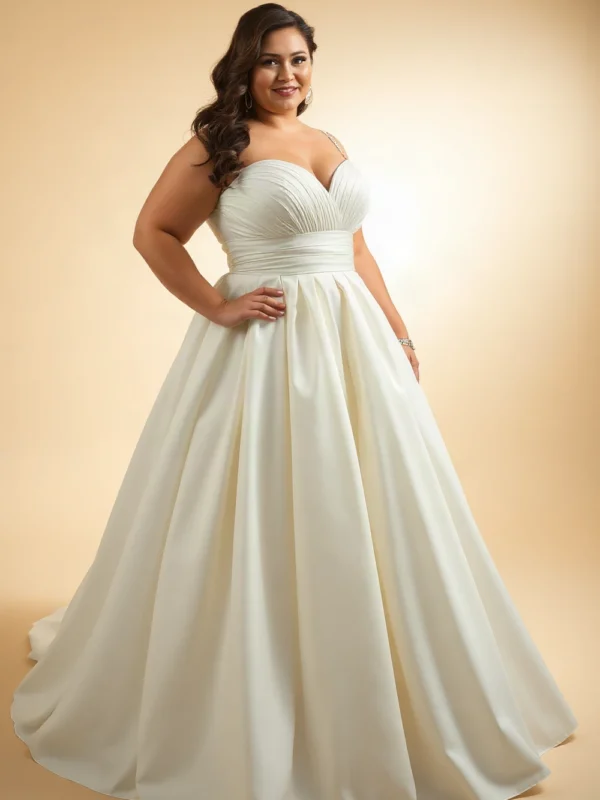
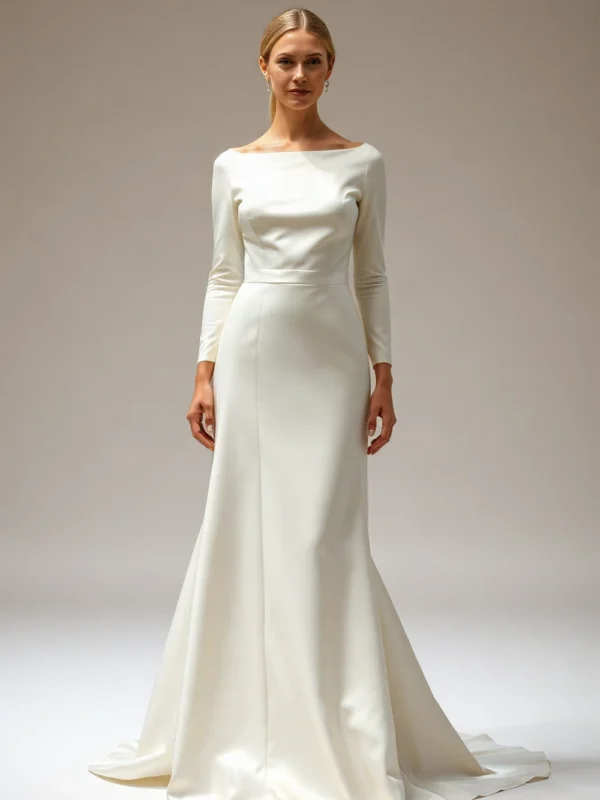
On plus-size wedding dresses, sleeves do more than determine how much of the arms remains visible. Their length, transparency and volume interact with the neckline, waist and skirt to shape the rhythm of the silhouette. An opaque three-quarter sleeve creates a contained frame, a flutter sleeve adds movement, and a sheer cape can transform a minimal dress. These six pale-toned concepts combine distinctive sleeves with fitted, A-line, wrap and mermaid-like skirts.
The aim is not to conceal any area or declare one cut universally flattering. Instead, consider whether the design lines support one another and suit the wearer’s movement and style. During a fitting, assess the side and back as carefully as the front, then sit, walk, reach and mimic carrying a bouquet. Used as inspiration rather than a product catalogue, the images can help identify sleeve, neckline and skirt relationships worth testing with real samples.
A Continuous Line with Three-Quarter Sleeves
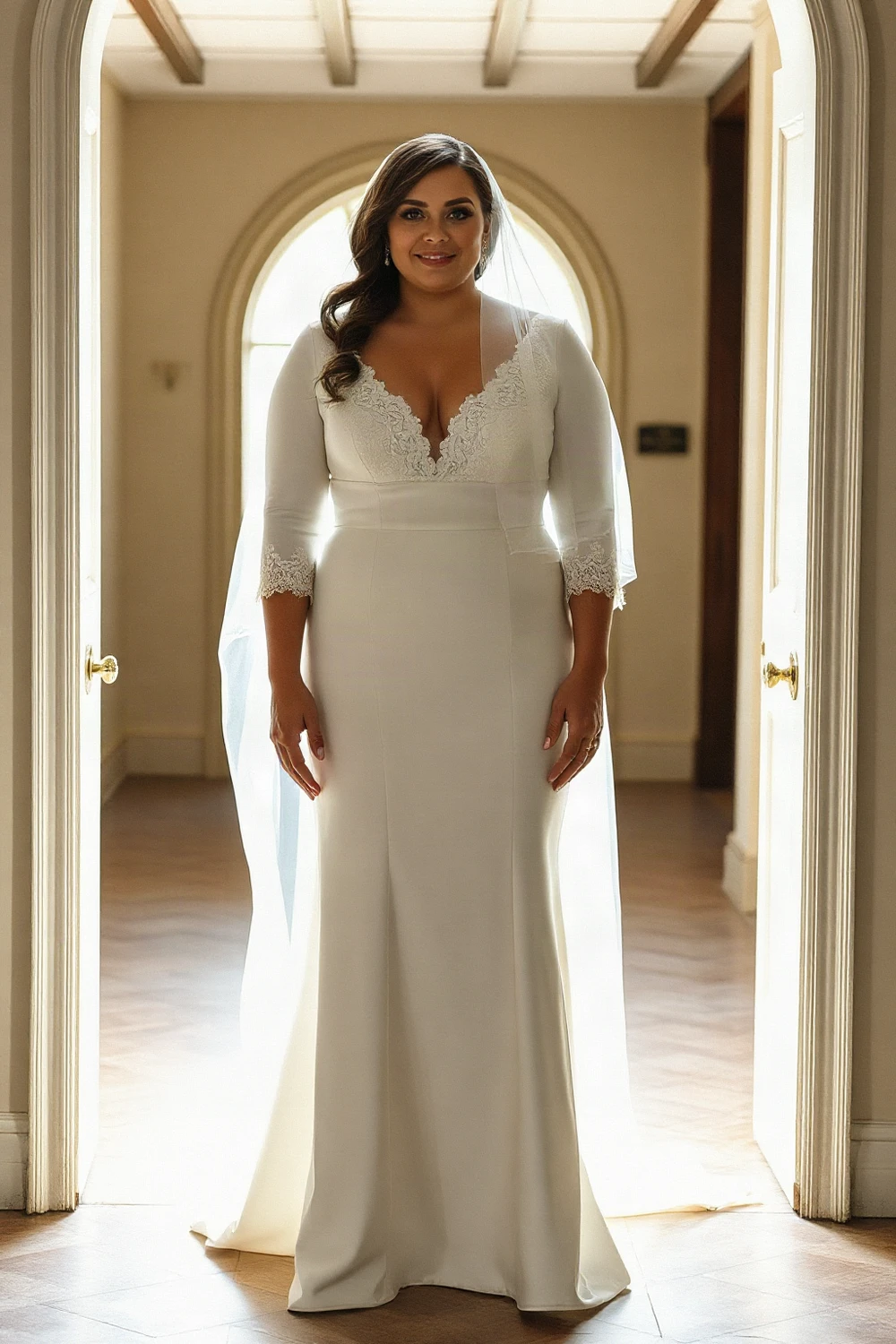
The first look links a deep, lace-edged V-neck to opaque three-quarter sleeves and a close-fitting skirt. A horizontal band defines the waist, while the undecorated front maintains a strong vertical line. Repeating the neckline motifs at the cuffs creates continuity without covering the dress in detail. The veil and arched interior add vertical framing without obscuring the simple silhouette.
This length falls between a full sleeve and a short flutter shape, so the cuff position matters. If it ends on the most active part of the elbow, it may pull when the arm bends. Hold a bouquet, reach forward and sit with relaxed arms. Because the skirt has less visible volume than the A-line options, also walk naturally, climb a step and use a chair rather than judging it from a still pose.
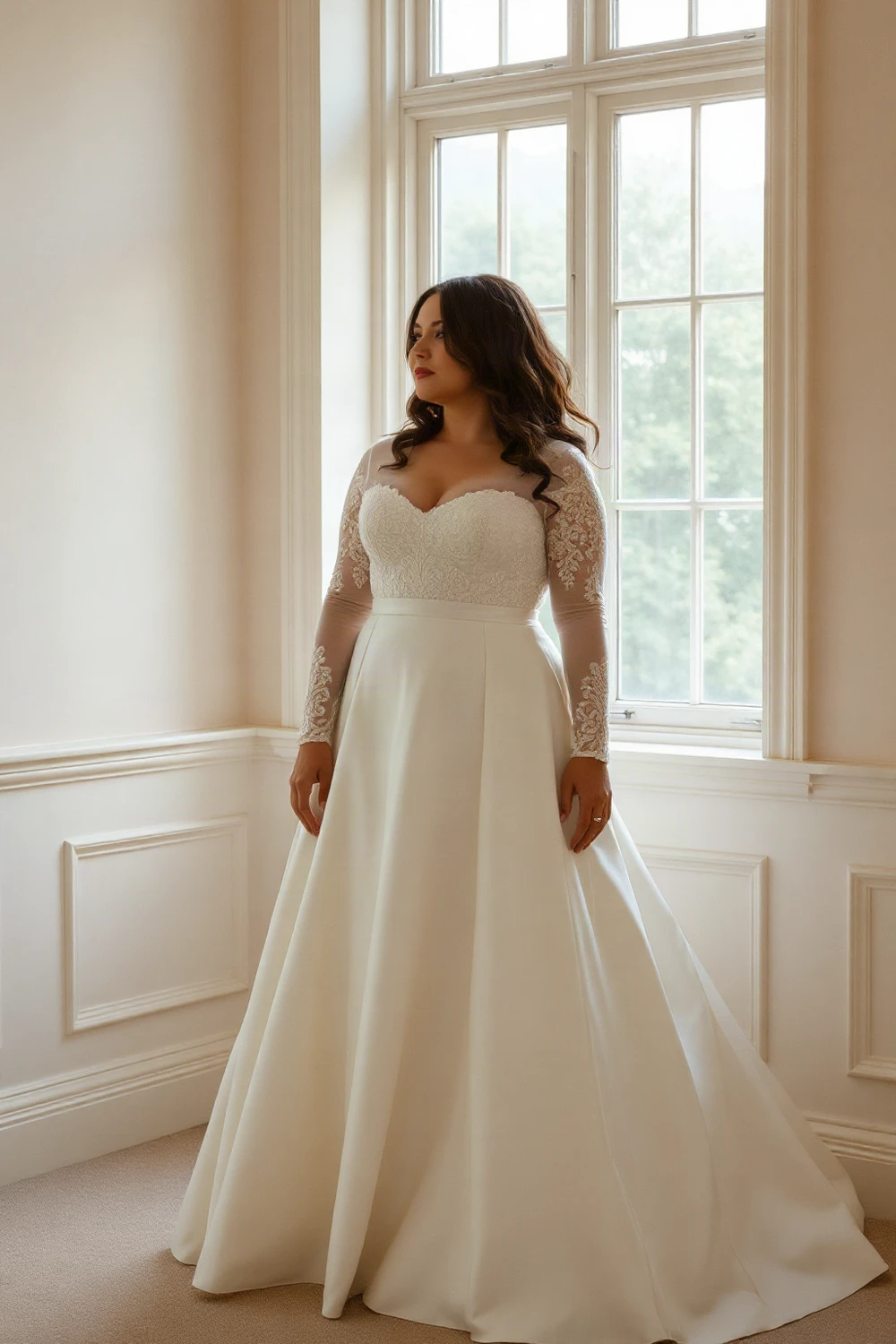
Balancing Full Sleeves with an A-Line Skirt
The second concept pairs a sweetheart-shaped, lace-look bodice with sheer full-length sleeves and a broad A-line skirt. Motifs carry detail toward the wrists, while a plain narrow waistband clearly separates the ornate upper frame from the undecorated folds below. Unlike the first narrow silhouette, this dress places substantial volume beneath the waist. The tall window visually counterbalances that width.
Test a sheer sleeve for function as well as appearance: the underarm should allow comfortable reach, and decorated sections should bend easily at the elbow. Sitting, embracing someone and making dance-like turns can expose tension missed in a static pose. The skirt needs room to turn and settle around a chair. Since waistband position changes the perceived bodice length, review the full proportion with the intended heel height, not only while barefoot.
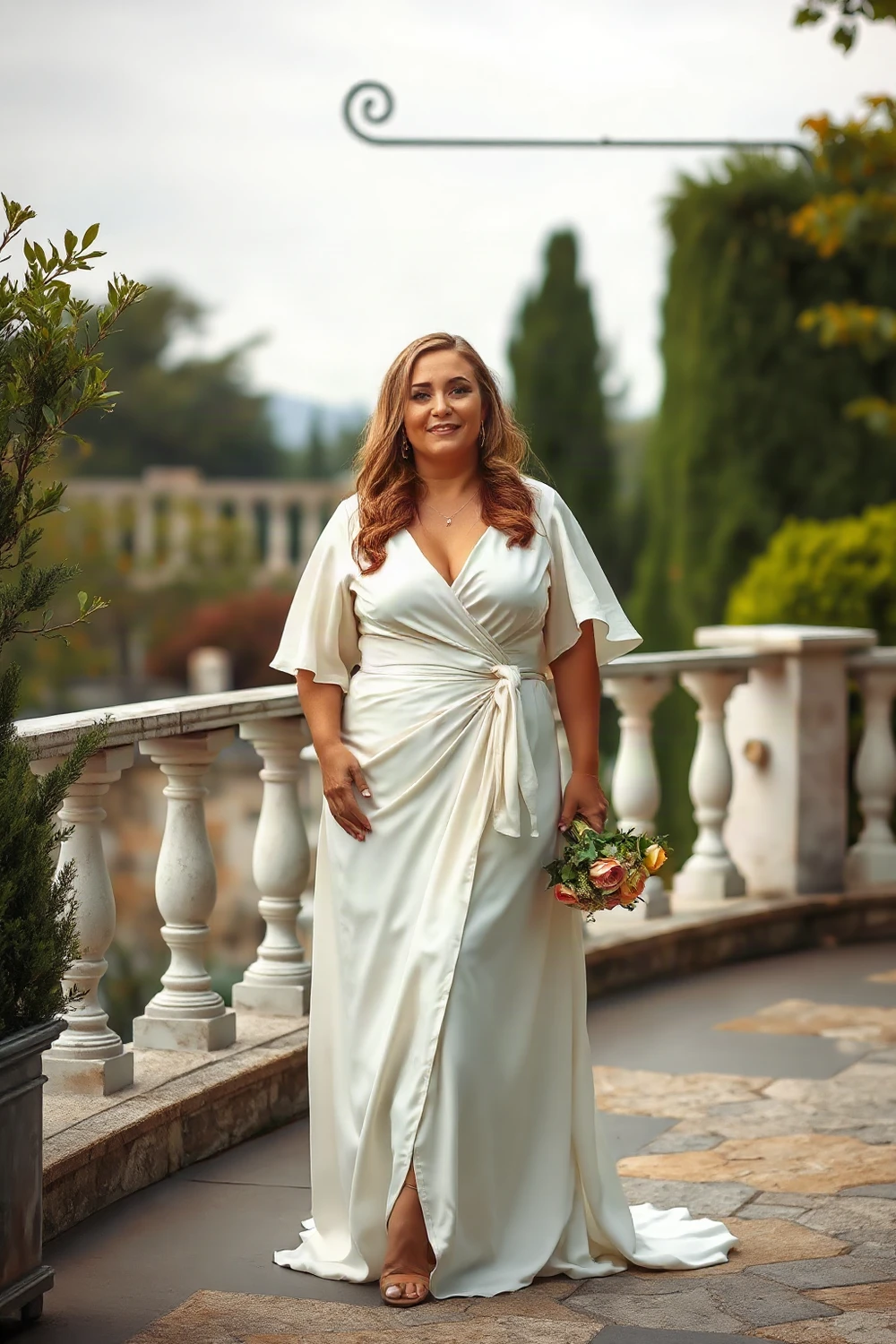
Flow through a Wrap Bodice and Flutter Sleeves
In the third image, short flutter sleeves, a V-neck wrap bodice and a side tie share a fluid design language. The crossover creates diagonal lines, while the overlapping skirt forms a moving front opening. Its smooth, lustrous-looking surface makes the folds easy to read. Falling freely from the shoulders, the sleeves support the relaxed character of the open-air setting rather than forming a rigid frame.
A wrap appearance should remain secure in motion. Because the image cannot show whether the tie is decorative or structural, check the closure and internal support on an actual sample. Sit to assess the neckline, then walk and turn to observe the overlap. Loose sleeves can move in an outdoor breeze. If the knot and bouquet occupy the same area, change the carrying hand or bouquet scale to find a balanced arrangement.
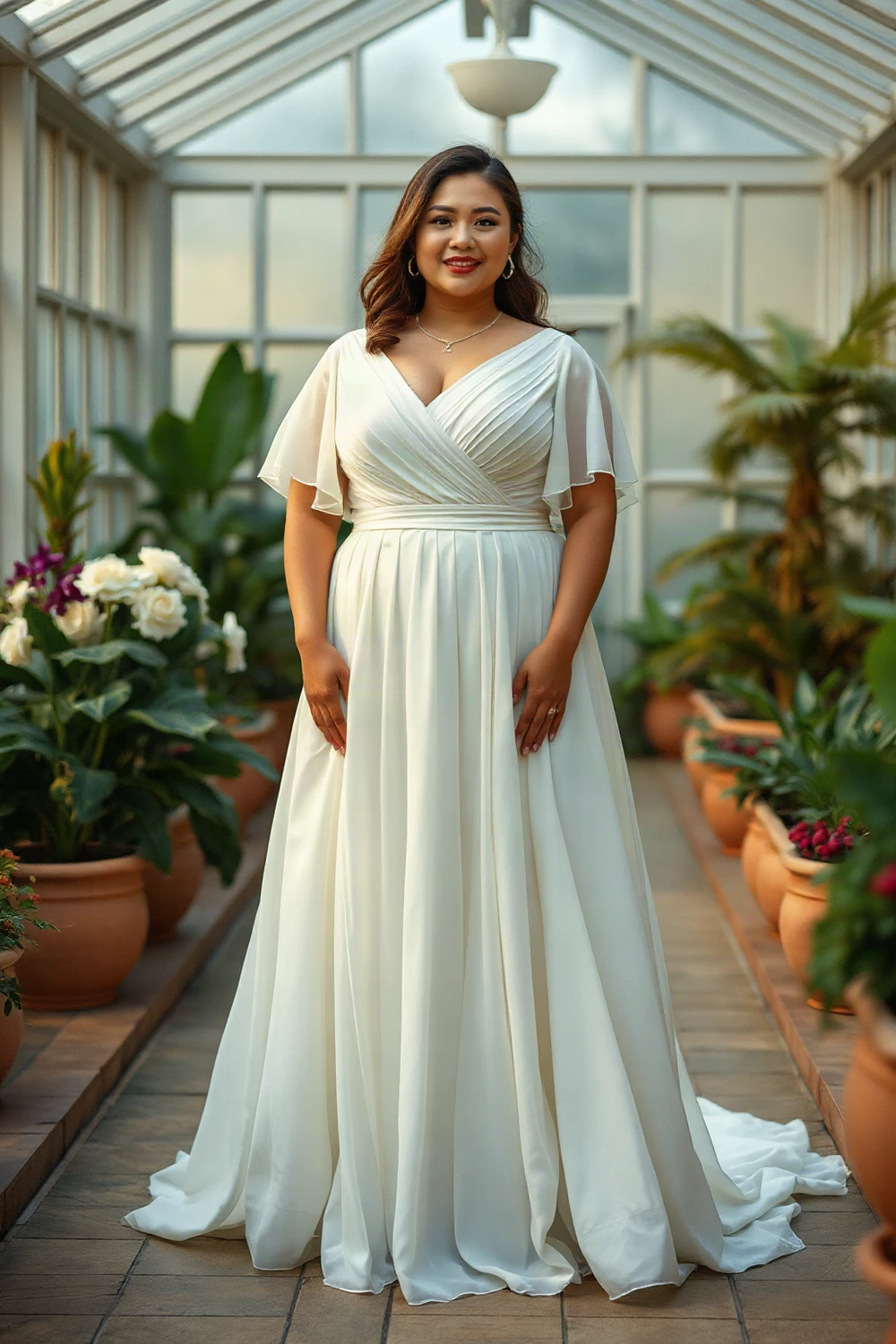
Soft Volume with Pleats and a Fixed Waist
The fourth look gives flutter sleeves a more symmetrical structure. Fine pleats cross the V-shaped bodice toward a fixed horizontal waistband, which provides an orderly start for the expanding skirt. Softly layered sleeves and long vertical folds lead to the floor. Unlike the previous design’s side knot and overlapping front, this centered composition feels more formally regular.
When trying a pleated bodice, check whether the folds open across the bust or fail to settle after arm movement. A waistband that looks crisp while standing should not roll, dig in or rise when seated. Flutter sleeves provide more open space than fitted sleeves, but a foundation layer or bra edge may show from the side, so inspect that angle. Although the skirt appears less structured than the broad A-line example, normal steps and turns are needed to determine its actual walking room.
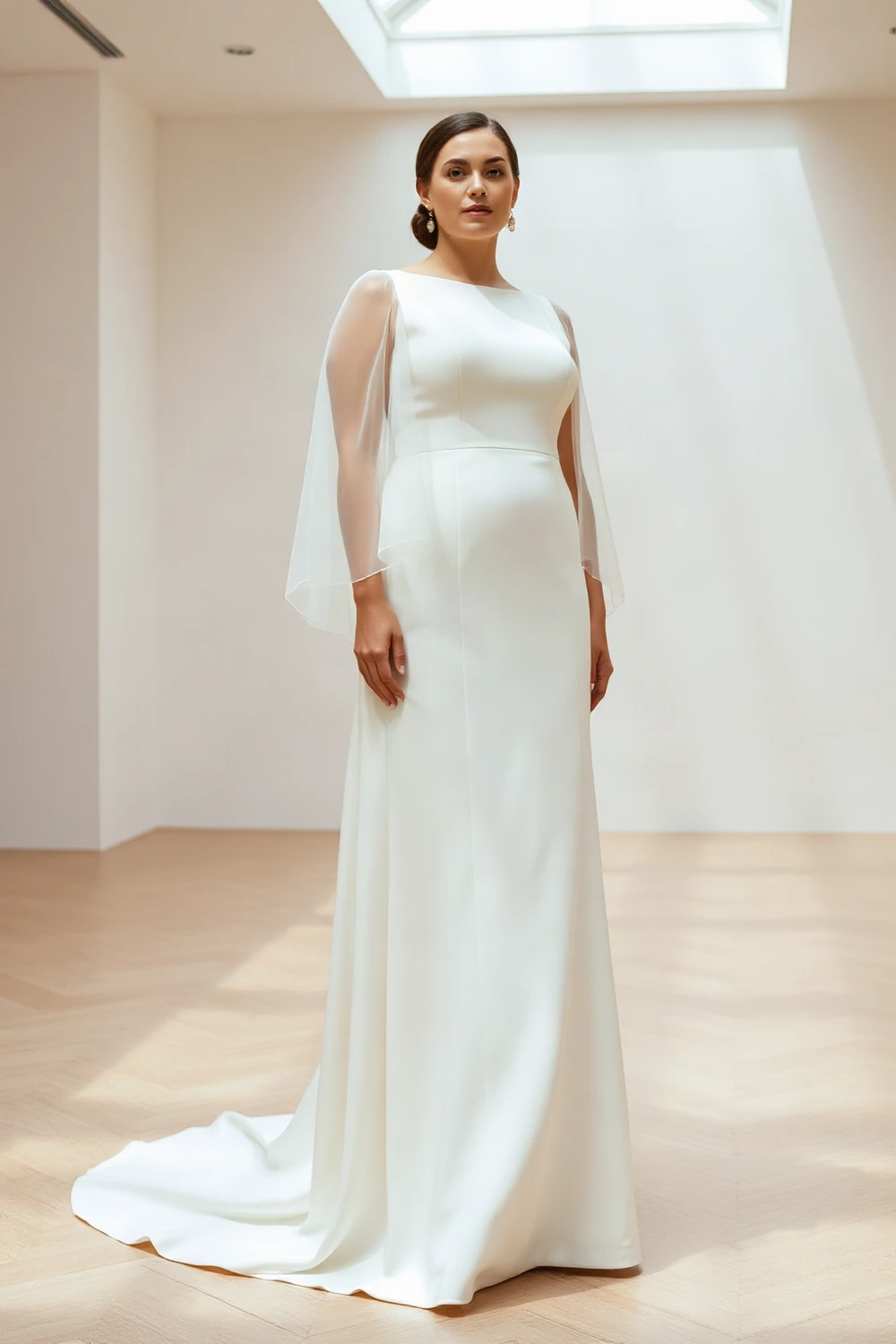
Letting Cape Sleeves Lead a Minimal Design
Decoration recedes in the fifth concept, allowing sheer cape sleeves to become the main feature. A closed, near-boat neckline and fitted skirt with vertical seams create a clean foundation. The panels hang from the shoulders, adding volume beside the upper body only in motion. A modest train and unadorned, light-filled room extend the architectural simplicity, contrasting movement around the arms with stillness across the dress.
Cape sleeves still require practical testing. Raise the arms to check for pulling at the neckline, sit to see where the long edges collect, and imitate dining-table movements. Consider loose fabric around chair arms, jewelry and a bouquet. Compared with fitted sleeves, the cape leaves open arm space; compared with flutter sleeves, it produces a longer, more dramatic trail. The closed neckline can accompany statement earrings or a defined hairstyle without an additional necklace.
Directing Detail with Sheer Sleeves and Vertical Motifs
The sixth look combines sheer elbow-length sleeves, a deep V and an ornamented-looking bodice. Related motifs continue down both sides below the waist, creating interrupted vertical paths. The skirt stays close through the hips and upper legs, then opens below the knees into a mermaid-like flare. Unlike the clean cape-sleeve gown, its sleeves, neckline and skirt decoration form one strongly directed composition.
Ornament placement matters where the dress bends. Sit to observe how the waist motifs fold, walk to test the narrow skirt section, and check whether the sleeves shift upward. The flare height affects stride and proportion, so compare different placements if possible. With such an active bodice, concentrating accessories in one area helps preserve the vertical lines. A simpler bouquet, earrings without a necklace, or another restrained combination can provide separation.
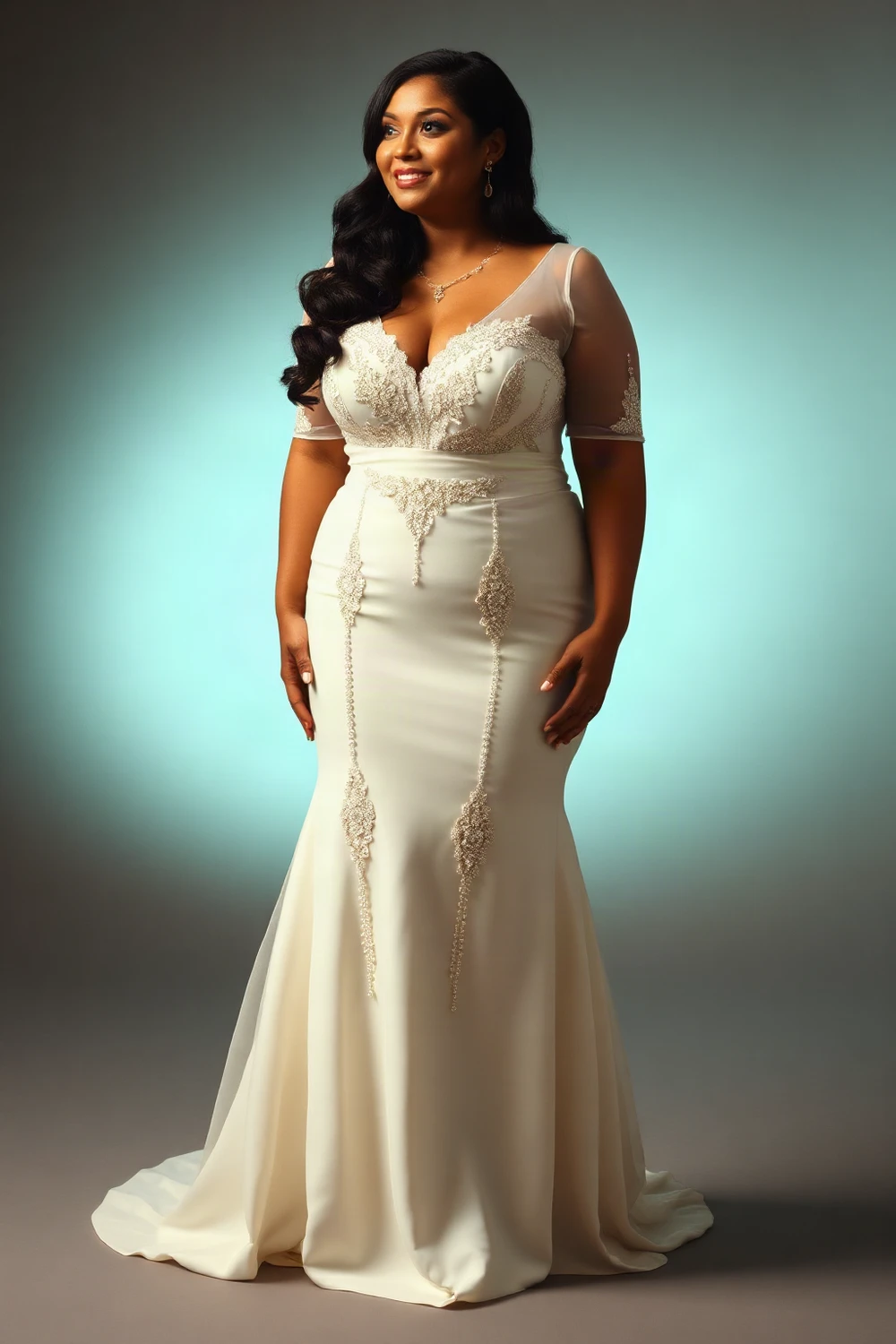
These concepts show that elegant sleeves need not share one length, coverage level or treatment. Three-quarter and full sleeves create a closer frame; flutter and cape sleeves add moving volume; and sheer elbow-length sleeves connect an ornate bodice with bare forearms. Compare a preferred sleeve with several necklines and skirt volumes. Review front and side photographs, but also record walking, turning and sitting. Note elbow comfort, neckline security, waist position, stride and accessory balance. This keeps attention on the complete dress and celebration rather than isolating the sleeve or assuming one silhouette suits every plus-size bride.
Compare three-quarter, long, flutter, cape and sheer sleeves with fitted, A-line, wrap and flared skirts, considering neckline balance, waist definition, movement and practical fitting checks.
Frequently asked questions
Are three-quarter sleeves more practical than sheer full-length sleeves?
Three-quarter sleeves leave the wrists free and use less continuous layering, while full-length sheer sleeves create an unbroken arm frame. Compare elbow flexion, underarm reach, season and venue conditions rather than deciding by coverage alone.
Will flutter sleeves and a full skirt create too much volume together?
Not necessarily. The result depends on the number of sleeve layers, the skirt’s starting point and the clarity of the waist. Try the same sleeve family with both a wrap skirt and a fuller shape, then compare front and side views.
What should I test when trying a wedding dress with cape sleeves?
Raise both arms, sit in a chair and imitate movements at a dining table. Check that the loose edges do not pull the neckline, collect awkwardly behind you or catch on jewelry, furniture or the bouquet.
How should accessories be chosen for detailed sleeves?
If the neckline and sleeves already contain prominent motifs, choose one additional focal area. Test earrings, a hair accessory or a small necklace separately and review how crowded the shoulder area appears in fitting photographs.
Why should sleeve shape and skirt cut be considered together?
Sleeve volume controls visual weight near the shoulders, while the skirt distributes it below the waist. Fitted, flowing A-line and mermaid-like skirts can make the same sleeve feel very different and also change practical freedom of movement.