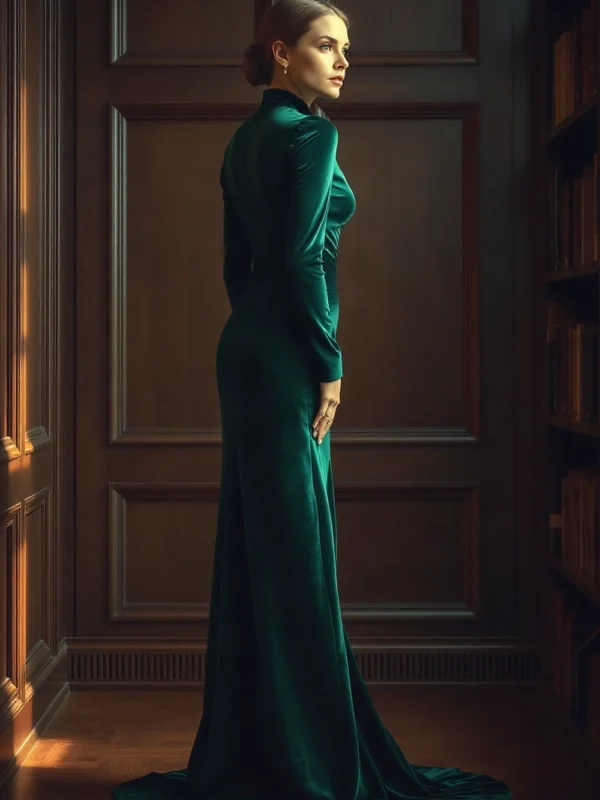
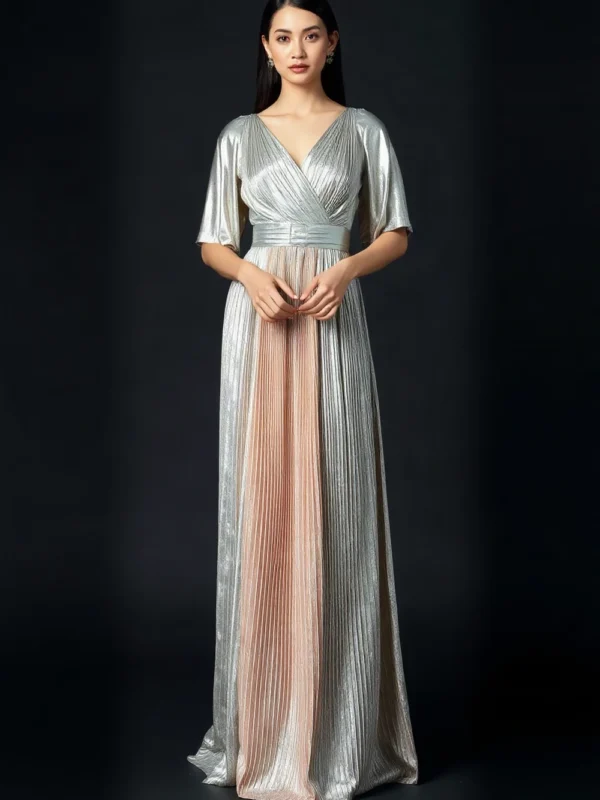
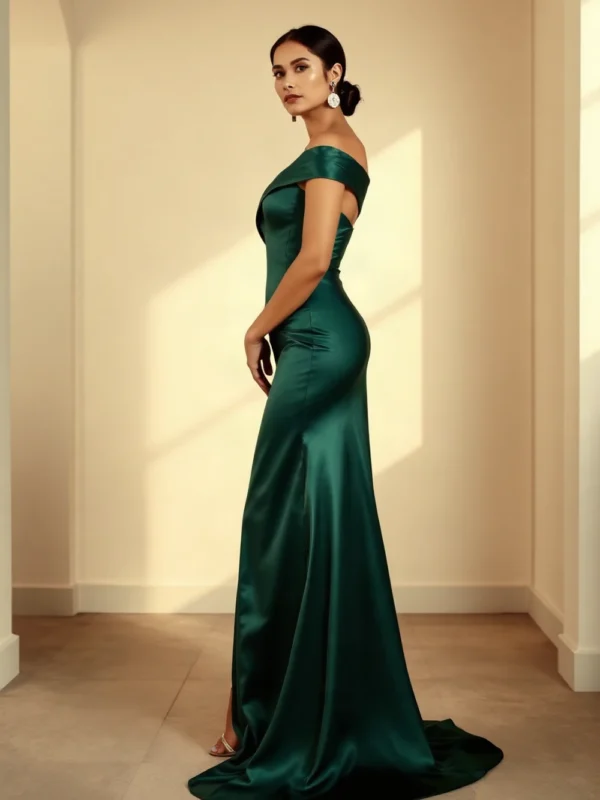
A flowing evening gown is not defined only by a lightweight-looking skirt. Its motion depends on waist placement, whether the lower half uses horizontal tiers or uninterrupted vertical folds, and how surface detail responds to light. These six concepts move from an ice-blue tiered dress to a voluminous chocolate-brown ball gown, with dusty-rose draping, an ivory halter, champagne-toned embellishment and bronze fringe between them.
Read the images as ideas about proportion, movement and accessory balance rather than specific products. The most noticeable texture is not automatically the best choice. Venue, seating, walking distance, possible dancing and neckline comfort all matter. Color may attract the first glance, but cut and movement determine whether a silhouette works throughout an event.
Horizontal rhythm and controlled volume in tiers
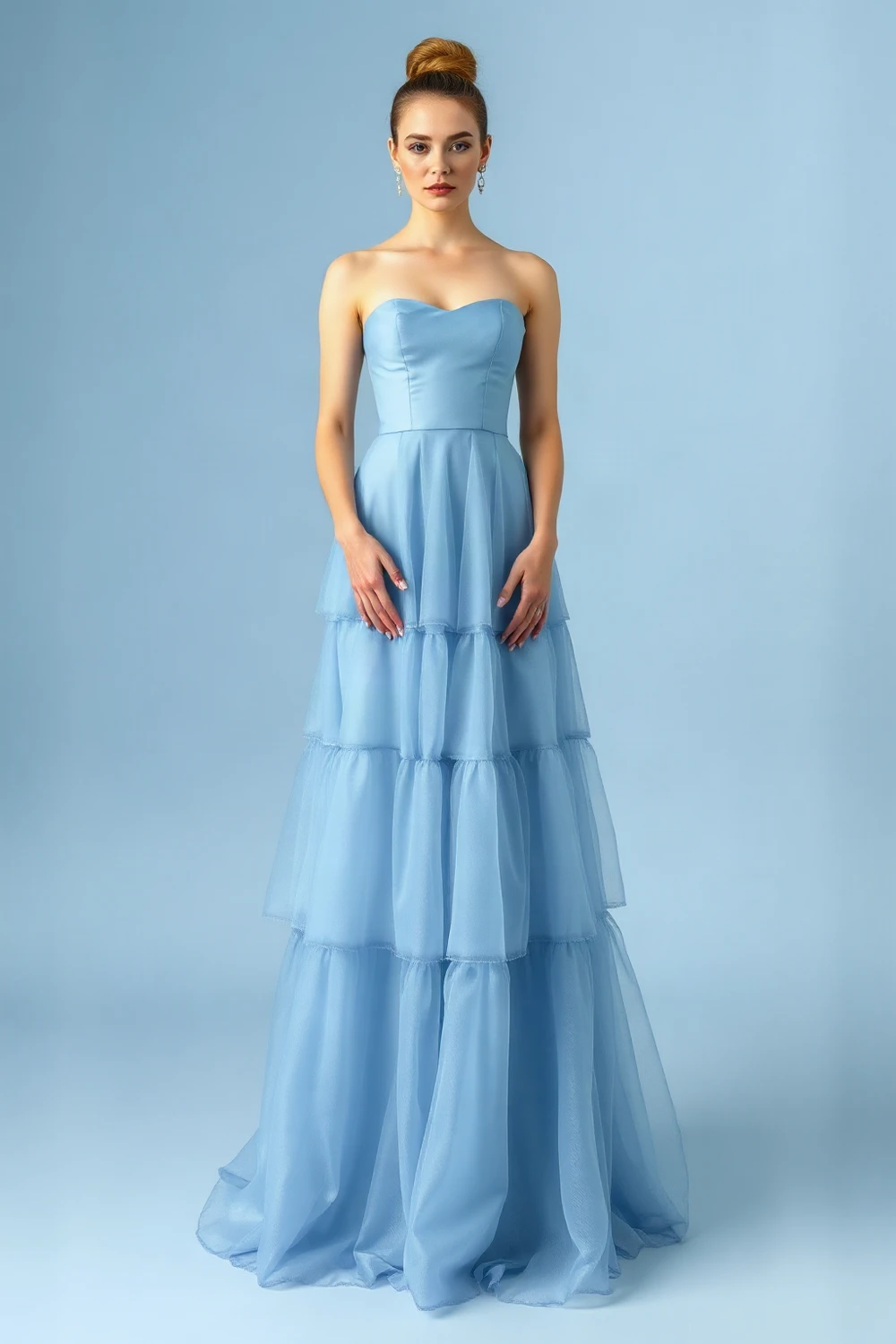
In the ice-blue strapless look, the upper body stays close and defined while the skirt expands in stages below the waist. Horizontal joining lines divide the single-color surface into a clear rhythm, while translucent-looking outer levels keep the volume airy rather than rigid. Compared with a continuous A-line, the structure appears more animated; unlike one broad, unbroken skirt, it avoids reading as a heavy visual block.
Tier placement also changes apparent proportions. Closely spaced lines divide the length, while levels growing larger toward the floor pull the eye downward. Do more than a static mirror check: walk, turn and sit to see whether the circumference and pooled length approach the shoes, then raise the arms to test the strapless bodice. Because the open neckline and repeated skirt texture already form a strong composition, small earrings or a slim bracelet add finish without another large area of detail.
Romantic flow through draping and fullness
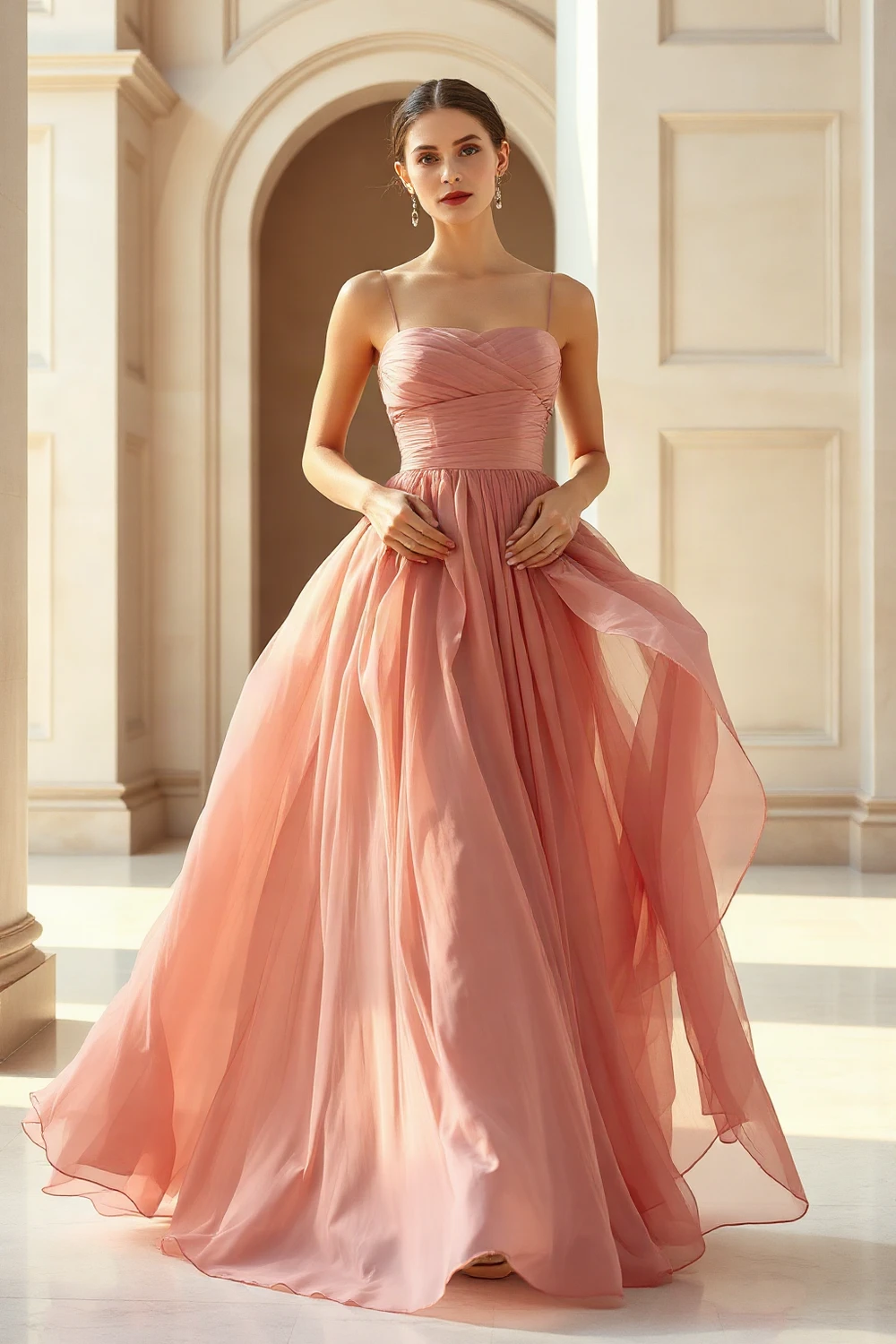
Fine straps keep the dusty-rose upper line delicate, while diagonal draping leads the eye across the bust and toward the waist. From there, the skirt expands in long folds without strong horizontal breaks. A panel lifting at the side adds another directional line and suggests a turn. The effect favors a soft, continuous sweep over the measured rhythm of separate tiers.
That fullness has practical consequences. Narrow gaps between tables, stairs and outdoor wind can affect long outer layers. The straps should keep comfortable tension, and the draping should remain in place while sitting or rotating. With so much circumference, shoe height establishes safe hem clearance rather than serving only as decoration. There is no need to repeat the romantic quality in every accessory. Small reflective earrings and a simple compact bag let the broad folds and moving panel remain central.
A quiet vertical line from a halter neckline
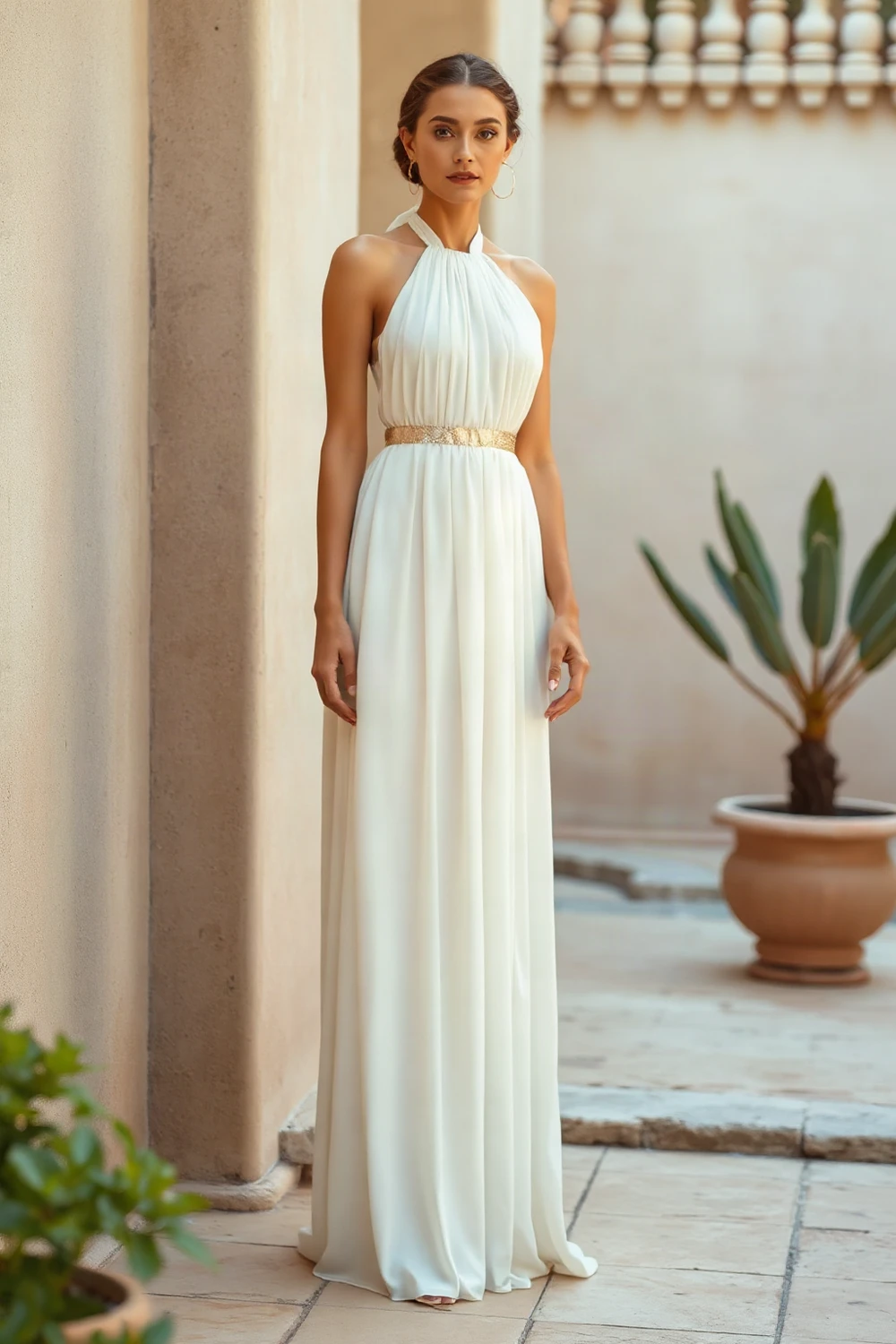
The ivory gown relies on the relationship between neckline, waist and vertical folds rather than elaborate decoration. Material gathers at the halter neck, leaving the shoulders open before falling in narrow lines through the body and skirt. A slim gold-colored belt interrupts that length and clarifies the proportions. Its controlled hem further separates this silhouette from tiered or broadly inflated alternatives.
Its fit must be assessed beyond the front: pressure at the neck connection and arm-opening edge, plus back support, affect comfort over several hours. Because slight changes in belt height alter apparent torso length, compare it with the natural waist. The high neckline limits necklace space, making earrings or a bracelet cleaner. The metallic belt defines the pale surface, so shoes and bag need not match it exactly; related warm undertones create continuity without looking overly coordinated.
Embellishment fading into a smooth skirt
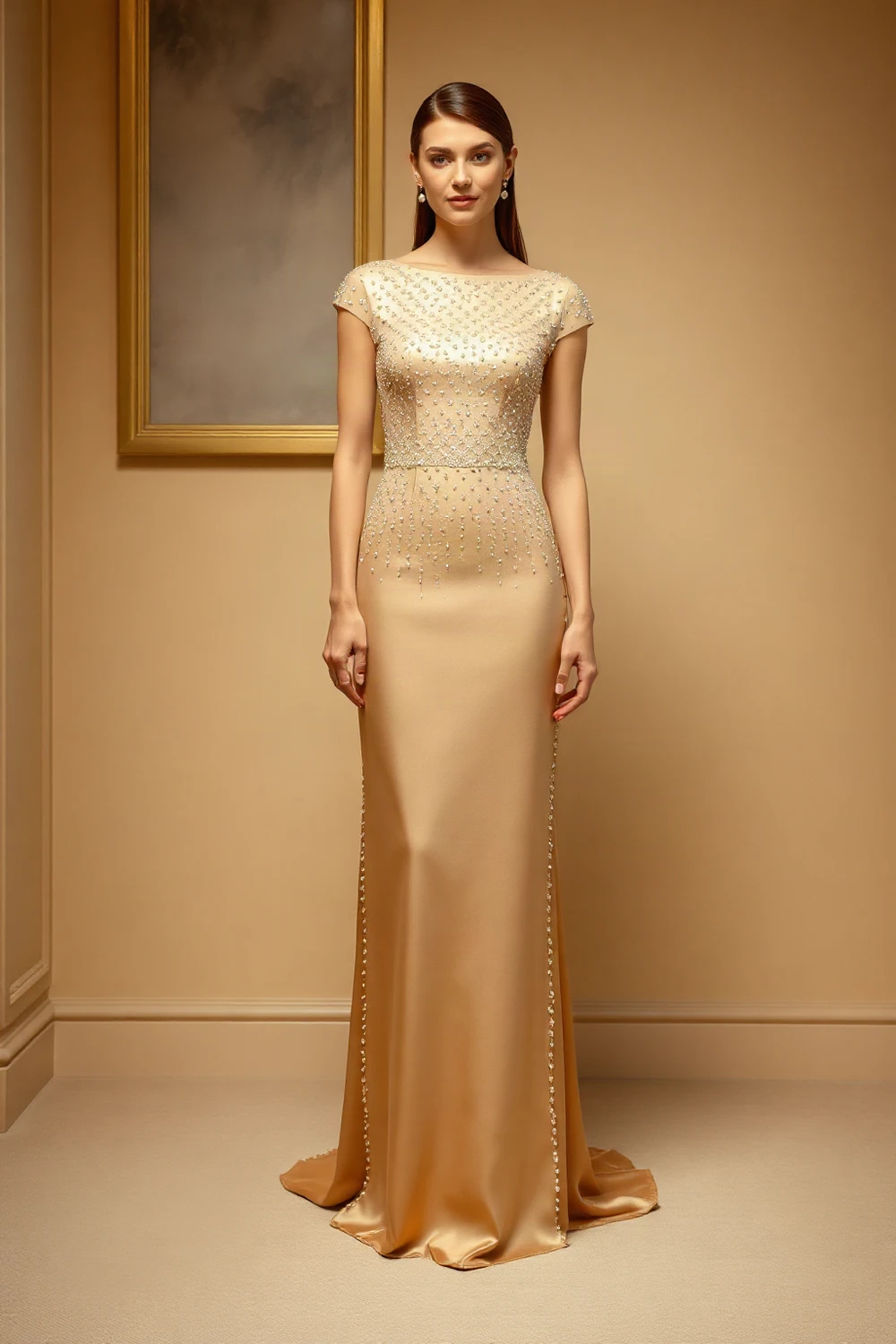
The champagne gown creates flow through a long, narrow line and the downward distribution of detail, not a broad skirt. Reflective elements form a dense network across the shoulders and torso; below the waist, elongated rows gradually thin toward the smooth lower section. Short shoulder coverage and a shallow neckline calmly frame this concentration.
Compared with even head-to-toe shine, the transition creates a controlled focal point. Warm directional light may soften the effect, while direct flash can strengthen reflections. Test stride, sitting and the short rear extension together: a narrow shape may demand more careful movement than its compact circumference suggests. Check whether raised details touch the underarm or catch a bag edge. Because the upper body already carries the emphasis, small earrings and a plain clutch, without a necklace, preserve the progression from sparkle to smoothness.
Fringe that turns texture into motion
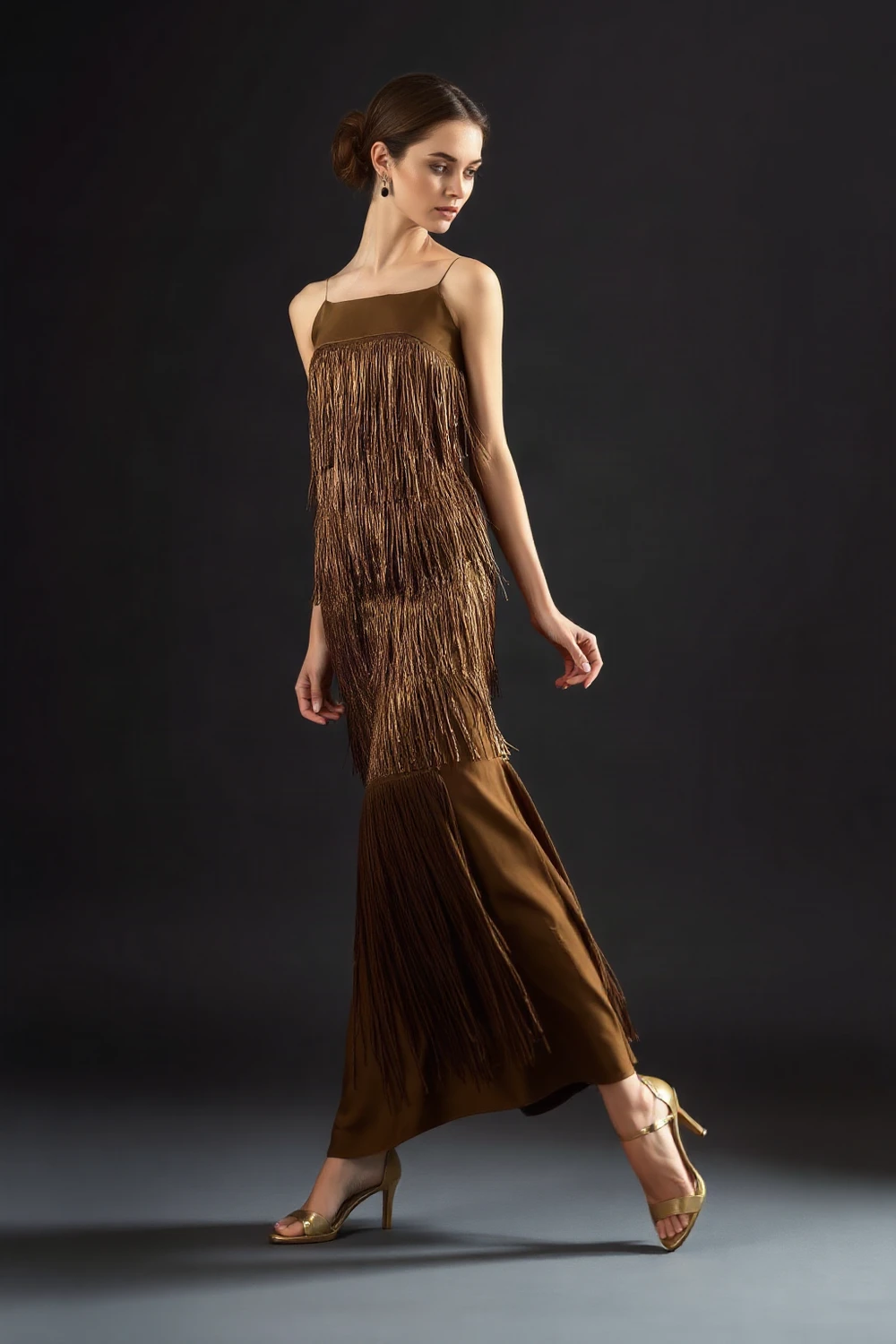
In the bronze gown, texture is not just a close-up detail; it changes with every step. Long fringe starts beneath a simple, fine-strapped upper edge and covers the body in overlapping levels. A smoother panel near the lower leg briefly rests the eye before another fringe layer carries movement toward the hem. Against the dark background, individual bronze strands are easier to distinguish.
The style can look especially lively when dancing, but fitting should be active. Check whether strands twist together, collect beneath the body when seated or catch on jewelry, bag chains and shoe hardware. Where the fringe levels end around the hip, knee and calf also affects the points at which the silhouette seems wider. Since the surface already produces continual motion, fewer accessories keep the result controlled. Fine-strap shoes and small earrings may be enough, while avoiding protruding shoe buckles is practical as well as visually clean.
Sculptural scale from a lustrous full skirt
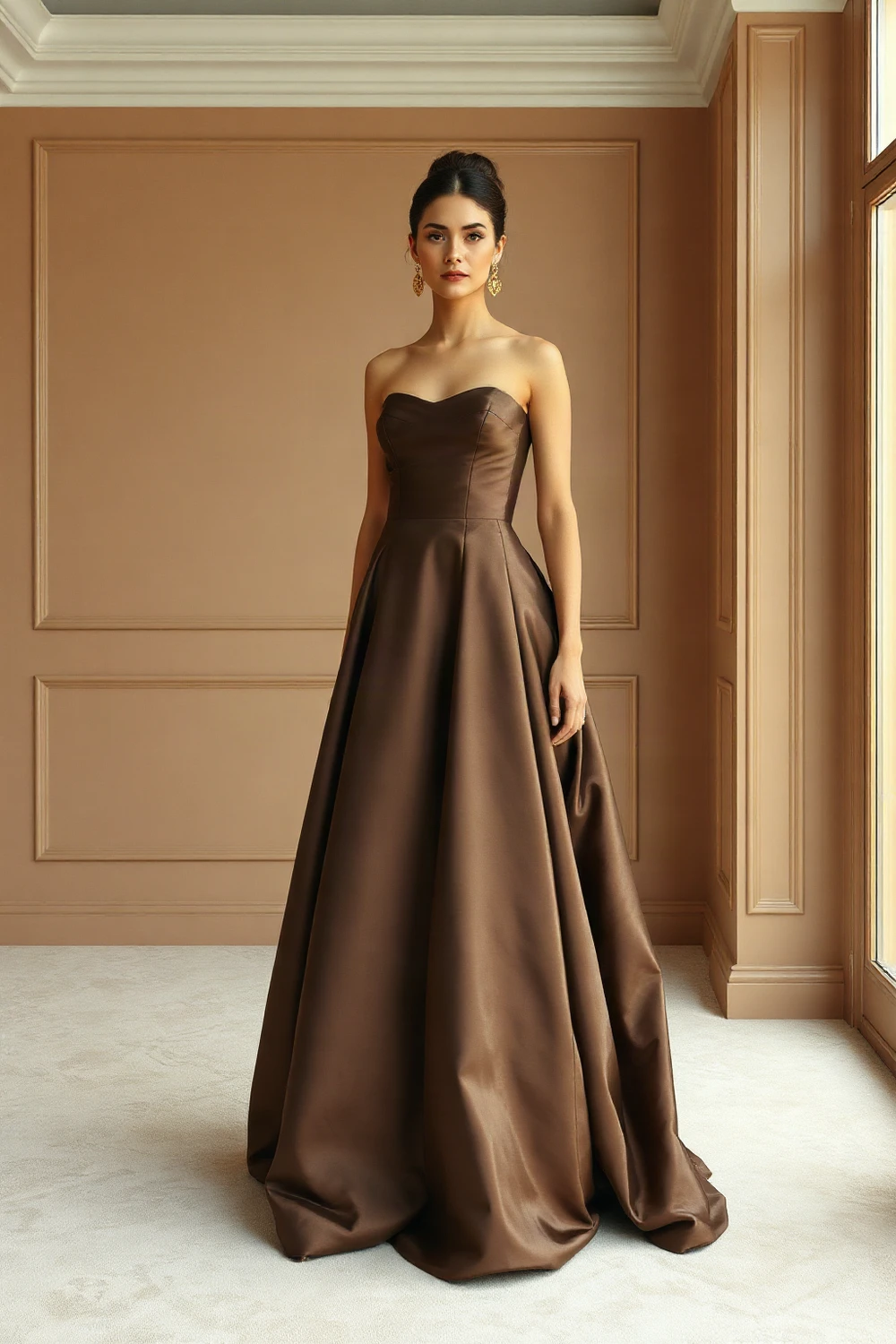
In the chocolate-brown strapless look, texture comes from a smooth surface carrying light and large folds creating deep shadows, not applied decoration. Seams shape the bodice and define the waist before the skirt expands dramatically and settles on the floor. The dark warm color and uninterrupted broad surface create a ceremonial silhouette despite the restrained detail.
Fitting should focus on managing that volume. With the intended shoes, check the hem, how much skirt must be lifted on stairs and the space it occupies when seated. The strapless upper section must remain secure while walking or raising the arms, and the waist seam should meet the body without crossing an awkward point. Because creasing is more visible on a lustrous surface, inspect the skirt after sitting as well as while standing. The skirt is already the statement; a strong earring or compact metallic bag adds definition without crowding the clean relationship between neckline, waist and volume.
Together, these approaches show that flow does not belong to one cut or surface. Tiers establish rhythm, draping creates soft fullness, vertical folds bring calm, dispersing embellishment directs the eye, fringe translates steps into visible motion, and a broad lustrous surface becomes sculptural through light. Start with neckline comfort, waist position, stride and hem circumference before focusing on color. Then account for venue lighting, seating and possible contact between accessories and the dress. The most balanced gown pairs an arresting visual idea with a silhouette that remains secure and manageable throughout the event.
Compare how tiered skirts, draping, bead-like decoration, fringe and lustrous surfaces shape a long evening gown, then use movement, venue and accessory balance to guide your choice.
Frequently asked questions
Is a tiered skirt or a fringed gown better for an event with dancing?
Fringe makes each step more visible, while tiers create a broader, softer swing. Compare the possibility of snagging on the fringed design, the circumference of the tiered skirt and safe stride length with the intended shoes before deciding.
How should the security of a strapless evening gown be checked?
Do not assess it only while standing still. Raise your arms, sit, turn and walk for several minutes. The upper edge should stay in place, the seams should not press uncomfortably and the waistline should remain correctly positioned.
Which accessories suit a heavily embellished or fringed evening gown?
When the surface is already a strong focal point, small earrings, a simple bag and one metallic tone are often sufficient. First ensure that jewelry and bag hardware cannot catch on fringe or raised decoration.
How should the length of a full floor-length gown be tested?
Wear shoes at the intended event height, take normal steps, simulate stairs and sit down. The hem should not fold in front of the feet and should be manageable when lifted or guided between tables.
How can I choose between a halter and a strapless neckline?
A halter emphasizes the shoulders and requires comfort at the neck; a strapless neckline leaves the upper chest open and needs secure torso support. Neck pressure, arm movement, internal support and preferred jewelry should guide the choice.