Dark floor-length evening dresses can look similar when judged by colour alone. Black, navy, forest green, aubergine and teal share an evening palette, but neckline coverage, sleeves, waist construction and the way a skirt meets the floor give each style a distinct character. These six concepts progress from an off-shoulder sweetheart neckline through lace-look sleeves, a halter, a high neck and a sculpted peplum to a teardrop back. Choosing among them means considering the event, coverage and realistic movement, not just the front view. Side and rear lines, sitting, stride length and fabric on the floor all affect function. Dark colour then unifies the styles rather than deciding the choice.
Balancing an Off-Shoulder Line with a Mermaid Skirt
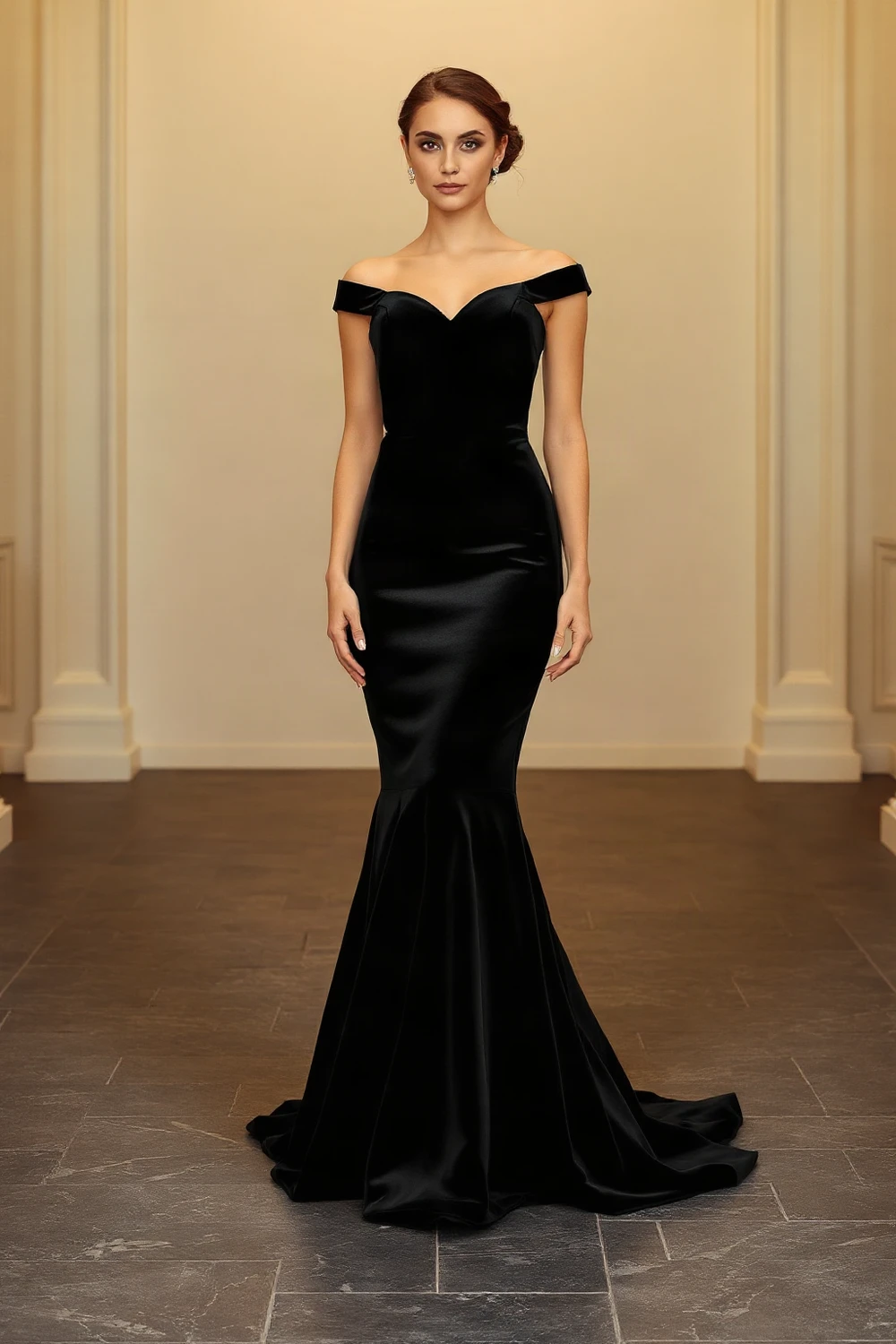
The broad off-shoulder band of the first black dress meets a sweetheart neckline, making a strong horizontal line. The fitted torso and hips provide a vertical counterpoint before the skirt releases below the knees. Floor-level volume balances the exposed shoulders, while highlights on the smooth fabric describe curves and folds without pattern, beading or colour contrast.
Judge the neckline in motion: when arms reach forward, rise or move during dancing, the band should remain stable and supportive without pinching. The low flare elongates the outline, but close fabric around the knees may limit stride. Set the hem after selecting footwear, then walk and turn to ensure the front clears the floor and the rear sweep stays manageable. Earrings suit the open neck; a large necklace may compete with the sweetheart contour.
Combining Patterned Transparency with Coverage
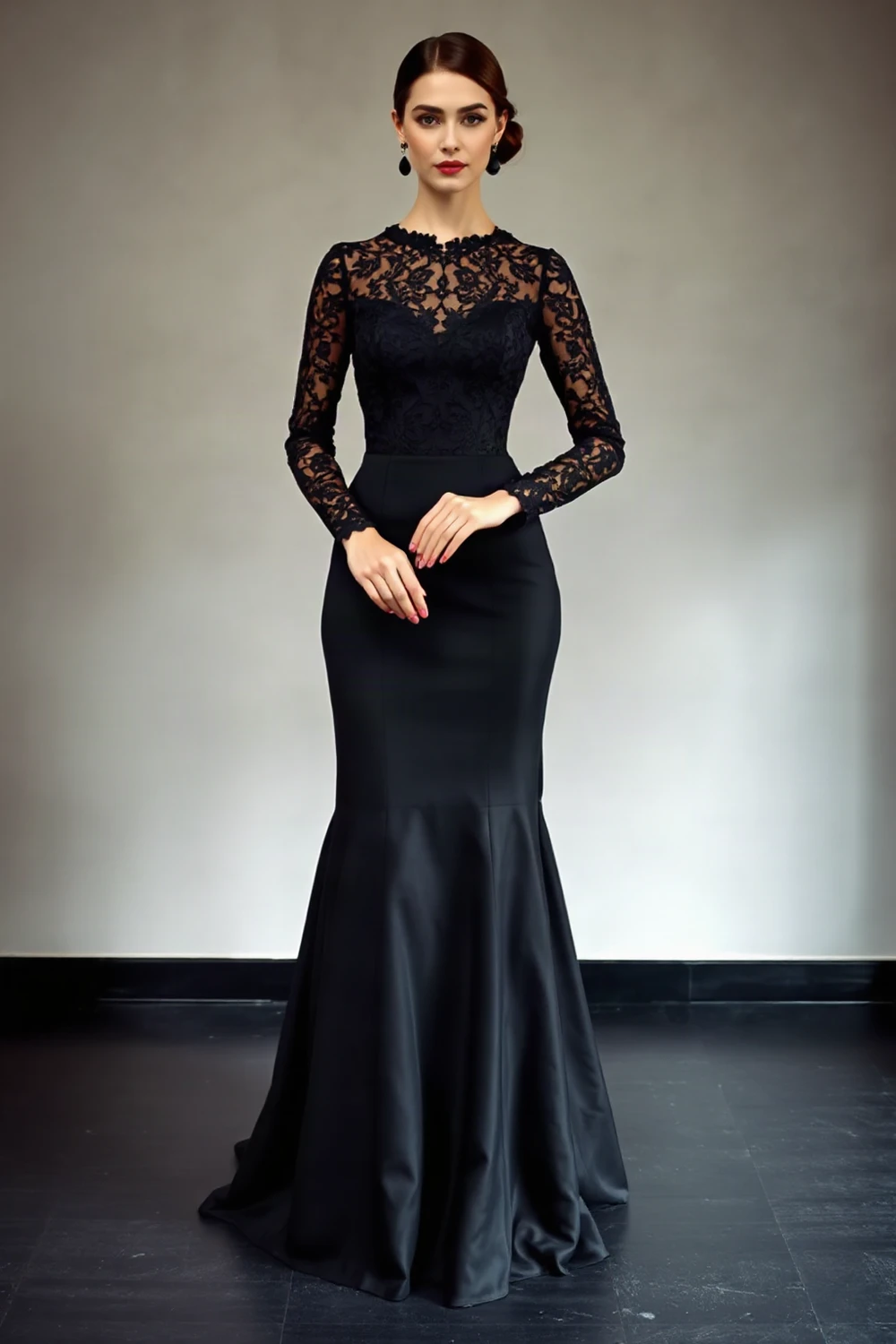
The second black concept surrounds an opaque sweetheart shape with a floral, sheer-looking layer. A high neck and full sleeves create coverage, while openings in the pattern keep the upper body from appearing solid. A plain waist transition separates this detail from the smooth fitted skirt widening below the knees. Texture forms two distinct zones within one colour.
This style covers shoulders and arms without a plain, closed bodice, but movement still matters. Test elbow flexion, reaching and raised arms because the outer layer may restrict motion despite appearing to fit. Check the sweetheart lining while seated and standing, as posture can alter its apparent height. With pattern near the face, compact earrings, restrained hair and minimal wrist details avoid competing focal points. Unlike the bare-shouldered first dress, the skin-pattern-lining transition is central.
Allowing Movement Between a Halter Neck and Long Train
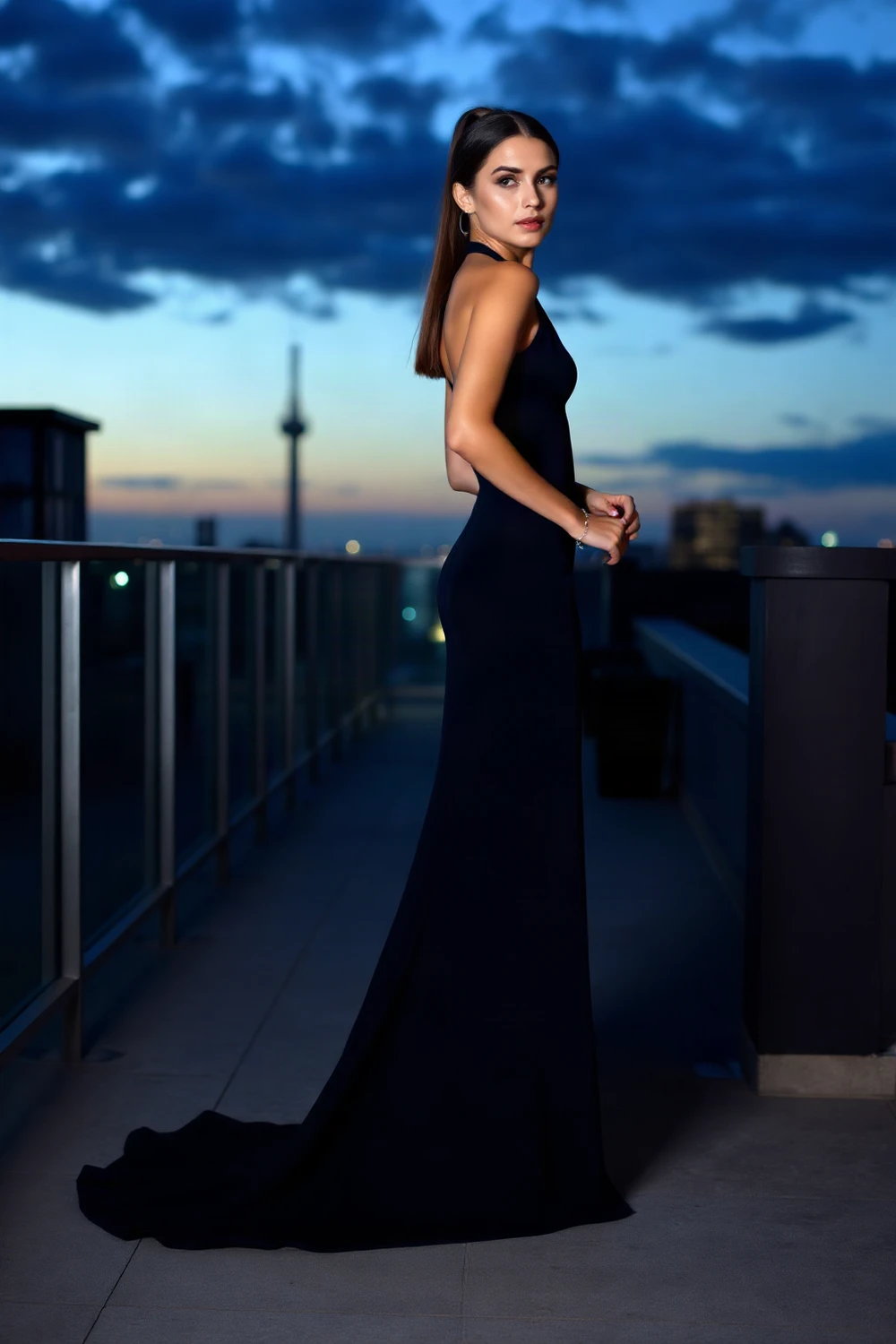
The dark navy dress is read mainly in profile. Its halter exposes the shoulders and draws the eye toward the neck, while the open back adds space behind the fitted torso. Without strong visible embellishment, the gaze continues from the waist into the long skirt and train across the rooftop floor. The blue dusk sky further clarifies the outer silhouette.
Halter comfort matters over a long event because support may be felt around the neck. The open back makes the undergarment or support solution an early decision; a visible improvised layer could disrupt the minimal line. Reconcile the train with stairs, rough outdoor surfaces, narrow routes and dancing. A loop or bustle can only be confirmed on the actual garment. A small earring or bracelet adds light without distracting from the long profile.
Using Light Across a High Neck and Long Sleeves
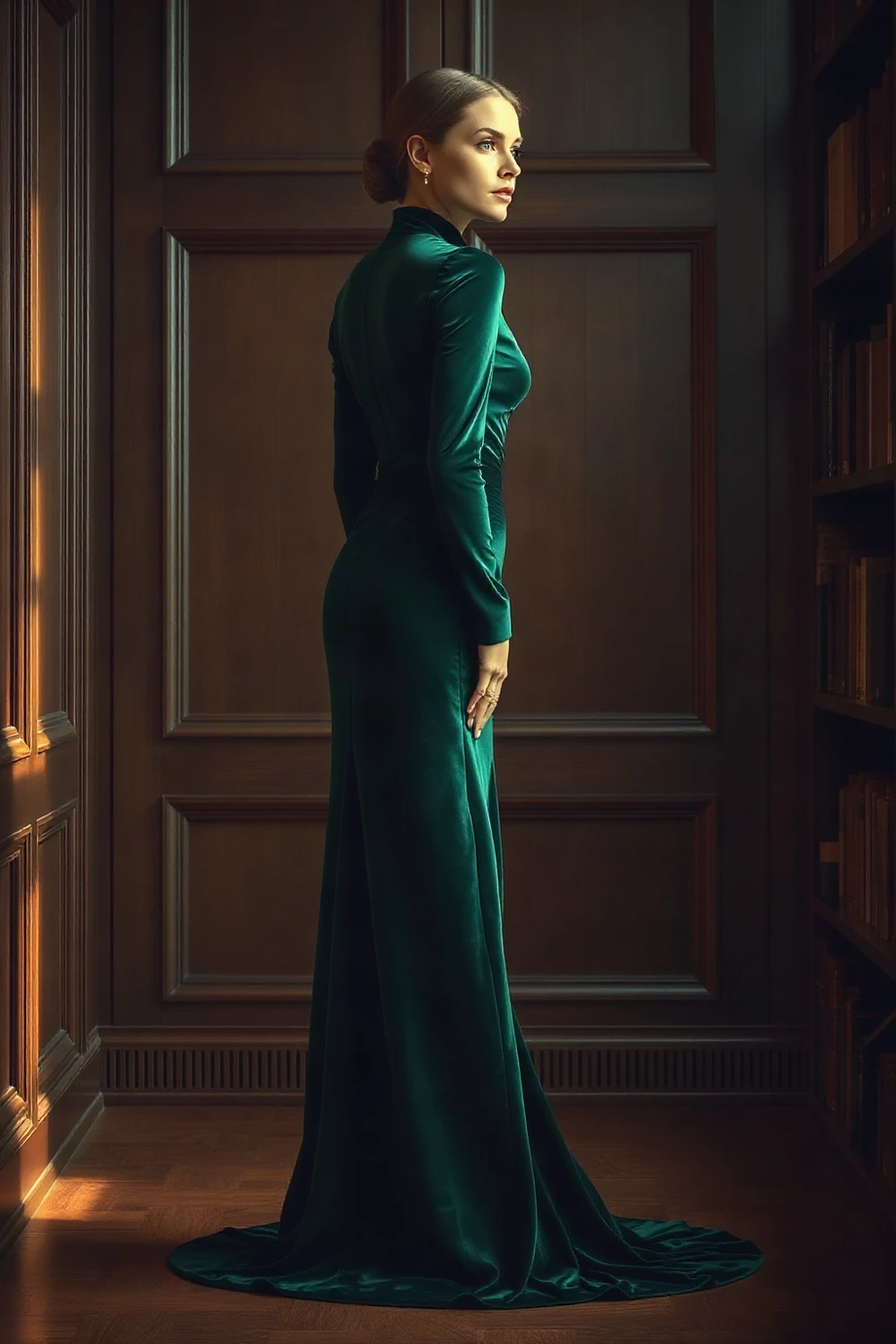
The fourth look combines deep forest green with a high neck, full sleeves and a skirt sweeping across the floor. Despite extensive upper coverage, the waist and hips remain defined before extending into the train. A velvet-like response turns some areas luminous emerald and others almost black-green, showing how directional light transforms a dark colour in a warm wood interior.
Ensure the neckline permits sitting, conversation and head movement without throat pressure, and that sleeves allow ordinary gestures. Because the surface reacts strongly to direction, compare it in daylight, warm venue lighting and conditions resembling event photography rather than one fitting-room source. Though more covered than the navy halter, its train needs similar attention to flooring. Up hair and compact earrings keep the neck clear; a clutch should neither catch the sleeve nor rub the hip.
Structuring Waist Emphasis with a Peplum
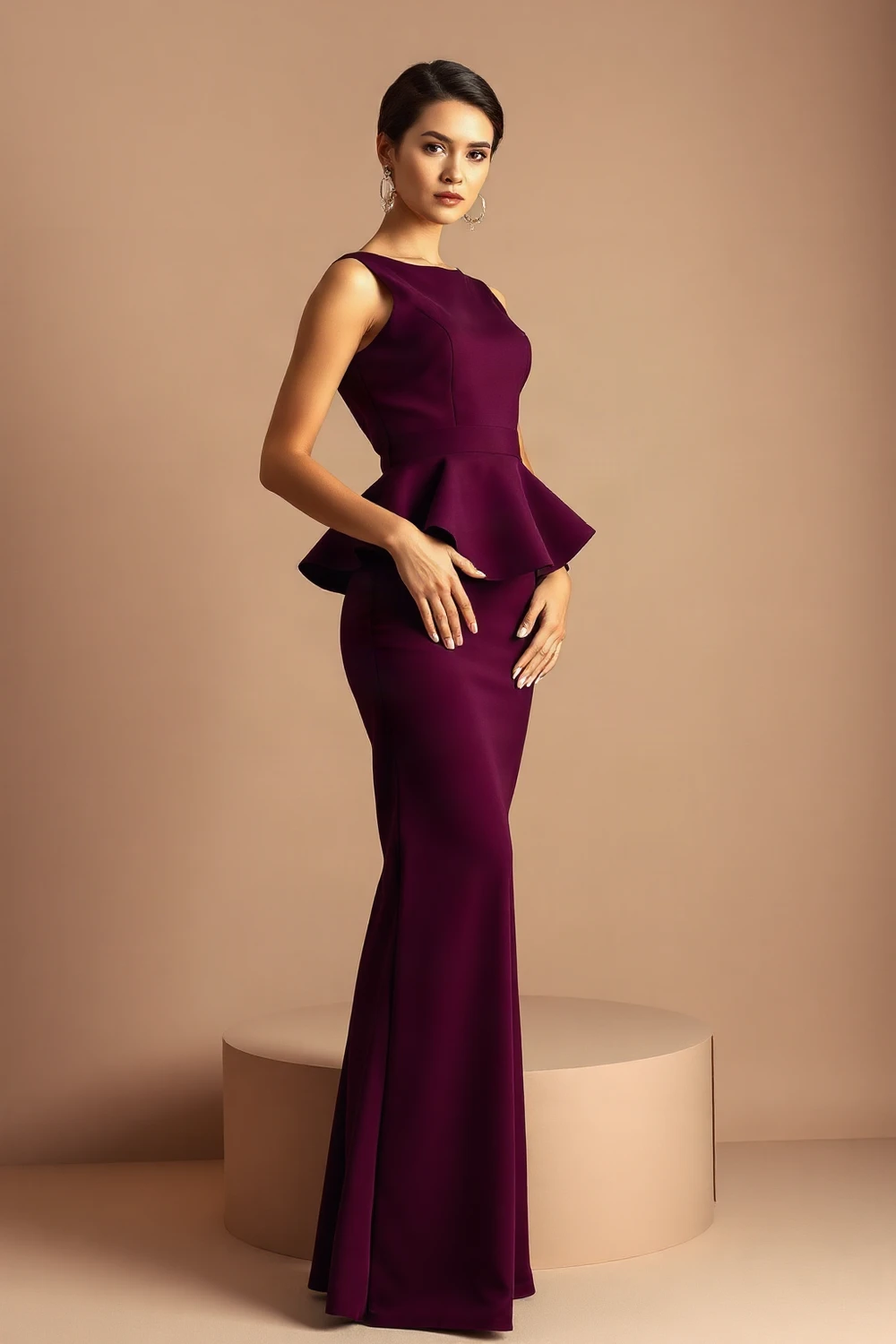
In the fifth image, aubergine flows from a clean sleeveless bodice into a sculpted peplum. Opening on both sides below the waist band, the layer redirects attention to the middle of the figure. A long, narrow, train-free skirt balances that horizontal volume. Here, the cut itself supplies the decoration.
The key variables are its starting level, width and projection. A line above the natural waist creates different proportions from one nearer the hips, so assess side and seated views as well as the front. Check for conflict with a clutch at the waist. A train-free hem may suit busy receptions, but the narrow skirt still needs a stride test. Since the waist is prominent, one purposeful accessory is more balanced than a large necklace, belt and voluminous bag together.
Framing an Open Back with Sleeves and a Fishtail Hem
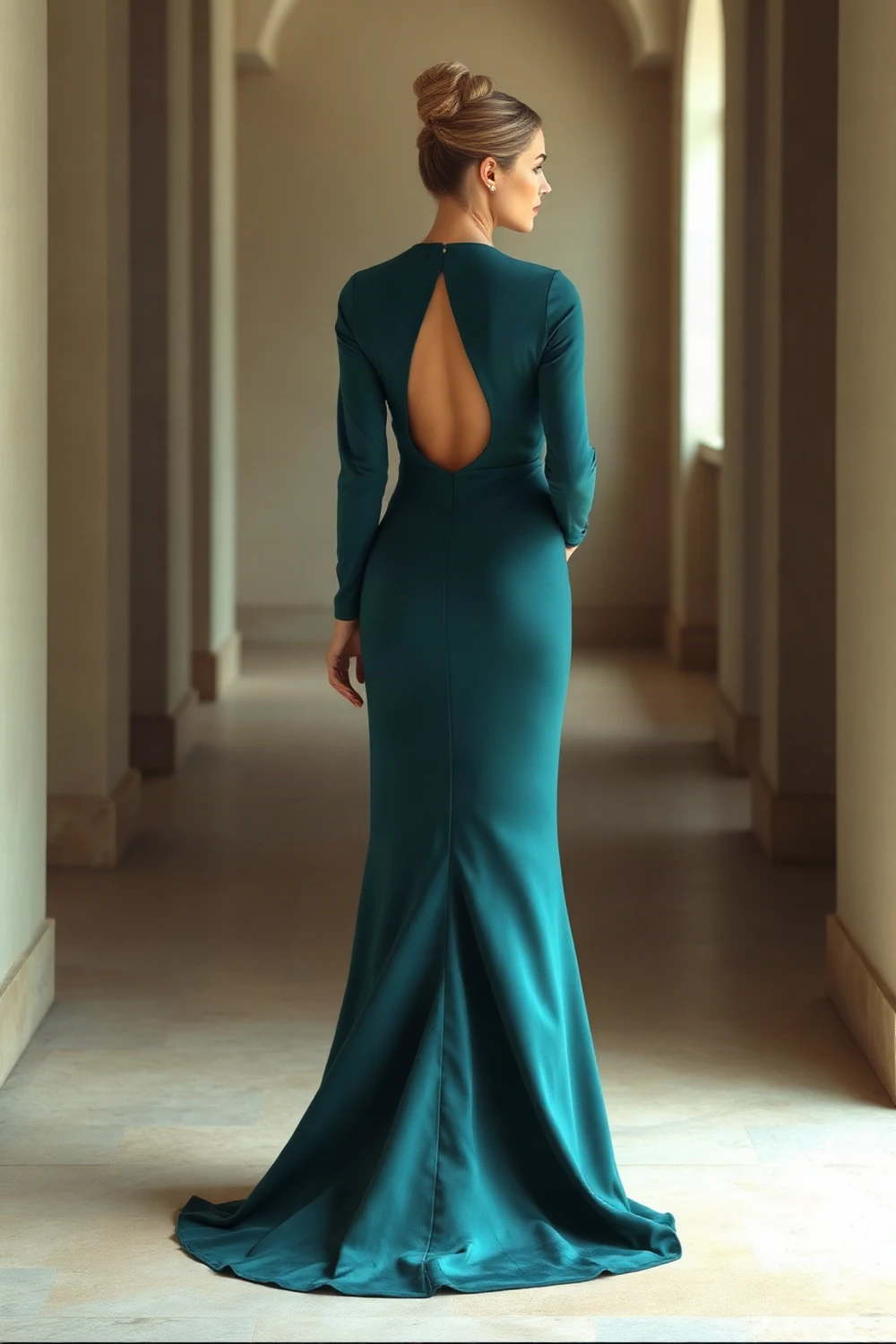
The sixth dress pairs teal with long sleeves and a large teardrop opening at the back. The front may seem covered, but the rear becomes the focal point. The opening's pointed top and centre-back seam share a vertical axis. Below the calves, the skirt releases into a gentle fishtail across the corridor floor, echoing the centred rhythm of the arches.
Fit the open back with the intended hairstyle and support solution. Its edges should lie flat in motion, the neck fastening stay comfortable and the centre seam hang straight. Unlike the navy halter's broad exposure, this cut-out is enclosed by long sleeves. Up hair reveals it; a lower style softens it. Test heel-to-hem clearance on level flooring and steps. Small earrings and accessories that do not cross the back preserve the outline.
A practical choice among dark floor-length dresses starts with silhouette, not shade. Open or high necklines, bare or covered arms, a peplum or uninterrupted waist, and a clean hem or train each create different coverage and movement needs. Black, navy, forest green, aubergine and teal should then be assessed under lighting resembling the venue. Together, these concepts show how one dark palette supports romantic, minimal, architectural and ceremonial interpretations.
Before deciding, view the dress from front, side and back with the intended shoes. Sit, walk, raise the arms, turn and, if relevant, try a step. Accessories should reinforce the strongest feature rather than compete with it: earrings for an open neckline, restraint at a high neck, limited volume beside a peplum and a clear frame around an open back. This process turns inspiration into a choice suited to the occasion.
Compare black, navy, forest-green, aubergine and teal floor-length evening dresses through neckline coverage, sleeves, waist emphasis, skirt shape, back details and trains.
Frequently asked questions
Where should neckline selection begin for a dark evening dress?
Start with the event's expected coverage and the support you need. Off-shoulder and halter lines emphasise the shoulders, while a high neck or lace-look long sleeves create a more enclosed frame.
When does a train require extra consideration?
A train needs careful planning when the venue includes stairs, rough outdoor flooring, crowded table routes or dancing. Test walking and turning in the intended shoes and ask how the actual train can be managed.
How can I compare a peplum waist with a mermaid skirt?
A peplum creates horizontal emphasis at the waist, whereas a mermaid skirt continues a close line toward the knees or calves. Compare side proportions, sitting comfort and stride rather than relying only on a front view.
What should be checked when fitting an open-back dress?
Check that the edges remain flat in motion, the neck fastening feels comfortable, the centre seam hangs correctly and the support solution stays hidden. The planned hairstyle will also change how much of the opening is visible.
How much jewellery suits a dark dress with a strong design feature?
Identify the dress's main focal point first. A patterned bodice, peplum, high neck or open back may need only compact earrings, one bracelet or a simple clutch rather than several large accessories.