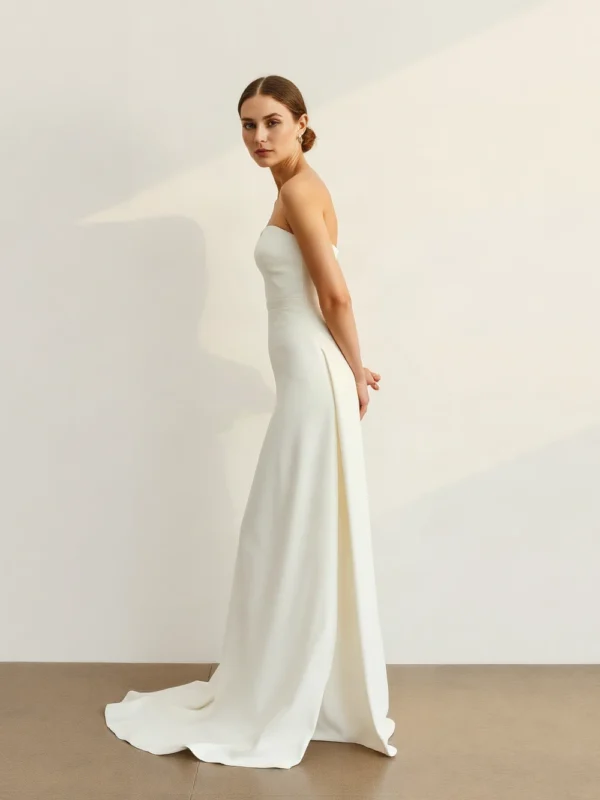
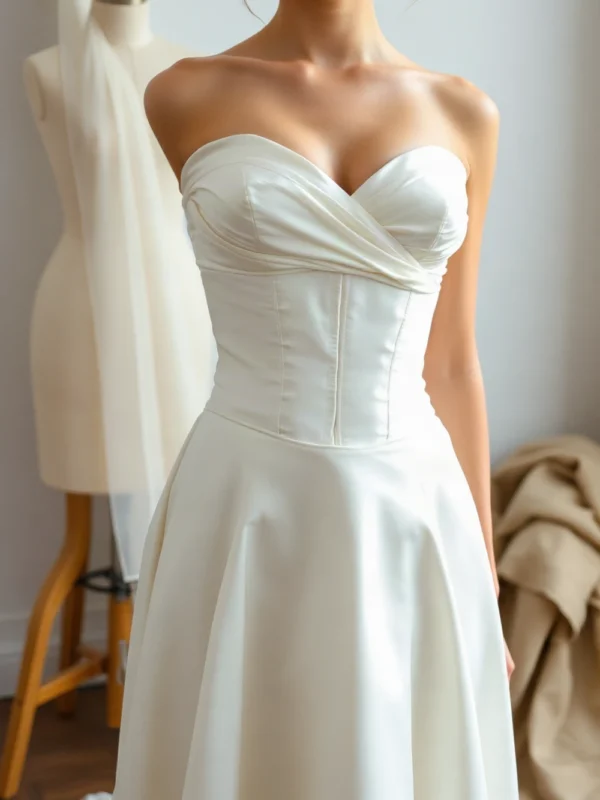
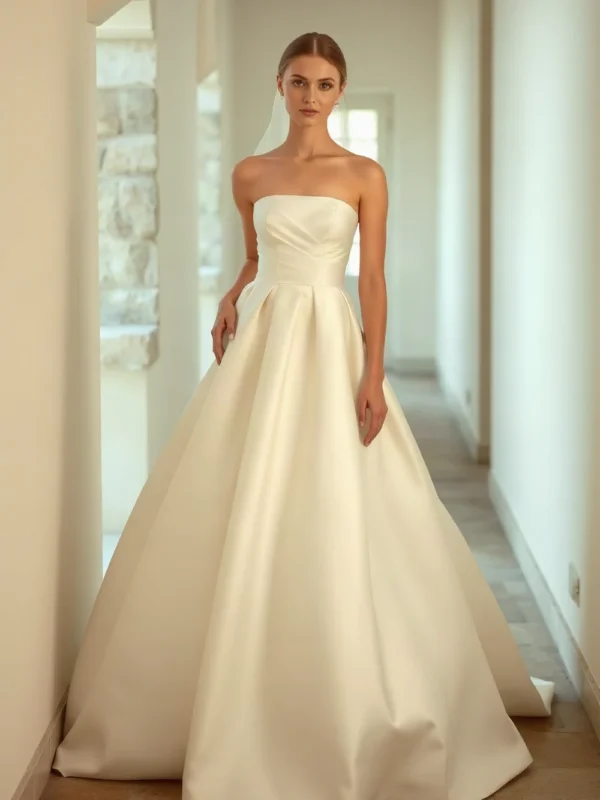
All six looks begin with a strapless upper line that exposes the shoulders, yet their overall effects are far from identical. A straight neckline, a sweetheart curve, diagonal draping and visible corset seams each direct attention differently. The first dress relies on an uninterrupted plain surface and a narrow silhouette, while the second uses crossed folds and an A-line skirt to create a softer transition from bodice to hem.
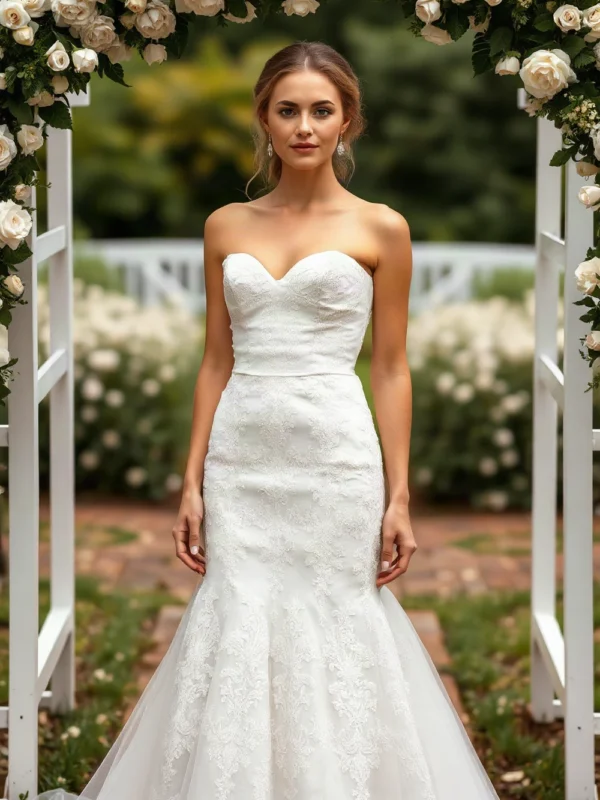
The close view in the third image reveals how seam placement can shape the appearance of support. Its long corset-style bodice is more defined than the gently wrapped beach look. The fourth concept introduces lace-like motifs over a close-fitting silhouette that expands lower down. When comparing these two, consider not only decoration but also where the waist is marked and where the skirt begins to release from the body.
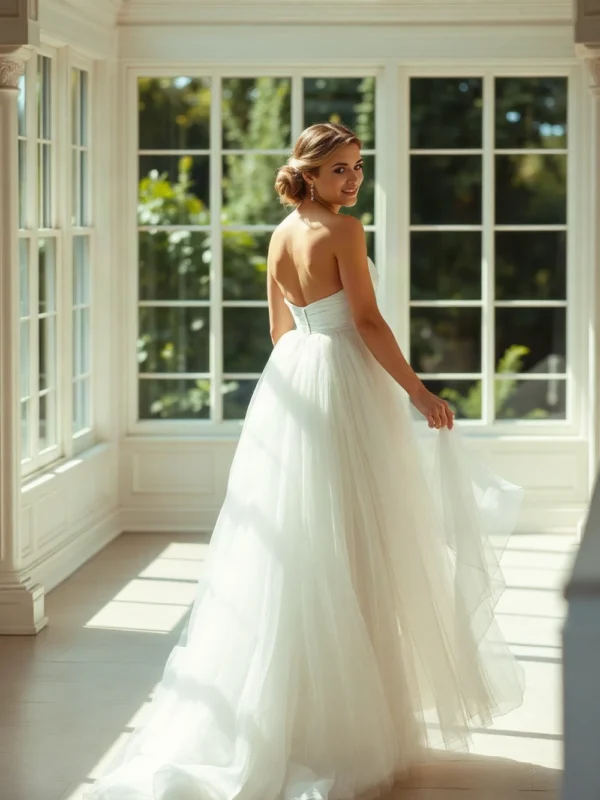
The fifth photograph shifts attention to the back. A low strapless edge, horizontal gathering and translucent-looking layers produce a light, mobile effect. The sixth image takes the opposite approach: a smooth surface, broad pleats and substantial ball-gown volume create a more architectural presence. Both have fullness, but one appears to ripple with movement while the other holds a clearer, structured outline.
The settings help explain those differences without determining the choice. A plain studio wall clarifies the first dress’s clean line; coastal light supports the second skirt’s flow; and a floral arch repeats the patterned quality of the fourth. Window light separates the fifth dress’s layers, whereas the narrow corridor makes the final skirt’s width immediately apparent. For practical planning, floor surfaces, doorways, wind and available movement space matter more than matching a dress to décor alone.
During a fitting, check whether the upper edge stays evenly against the body, whether the bodice changes when seated and whether the waist transition restricts movement. Then assess how a narrow, fluid, fitted or voluminous skirt behaves in the intended venue. These images are most useful as structural comparisons rather than as evidence about a particular material or purchasable product.