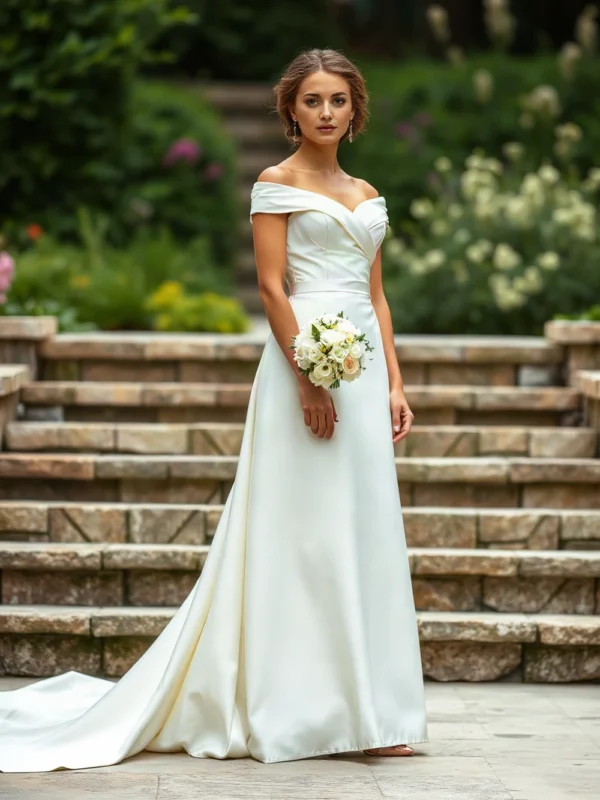
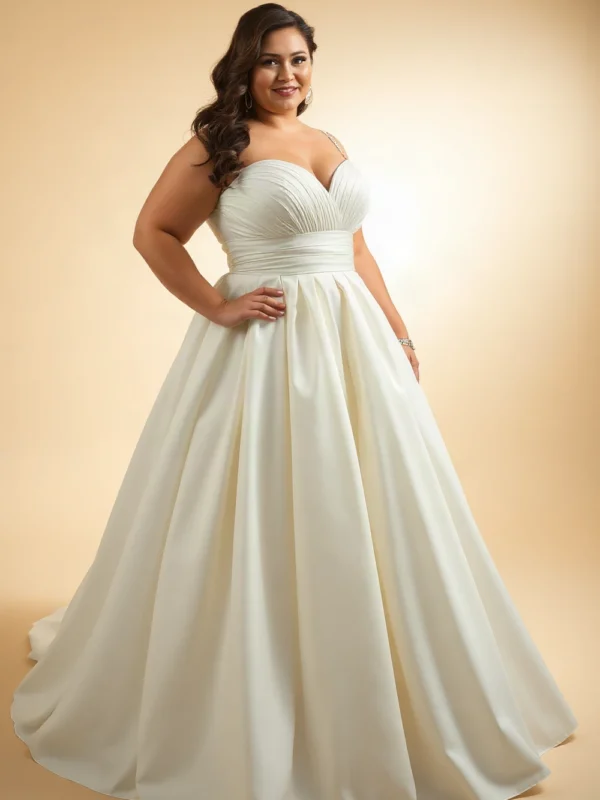
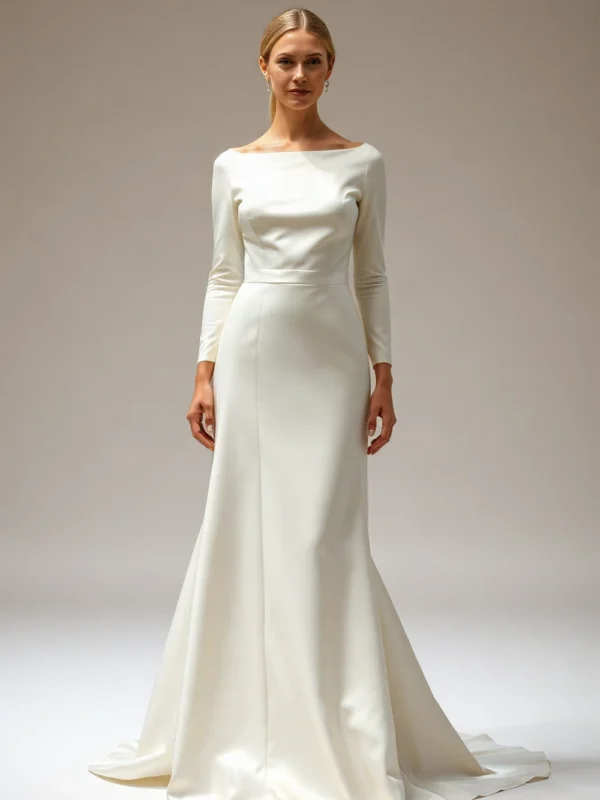
A square neckline brings visual order through its horizontal upper edge and defined turns near straps or sleeves, yet the geometry changes across silhouettes. Broad straps can feel substantial above a full ball gown skirt; on a close fit-and-flare, the neckline starts a long vertical line. With three-quarter sleeves, it becomes the open center of a covered outer frame.
These six concepts compare how skirt volume, strap scale, sleeve coverage, surface detail and asymmetry alter square-neck dresses beyond depth and width. The images are styling references, not evidence of purchasable garments, and are best used to shape fitting questions. Start with required movement and event space, then check neckline security. Do not rely on a front-facing pose: side views, sitting, walking, turning and lifting the arms reveal what a still mirror view can conceal.
A Square Neckline Above Ball Gown Volume
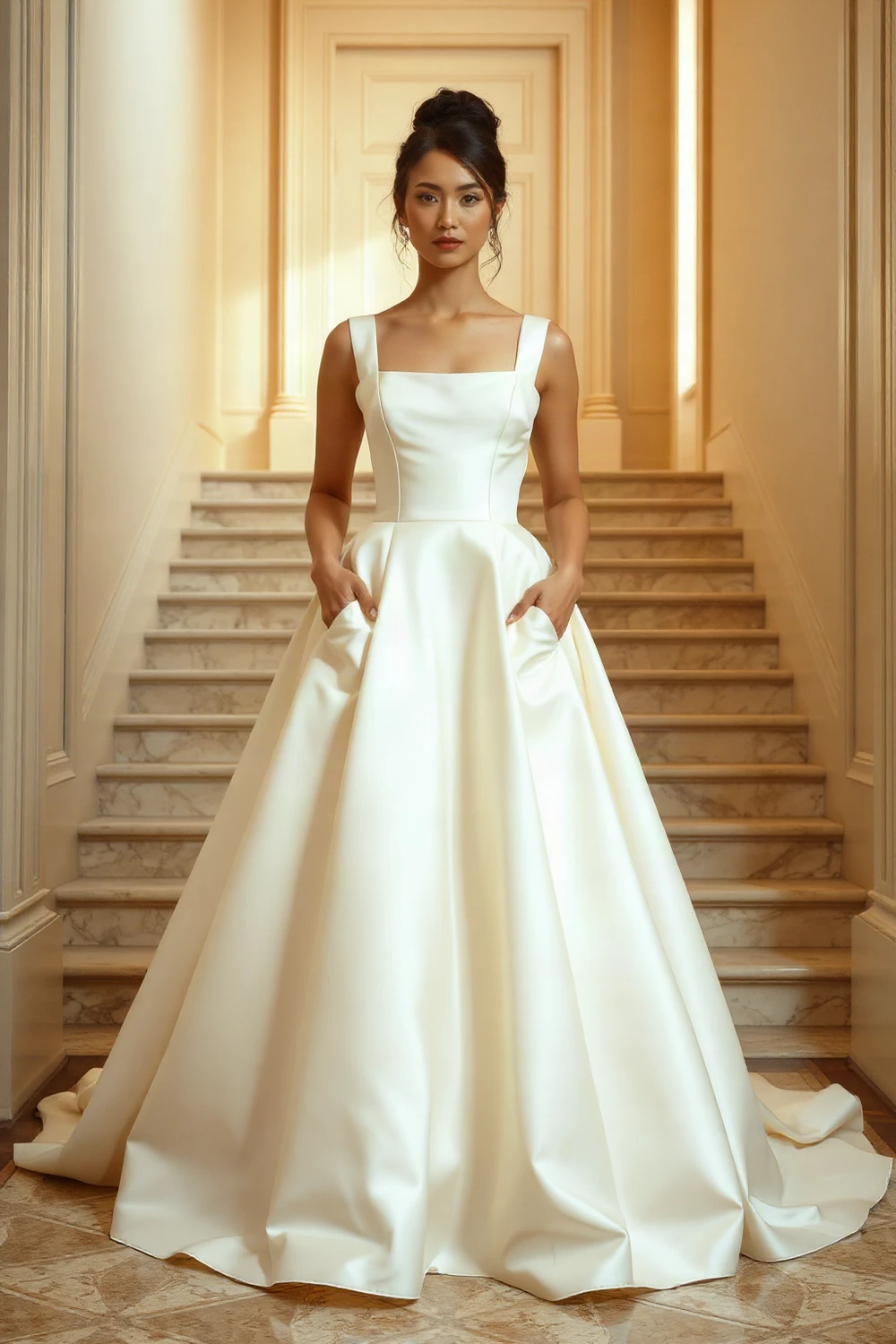
The first concept uses broad straps to join a straight square neckline and full skirt. A shaped bodice ends at a defined waist, controlling the volume so it does not overwhelm the upper frame. The plain luminous surface emphasizes proportion and folds over ornament. Side pockets add a relaxed gesture and slightly reshape the skirt when used.
This silhouette can make a stronger entrance than a narrow cut, especially in an open setting, but needs more room. At a fitting, account for aisles, stairs, chair spacing and the dance area. Put both hands in the pockets to check whether the bodice pulls down or the skirt twists; walk normally and raise the arms to ensure the wide straps stay flat. With straps and skirt already forming a bold frame, restrained accessories preserve the neckline’s architectural clarity.
Asymmetry on a Narrow Fitted Silhouette
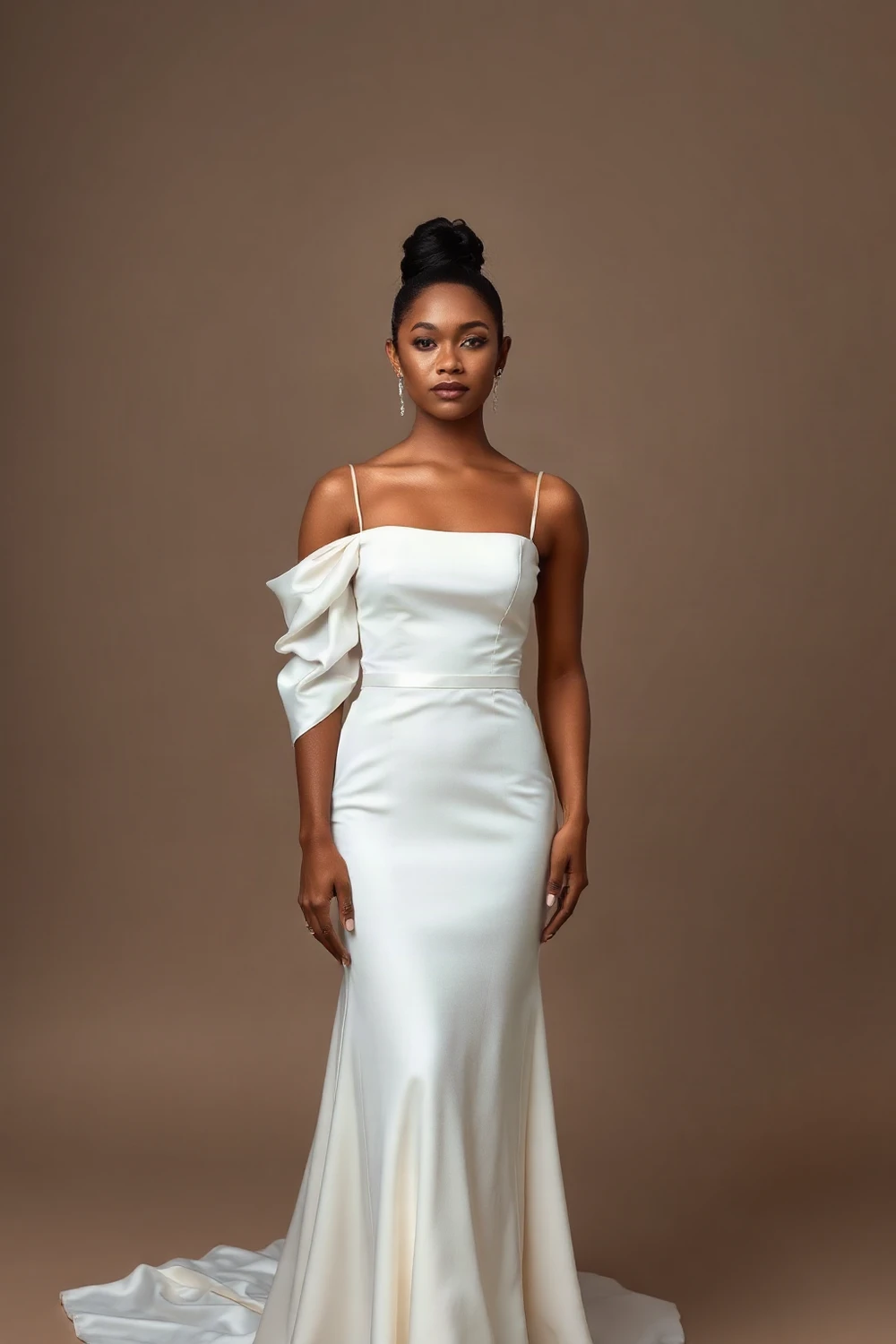
The second look interrupts a slim-strapped, straight neckline with draping on one arm. Its close cut follows the torso and hips before opening near the floor, keeping the direction vertical. Folded shoulder volume adds horizontal motion, while the uncovered opposite arm makes the asymmetry deliberate. Detail stays at one focal point rather than crossing the bodice.
This unexpected accent on a restrained shape cannot be judged only from the front. Sit, embrace, turn and try dance movements to learn whether the drape restricts the arm or collapses awkwardly. Check the back and how a veil falls beside the raised detail. A simple hairstyle and understated earrings limit competition at the shoulders, allowing the square upper edge and asymmetric sleeve to remain clear together.
Tonal Surface Detail on a Fit-and-Flare Cut
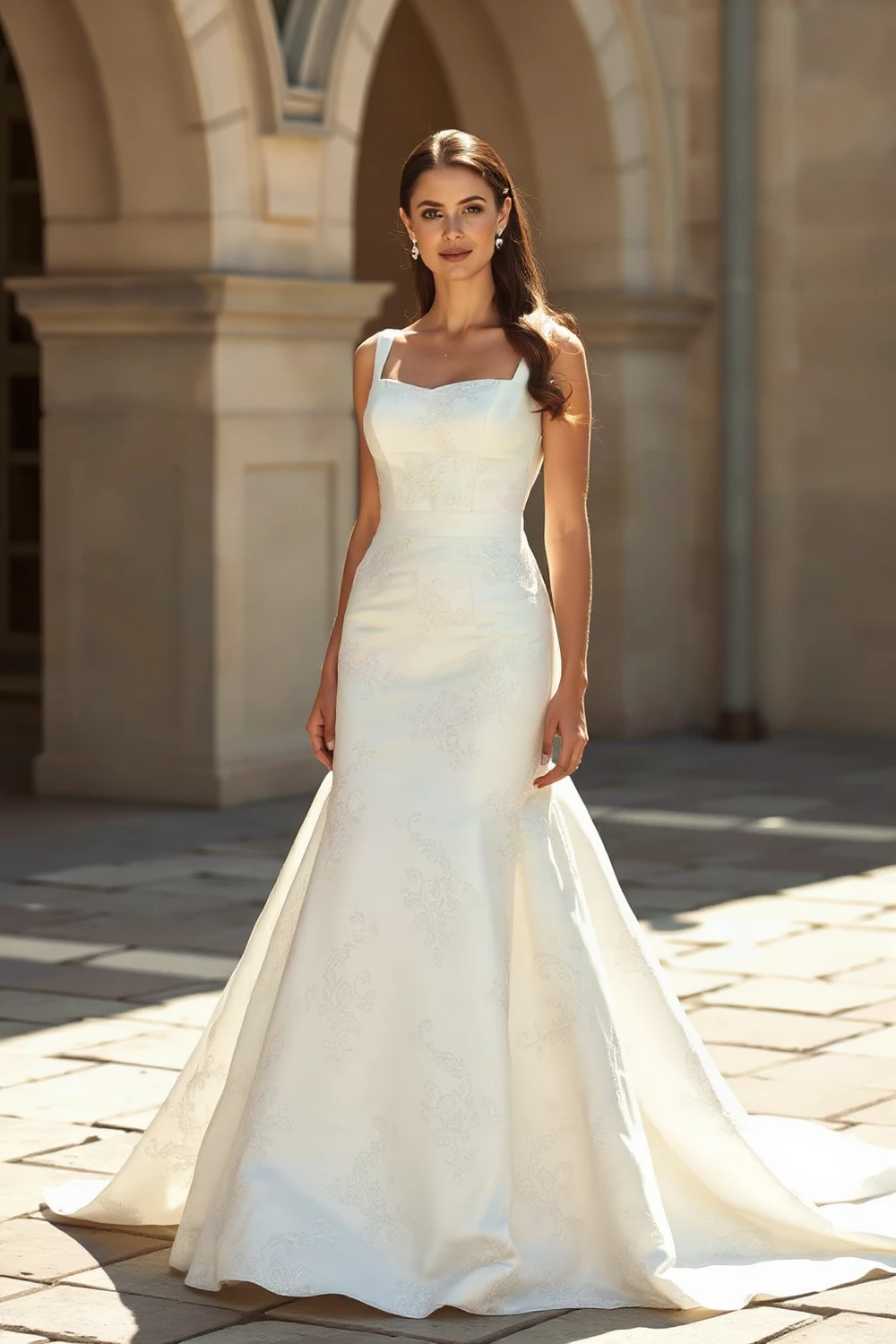
In the third concept, broad straps connect the square neckline to a close bodice and skirt that gradually widens below the hips. Unlike the ball gown’s immediate waist change, this line continues downward before expanding, leading the eye on a longer route from neckline to hem. Faint tonal motifs add close-range interest while staying quiet from farther away.
This treatment sits between an entirely plain dress and dense contrasting lace. Examine it in daylight and soft indoor light, where motifs may gain or lose visibility. Take long steps, climb stairs and sit to test where the fitted section releases. The neckline should remain level, the side seams should not rotate, and the wide straps should share tension evenly. These construction responses matter more to comfort than the clean impression of a stationary outdoor pose.
Evaluating Square-Neck Depth at Close Range
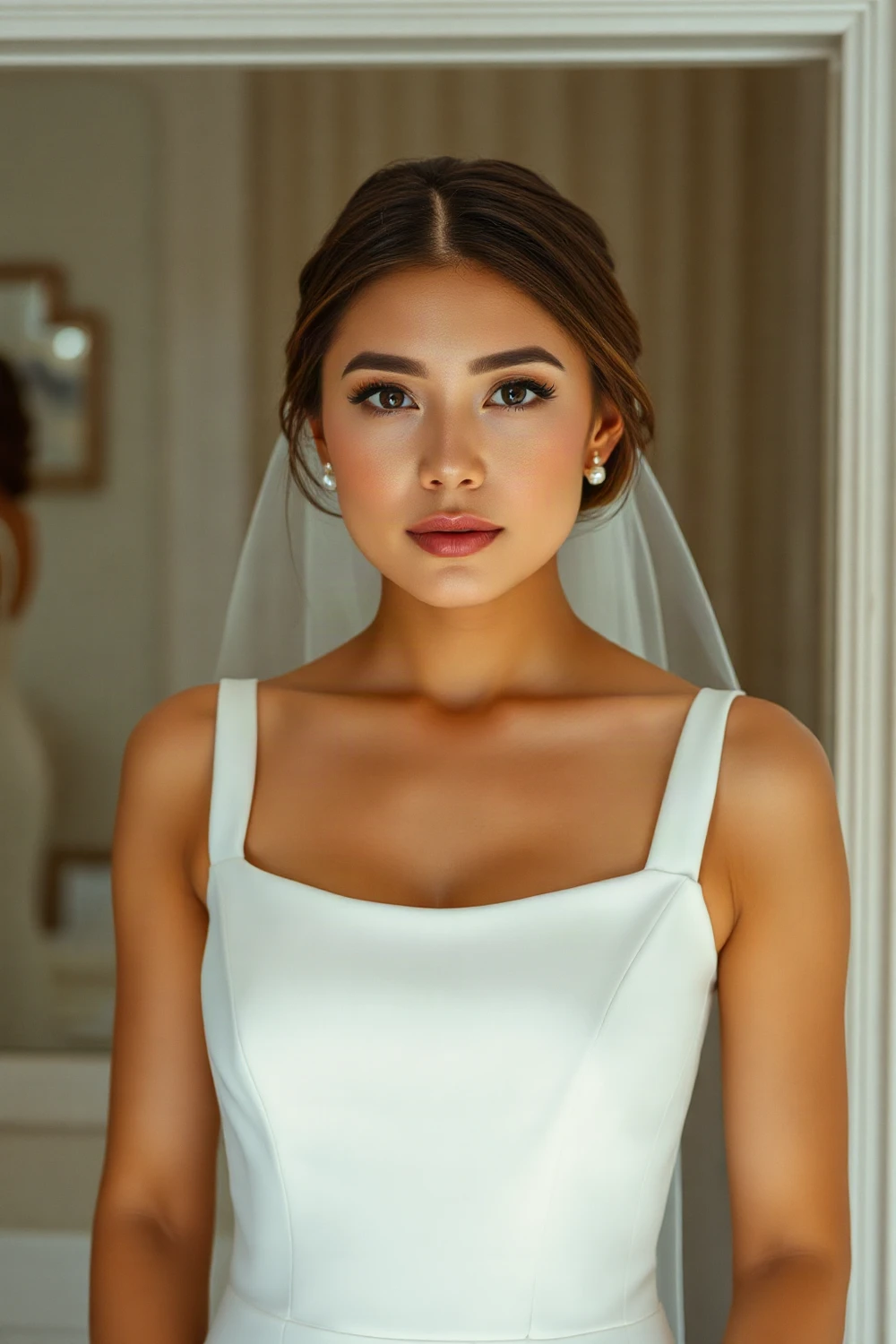
The fourth image removes the skirt from view, focusing on the neckline’s relationship to the face, neck and shoulders. Broad straps set a firm outer boundary, while a slight central curve softens the square edge. The unembellished bodice and swept-back hair clarify these proportions; small earrings and a veil behind the shoulders finish the frame without filling the opening.
A full-length photograph cannot show every aspect of fit. Close up, confirm that both corners sit at the same height and the upper edge does not separate when leaning forward. Turn the head and lift the arms to see whether the straps move toward the neck. If planning a necklace, test several lengths with the neckline; a restrained piece leaving visible space may preserve the structure better than one filling the opening. View the veil from the side to prevent excessive overlap at the straps.
Balancing Coverage with Three-Quarter Sleeves
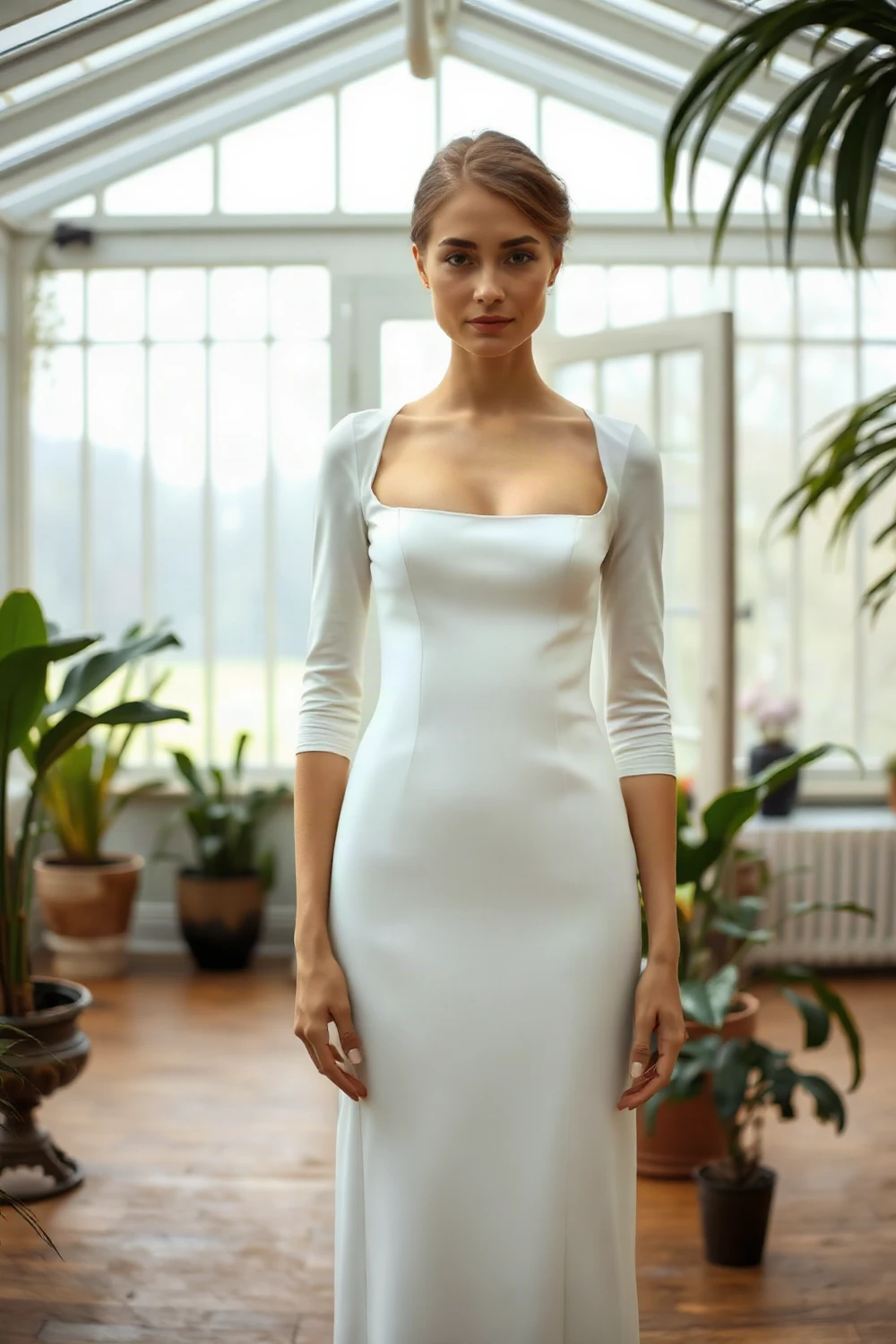
The fifth look keeps the neck and upper chest open but surrounds the square shape with three-quarter sleeves, creating a continuous outer frame unlike the exposed shoulders of slim straps. A close column cut and plain white surface center attention on sleeve length and neckline width. The effect is calm and elongated, not voluminous.
Sleeves offer coverage but do not guarantee comfort. Bend the elbows, reach forward and upward, sit, and repeat important event gestures. If the sleeves gather or restrict the shoulder, they may pull the neckline out of position; its corners should stay stable rather than rise with each movement. Wearing the hair back preserves the open square shape, while moderate earrings avoid adding weight to a frame already defined by long sleeves and a broad neckline.
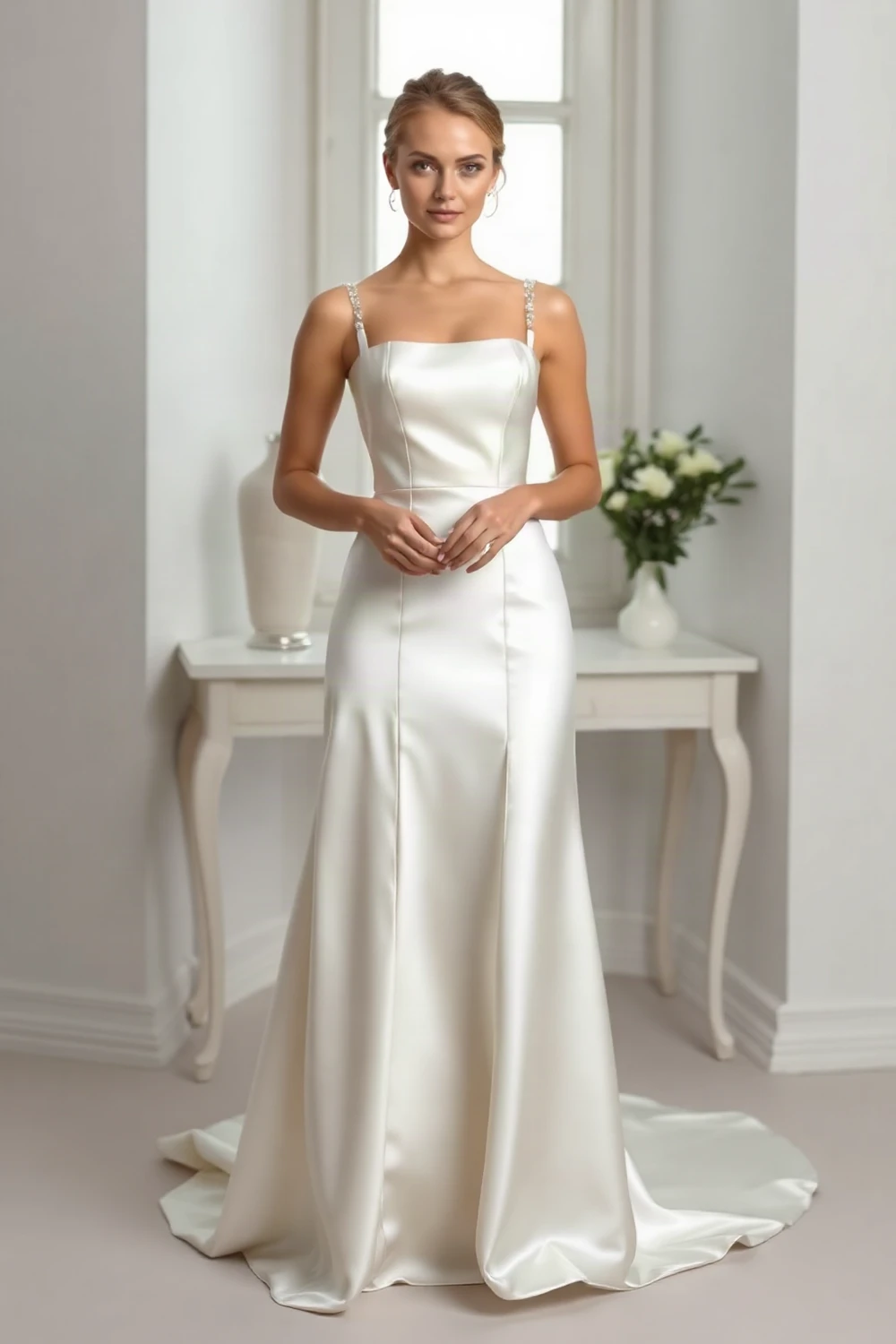
Sparkling Slim Straps on a Restrained Flare
The sixth concept pairs a straight square neckline with slim straps carrying small light-catching details. Vertical bodice seams shape a close upper silhouette, and the skirt opens in a controlled flare near the lower body. Its luminous but otherwise plain surface leaves quiet space, making the accents noticeable despite their scale. Decoration stays near the face rather than spreading over the dress.
Slim straps make a lighter frame than broad ones, but comfort and support need testing. Confirm that they do not press into the shoulders, shift sideways or lift one neckline corner above the other. Move the arms, sit and take long steps while watching the fitted bodice. Since the straps sparkle, consider making earrings, necklace or decorated veil secondary rather than emphasizing all three equally. Rehearse the train and lower flare for turning, confined passages, and moving from ceremony seating to dancing.
Choosing a square-neck wedding dress involves more than its width or depth. A full ball gown, narrow fit-and-flare and sleeved column each reinterpret the geometry. Pockets relax volume, an asymmetric sleeve creates directional focus, and tonal motifs or sparkling straps adjust how minimalist the result appears.
The most reliable choice comes from testing every element together. Consider venue passages and seating, then walk, sit, climb steps and lift the arms. Compare front, side and back views in similar light. If the neckline stays secure, the silhouette permits natural movement and accessories do not crowd the upper frame, the design can remain coherent through the event, not only in a posed image.
Compare how a square neckline changes across ball gown, fit-and-flare and column silhouettes, with practical guidance on wide straps, slim straps, sleeves, asymmetric details and luminous surfaces.
Frequently asked questions
Should I choose a ball gown or fit-and-flare shape with a square neckline?
A ball gown creates a stronger contrast between a fitted bodice and a full skirt, while a fit-and-flare shape continues closer through the hips before expanding. Base the decision on walking comfort, seating, stairs and the amount of space available.
How can I tell whether a square neckline is the right depth?
Both corners should stay level, the upper edge should not gap when you lean forward and arm movement should not pull the neckline upward. Check it while sitting and bending as well as in a close front view.
How do wide straps, slim straps and three-quarter sleeves differ?
Wide straps create a stronger shoulder frame, slim straps look lighter, and three-quarter sleeves provide more coverage. Test each option for slipping, pressure, elbow movement and its ability to keep the neckline stable.
Does a square neckline need a necklace?
No. The neckline already creates a defined frame. If you add a necklace, choose a scale and length that leave its geometry visible. With sparkling straps or an asymmetric sleeve, restrained earrings may be sufficient.
How should pockets and a train be tested during a fitting?
Place both hands in the pockets and check that the bodice and skirt do not pull out of position. For a train, rehearse walking, turning, sitting and using stairs, taking the venue’s narrow passages into account.