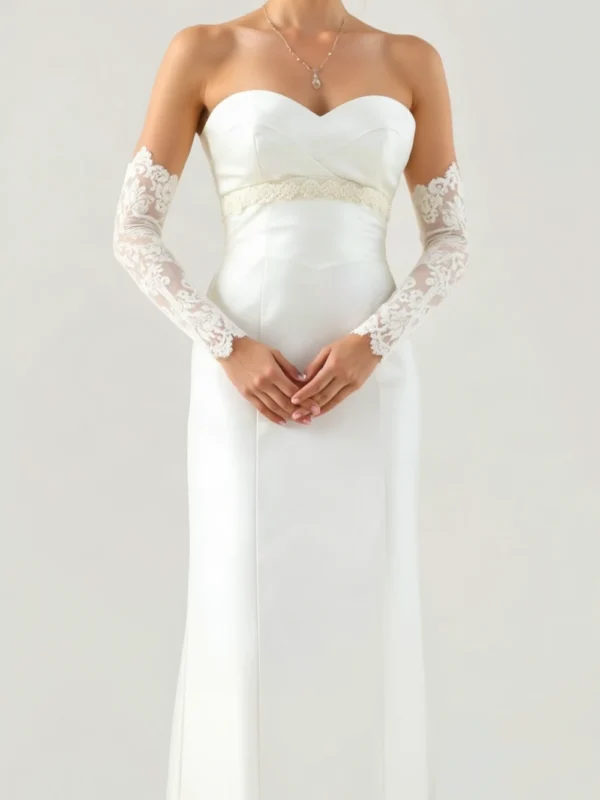
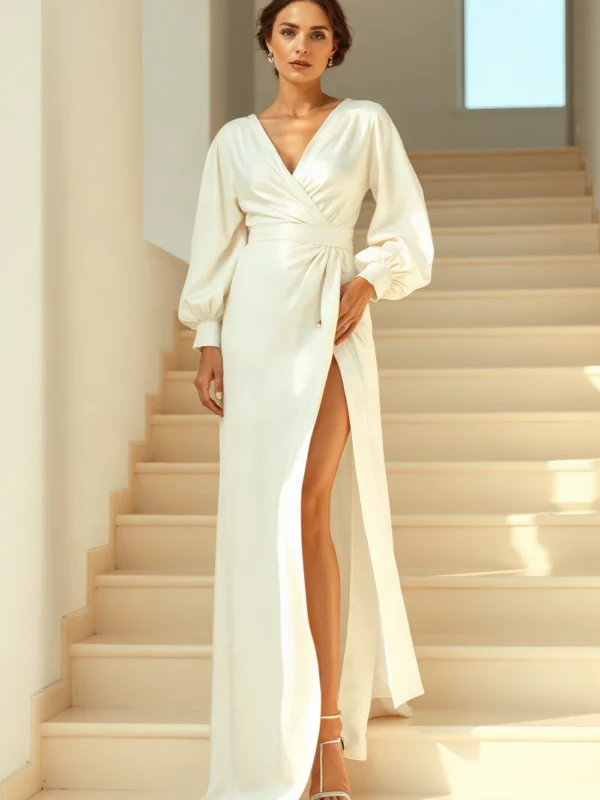
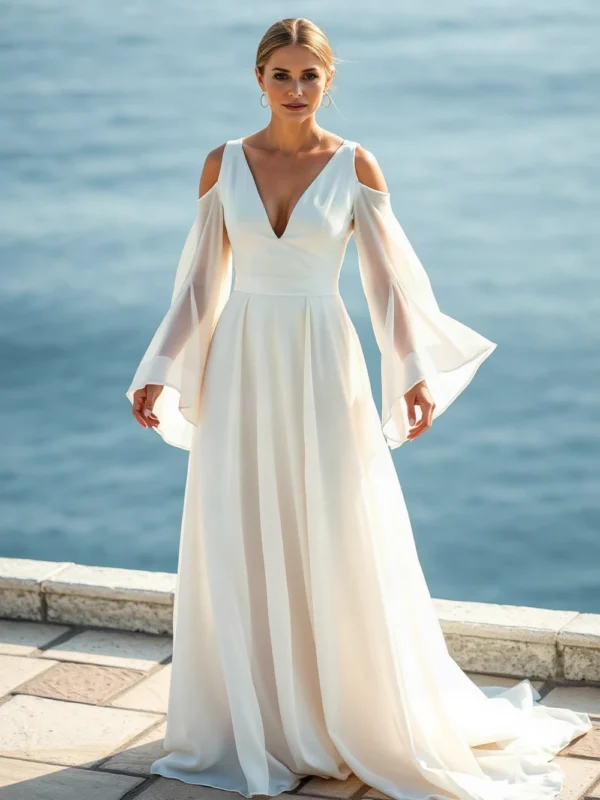
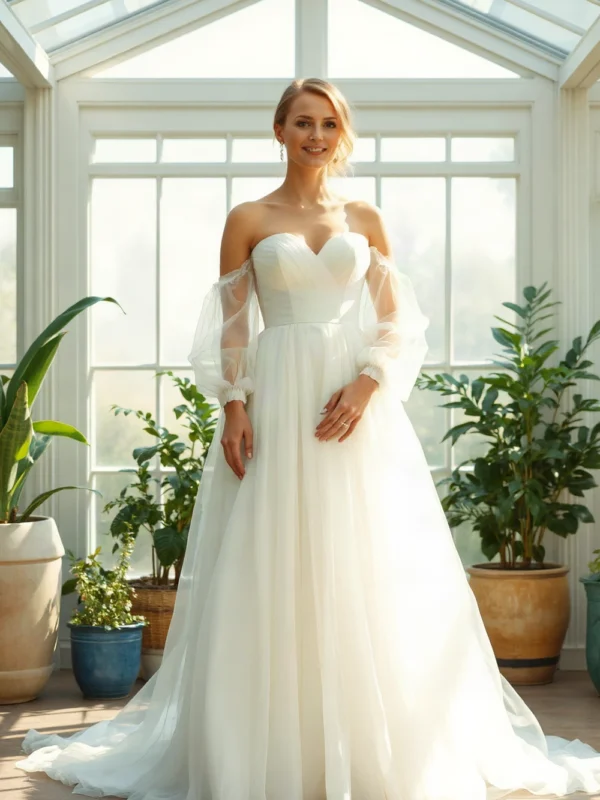
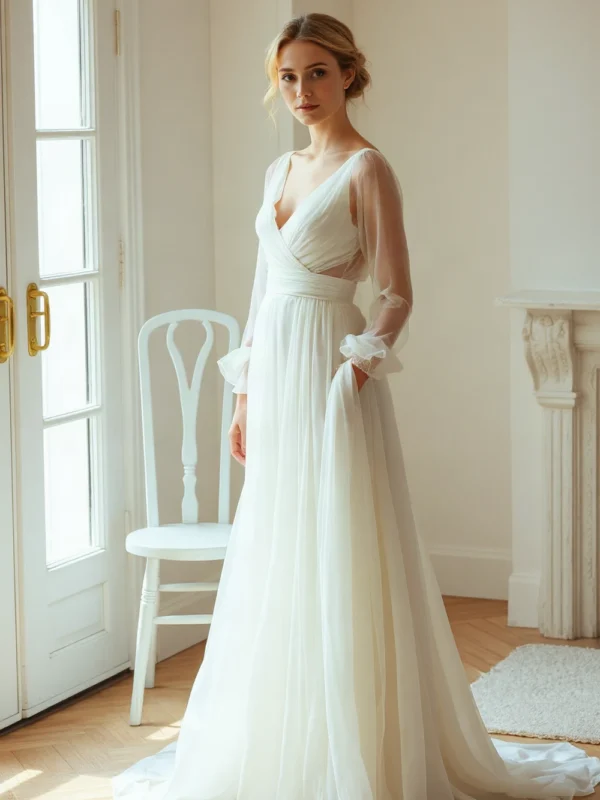
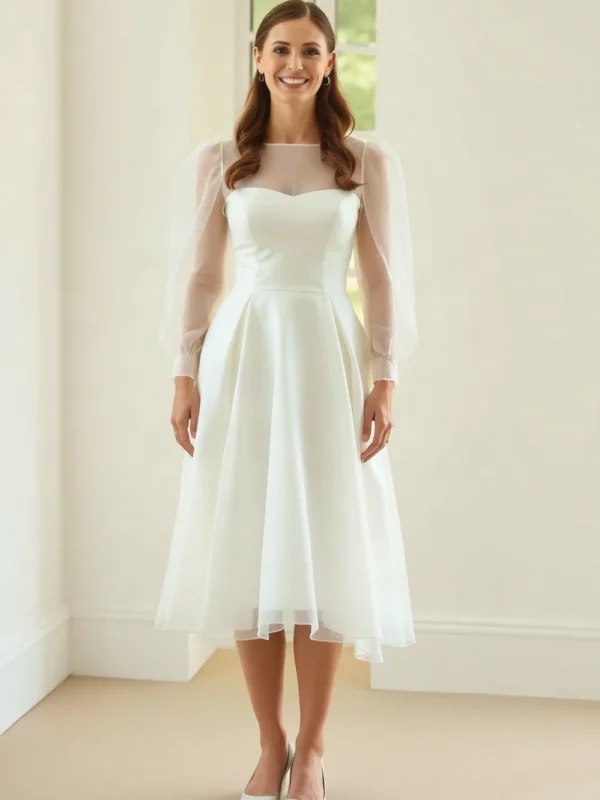
The shared theme across these six images is the sleeve as a structural part of the silhouette rather than a simple addition for coverage. A narrow patterned sleeve preserves a vertical line, while a billowing or flared sleeve introduces width and movement near the shoulders. The most useful comparison therefore includes the neckline, waist and skirt as well as the sleeve itself.
The first concept places floral-patterned sheer oversleeves beside a smooth strapless column. The second uses opaque blouson sleeves to soften the sharper lines of a wrap V-neck, defined waist and high side slit. In the third image, open shoulders and split, flared panels echo the movement of a flowing A-line skirt.
The fourth and fifth looks both use translucent volume, but their construction appears different. Low-set bishop sleeves frame the fourth dress’s strapless sweetheart bodice, leaving the collarbones open. On the fifth dress, gathered sheer sleeves begin at the shoulders and flow into ruffled cuffs, continuing the softer direction established by the wrap bodice and pleated skirt.
The sixth concept changes the overall proportions with a tea-length hem. Its translucent upper panel and puff sleeves balance a structured bodice, while visible shoes become a deliberate part of the composition. The shorter skirt makes hem movement and footwear more prominent than they are in the floor-length looks.
When comparing these ideas, examine more than a static front view. Test how a shoulder connection responds when the arms rise, where a cuff sits with bent elbows, and how wide panels behave while walking, sitting or approaching a table. Restrained accessories can preserve the clarity of a voluminous sleeve, while a smooth bodice provides an effective background for a narrow patterned one.