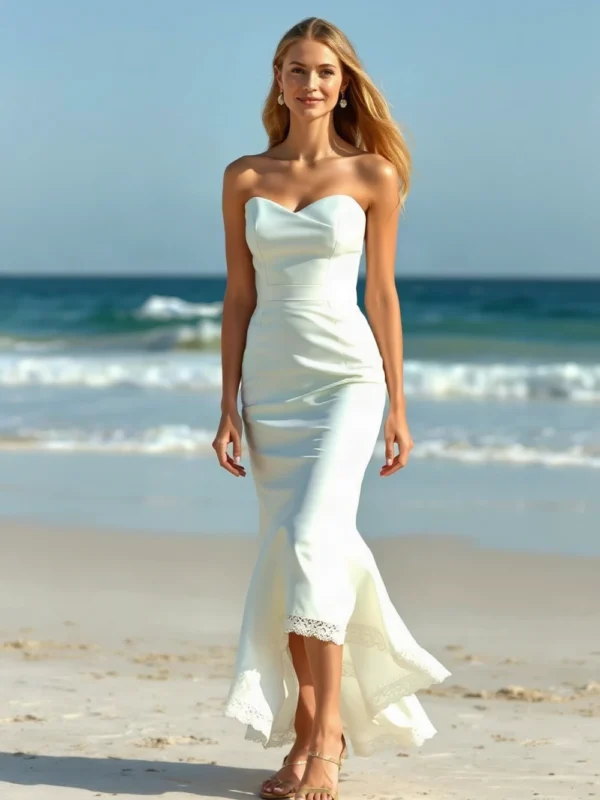
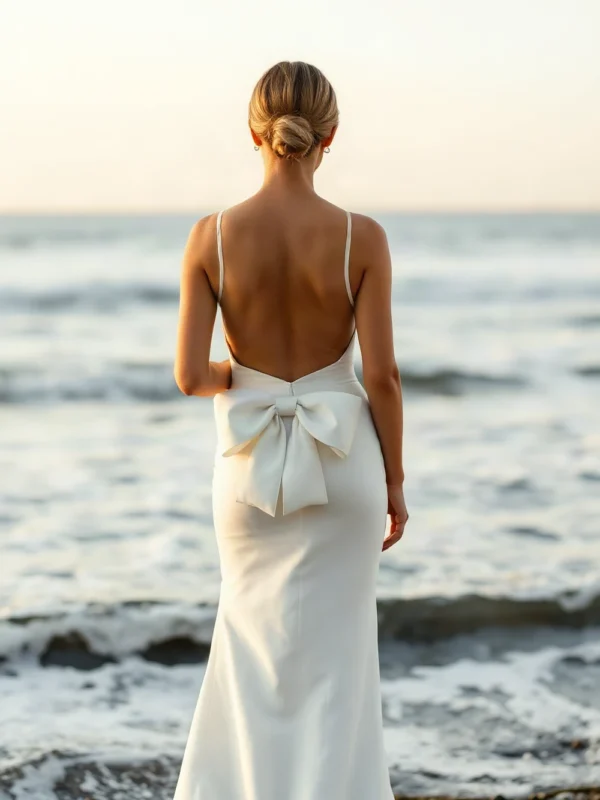
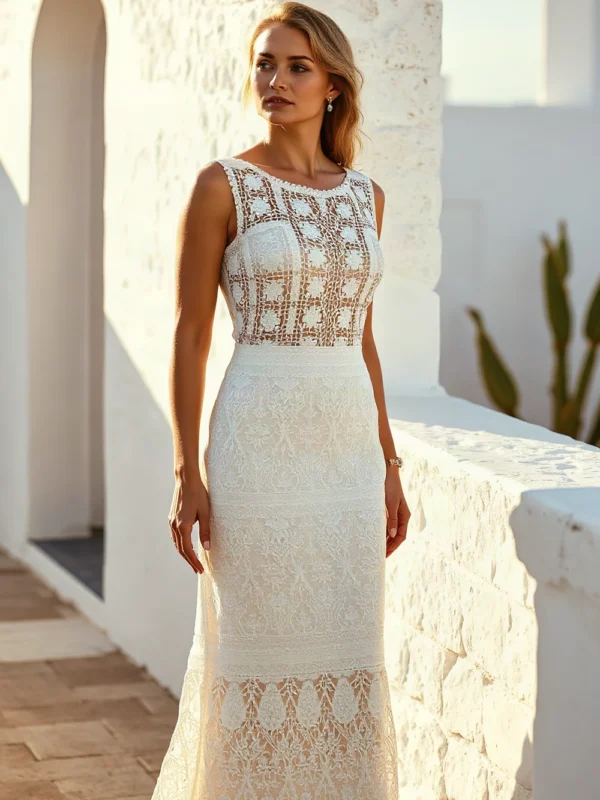
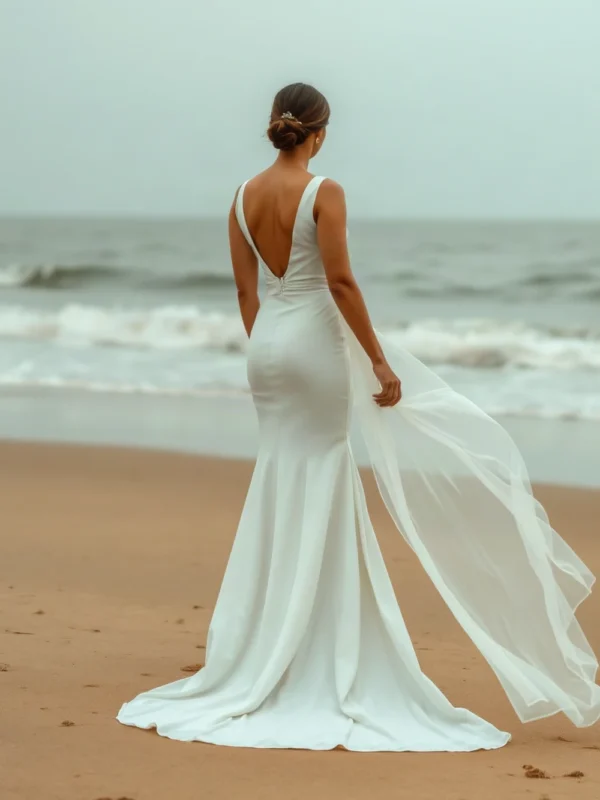
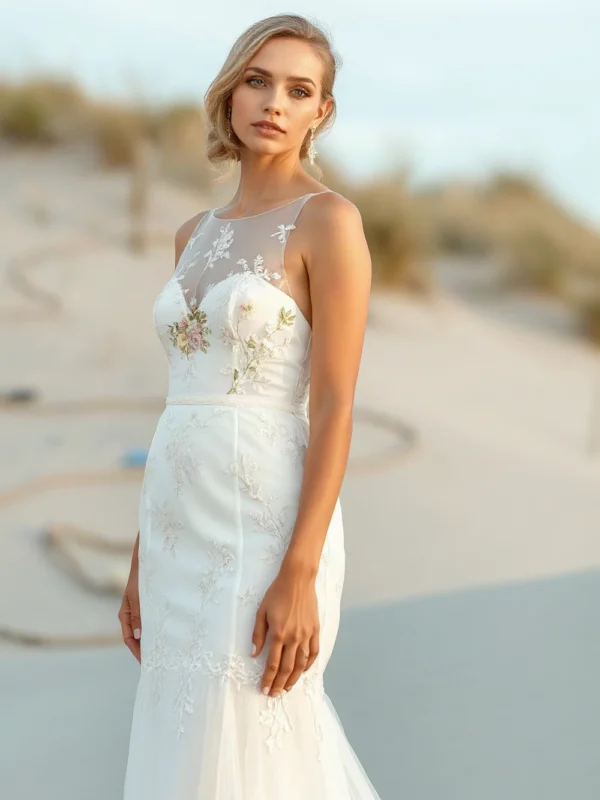
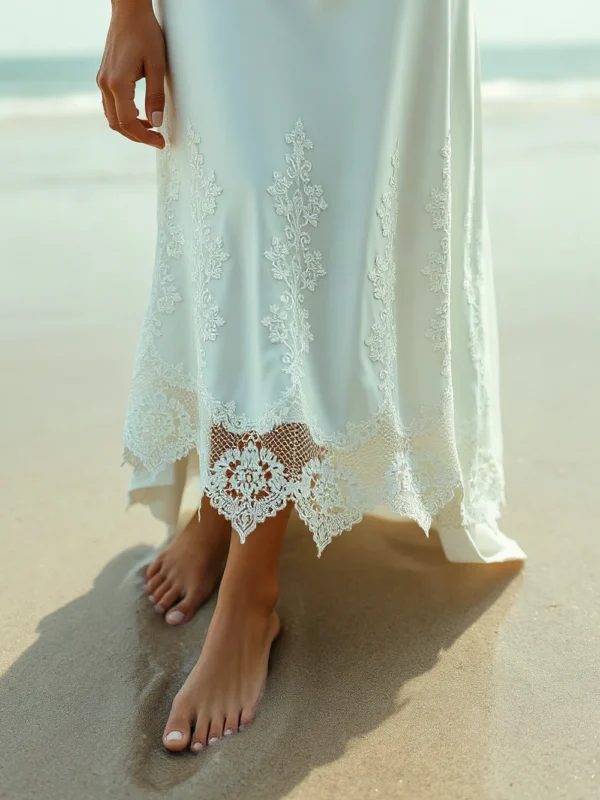
The white bridal looks in this gallery share a coastal setting but give visual priority to different areas. In the first and last images, the hem guides the eye. The second and fourth turn the back into the focal point, while the third and fifth demonstrate how surface pattern can transform an otherwise streamlined silhouette.
The first dress combines a fitted strapless body with a shorter front, making both the stride and shoes visible. The second creates a longer, uninterrupted column and concentrates its volume in a large bow beneath a low open back. One feels visually light and active from the front; the other has a more formal impact when viewed from behind.
Geometric openwork makes the third look structured and graphic, especially against white architecture. The scattered branches and softly colored flowers in the fifth look are more organic. A dense repeated pattern can remain legible in wider photographs, whereas spaced embroidery may appear quiet from a distance and become more expressive in portraits and detail frames.
The fourth image pairs a deep V-back with a fitted shape, floor-length train and a translucent panel lifted by the breeze. This produces movement but also raises practical questions about wind and the route across sand. The sixth image offers a different relationship with the ground: bare feet, compact wet sand and a lace-effect border positioned close to the ankles.
Choose by considering where the strongest detail sits and how it will behave. Test a strapless bodice while moving, a bow against the intended chair, and a train along the actual route. View openwork and illusion areas in changing light. Finally, try the complete length with the planned shoes, because even a small height change can alter how an ornate hem meets the sand.