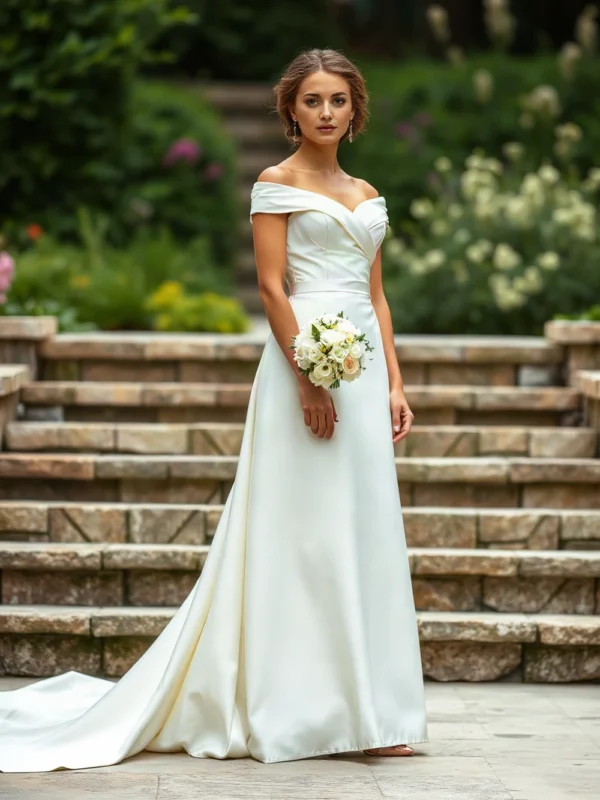
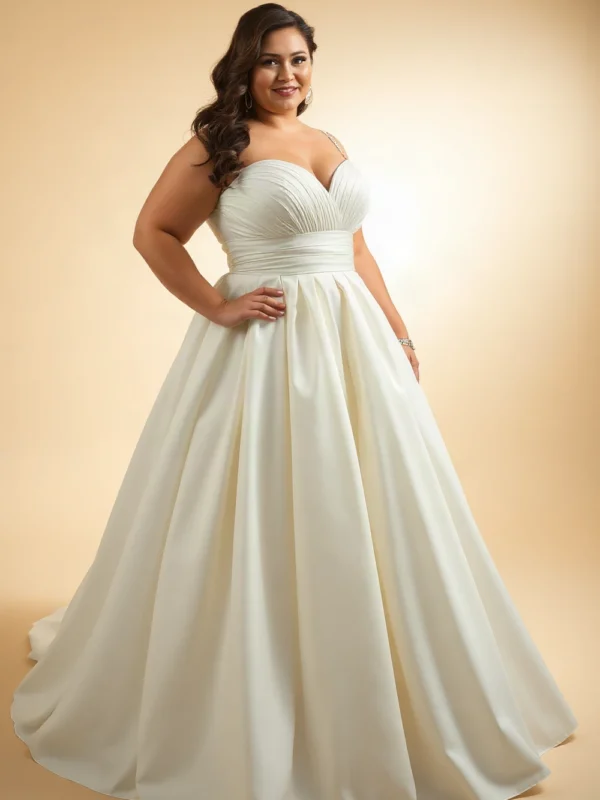
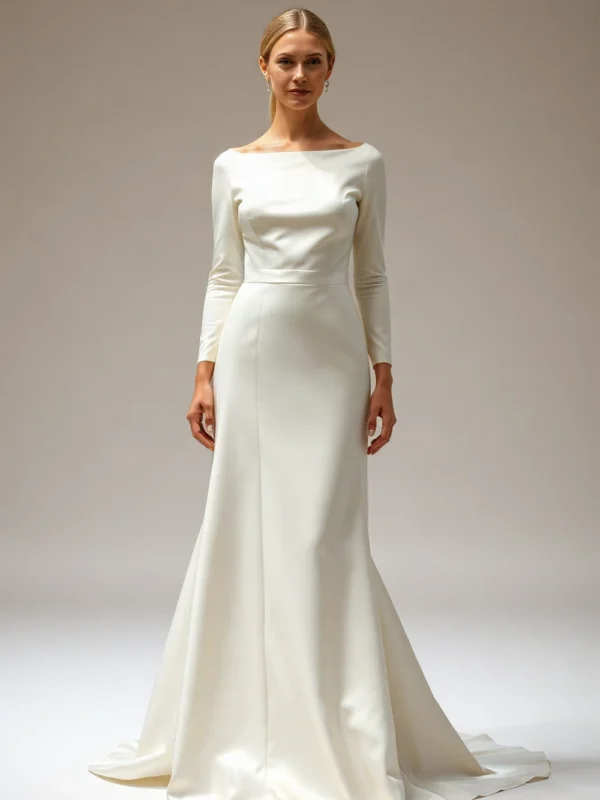
Beach wedding dress styles involve more than choosing something light or unadorned. In the same coastal setting, a fitted mermaid shape, structured A-line skirt, pointed waist, off-the-shoulder neckline or open back creates a distinct mood. The right choice depends on personal style as well as sand firmness, the ceremony route, wind, lighting and planned movement.
These six visuals show how largely white, minimally decorated surfaces differ through silhouette, neckline, waist placement and skirt behavior. Rather than copying a look, identify the idea that fits the real ceremony. During fittings, walk, sit, embrace and turn instead of only standing before a mirror. Consider veils and trains within the complete plan, because ground conditions and moving air affect them as much as the dress.
A Mermaid Silhouette Needs a Realistic Stride Test
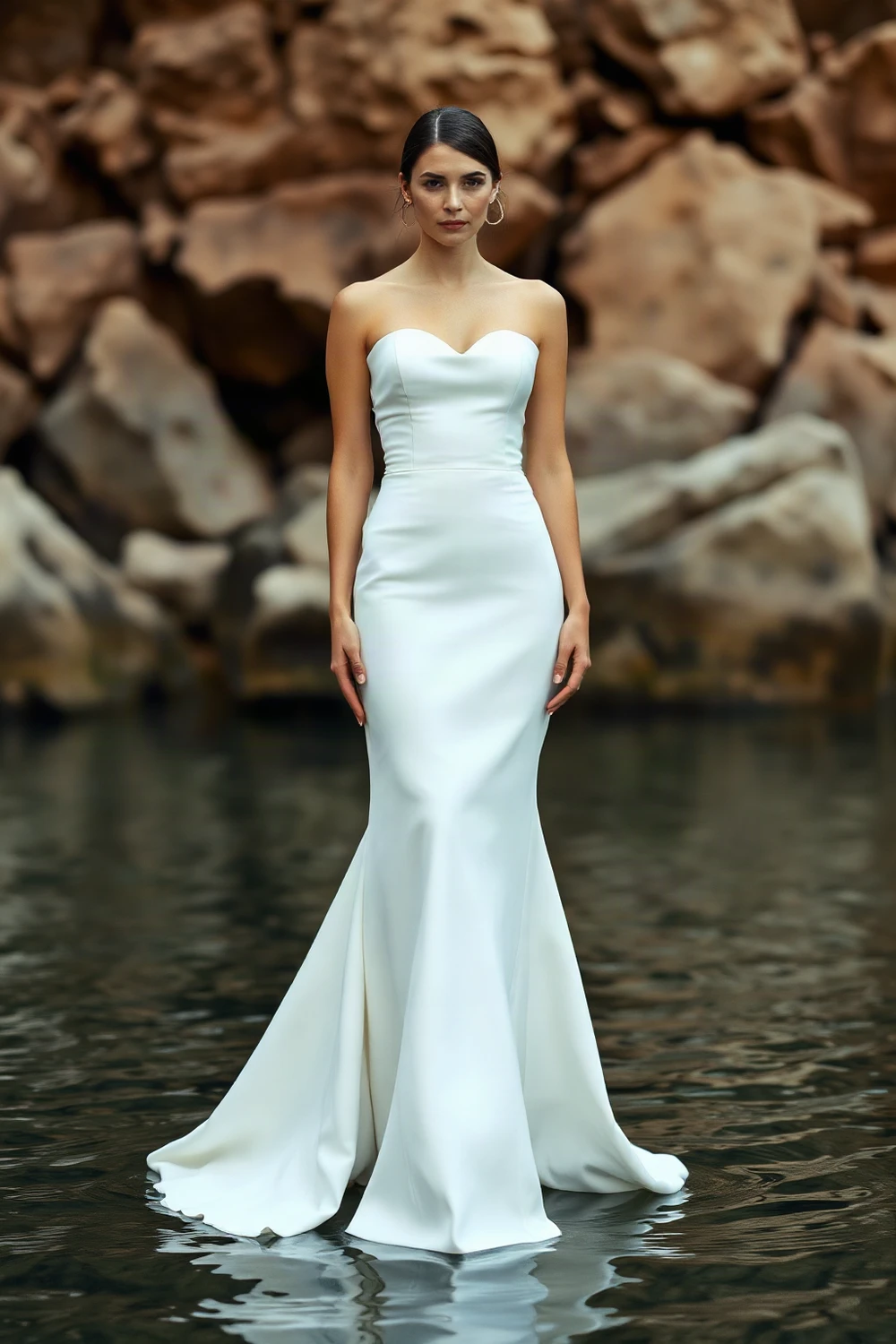
The first look creates an uninterrupted line from its sweetheart strapless neckline through a long, body-skimming section to a mermaid skirt opening near the knees. Minimal visible decoration lets the silhouette stand out against the rocky background and shallow-water reflection, leaving room for restrained jewelry or a hair accessory without requiring oversized additions.
With a mermaid shape, the issue is not only whether the outline flatters. A knee-level flare can limit stride, balance on sand and seated comfort. Wear the intended shoe height at the fitting, walk at different speeds and try a step or low platform. Separate dramatic waterside portraits from the practical ceremony route: a hem touching water may look appealing, but it cannot replace a dry, stable path or a manageable length for several hours.
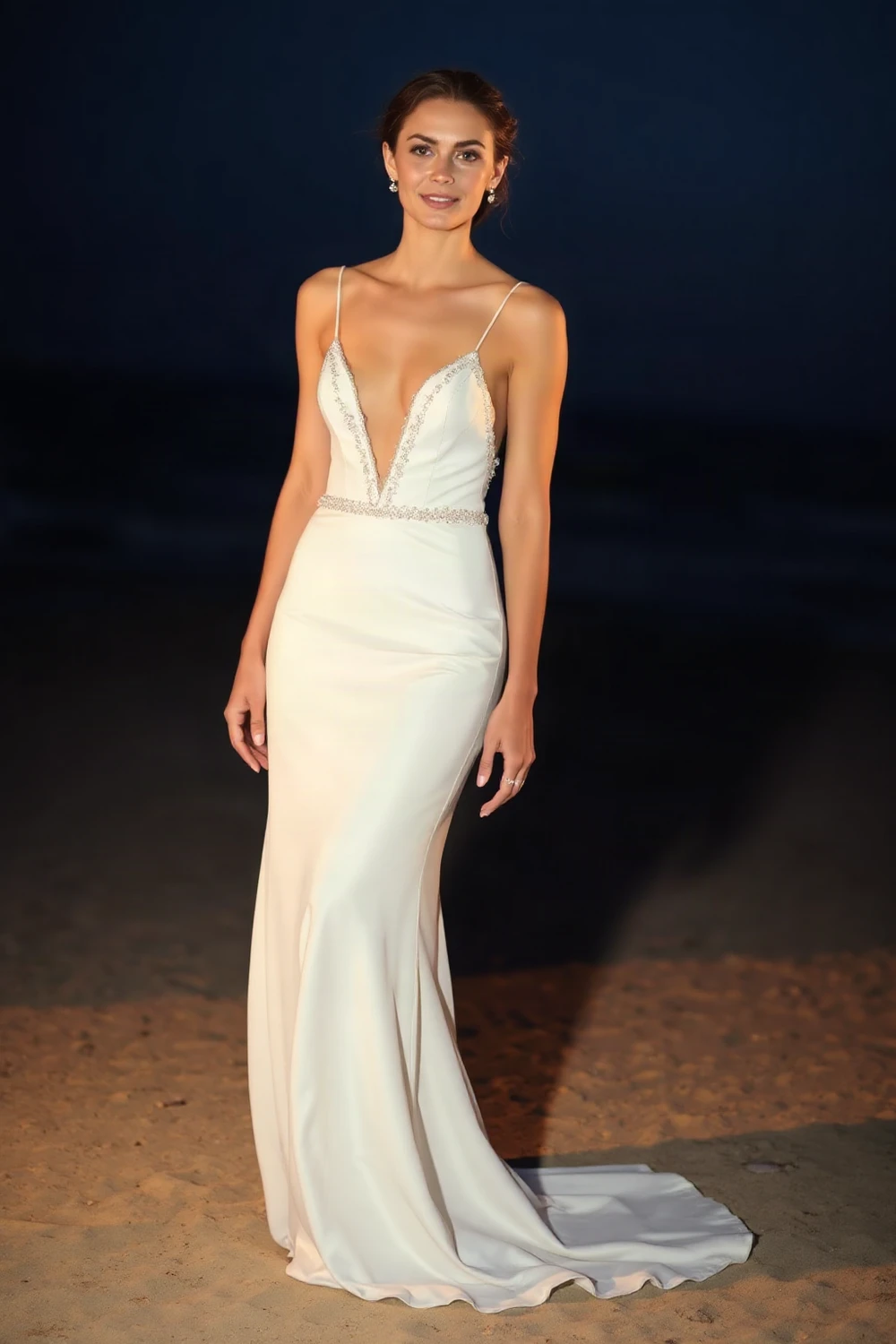
Reflective Edging and a Deep Neckline for an Evening Ceremony
The second look frames slim straps and a plunging V-neck with reflective edging that continues around the waist. Its narrow skirt and short train maintain a streamlined outline, while the dark beach setting emphasizes the upper details. Small accents that seem restrained by day can become the focal point under evening lighting.
For an after-sunset ceremony, assess the gown beyond bright fitting-room lights. Warm bulbs, cooler illumination and camera flash can change the contrast of the white surface and reflective trim. Test coverage while sitting, leaning and embracing, and wear the straps long enough to judge their support. Although a narrow skirt uses less aisle space than a full layered shape, its stride still requires testing. Plan how to lift or manage the short train while walking and dancing on loose sand.
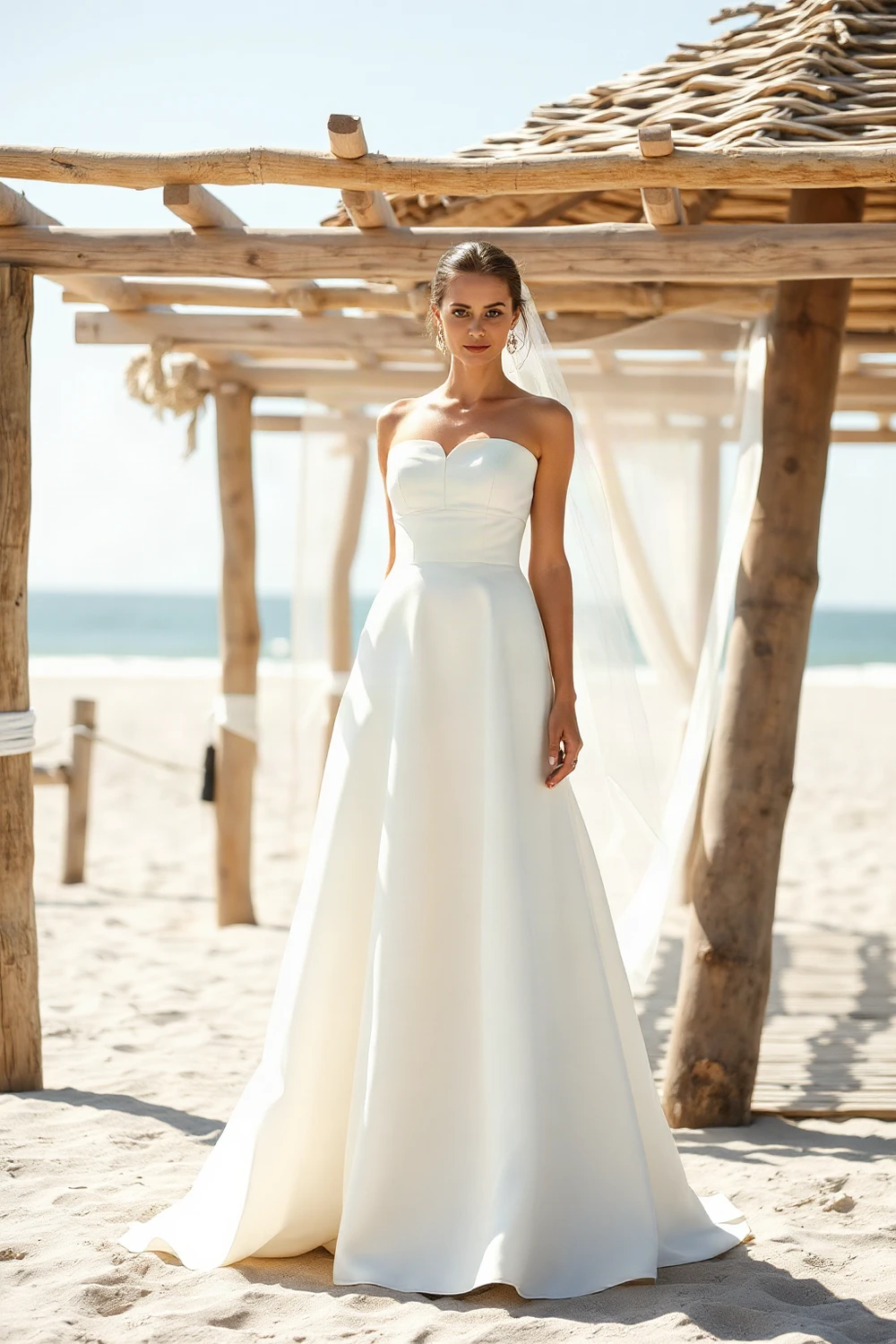
A Structured Bodice and Classic A-Line Shape Beneath Shade
In the third image, a structured-looking strapless bodice meets a broad, clean A-line skirt at a distinct waist. The beach canopy’s horizontal and vertical timbers reinforce the gown’s symmetry, while the long translucent veil adds movement. Compared with the fitted silhouettes, this skirt creates a wider visual field and more traditional proportions.
Volume alone does not reveal a dress’s weight or ease, so evaluate movement during the fitting. Compare the skirt circumference with the aisle, chair gaps and platform edges. Test the strapless bodice while raising the arms and sitting. With a long veil, consider wind direction, attachment strength and its distance from beams or décor. For midday photographs, try direct sun and shade so the shaping of the clean white surface remains visible in bright exposure.
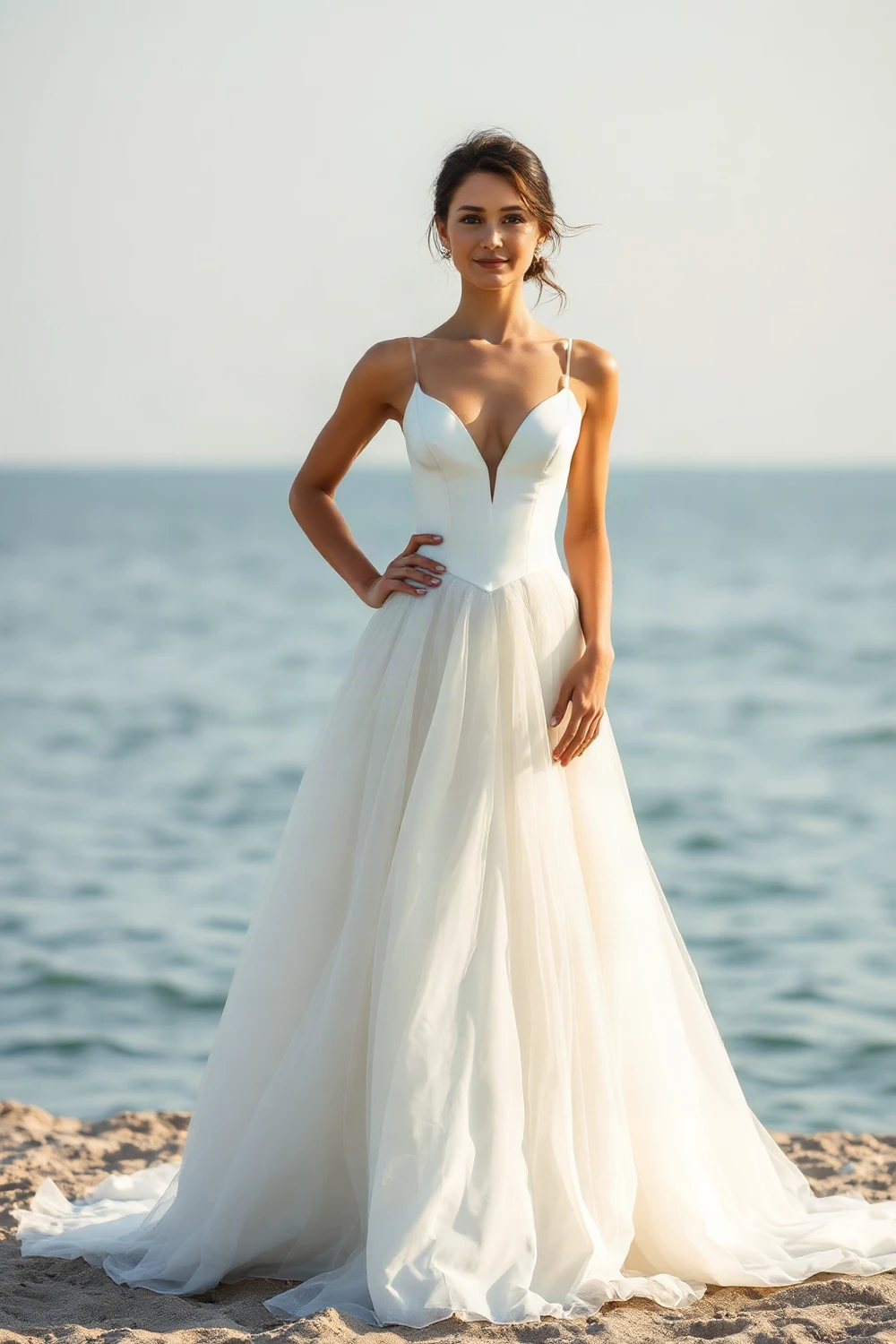
Balancing a Pointed Waist with Soft Layered Volume
The fourth look joins a slim-strapped, plunging bodice to a layered skirt through a waistline that drops to a central point. Sharp geometry defines the upper body, while broad, lightly translucent-looking layers soften the lower half. The silhouette falls between a minimal column and a conventionally rounded ball gown, making the waist transition its principal feature.
Check where the pointed waist ends relative to the natural waist and whether it presses when seated. The deep opening and narrow straps must also provide coverage and support during turns, embraces and posture changes, not only in a front-facing pose. Although the layered skirt may permit a wider stride than a close mermaid shape, gusts can make separate layers difficult to control. With the planned shoes or barefoot height, confirm that the longest front point clears the feet on soft sand.
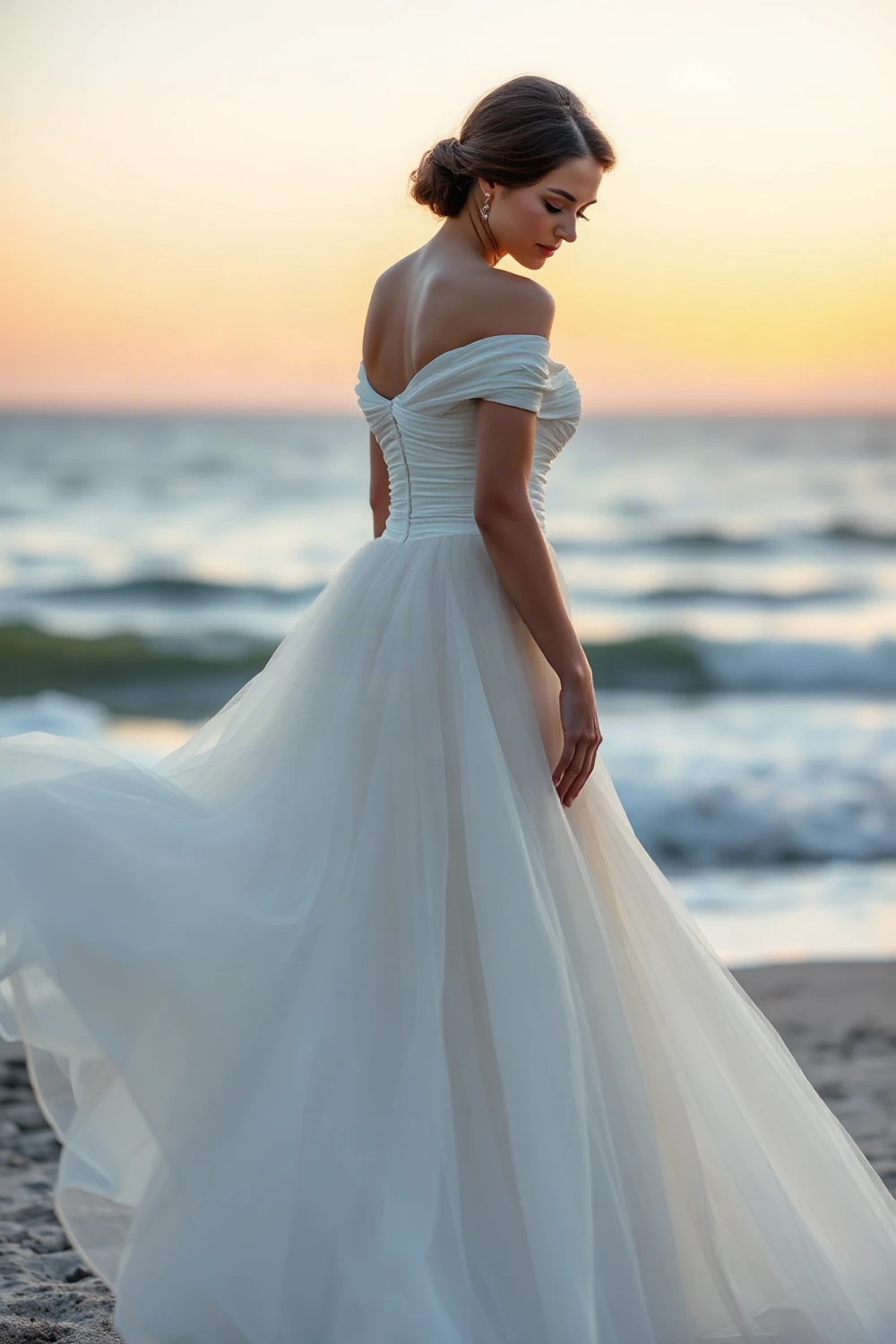
An Off-the-Shoulder Line with Wind-Expanded Volume
In the fifth visual, a gathered off-the-shoulder neckline, fitted upper section and central button line create a romantic frame from the back. The broad skirt opens into the wind, and warm sunset light reveals the edges of its pale layers. The look relies on shape and movement rather than dense surface decoration.
Because an off-the-shoulder neckline can restrict the arms, test holding a bouquet, embracing and raising the hands for dancing. The skirt can make wind visible in photographs, but it may also reach chairs, decorations or guests, so compare its full circumference with the aisle. Since sunset light changes quickly, review front-lit and backlit angles at a similar hour if possible. Use a sheltered path for a calmer entrance and reserve a carefully selected open area for portraits where the skirt’s movement can remain intentional and manageable.
An Open Back, High Slit and Long Directional Layers
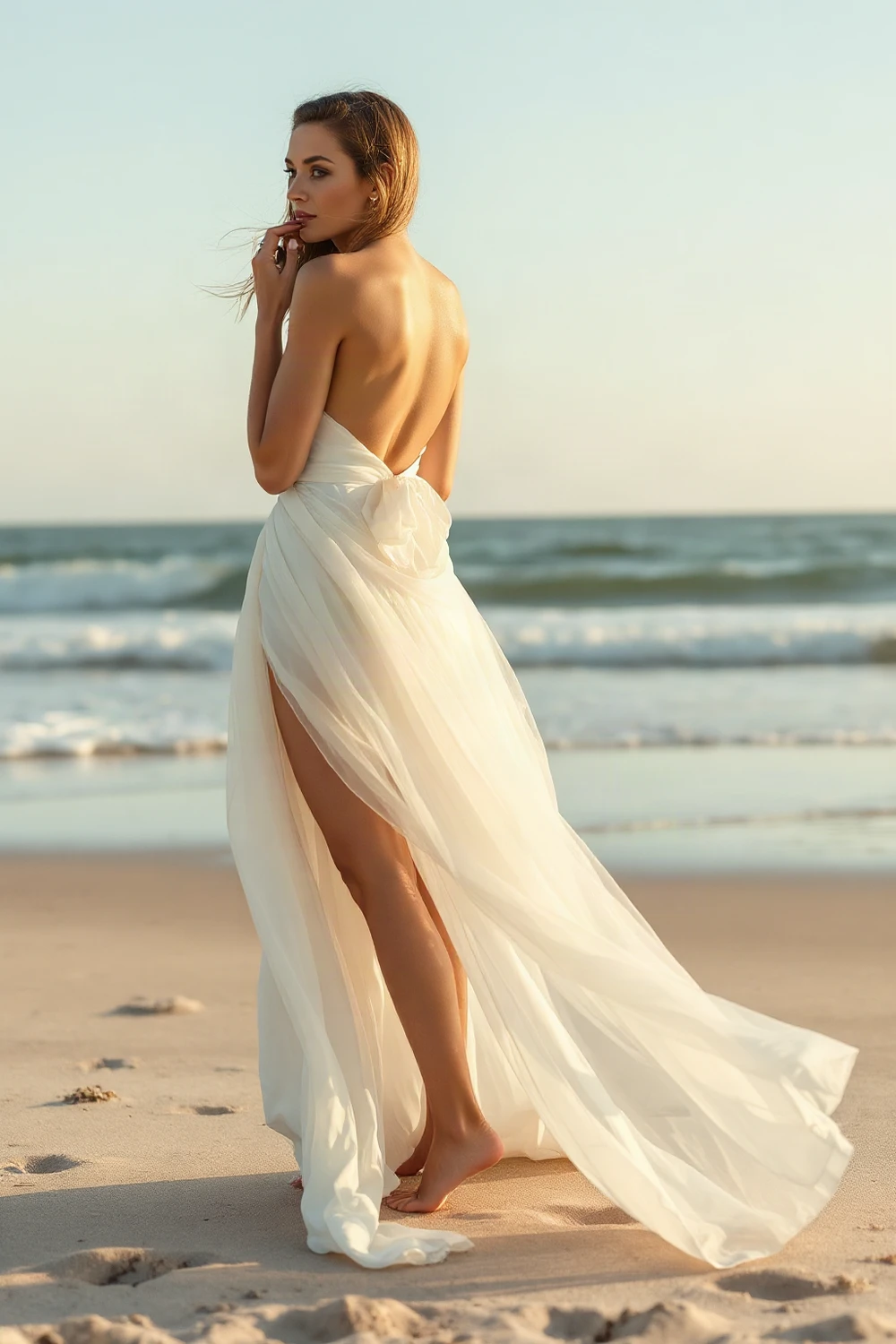
The final look combines a deeply open back, a voluminous waist detail and a high side opening. Long, light-looking layers stream behind the figure in the wind, while the barefoot stance strengthens the connection to the shore. Unlike more enclosed styles, this silhouette changes with movement as the back, leg and trailing panels appear from different angles.
Go beyond static poses during the fitting. Simulate changing wind directions to check how far the opening moves, whether the layers tangle and how the waist feature feels when seated. Establish support for the low back early and ensure it remains hidden while walking. If the ceremony is barefoot, set the hem at that height; if heels will be worn later, test both positions. A dry route and a simple way to gather the trailing layers will make transitions easier throughout the event.
The best beach wedding dress is not simply the one that looks most dramatic beside the sea. It must support the day’s actual sequence. A mermaid silhouette offers a clean, sculpted line; an A-line skirt creates wider presence; a pointed waist adds geometry; an off-the-shoulder neckline supplies a romantic frame; and an open back or high slit creates focal points that change with movement.
Build a shortlist by taking one principal idea from each visual rather than combining every feature. Then walk a route comparable to the venue in the intended shoes or at barefoot height. Sit, turn and test dance movements. If possible, observe similar wind and light, and evaluate the train, veil and skirt layers together at the final fitting. This preserves the desired photographic silhouette while reducing the need to hold or rearrange the dress during the ceremony.
Compare six beach wedding dress ideas, from a fitted mermaid shape to wind-swept layers, with practical guidance on necklines, movement, sand, lighting and train length.
Frequently asked questions
Is a mermaid or A-line dress more practical for a beach wedding?
A mermaid shape is narrower and more sculpted, while an A-line skirt may provide more room around the legs. Practicality depends on the exact cut, so test walking on sand, sitting and dancing with the intended shoe height.
Can a long veil work at a windy beach ceremony?
Yes, but its attachment, direction in the wind and distance from décor should be rehearsed. When stronger wind is likely, a shorter veil or a removable plan may be easier to manage.
Which movements should be tested with a plunging V-neck?
Try sitting, leaning forward, embracing, carrying a bouquet and turning while dancing. Check coverage, strap placement and any internal support from front, side and moving angles.
How should hem length be set for a barefoot ceremony?
Fit the hem at the true barefoot height. If heels will be worn later, test both heights and confirm that the longest front layer clears the feet on soft sand.
Will a simple white dress disappear in sunset photographs?
A clean surface can emphasize shape, but the lighting angle affects the visibility of seams and layers. A brief test at a similar hour helps compare front lighting, backlighting and shaded positions.