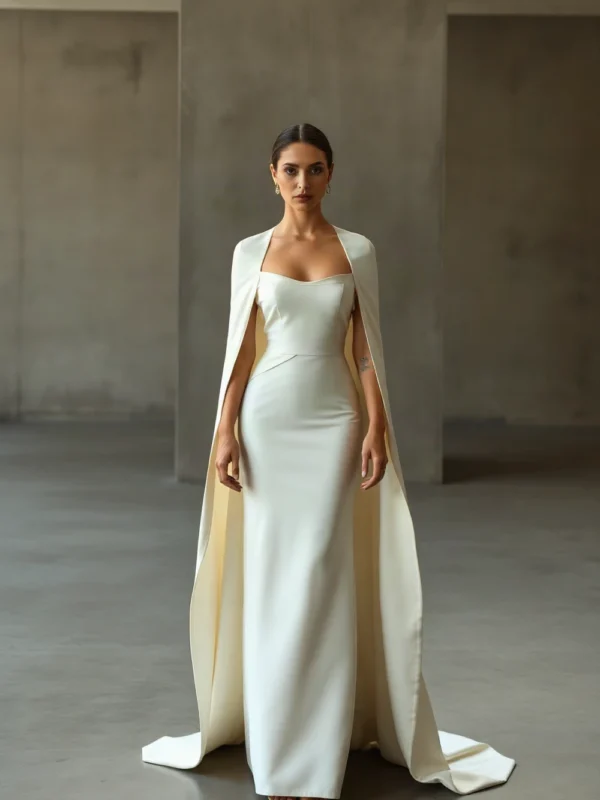
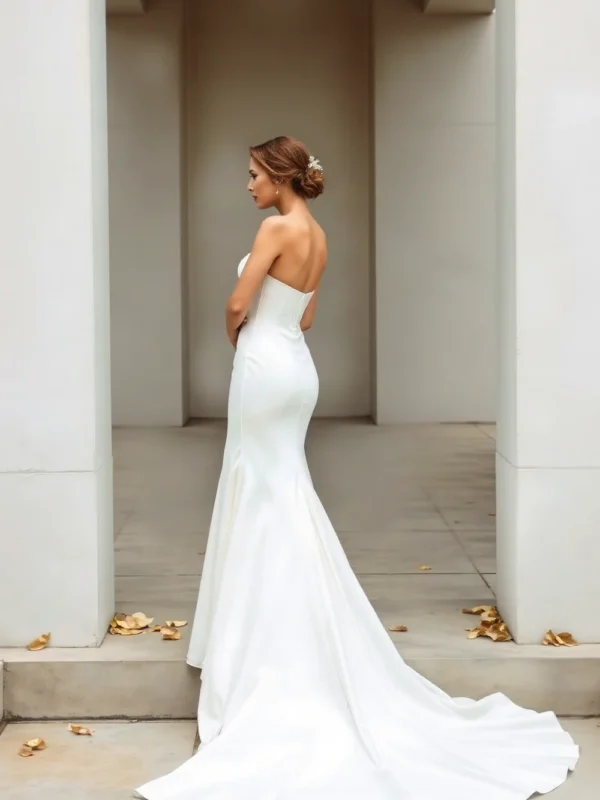
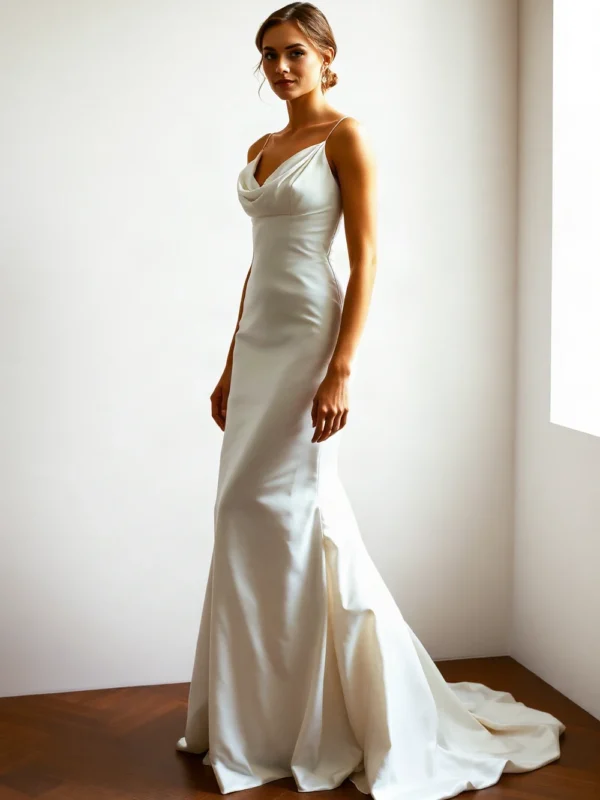
The shared language of this gallery is modern minimalism: white and warm ivory tones, unpatterned surfaces, long vertical lines and details created through cut rather than dense embellishment. Yet the dresses do not produce the same effect. In the first image, shoulder-hung cape panels form an architectural frame around a narrow column. The second keeps the upper body exposed and transfers the drama to a broad train that spreads across the ground behind a fitted silhouette.
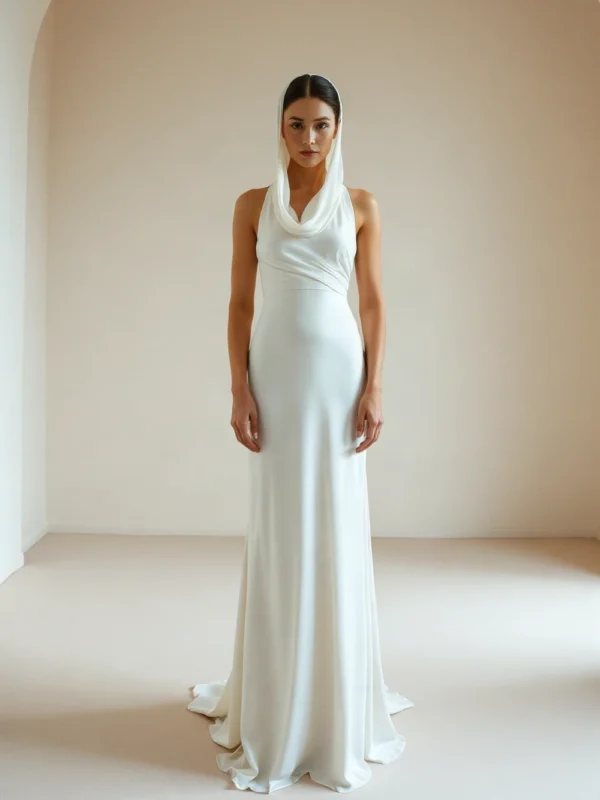
The third and fifth images present two substantially different uses of soft draping. A hood-like neckline surrounds the head and neck while diagonal folds move across the bodice, making the face the center of the composition. The slender-strapped cowl neckline is smaller, more open and less commanding. Both accompany close-fitting shapes, but the hooded treatment has a stronger influence on hairstyle and earrings. The cowl leaves more visual space for accessories, provided they do not obscure its gentle fold.
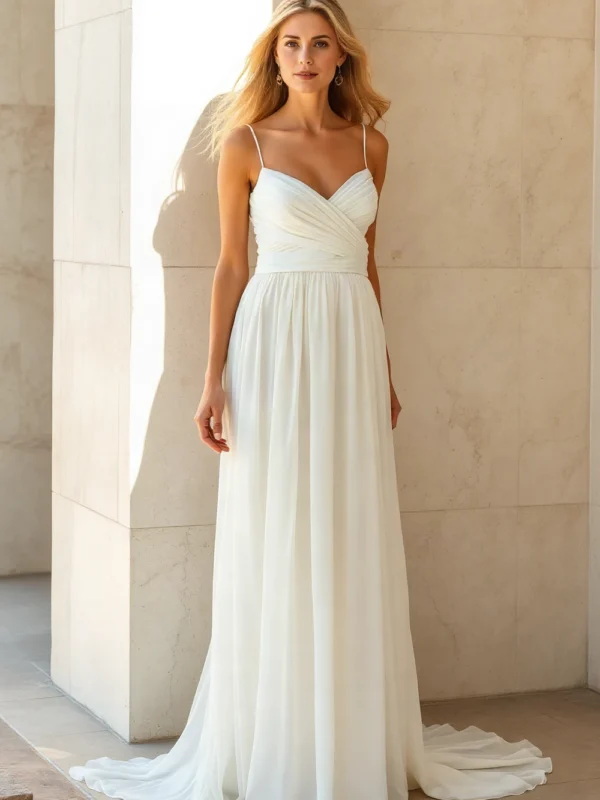
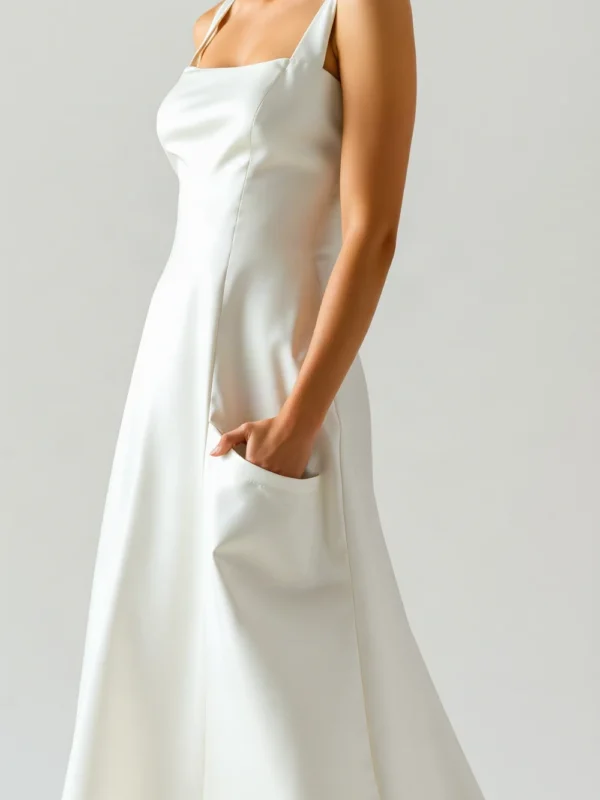
The fourth dress changes the balance with a wrapped, layered bodice and a softly gathered A-line skirt. It distributes volume below the waist instead of following the hips as closely as the column, mermaid and cowl-neck examples. The final close-up introduces wider straps, a softly squared neckline, vertical seams and a large pocket. That pocket is not merely a practical feature: a hand placed inside changes the side of the skirt and creates an asymmetrical pose.
Do not assess these ideas from a single front view. Walk, turn and sit while testing cape panels and trains; try different stride lengths in fitted skirts; and watch how a draped neckline behaves when you bend forward. With a pocket, compare its outline when empty and when holding the light items you might actually carry. Venue layout, season, hairstyle and the required range of movement will determine whether the most dramatic or the most restrained option is also the most useful choice for the day.